Unit 8 Urban Planning
8
Urban Planning
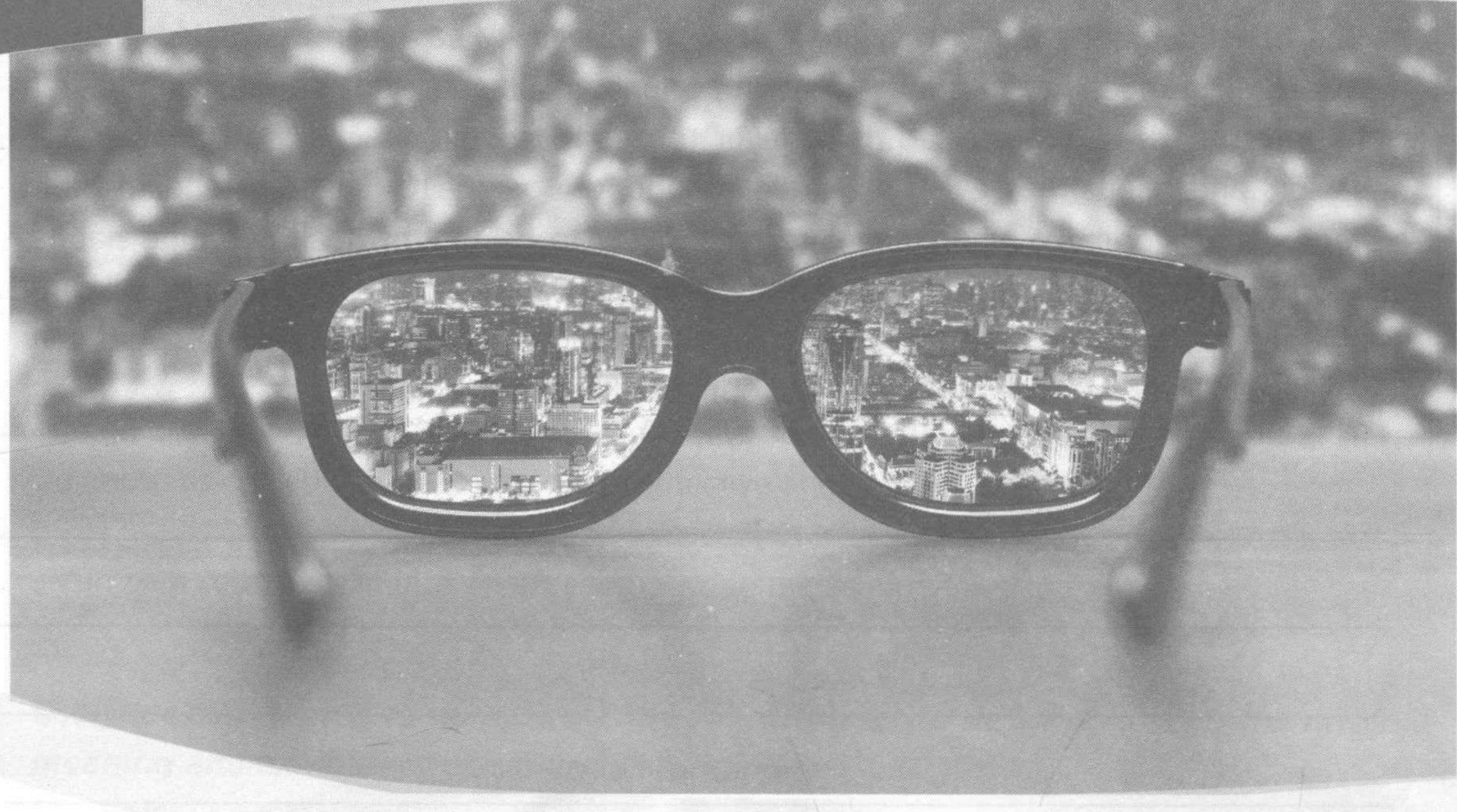
Lead-in
- Study the two line graphs on urban and rural populations in two countries: China and India. Summarize the main features shown in the graphs and make comparisons.
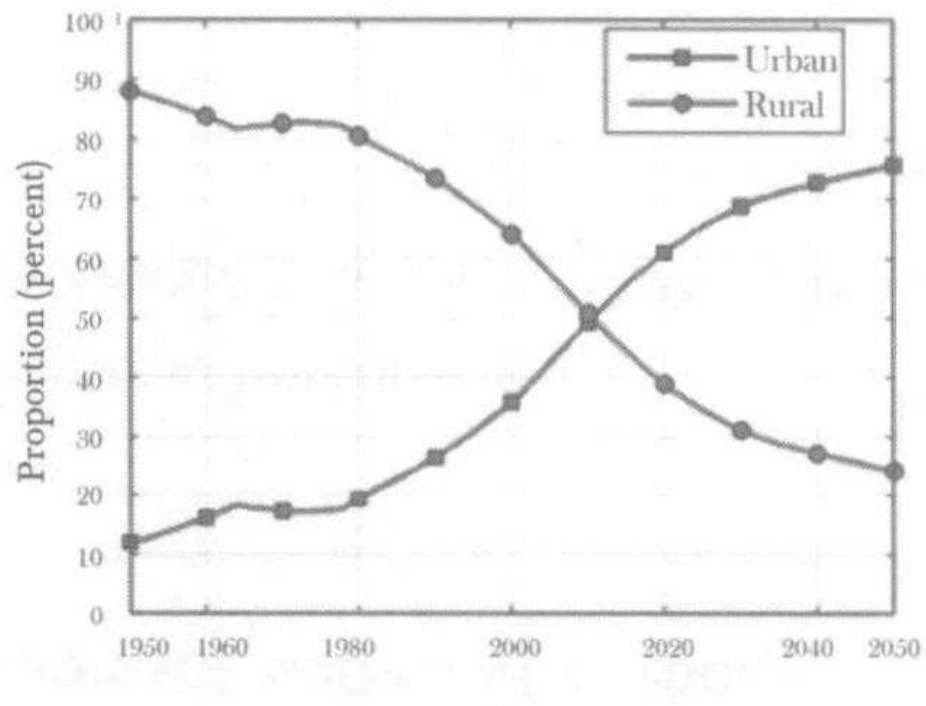
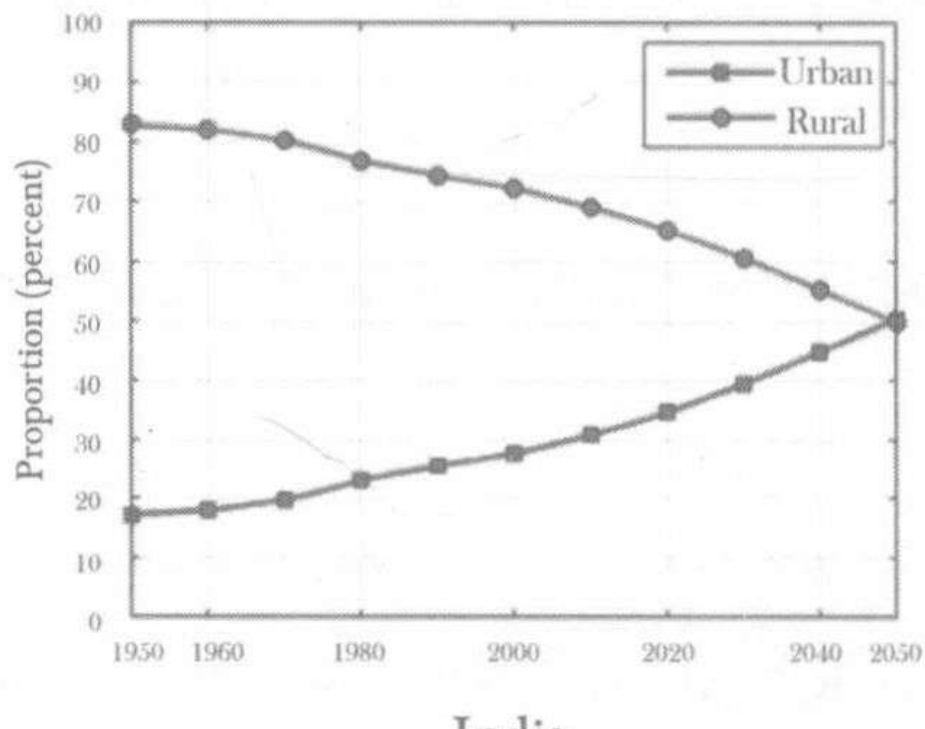
- According to The World's Cities in 2016, a report published by the United Nations, "one in five people worldwide lives in a city with more than 1 million inhabitants (居民)".
Discuss: What are the advantages and disadvantages of living in cities?
Part I READING
Reading 1
City Parks May Mend the Mind
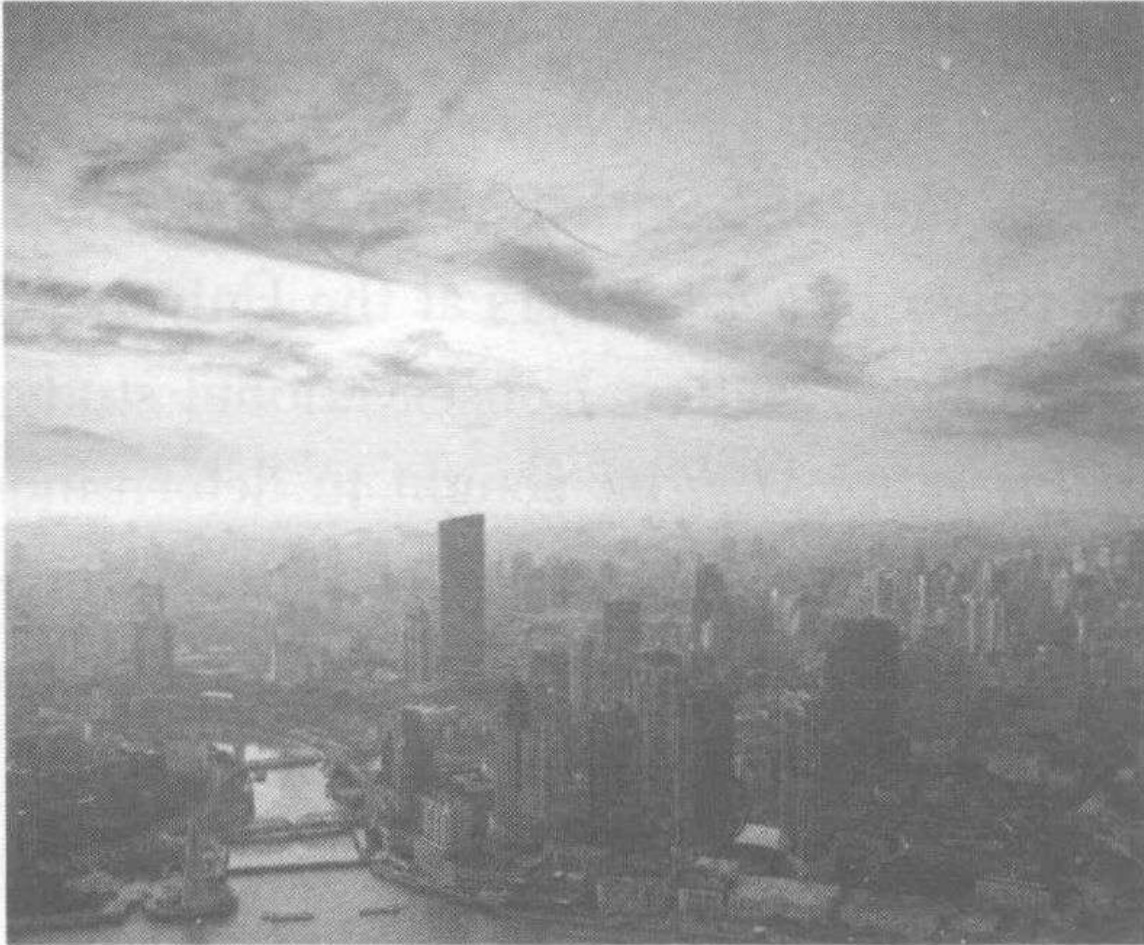
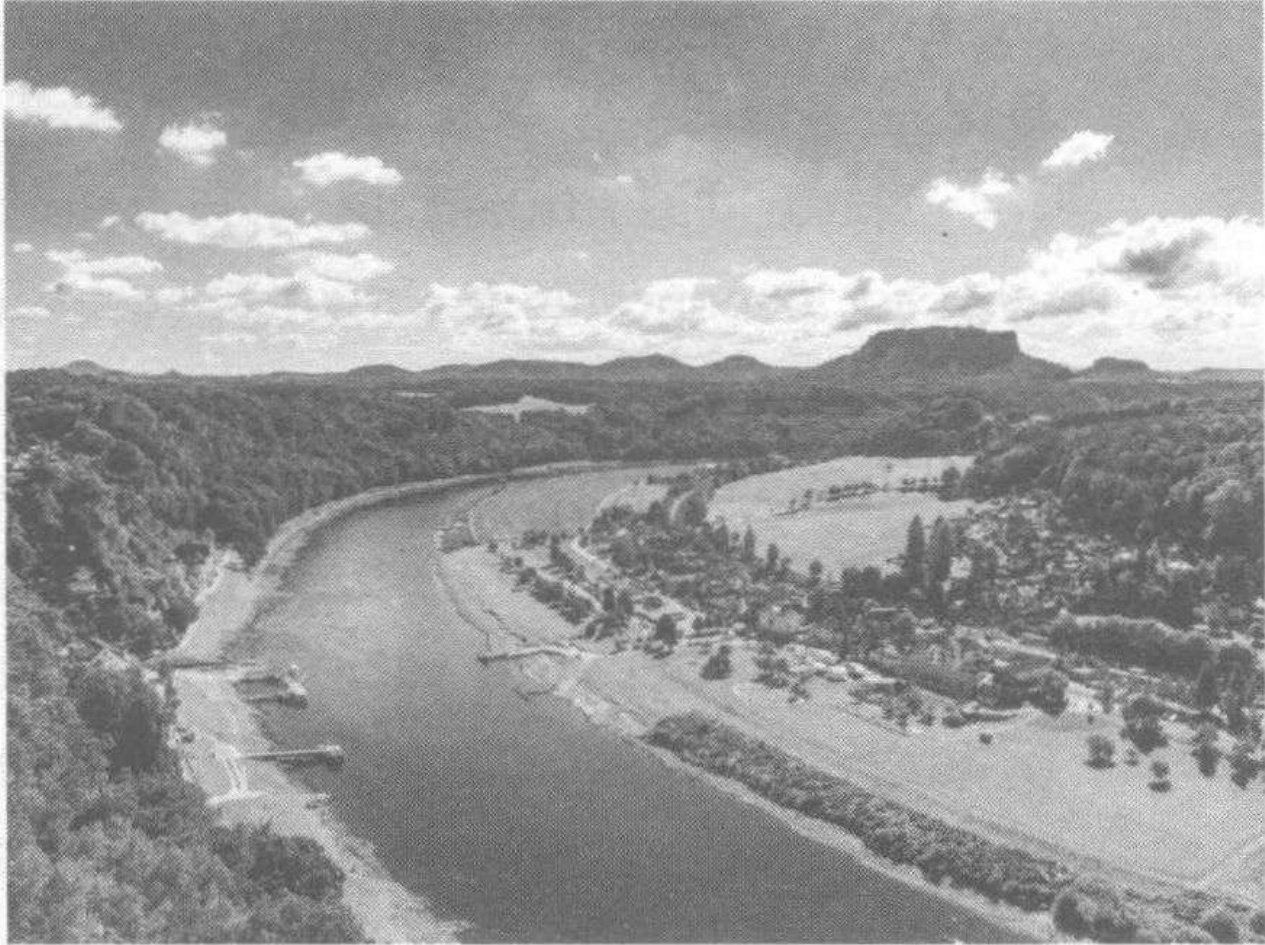
Before Reading
Look at the pictures of two cities. Which one do you prefer to live in? Why?
City Parks May Mend the Mind
Tori Rodriguez
1 Exposure to natural settings has been linked with a vast array of human health benefits, from reduced rates of depression to increased immune functioning. Two recent studies found evidence suggesting that urban green spaces, such as parks and gardens, may also improve cognitive development and buffer the effects of health inequality.
2 In a research reported last year in the Proceedings of the National Academy of Sciences USA, investigators in Spain, Norway and the US explored the cognitive development of 2,593 children between the ages of seven and ten from 36 primary schools in Barcelona. At regular intervals over a period of 12 months, they tracked changes in memory and attentiveness using cognitive tests, and they used high-resolution satellite data to assess the children's proximity to green space at home and school and during their commute. After factoring out socioeconomic status and other potential confounders, they determined that children who were closer to parkland had better memory development and less inattentiveness than other children.
3 The study authors suggest that green spaces may have a positive effect both directly and indirectly. "Green spaces provide children with opportunities to develop mental skills such as discovery and creativity," says co-author Payam Dadvand, a
physician and researcher at the Center for Research in Environmental Epidemiology in Barcelona. More indirectly, green spaces may help by reducing exposure to air pollution and noise, increasing physical activity, and enriching microbial input from the environment, all of which have been associated with improved mental development, he says. When the researchers measured and factored in traffic-related air pollution, which is higher in places with fewer plants and trees, they found that it accounted for 20 to 65 percent of the observed association between greenness and cognitive development. Air pollution has been shown to have neurotoxic effects, Dadvand says.
Natural settings may also help reduce the mental health burden that comes with socioeconomic inequality, according to a paper by researchers at the University of Glasgow and the University of Edinburgh. A cross-sectional observational study published last year in the American Journal of Preventive Medicine sought to determine which neighborhood characteristics might be “equigenic”, or capable of disrupting the relation between socioeconomic disparities and health inequality. Using data from 21,294 adults living in urban areas in 34 European countries, the scientists examined associations between participants' level of financial stress and psychological well-being. Then they explored interactions between those variables and five neighborhood characteristics or services, including access to green spaces, banking and postal services, public transportation and cultural facilities. Results show that the difference in well-being scores among people experiencing the most and least financial difficulty diminished with greater access to green spaces, such that the health gap was 40 percent smaller among those with better access. No such benefits were found with any of the other variables studied.
5 Approximately half of the world's current population lives in urban areas, and that number is expected to increase, Dadvand says. Findings such as these could influence policy makers to increase access to green spaces, in the hope that doing so might boost mental health in nearby residents and improve academic achievement in children. "That could have long-term consequences for individuals, families and society as a whole," Dadvand says.
(536 words)
New Words and Expressions
setting /'setɪŋ/ n. the place and conditions in which sth. happens or exists 背景;环境
array $ ^{*} $ /əˈreɪ/ n. a group or collection of things or people, often one that is large or impressive 大堆;大群;大量
buffer $ ^{\triangle} $ / 'b∧fə(r)/ v. reduce the harmful effects of sth. 缓冲;减轻(伤害)
inequality /ˌɪnɪˈkwɒləti/ n. an unfair situation in which some people have more rights or better opportunities than other people 不平等;不平衡;不平均
proceedings $ ^{\star\textcircled{A}} $ /prəu'si:dɪnz/ n. an official record of the things said or done at a meeting, conference, etc.(会议等的)正式记录;公报
at regular intervals with a regular amount of time
in between 每隔一定时间;定期地
attentiveness /ə'tentɪvnis/ n. 注意力;专注
high-resolution /'haɪrezə'luːʃən/ a. showing a lot of clear sharp detail 高分辨率的;高清晰度的
proximity $ ^{*} $ /prɒk'sɪməti/ n. closeness in space or time(时间或空间)接近;邻近;靠近
commute /kə'mjuːt/ n. the journey that a person makes when traveling to or from work 上下班交通路程
factor out not consider or include (sth.) in making a judgment or calculation 把……作为因素排除
socioeconomic /'səʊsɪəʊˌɪkəˈnɒmɪk/ a. relating to or involving economic and social factors 社会经济(学)的
confounder /kənˈfaʊndər/ n. 混杂因素;干扰因素
parkland /ˈpɑːklænd/ n. land with trees, bushes, etc., that is or could be used as a park 适于辟建公园的土地
inattentiveness /ˌɪnəˈtentɪvɪnɪs/ n. 不专注;注意力不集中
co-author /kəʊˈɔːθə(r)/ n. a person who writes a book or an article with sb. else (书或文章的)合著者
enrich /ɪnˈrɪtʃ/ v. improve the quality of sth., often by adding sth. to it 充实;使丰富;使饱含(某物)
microbial /maɪˈkrəʊbɪəl/ a. 微生物的;细菌的
input $ ^{A} $ /'input/ n. sth. that enters a process or situation from the outside 输入;投入物
factor in consider or include (sth.) in making a judgment or calculation 把……作为因素计入
neurotoxic /,njuərəʊˈtɒksɪk/ a. 毒害神经的
cross-sectional /'krɒs'sekʃənəl/ a. 具有代表性的;典型性的
observational /ˌɒbzəˈveɪʃənəl/ a. relating to the watching of people or things, esp. in order to learn sth. new 观测的;根据观察的
preventive /pri'ventiv/ a. intended to try to stop sth. that causes problems or difficulties from happening 预防性的;防备的
equigenic /ˌiːkwɪˈdʒenɪk/ a. 同等基因的
disparity /dɪsˈpærəti/ n. a difference, esp. one connected with unfair treatment 不同;差异;悬殊
variable $ ^{A} $ /'veəriəbl/ n. something that may be different in different situations, so that one cannot be sure what will happen 可变情况;变量;可变因素
gap /gæp/ n. a difference that separates people, or their opinions, situation, etc. 分歧;差距
in the hope that with the hope that sth. will happen or could happen 怀着……的希望
resident $ ^{A} $ /'rezɪdənt/ n. a person who lives in a particular place or who has their home there 居民;住户
long-term /'lɒŋtɜːm/ a. concerning a long period of time 长期的
as a whole as a single and complete unit and not as separate parts 作为一个整体;整个来看
- final of 0202, 04 of 0904, 101.
- 2014 do luchers et jensl.
Proper Names
Tori Rodriguez /'tɔri rəʊ'driːɡəs/ 托丽·罗德里格斯
Barcelona/ba:si'ləunə/巴塞罗那(西班牙东北部港口城市)
Payam Dadvand /'peijəm 'dədvaend/ 佩亚姆 · 戴德范德
Glasgow /'glɑːsgəʊ/ 格拉斯哥(英国苏格兰中南部港口城市)
Edinburgh/edinbərə/ 爱丁堡(英国苏格兰东南部城市)
Global Reading
Study the reading skill in the box and work on the tasks below.
Reading Skill — Increasing reading speed
Learning to read faster is a very useful skill, especially in today's information age. The following are some useful techniques to help you read an academic text faster, some of which have been mentioned and practiced in the previous units.
Understand the general structure of an academic text. There are three parts: the introduction presenting the topic and thesis statement, the body paragraphs with usually one main idea in every paragraph supported by some evidence, and the conclusion. (See also "Skimming", Unit 1)
Preview the text. Look at the title, sub-headings, images, graphics, and glossary. (See also "Surveying an article", Unit 1)
Don't read every word. Focus on the main part of the sentence and the content words (usually nouns and verbs) that carry the main information. (See also "Scanning", Unit 1; "Reading by skipping the supplementary information", Unit 4)
Adjust your reading strategies according to what you need from the text. Skim for the organization and the main idea of the text, scan for specific information, and do close reading for precise understanding of a certain part / sentence.
- Divide the text into three parts: introduction, body and conclusion. Write the paragraph number(s) for each part.
| Part | Para(s). |
| Introduction | |
| Body | |
| Conclusion |
- Skim the text and choose the right answers.
- What is the text mainly about?
a) Advice on city planning in the future.
b) The need to live close to nature.
c) Mental benefits of city parks.
- How many studies are presented in the text?
a) One. b) Two. c) Three.
- What is the thesis statement of the text? In which paragraph can you find it?
- Find the following words in the text and underline them.
- University of Glasgow 2) Norway 3) Payam Dadvand 4) equigenic
Close Reading
- Match each statement (1–4) with one from the list of researchers (A–C). Follow the steps below to complete the task:
i. Scan the text to locate researchers A in the list.
ii. Understand the information around A: the sentence where A is found and, if necessary, the sentence(s) before or after that.
iii. Match the information with statements 1–4.
iv. Repeat steps i–iii to identify matching information with researchers B and C.
List of researchers
A) Investigators in Spain, Norway and the US
B) Researchers at the University of Glasgow and the University of Edinburgh
C) Scientists doing a cross-sectional observational study
- They found that people of inferior financial or social background might feel less stressed in places with trees and plants.
- They identified the factor that could reduce the differences in people's health related to financial stress.
- They recorded for a whole year the changes that happened to the people they studied.
- The satellite helped them to carry out their studies.
2. Answer the following questions
- What is the finding of the study in Para. 2?
- What are the direct and indirect positive effects produced by green spaces?
- What factor has been proven harmful to a person's neural system?
- Among the five factors scientists studied (access to green spaces, banking and postal services, public transportation and cultural facilities), which one affected people's well-being scores?
Critical Thinking
Read the following paragraph about urban growth by 2050 and discuss the questions below.
The continuing urbanization and overall growth of the world's population is projected to add 2.5 billion people to the urban population by 2050, with nearly 90 percent of the increase concentrated in Asia and Africa. At the same time, the proportion of the world's population living in urban areas is expected to increase, reaching 66 percent by 2050.
- What do the statistics show?
- Is it possible for city planners to set aside enough green spaces?
Language Enhancement
- Complete the following sentences with words from the box below. These words are all polysemous, which means each word has more than one meaning. Change the form where necessary. Each word can be used more than once.
| enrich | gap | input | variable |
- With a click of the mouse, the _____ gathered from the Internet can be stored easily in a database. (information that is put into a computer)
- The oil boom greatly _____ the local people. (made someone rich)
- A huge _____ exists between the lifestyles of the rich and the poor. (a big difference between two groups of people)
- A medium-sized eagle is exceptionally _____ in color, from very dark brown, almost black, to pale brown, nearly white. (showing diversity; being different)
- Fruit juices are added to this cheap wine to _____ its color and flavor. (make food taste better)
- We need everybody's _____ on this project. So I'd like to fix a time to meet next week and hear what you all have to say. (ideas, advice or effort put into a job or activity)
- Most people agree that immigrant (移民的) communities _____ our culture to a great degree. (improve the quality of something)
- There are too many _____ in the experiment to predict the result accurately. (things that may be different in different situations)
- The gate was locked but we managed to get through a _____ in the fence. (a hole or space where something is missing)
- Complete the sentences with phrases from Reading 1. Their meanings and paragraph numbers have been given in brackets.
- The medical examination shall be repeated _____ to guarantee the workers' physical suitability. (with a regular period of time in between; Para. 2)
- This would allow investors to _____ trading costs before calculating how much money they made from the stock exchanges. (not include; Para. 2)
- Many restaurants add a service charge, which customers may forget to _____ when deciding how much they can spend. (include; Para. 3)
- Statistics show that online travel services _____ more than one-third of the total European travel market last year. (made up, formed; Para. 3)
- We have decided to make a further price cut of 2% _____ this will help you push the sale of our products. (with the hope that; Para. 5)
- Each individual should be rewarded according to his contribution to the profit of his own department and of the corporation ___. (as a single and complete unit; Para. 5)
- Study the word building skill in the box and work on the tasks below.
Word Building Skill — Back-formation (I): noun → verb
Back-formation is an unusual type of word building where a shorter word is derived by deleting an imagined affix from an already existing longer word in the vocabulary. Back-formation may be particularly common in English since many English words are borrowed from Latin, French and Greek, giving English a large range of common affixes. For example, the verb “translate” is a back formation from “translation”, which is from Latin.
Verbs can be back-formed from the following nouns:
Nouns ending with -er, -ar, -or, -sion, -tion: "butch" (屠宰) from "butcher", "beg" from "beggar", "edit" from "editor", "aggress" (侵犯) from "aggression", "automate" (使自动化) from "automation";
Nouns ending in other forms: "enthuse" (使有热情) from "enthusiasm", "diagnose" (诊断) from "diagnosis".
A. Write down the verbs that are back-formed from nouns in the following table, and put down their Chinese meanings. The first one has been given as an example. Consult the dictionary when necessary.
| Noun | Back-formed verb | Chinese meaning of verb |
| 1) television | televise | 用电视播放 |
| 2) destruction | ||
| 3) donation | ||
| 4) emotion | ||
| 5) negation | ||
| 6) plumber | ||
| 7) peddler | ||
| 8) commentator | ||
| 9) swindler | ||
| 10) escalator |
B. Complete the following sentences with the proper verbs from the ten back-formed verbs above. Change the form where necessary
- What happens when a British guy who knows nothing about baseball tries to _____ a baseball game?
- The new results have _____ that assumption — the mere presence of oxygen in an atmosphere is not enough evidence to start looking for life.
- Equally, plenty of disputes (争吵) may easily _____ into war if the countries concerned can't calm down and negotiate.
- He worked as a door-to-door salesman _____ cloths and brushes.
- We admire your paintings so much. How do you get the inspiration to _____ so freely and intensely?
4. Study the translating skill in the box and work on the task below
Translating Skill — Translating passive constructions (被动结构) (I): as active constructions
Passive constructions are widely used in English, especially in formal writing and scientific writing. Generally speaking, passive constructions are used in the following four situations:
when the agent (动作发出者) is not known or is not necessary to know;
when emphasis is on the action or the object rather than on the agent;
when the speaker is not willing to reveal the agent;
when use of passive constructions can help link the sentence with its contexts.
Passive voice is used much less frequently in Chinese than in English. Very often we do not have to translate a passive construction in English as a passive construction in Chinese. Depending on the context, we can keep the original subject of the English sentence without using passive markers (see Example 1), adapt another element in the English sentence as the subject of the Chinese translation (see Example 2), or add a subject in the translation (see Example 3).
Example 1:
Source Text: Participants were told that they would be presented with a series of images ... (Para. 4, Reading 1, Unit 3)
Translation: 参与者们被告知他们会看到一系列肖像……(keeping “他们”, the counterpart of “they” in the original sentence, as the subject of the object clause)
Example 2:
Source Text: The video achieved instant popularity and has been watched millions of times ... (Para. 1, Reading 1, Unit 3)
Translation: 视频迅速走红,浏览量高达数百万…… (adapting the predicate "has been watched" in the original sentence as the subject "浏览量")
Example 3:
Source Text: Not only do they demand regular meals and a steady supply of fresh water, but they have to be cleaned up after constantly, too. (Para. 1, Reading 1, Unit 6)
Translation: 你不仅需要按时喂食、持续提供淡水,(你)还得跟在它们后面不断打扫。(adding the pronoun "you" as the subject)
Translate into Chinese the following sentences from Reading 1, paying special attention to passive constructions.
- Exposure to natural settings has been linked with a vast array of human health benefits ... (Para. 1)
- In a research reported last year in the Proceedings of the National Academy of Sciences USA, ... (Para. 2)
- More indirectly, green spaces may help by reducing exposure to air pollution and noise, increasing physical activity, and enriching microbial input from the environment, all of which have been associated with improved mental development ... (Para. 3)
- A cross-sectional observational study published last year in the American Journal of Preventive Medicine ... (Para. 4)
- No such benefits were found with any of the other variables studied. (Para. 4)
- Approximately half of the world's current population lives in urban areas, and that number is expected to increase, ... (Para. 5)
Translation:
- ___
- ___
3)
- ___
- ___
- ___
Reading 2
How Traffic Jams Decentralize Cities
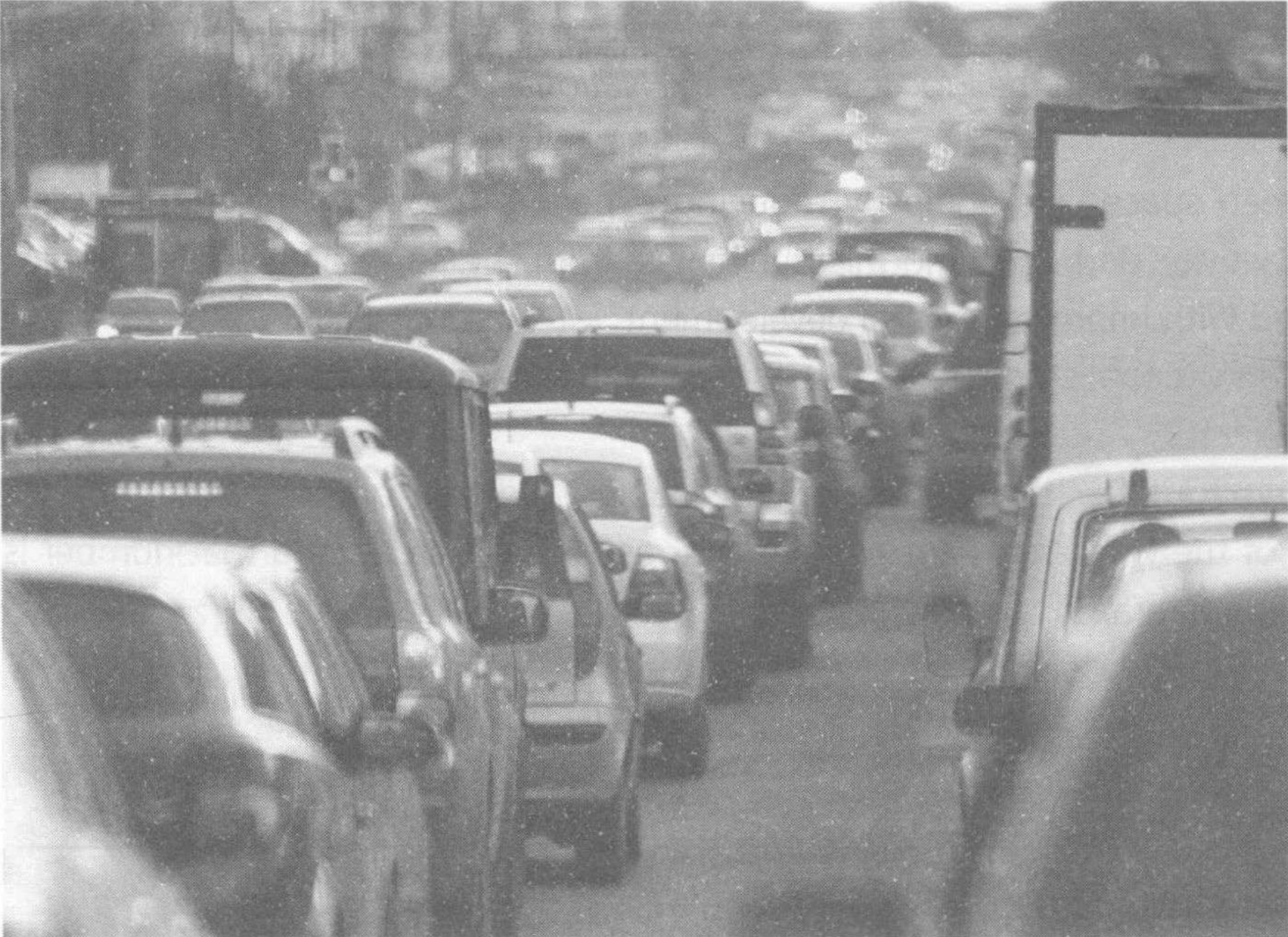
Before Reading
Discuss the following questions.
- What do you usually associate traffic jams with?
- What can be done to reduce traffic jams?
How Traffic Jams Decentralize Cities
Sarah Fecht
1 Most of the cities that exist today originally grew from an important marketplace or town square. Over time, they developed multiple centers where people could go to work, shop and play – in fact, no major world city has just a single center anymore. So, what governs the transition of a city from monocentric to polycentric? Economists have suggested polycentrism is driven by business agglomeration – the idea that companies are more successful when they are clustered. But physicist Marc Barthelemy of the Institute for Theoretical Physics in France says that is only part of the story.
2 In a new paper in Physical Review Letters, Barthelemy and his colleague, Remi Louf, have constructed a mathematical model to explain how cities and their surrounding suburbs evolve to be polycentric. Their findings suggest that population size and automobile traffic congestion play large roles in driving the creation of alternative hot spots, even in small to medium-sized cities. “It’s an interplay between
how attractive the place is, and how much time it takes to go there," he says. At first everyone goes to the city center, but as the city becomes increasingly crowded it becomes more difficult to get there. Eventually subcenters spring up toward the city's outskirts, providing more convenient locations for residents to work and shop. Cities with accommodating transportation networks remain centralized longer, but once population density passes a certain threshold, cities inevitably become polycentric, Barthelemy says.
3 It's a simple model – for instance, it does not account for zoning restrictions or for the fact that some cities, such as London, emerged as polycentric entities hundreds of years ago when several smaller villages consolidated – but it is still a useful model for exploring polycentricity, says Michael Batty, an urban planner at University College London, who wasn't involved in the study. “Although it is a major simplification of the real world, it has enough elements to make it work, and the dynamics they produce are interesting and plausible.”
4 David Levinson, a transportation engineer at the University of Minnesota, says it is not altogether surprising to find a relationship between population size and the number of urban subcenters. A group of economists made that assumption a few decades ago. Barthelemy counters that the economic models were “fuzzy” and untested. “After 20 pages of calculation, they don’t have a prediction and they don’t test their model,” Barthelemy says. “We can test our results against data.”
5 To test the prediction that the number of subcenters scales with population, the researchers used employment data across 9,000 US cities and towns. “If you know where people are working, you can see these activity centers,” Barthelemy says. The data showed that as a city’s population increases, so does the number of subcenters. But the two do not scale linearly – if a population grows to 10 times its original size, the number of centers is multiplied by five, on average. Barthelemy says he expects the pattern to hold across cities in other countries of the world as well.
6 Having a clearer understanding of the evolution of metropolitan polycentricity could prove useful, Levinson says, especially considering that two thirds of the world's population is expected to be urban by the year 2050. "There's a lot of urbanization left to happen," Levinson says. "If planners imagine a city to take a particular form, but that's not the way the city wants to behave, we'll be making unwise investments."
7 The authors are still fine-tuning their model. Future versions will likely include other modes of transportation, such as public transportation, which would be expected to slow the appearance of new centers of activity.
8 Barthelemy says the model could also come in handy for estimating traffic delays, gas consumption and carbon dioxide emissions, so that urban planners and policy makers can better understand how those different factors evolve as a city grows. “I think that this opens up the path to some really quantitative insights about cities,” he says. “We can take simple mechanisms, simple ingredients, and in the end predict how important properties are scaling with population.”
(673 words)
decentralize $ ^{*} $/di:'sentrəlaiz/ v. move parts of a government, organization, etc. from a central place to several different smaller ones (使)(政府、组织等的部门)分散
originally /əˈrɪdʒənəlɪ/ ad. in the beginning, before other things happened 原先;最早;最初
marketplace /'mɑːkɪtpleɪs/ n. an open area in a town where a market is held 集市;市场
transition $ ^{\star} $/træn'zɪʃən/ n. the process or a period of changing from one state or condition to another 过渡;转变;变迁
monocentric/monəʊ'sentrik/ a. 一个中心的
polycentric/pɒlɪˈsentrik/ a. 多中心的
polycentrism /,pɒlɪˈsentrizəm/ n. 多中心主义;多中心型
agglomeration /əˌɡlɒməˈreɪʃən/ n. the action or state of collecting things and forming them into a mass or group 聚集;聚结
cluster $ ^{\star} $/'kl $ \underset{\cdot}{a} $stə(r)/ v. come together in a small group or groups 群聚;聚集
automobile /'ɔːtəməʊbiːl/ n. a vehicle used for carrying passengers on streets and roads; car汽车
congestion /kənˈdʒestʃən/ n. the state of being
crowded and full of traffic (交通)拥塞;
塞车
creation $ ^{A} $ /kriː'eɪʃən/ n. the act or process of making sth. that is new 创造;创建
interplay /'ɪntəpleɪ/ n. the way in which two people or things affect each other 相互作用;相互影响
subcenter /'sʌbˌsentə(r)/ n. 次要中心;(商业等的)次中心区
spring up suddenly appear or start to exist 迅速涌现;迅速产生
outskirt $ ^{\triangle} $/'autsk3:t/ n. a part of the city far removed from the center 市郊;郊区
accommodating $ ^{\star\textcircled{A}} $/ə'kɒmədeɪtɪŋ/ a. helpful and easy to work with 帮助的;与人方便的
centralize /'sentrəlaɪz/ v. 作为……的中心;使处于中心
density /'densəti/ n. the degree to which an area is filled with people or things 密度
threshold $ ^{\star} $/θreshould/ n. the level at which sth. starts to happen or have an effect 界;起始点
inevitably $ ^{A} $ /ɪnˈevɪtəblɪ/ ad. in a way that cannot be avoided or prevented from happening 不可避免地;必然发生地
account for be the cause or origin of 是……的原因
zoning /ˈzəʊnɪŋ/ n. (城市规划中分成工厂区、住宅区等的)分区制
emerge $ ^{A} $ /ɪˈmɜːdʒ/ v. start to exist; appear or become known 显现;显露
entity $ ^{\star A} $ /'entəti/ n. sth. that has a single separate and independent existence 独立存在物;统一实体
consolidate $ ^{*} $/kən'splɪdert/ v. join things together into one; be joined into one (使)结成一体;合并
polycentricity/,polisen'trisəti/ n. 多中心;多中心体制
simplification $ ^{*} $ /ˌsimplɪfɪˈkeɪʃən/ n. the action or process of making sth. plainer, easier, or less full of detail 简化
element $ ^{A} $/'elimənt/ n. a necessary or typical part of sth. 要素;基本部分;典型部分
dynamic $ ^{A} $ /dai'næmik/ n. a force that produces movement or changes in sth. else 动力;推动变化的力量
plausible /'plɔːzəbl/ a. (of a statement, argument, etc.) seeming to be true or reasonable (论点等) 有理的;(说法等)貌似真实的
counter /'kauntə(r)/ v. reply to sb. by trying to prove that what they said is not true 反驳;驳斥
fuzzy /ˈfʌzɪ/ a. confused and not expressed
clearly 糊涂的;含混不清的
untested /ʌn'testɪd/ a. not tested; of unknown quality or value 未经试验(或考验)的
calculation $ ^{*} $/,kælkju'leɪʃən/ n. a process or result of working sth. out mathematically 计算
scale/skeil/ v.(按比例)调节
linearly $ ^{*} $/'lɪnɪəlɪ/ ad. in a way that goes from one thing to the next in a direct and logical mode(进展)直线式地
on average in most cases; usually 大多情况下;
通常;平均
evolution $ ^{A} $ /,i:və'lu:ʃən/ n. a process of slow change and development 演变;发展;渐进
metropolitan $ ^{\star} $ /ˌmetrəˈpɒlɪtən/ a. connected with a large or capital city 大城市的;大都会的
urbanization /ˌɜːbənɪˈzeɪʃn/ n. the process by which towns and cities are formed and become larger as more and more people begin living and working in central areas 城市化
fine-tune /'faɪn'tjuːn/ v. make very small changes
to sth. so that it is as good as it can possibly be 对……微调
come in handy be useful in a particular situation
派得上用处
carbon dioxide /ˈkɑːbən daɪˈɒksɪd/ 二氧化碳
quantitative $ ^{*} $/'kwɒntɪtətɪv/ a. connected with the amount or number of sth. rather than with how good it is 数量的;量化的;定量的
insight $ ^{A} $ /'insait/ n. an understanding of the true nature of sth. 洞悉;深入了解
mechanism $ ^{A} $ /'mekənizəm/ n. a process or system that is used to produce a particular result 方法;机制
ingredient/m'gri:djənt/ n. a quality or characteristic that makes sth. possible (构成的)因素;要素
property /'prɒpəti/ n.. a quality or characteristic that sth. has 性质;特性
Proper Names
Sarah Fecht /'seərə feft/ 萨拉·费什特
Marc Barthelemy / mark baːteləmɪ/ 马可·巴特勒米
Physical Review Letters 《物理评论快报》(世界著名的物理学顶级学术周刊)
Remi Louf/remi luf/雷米·卢夫
Michael Batty /'maikəlˈbætɪ/ 迈克尔·巴蒂
David Levinson /'dɛrɪvɪd ˈlevɪnsən/ 戴维·莱文森
Minnesota /, mini'səutə/ 明尼苏达州(美国州名)
Global Reading
- Skim the text to find the thesis statement. Is it, as usual, in the first paragraph?
Does the last paragraph repeat the thesis statement? What is it mainly about?
- Skim the text and circle the right answer in each of the following sentences.
- The text discusses rural / urban development.
- It identifies that most cities now are monocentric / polycentric.
- It discusses a model / a research.
- It emphasizes the relationship between population size / traffic jams and the number of city centers.
Close Reading
- Study the reading skill in the box and work on the tasks below.
Reading Skill — Annotating (标记) a text
Annotating a text is a useful revision and research technique. It helps you understand better what you read and assists you in recognizing the organization of the text, identifying key information, making a summary and highlighting ideas that need further exploration. This skill is generally applied in close reading.
The following are several ways to annotate a text.
Underline key phrases or facts in the text.
Use signs like lines or arrows to connect your notes to the relevant part in the text.
After you read each paragraph, write a few words in the margin to describe the organization, the topic or the main idea of the paragraph.
If there is any question you have after reading the paragraph, write them down.
Later, you can discuss these questions with classmates / teachers or look for answers elsewhere.
Remember, how you annotate a text is completely flexible. You'd better find ways most effective for yourself.
- Look at the annotations in the left margin, within the text and in the right margin of Para. 1. Answer the questions below.
| Left margin | Text | Right margin |
|---|---|---|
| Development of cities $ \rightarrow $ From one center to multiple centers Question for study $ \rightarrow $ One answer $ \rightarrow $ Not just the above answer | Most of the cities that exist today originally grew from an important marketplace or town square. Over time, they developed multiple centers where people could go to work, shop and play — in fact, no major world city has just a single center anymore. So, what governs the transition of a city from monocentric to polycentric? Economists have suggested polycentrism is driven by business agglomeration — the idea that companies are more successful when they are clustered. But physicist Marc Barthelemy of the Institute for Theoretical Physics in France says that is only part of the story. | Introduction of the text Topic: city centers Purpose of the text: to find out what governs the change from monocentric to polycentric |
a) Do you think the annotations identify key information in the paragraph?
b) Do the annotations make the content and organization of the paragraph clearer?
c) Can you understand the paragraph using the annotations alone?
d) Do you have any questions about the ideas in this paragraph?
e) In what other ways will you annotate the paragraph?
- Annotate Para. 2, using the above questions a–c to evaluate whether your annotations are effective or not.
- Answer the following questions.
- What TWO factors do Barthelemy and his team find that have changed a city from monocentric to polycentric?
- What advantage does Barthelemy's model have over old models?
- Does the model show that the number of city centers grows in proportion to (与……成正比例) the population size?
- Is the model useful for city planning?
Critical Thinking
Discuss the following questions. You may need to search for necessary information on the Internet.
- What is a satellite city?
- Is it a good idea to develop satellite cities? Why or why not?
Language Enhancement
- Study the polysemous words in the following boxes and choose the correct meaning for the boldfaced word in each sentence.
emerge
a. appear or come out from somewhere
b. become known after being hidden or secret
c. come out of a difficult experience
$ \underline{ } $1) The facts emerged after a lengthy investigation.
$ \underline{2} $ The sun emerged from behind the clouds.
$ \underline{3} $ She emerged from the divorce a stronger person.
counter
a. a long flat surface over which goods are sold or business is done in a shop, bank, etc.
b. an electronic device for counting sth.
c. do sth. in order to prevent sth. bad from happening or to reduce its bad effects
d. say sth. in order to try to prove what sb. said is not true
___4) When they blamed him for the collapse of the bridge, he countered that his warnings about the bridge had been ignored.
___5) Intelligent as they may be, whales have not found a way to counter the attacks of their deadliest enemy: human beings.
___6) The clerk behind the counter just looked at the man but did not tell him where the men's department was.
___ 7) Primary school students are not allowed to use counters in maths class.
evolve
a. develop gradually, esp. from a simple to a more complicated or advanced form
b. develop over time, often many generations, into forms that are better adapted to survive changes in environment
___ 8) Many scientists now believe that birds evolved from dinosaurs.
___ 9) The city's importance as a financial centre has evolved slowly.
mechanism
a. a set of moving parts in a machine that performs a task
b. a method or a system for achieving sth.
c. a system of parts in a living thing that together perform a particular function
— 10) In the modern environment, we aren't exposed to natural risks in the same way. But the underlying neural mechanisms haven't gone anywhere. (Para. 2, Reading 2, Unit 5)
__ 11) The peace plan includes a mechanism to share power between all four parties.
___ 12) Unfortunately, the locking mechanism on the door is broken.
property
a. sth. that is owned by a person, business, etc.
b. a piece of land often with buildings on it that is owned by a person, business, etc.
c. a special quality or characteristic of sth.
___ 13) The hotel is not responsible for any loss or damage to guests' personal property.
___ 14) We tested the chemical and biological properties of the samples.
___ 15) Homeowners who want to sell their homes without a real estate agent can now advertise their residential properties free on the Internet.
2. Complete the sentences with phrases from Reading 2. Their meanings and paragraph numbers have been given in brackets
- In metropolitan areas, luxury buildings with tiny flats, gyms and easy access to urban pleasures are _____ for young and aspiring professionals. (appearing suddenly; Para. 2)
- These new features like high-resolution touch screen and fast processor _____ the computer's higher price. (are the cause of; Para. 3)
- _____, those who were larger around the middle were more likely to have diabetes than those of the same age with smaller waistlines. (Generally; Para. 5)
- Listening carefully and remembering some unique information about each person will _____ if you meet them again. (be useful in a particular situation; Para. 8)
- The Internet has upended conventional business models and _____ a whole new world of information to people all over the globe. (made available; Para. 8)
3. Study the word building skill in the box and work on the tasks below
Word Building Skill — Back formation (II): adjective → verb; compound noun → verb
Even though many English words are formed through back-formation, new coinages (新造的词汇) may sound strange, and are often used for humorous effect. For example, "gruntled" (高兴的) (from "disgruntled") is used only in humorous contexts.
Back-formations frequently begin in colloquial use and only gradually become accepted. For example, "enthuse" (from "enthusiasm") is gaining popularity, though it is still generally considered nonstandard.
Verbs can be back-formed from adjectives: "laze" (懒散度日) from "lazy", "drowse" (打瞌睡) from "drowsy" (昏昏欲睡的), and from compound nouns: "babysit" from "babysitter", "daydream" from "daydreamer".
A. Write down the verbs that are back-formed from compound nouns in the following table, and put down their Chinese meanings. The first one has been given as an example. Consult the dictionary when necessary.
| Compound noun | Back-formed verb | Chinese meaning of verb |
| 1) housekeeper | housekeep | 主持家务;持家 |
| 2) gate-crasher | ||
| 3) proofreader | ||
| 4) troubleshooter | ||
| 5) stage-manager | ||
| 6) ghost-writer | ||
| 7) air-conditioning | ||
| 8) lip-reading | ||
| 9) soft-landing | ||
| 10) free-association |
B. Complete the following sentences with the proper verbs from the ten back-formed verbs above. Change the form where necessary.
- The clients were most impressed with the way she _____ the whole presentation.
- Most of these tools allow you to _____ a performance problem quickly and capture data for analysis.
- One of the constant debates about social media ethics is around _____, which has damaged the credibility and the image of media itself.
- When the psychiatrist (精神科医生) advised him to relax, the patient went into an unconscious state of mind and began to _____.
- As an editor, I have to _____ numerous articles. This is a fairly repetitive job, so it is easy to overlook mistakes.
- Study the translating skill in the box and work on the task below.
Translating Skill — Translating passive constructions (II): as passive constructions
Some passive constructions can be translated into passive constructions in Chinese. Passive markers (被动标记) in Chinese include “被”,“遭”,“受”,“为”,“由”,“让”,“给”, etc.
Source Text: Air pollution has been shown to have neurotoxic effects ... (Para. 3, Reading 1)
Translation: 空气污染已被发现对神经具有毒害作用……
Source Text: In this world, we'll experience a reality forged from the physical world around us and the digital world we create to exist on top of it. (Para. 4, Reading 1, Unit 2)
Translation: 在这样一个世界里,我们将体验到一个由身边的物质世界以及在此基础上创造的数字世界组成的现实。
Translate into Chinese the following passage that serves as a summary of Reading 2, paying special attention to passive constructions.
No major world city has just a single center anymore. So, what governs the transition of a city from monocentric to polycentric?
Economists have suggested polycentrism is driven by business agglomeration — the idea that companies are more successful when they are clustered. But in a new paper, researchers have constructed a mathematical model to explain how cities and their surrounding suburbs evolve to be polycentric. Their findings suggest that population size and automobile traffic congestion play large roles in driving the creation of alternative hot spots, even in small- to medium-size cities.
It is an interplay between how attractive the place is, and how much time it takes to go there. At first everyone goes to the city center, but as the city becomes increasingly crowded it becomes more difficult to get there. Eventually subcenters spring up toward the city's outskirts, providing more convenient locations for residents to work and shop. Cities with accommodating transportation networks remain centralized longer, but cities inevitably become polycentric once population density passes a certain threshold.
Translation:
Part II LISTENING AND VIEWING
Listening:
Brilliant Designs to Fit More People in Every City (Part I)
Before Listening
Discuss the following questions.
- Where do you want to live, in the city or in the countryside? Why?
- Can you list some serious problems in cities, especially in metropolises (大都市)?
New Words and Expressions
assembly $ ^{A} $ /ə'sembli/ n. the process of putting together the parts of sth. 装配;组装
sewer /'sjʊə(r)/ n. 污水管;下水道
unchecked /ʌn'tʃekt/ a. not limited or controlled 不加约束的;不受限制的
residential $ ^{★A} $ /ˌrezɪˈdenʃəl/ a. 适合居住的;住宅的
functional $ ^{A} $ /'fʌŋkʃənəl/ a. practical and useful; with little or no decoration 实用的
sprawl $ ^{A} $ /sprɔːl/ n. a large area covered with buildings that spreads from the city into the countryside in an ugly way (城市)杂乱无序拓展的地区
infrastructure $ ^{\triangle\triangle} $/'infra,str $ \Delta $kt $ \delta $(r)/ n. (国家或机构的)基础设施;基础建设(如道路、学校、电厂、交通、通讯系统等)
escalate $ ^{\triangle} $ /'eskəleɪt/ v. (cause to) become greater, worse, more serious, etc. (使)逐步扩大;不断恶化;加剧
Listening Comprehension
Study the listening skill in the box and work on the tasks below.
Listening Skill — Understanding the organization of a lecture (I): chronological order
While listening to a lecture with a great amount of information, you are supposed to identify how the information is organized in a clear and logical way. For instance, when a speaker wants to introduce the process or the development of a topic, the information will be presented in chronological order. You should be clear-minded about the sequential organization of the topic.
1. Listen to the lecture and focus on the chronological order of the evolution of cities. Put the following things (a–h) mentioned in the lecture into the different historical periods of cities
| a) separated functions | b) new cities | c) centralized energy production |
| d) assembly plants | e) little villages | f) rail networks |
| g) infrastructure | h) a pot of water |
A brief history of cities:
- The first period: _____
- The second period (industrialization): _____
- The third period (sprawl):_____
2. Listen again and decide whether the following statements are true (T) or false (F)
☐ 1) The size of an ancient village was decided by the distance to the source of water.
- Like production and health care, centralization is a typical feature in the era of industrialization.
☐ 3) The United States will rebuild the entire infrastructure in the next 15 years.
☐ 4) According to the speaker, cities use 75 percent of energy.
Viewing: Brilliant Designs to Fit More People in Every City (Part II)
Before Viewing
Discuss the following questions.
- Do you know about “smart home”? Can you imagine controlling your home appliances and devices with your cellphone?
- Do you know about "coworking" (联合办公)? Would you like to share working space with other people?
New Words and Expressions
implementation $ ^{A} $ /ˌɪmplɪmenˈteɪʃən/ n. the act of accomplishing some aim or executing some order 实现;实施
robotic /rəʊˈbɒtɪk/ a. connected with robots 机器人的
integrate $ ^{A} $/'intigreit/ v. join to sth. else so as to form a whole 使成为一体;使结合
infill /'ɪnfiːl/ n. the material used to fill in a space or a hole 填充物;空隙填料
tunable /'tjʊnəbl/ a. 可调的
24-bit LED 24位发光二极管
fixture $ ^{\star} $ / fikst $ \underline{\text{s}} $e(r) / n. 固定装置
full spectrum $ ^{*} $/'spektrəm/ 全光谱
state-of-the-art /'steɪtəvðəˈɑːt/ a. 应用最先进技术(或方法)的;最先进的
embed $ ^{*} $/im'bed/ v. fix sth. firmly into a substance
or solid object 把……牢牢地嵌入
personal bubble 私密空间
collaboration $ ^{\star} $ /kəˌlæbəˈreɪʃən/ n. the action of working together; cooperation 合作;协作
fab /fæb/ a. extremely good 极好的
mobility /məʊˈbɪləti/ n. the quality of being able to move or be moved 流动性
dramatically $ ^{A} $/drəˈmætɪkəli/ ad. to a very noticeable degree and often with surprising suddenness 显著地
livability /lɪvəˈbɪləti/ n. (住宅、环境的)宜居性;适居性
laneway /'leɪnweɪ/ n. a narrow street or alley running behind urban buildings 巷道;窄巷
imperative $ ^{*} $ /ɪmˈperətɪv/ n. sth. that must be done 必须做的事;必要的事
Viewing Comprehension
Study the listening skill in the box and work on the tasks below.
Listening Skill — Understanding the organization of a lecture (II): categorization
If a lecture covers a wide range of information, it will be grouped or categorized into different sections by a sophisticated speaker. In this process, different ideas and objects are recognized, differentiated and understood in an apparent way. The usual technique that the speaker uses is signposting language (see Listening Skills in Units 5 and 6) like firstly, then, lastly, etc. Sometimes, this categorization is not obvious enough, and you should try to classify the complex information yourself and take notes.
- As in the following categorized notes, the speaker mentions three aspects of changes that technology can bring us. Watch the video clip and fill in the blanks with the exact words you hear.
| A convertible home | a) robotic walls that can 1) ________ space from exercise to a workplaceb) the table folds out to fit 2) ________ in otherwise aconventional one-bedroom |
| A smart home | a) 3) ________ that understand where people are and what they're doingb) tunable LED lighting saves maybe 30, 40 percent in 4) ________ |
| Shared spaces | a) shared spaces for interaction and 5) ________b) shared desks at the Cambridge Innovation Centerc) a shared shop and shared fab lab, shared quiet spaces, electronics spaces, 6) ________ in Finland |
- Watch again and choose the right answers.
- According to the speaker, who are trying to realize the idea of a convertible home?
a) Homeowners.
b) Guests.
c) Architects.
- Which of the following is most effective if we want to get data about people moving in a room?
a) Cameras.
b) Wireless sensors.
c) Blue light.
- What can we learn from cities like Melbourne?
a) How to improve the livability and creativity of cities.
b) How to reduce consumption.
c) How to share work places.
Critical Thinking
Discuss the following questions.
- What is a "smart city"?
- If you were a city planner, how would you design new and sustainable living space for people in an over-crowded city?
Part III SPEAKING
After learning how to present the introduction (Unit 6) and the main body (Unit 7), you are going to learn how to conclude a presentation in this unit. The concluding part is your final chance to leave a deep impression on the audience and wrap up a successful speech. So you need to attach great importance to the ending, carefully thinking about what to say and how to deliver it effectively.
Concluding a presentation
If a strong opening arouses interest on the part of the audience and leads them to the key points of your topic, a strong closing should recap (简要概括) these points and try to leave a lasting impression on your audience. Normally the conclusion of a presentation has four components: a summary of the main points, an overall conclusion, an acknowledgement (致谢) to the audience and an invitation of questions.
• Summarizing the main points
The summary part serves as a quick and concise review of the important ideas covered in the presentation. You can restate these ideas in a slightly different way the second time, or repeat some key words or phrases to remind the audience what you have told them. Before summarizing, first use signposting language to indicate that you are reaching the end of the presentation and then use such language to lead to your summary:
That is my last point. Now I'd like to close my talk by...
Well, this brings me to the end of my presentation.
Finally, I'd like to recap what I've said...
In summary / To sum up / To wrap up.
At this stage I want to summarize / go over the main points ..
• Drawing an overall conclusion
An overall conclusion is different from a summary. While the summary refers back to what has been covered, the overall conclusion develops the main ideas and looks forward. It could show the significance of your ideas / research findings, give comments, or make recommendations (提议) and suggestions. Besides, some presenters like drawing a conclusion by citing quotations from famous people or providing thought-provoking questions. The use of any strategy is intended to leave the audience reflecting (深思) on the presentation and feeling impressed. For drawing the conclusion, the following language patterns can be useful:
In conclusion, I'd like to.
I hope you've found the presentation useful..
I hope this has provided you with some understanding about (the topic) ...
In the light of what we've discussed today, I suggest that.
Finally, I want to quote from ...
We may continue to think about these questions in the end...
Acknowledging the audience
In the opening session, the presenter tries to establish a good relationship with the audience. When the presentation comes to an end, it is necessary to express your gratitude for their attendance and cooperation. Even a simple Thank you would make the audience feel being recognized. In the meantime, the acknowledgement indicates that this is the real ending of a presentation, at the moment of which full applause should be given to the presenter.
• Inviting questions
In formal presentations at seminars and conferences, there is often a brief Question & Answer (Q & A) session at the very end, providing an opportunity for the presenter to interact with the audience. The presenter can make use of the following language to directly ask for questions:
We have ... minutes left for questions and answers.
I'm wondering if there are any questions for me.
Now I'm ready for questions.
Do not hesitate to ask me any questions.
I'd be delighted to answer your questions.
I hope you'd give me your valuable comments and suggestions.
In fact, how to deal with the questions properly is an important skill that a good presenter has to master. Before the presentation, you can predict what questions will be posed and rehearse answering them. When a question is asked, you may paraphrase the question first. On the one hand, it shows your understanding of the question and offers help to those listeners who fail to hear or understand it clearly. On the other hand, it provides you with more time to think about the answer. If you do not know the answer, admit it frankly. Throughout the whole Q & A session, you should behave politely and employ the strategies to agree or disagree, to clarify or confirm, to express and support an opinion (see Speaking Skills in Units 1–4.)
- Work in a group. Read the following sentences and identify which can be used in the concluding part of a presentation.
- Well, let's move on to the next point.
- I'm delighted to have the opportunity to report my research today.
- To sum up, we have elaborated four possible solutions to the problem of traffic congestion.
- I hope this has given you a general understanding of what is urban planning.
- An example of this can be found in the city planning of Venice.
- Can you see the words on this slide clearly?
- Now I'm ready to answer your questions. Would you please raise your hands?
- I'm going to divide my talk into four parts.
- Thank you so much for your attention tonight.
- In this part I'm going to explain how to be a good city planner.
2. Study the speaking skills and complete the following closing part of a presentation with the expressions in the box. You may need to capitalize the first letter of some expressions when filling in the blanks
| briefly summarize | I hope that you have found several possible solutions | if you have any questions talked about |
| the biggest reason | ||
| thank you so much |
In the end, I'd like to 1) _____ what have been discussed today. First, we 2) _____ the situation that in recent years more cities have become overcrowded, especially during rush hours. Then we tried to explore major causes for this situation. 3) _____ is that too many cars are produced and owned. Finally, 4) _____ have been proposed, such as developing public transportation and encouraging sharing bicycles or cars. 5) _____ the presentation helpful and that everyone has realized one thing: city planning should always "put people before automobiles". 6) _____ for your attention. (Wait for applause from the audience). I think we still have some time for a few questions. Please raise your hand to let me know 7) _____
3. Give a short presentation on the topic "If I Were the Designer of Our Campus". Use the following guidelines to help your presentation:
Think of how you are going to design your campus to make it more beautiful or more comfortable for living and studying.
Use various language patterns for the different parts of your presentation.
Be a confident presenter and avoid undesirable manners.
Part IV WRITING
If you have made use of one of the three ways (i.e. quoting, paraphrasing and summarizing, Unit 7) to cite others' work or ideas, it is necessary to immediately show your credit to the source by referencing. Providing brief information about a source in the essay, usually next to a quotation, paraphrase or summary, is known as in-text referencing. End-text referencing is to provide detailed and complete information about the source at the end of your essay. You are going to learn about these two types of referencing in this unit.
Avoiding plagiarism (II)
In order to avoid plagiarism, you have to acknowledge the source whenever you cite others' words or ideas in your writing. The source can be a book, an article, a government document, a website, etc. The practice of acknowledging the source is called referencing. There are different systems / conventions of referencing in the academic publishing all over the world. As shown in the following table, each discipline (学科) has their preferred referencing style.
| Referencing Style | Disciplines |
| Modern Language Association (MLA) style | Used in language, literature and humanities. |
| American Psychological Association (APA) style | Used in social sciences, education, engineering and business. |
| Chicago style | Used in history, economics and social sciences. |
| Harvard style | Used in physics and natural sciences. |
| American Anthropology Association (AAA) style | Used in anthropology and ethnography. |
| Council of Science Editors (CSE) style | Used in biological sciences. |
| American Medical Association style | Used in biomedical sciences, medicine and nursing. |
Therefore, you need to get acquainted with the citation and referencing system often used in your discipline. Always consult your instructor about which referencing style he / she requires when doing the written assignment. In this unit, you will learn about the basic rules or guidelines of referencing published by APA, or say APA style (one of the most widely used documentation systems in the world). You may visit its official website $ \underline{\text{http://www.apastyle.org/}} $ for more specific information.
In-text referencing
In academic writing, if you paraphrase or summarize another author's words, you need to mention his / her last name (i.e. family name) and the year of publication before or after the cited information according to the different focus. When you focus on the authority of the source information, you should use the original author's name as the subject of the sentence, with a reporting verb introducing the cited information (shown in Example 1). If the focus is the cited information, the author's name and the year are placed in brackets after the paraphrase or summary (i.e. parenthetical (括号的) format), as shown in the following Example 2.
Example 1. Walker (2003) maintains that there are commercial and political reasons for high-density living in mega and compact cities.
Example 2. There are commercial and political reasons for high-density living in mega and compact cities (Walker, 2003).
Sometimes there is more than one author. The rules of in-text referencing in such cases are more complicated (as illustrated in the table below), so you need to pay special attention to the details when referencing.
| First in-text reference | Subsequent in-text reference | Parenthetical format, first in-text reference | Parenthetical format, subsequent in-text reference | |
| One work by two authors | Walker and Allen (2004) | Walker and Allen (2004) | (Walker & Allen, 2004) | (Walker & Allen, 2004) |
| One work by three authors | Bradley, Ramirez, and Soo (1999) | Bradley et al. (1999) | (Bradley, Ramirez, & Soo, 1999) | (Bradley et al., 1999) |
If you directly quote words or sentences from a source, besides giving the author's name and the year, you also need to provide the page number(s) indicating the exact place of the quoted words in the original work (see Examples 3 & 4). Note that "p." / "pp." is short for the word "page". If one page is involved, use "p." . If two or more pages are involved, use "pp." . Example 3. Francisco (2003, p. 12) explained that the objective of their program was to "provide
- Francisco (2003, p. 12) explained that the objective of their program was to "provide examples of correction of urban mistakes" made in past urban development.
Example 4. The objective of this program was to "provide examples of correction of urban mistakes" made in past urban development (Francisco, 2003, p. 12).
End-text referencing
For each in-text reference, there should be a matching entry (条目) in the Reference (参考书目) list placed at the end of the writing. For instance, if you have paraphrased from Smith (1984) in the text, you need to provide detailed information about this source at the end of your text like this:
Smith, W. S. (1984). Mass transport for high-rise high-density living. Journal of Transportation Engineering, 110, 521–535.
Page numbers
Generally speaking, for all types of sources, whether it is a book, a journal article or a website, you need to provide information on four basic components in the end-text references: author name(s), publication date / year, title of the work, publication information. The following examples illustrate the referencing format of different sources:
| Type of source | Format of end-text referencing |
| A book | Hall, P. (2000). Cities of tomorrow: an intellectual history of urban planning and design in the twentieth century. Oxford: Blackwell. |
| A journal article | Oliveira, V., & Pinho, P. (2008). Urban form and planning in Lisbon and Oporto. Planning Perspectives, 23, 81–105. |
| A newspaper article (printed) | Schwartz, J. (1993, September 30). Obesity affects economic, social status. The Washington Post, pp. A1, A4. |
| A newspaper article (online) | Laignee, B. (2017, August 30). “Unesco-cide”: does world heritage status do cities more harm than good? The Guardian. Retrieved from https://www.theguardian.com |
| An online article without author | Toyota to go green in moving cars by sea. (2017, September 6). Retrieved from https://asia.nikkei.com/Business/Companies/Toyota-to-go-green-in-moving-cars-by-sea |
Finally, all the entries in the Reference list have to be arranged alphabetically (按字母顺序排列地) according to the first author's surname.
- Read the following examples of in-text references that are not correct according to the APA style. Correct the mistakes.
- High-density compact cities suffer from urban landmass with high thermal capacity and urban heat island intensity. (Oke, 1973)
- City suburbs are often described as “disorderly peripheries” that are “ugly and melancholic, built to house people, but where all that is needed to inhabit and live is missing” (Ferreira, 2000: 4).
- Roth observes that many mega, high-density, and compact cities are located in tropical and subtropical Southeast Asia, which have hot and humid climatic conditions (2007).
- A renowned Portuguese sociologist has examined traffic conditions in the Lisbon metropolitan area to illustrate the difficult living conditions in contemporary Portuguese cities (Barreto and Pontes, 2007).
- Apart from the impact to health, higher urban temperature also means higher energy consummation for air conditioning (Fung et al. 2006), thereby increasing energy use and $ CO_{2} $ emission.
- Match the following entries of end-text references (1–5) with the types of sources (a–e).
| a) A book | _ 1) McPhillips, D. (2017, September 5). Is conservation |
| b) A journal article | better than coal for the rural west? U.S. News. |
| c) A newspaper / magazine article (printed) | Retrieved from https://www.usnews.com/ |
| d) A newspaper / magazine article (online) | _ 2) Forester, J. (1989). Planning in the face of power. Berkeley, CA: University of California Press. |
| e) An online article without author | _ 3) Bastos, E. (2017, May). Where the wild things are in the suburbs. Reader's Digest. pp. 56-58. |
| _ 4) Greater London authority, 2011: the mayor's London plan. (2011). Retrieved from http://www.london.gov.uk/shaping-london/london-plan | |
| _ 5) Neuman, M. (2005). The compact city fallacy. Journal of Planning Education and Research, 25, 11-26. |
- Identify the different components in each entry of Task 2. The first one has been given as an example.
Last name Initial Date of publication Title of the article Title of the magazine
↑ ↑ ↑ ↑ ↑ ↑
- $ \underline{\text{McPhillips, D. (2017, September 5). Is conservation better than coal for the rural west? U.S. News}} $ Retrieved from $ \underline{\text{https://www.usnews.com/}} $
$ \downarrow $
Website address of the magazine
- $ \underline{\text{Forester, J.}} $ (1989). $ \underline{\text{Planning in the face of power}} $. $ \underline{\text{Berkeley, CA}} $: $ \underline{\text{University of California Press.}} $
$ \downarrow $ $ \downarrow $ $ \downarrow $ $ \downarrow $ $ \downarrow $
___ ___ ___ ___ ___
- $ \underline{\text{Bastos, E.}} $ (2017, May). $ \underline{\text{Where the wild things are in the suburbs.}} $ $ \underline{\text{Reader's Digest}} $. pp. 56 -58.
$ \underline{\text{↓}} $ $ \underline{\text{↓}} $ $ \underline{\text{↓}} $ $ \underline{\text{↓}} $ $ \underline{\text{↓}} $
- $ \underline{\text{Greater London authority, 2011: the mayor's London plan.}} $ (2011). Retrieved from http://www.london.gov.uk/shaping-london/london-plan
- Neuman, M. (2005). The compact city fallacy. Journal of Planning Education and Research, 25, 11–26.
↓↓↓
—— —— —— —— —— ——
- Learn from the following extract about how to use in-text and end-text references in academic writing. Then write a body paragraph for the essay entitled "Important Factors in Making a City Livable (宜居的)". Use the following guidelines to help your writing.
● List important factors that make a livable city, focus on one of them and develop a main idea.
This body paragraph should include a topic sentence, supporting sentences and / or a concluding sentence.
Cite at least one source.
Use correct formats of referencing.
This debate has highlighted a critical dilemma: on the one hand, urban sprawl is not desirable because of its negative environmental consequences, including the loss and degradation of landscape around the towns, but on the other hand, the lack of quality green space and overall poor environmental quality are major reasons for people wanting to move to suburbs and beyond, thus causing further urban sprawl (Beer et al., 2003; Pauleit, 2003). Therefore, as mentioned by Jim (2004), if green space is deprived, a compact city becomes the opposite of a green city.
References
Beer, A. R., Delshammar, T., & Schildwacht, P. (2003). A Changing understanding of the role of green space in high-density housing: A European perspective. Built Environment, 29, 132–143.
Jim, C. Y. (2004). Green-space preservation and allocation for sustainable greening of compact cities. Cities, 21, 311–320.
Pauleit, S. (2003). Perspectives on urban greenspace in Europe. Built Environment, 29, 89–93.
(Adapted from: Baycan-Levent, T. & Nijkamp, P. (2009). Planning and management of urban green spaces in Europe: comparative analysis. Journal of Urban Planning & Development, 135, 1–12.)