Unit 1 Food Science
Food Science
Lead-in
Discuss the following questions.
- What is your favorite food? Do you think it is healthy or not?
- Describe a typical meal that you eat every day.
- Can you cook? Do you prefer home cooking or eating out? Why?
- Are you concerned about food safety?
Reading 1
Are Potatoes Now a Cancer Risk?
Before Reading
Pick from the list two factors that you think are the most important when you choose food and explain to your partner.
a. price
e. taste
b. appearance
f. ingredients
c. freshness
g. cooking methods
d. packaging
h. place of origin
Are Potatoes Now a Cancer Risk?
Sam Wong
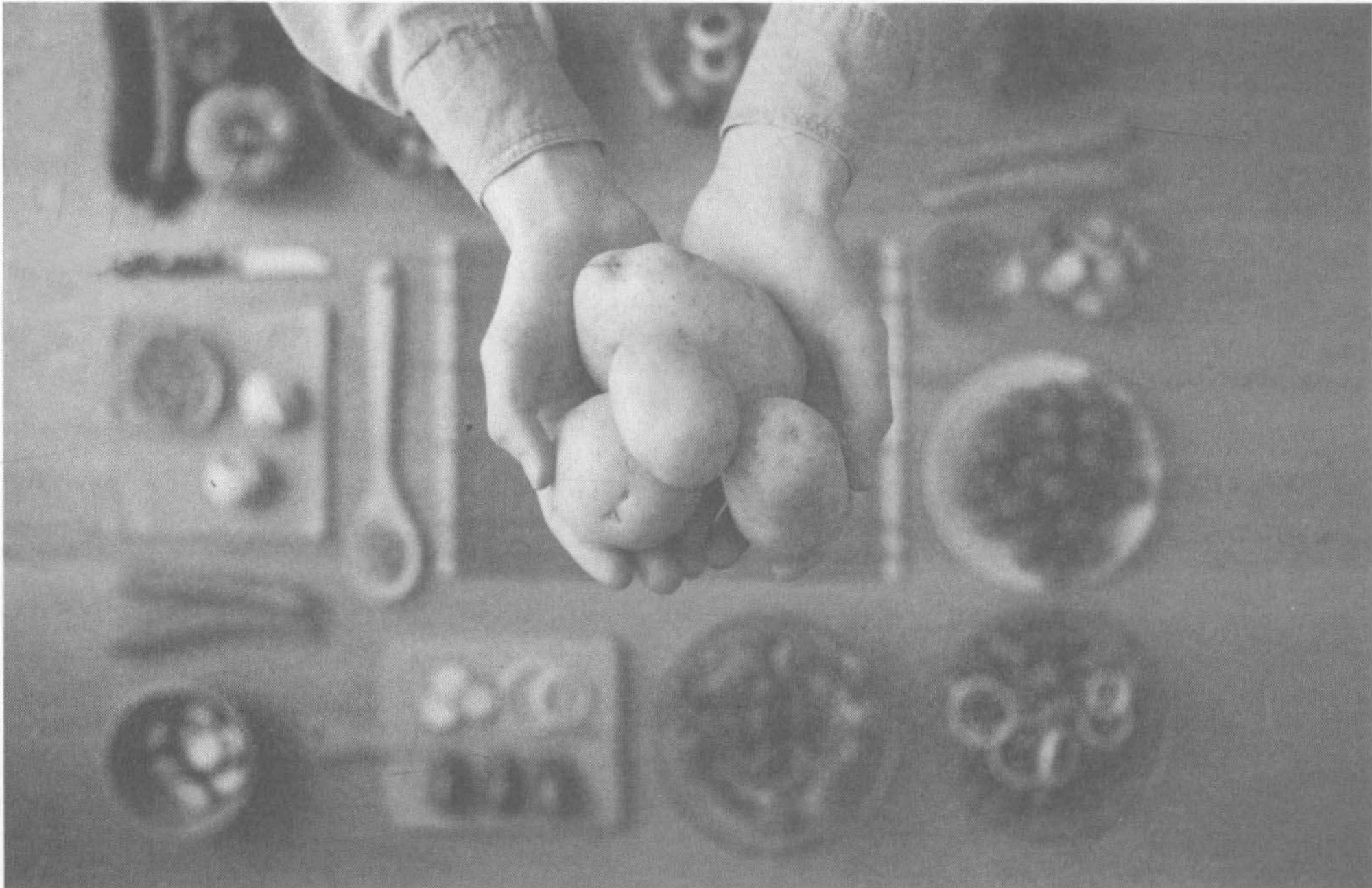
1 The UK Food Standards Agency (FSA) has launched a campaign warning of the cancer risk associated with cooking potatoes and other starchy foods at high temperatures. How worried should we be, and do we need to change the way we eat?
2 What's the problem?
In a word, acrylamide. This chemical is used in lots of industrial processes, including water purification, and to separate DNA molecules in experiments.
Acrylamide is also found in some foods.
3 Which foods contain acrylamide?
Acrylamide is made by something called the Maillard reaction, which browns cooked foods and gives them their pleasing flavor. As sugars and amino acids react together, they produce thousands of different chemicals. Particularly high levels of acrylamide are found in starchy foods, like potatoes and bread, when cooked at temperatures over $ 120^{\circ} $C. The chemical can also be present in breakfast cereals, biscuits and coffee.
4 Is acrylamide dangerous?
In the body, acrylamide is converted into another compound, which can bind to DNA and cause mutations. Animal studies clearly show that acrylamide causes all sorts of cancers, but it's hard to relate this to us.
5 "Although evidence from animal studies has shown that acrylamide in food could be linked to cancer, this link isn't clear and consistent in humans," says Emma Shields, at charity Cancer Research UK.
6 It's much harder to study the effects of acrylamide in people, but there's no reason to think that it couldn't damage human DNA too. However, other lifestyle factors carry much more defined cancer risks. "It's important to remember that there are many well-established factors like smoking, obesity and alcohol, which all have a big impact on the number of cancer cases in the UK," said Shields.
7 What should we do?
“To be on the safe side, people can reduce their exposure by following a normal healthy, balanced diet — which includes eating fewer high calorie foods like crisps, chips and biscuits, which are major sources of acrylamide,” says Shields.
8 And when frying, baking, toasting or roasting starchy foods, the FSA's advice is to "go for gold": aim for a golden yellow color or lighter.
9 But I like my roast potatoes brown and crispy!
10 Then you might do well to eat them less often. “It’s those kinds of trade-offs we’re encouraging people to just think about,” says Steve Wearne of the FSA. “We’re not saying to people to worry about the occasional meal that’s a bit overcooked. This is about managing risk across your whole lifetime.”
11 How else can we reduce the risk?
Don't keep raw potatoes in the fridge. At low temperatures, an enzyme breaks down the sugar sucrose into glucose and fructose, which can form acrylamide during cooking. Frozen food doesn't carry this particular risk, as sucrose doesn't get broken down at very low temperatures. You can also try blanching potatoes before frying. This removes half the sugar, resulting in lower levels of acrylamide.
12 In the future, safer potatoes may be available. Restaurants and the food industry are already being encouraged to use potato varieties that naturally produce less acrylamide. Now growers are looking to develop varieties that contain less asparagine, an amino acid that seems to be important for making the chemical.
本书生词黑正体表示“基础目标”的词汇;★表示“提高目标”的词汇;▲表示“发展目标”的词汇;⑨表示“学术词汇表(Academic Word List)”中的词汇;白正体表示超纲词汇。全书词汇的标注原则均遵照此体例,不另述。
launch /lɔːntʃ/ v. put into operation or set in motion 发动;发起
starchy /'stɑːtʃi/ a. like or full of starch 含淀粉的;淀粉似的
purification $ ^{\star} $ /,pjuərifi'keɪʃən/ n. the action or process of making pure 净化
DNA 脱氧核糖核酸(基因讯息的载体)
molecule/mplikju:l/n. 分子
reaction $ ^{A} $/ri'ækʃən/n. a chemical change that occurs when two or more substances combine to form a new substance 反应
Maillard /,meɪˈlɑːd/ reaction 美拉德反应(食品工业的一种非酶褐变,是还原糖类和氨基酸、蛋白质间的反应)
flavor /'fleɪvə(r)/ n. how food or drink tastes 味;味道
amino acid/əˈmiːnəʊ ˈæsɪd/ 氨基酸
cereal /'sɪərəl/ n. food made from grain, esp. one such as cornflakes that is eaten at breakfast in some countries (经加工的) 谷类食品 (尤指早餐时吃的玉米片等)
convert $ ^{A} $ /kən'vɜːt/ v. cause to change into another form, substance, or state, or from one purpose, system, etc., to another 使转变;使转化
compound $ ^{A} $ /'kɒmpaʊnd/ n. a substance created when the atoms of two or more chemical elements join together 化合物;复合物
bind/band/v. combine with (sth.) by chemical forces(使)结合
mutation /mju:'teɪʃən/ n.(生物的)突变;突变体
charity /'tʃærəti/ n. an organization for helping people in need 慈善机构
factor $ ^{A} $ /ˈfæktə(r)/ n. any of the forces, conditions, influences, etc., that act with others to bring about a result 因素
defined $ ^{A} $ /di'fand/ a. clearly described or marked
明确的;确定的
obesity $ ^{\star} $ /əʊˈbiːsəti/ n. the state of being very fat in an unhealthy way 过度肥胖
impact $ ^{A} $ /'impækt/ n. an esp. strong or powerful influence or effect caused or produced by an idea, invention, event, etc. 影响;作用
have an impact on have a strong effect on 对……有影响;起作用
on the safe side be more careful or cautious than
may be necessary 为了保险起见
exposure $ ^{A} $ /ɪkˈspəʊʒə(r)/ n. (a case of) being left without protection 暴露;显露
calorie /ˈkæləri/ n. a measure used to show the amount of heat or energy that a food will produce 卡(路里)(热量单位)
crisp $ ^{\star} $ /krisp/ n. a thin piece of potato cooked in very hot fat, dried, and usu. sold in packets; potato chip 油炸(马铃)薯片
source $ ^{A} $ /sɔːs/ n. a place from which sth. comes; means of supply 来源;出处
roast /rəʊst/ v. cook (esp. meat) or be cooked by dry heat, either in front of an open fire or in an oven 烤 (肉等)
go for try to obtain or win 试图得到;争取
crispy $ ^{\star} $ /'krɪspi/ a. pleasantly hard and dry 脆的;酥脆的
do well to do sth. be wise or use good judgment to do what one should do 最好还是做某事;做某事很明智
trade-off /'treɪdɒf/ n. a balance between two (opposing) situations or qualities, intended to produce an acceptable or desirable result(在不能兼顾的两种因素之间作出的)权衡;协调 occasional /ə'kerɪənəl/ a. happening from time to time; not regular 偶尔的;偶然的;不经常的
overcooked /ˌəʊvəˈkʊkt/ a. being cooked too much or for too long time 烘烤过度的;蒸煮过度的
enzyme /ˈenzaɪm/ n. 酶(由生物体内活细胞产生的一种生物催化剂)
break down become separated or separate (sth.) into simpler substances (把……)分解
sucrose /'sjuːkrəʊz/ n. 蔗糖
glucose /'gluːkəʊs/ n. 葡萄糖;右旋糖
fructose /'frʌktəʊs/ n. 果糖;左旋糖
blanch /blaːntʃ/ v. put (vegetables, fruit, or nuts) into boiling water for a short time, usually in order to remove their skins, or to prepare them for freezing 焯(把蔬菜、水果、坚果等放在沸水中略微一煮)
result in have as a result; cause 导致;造成
asparagine/əˈspærədʒɪn/ n. 天(门)冬酰胺(一种常见氨基酸,加热到足够高的温度时,可与还原糖或羰基在食物中反应,生成丙烯酰胺)
Proper Names
Sam Wong/sæm wɒŋ/ 萨姆·王
Emma Shields/ˈeməˌʃiːldz/ 爱玛·希尔兹
Steve Wearne/stɪv wɔːn/ 史蒂夫·沃恩
Global Reading
- Study the reading skill in the box and work on the task below.
Reading Skill — Surveying an article
A quick survey of the reading material may help you become an effective reader. First, it allows you to decide whether or not this article is useful for your purpose. Second, it will improve your reading comprehension if you have a prior understanding of the article before reading it in detail. You can survey an article by:
looking at the title, subtitle and headings;
looking at the pictures and captions;
- looking at the graphs or diagrams.
Survey the text and answer the following questions.
- What is the text about?
- Where would you possibly find this type of article?
- Who is the target audience?
2. Study the reading skill in the box and work on the tasks below
Reading Skill — Skimming and scanning
Skimming and scanning are two different ways to help you read an article effectively.
If you skim a text, you can know how the information is organized and gain a general understanding of the main ideas.
If you scan a text, you read fast to try to locate specific pieces of information, such as a name, a date, a definition, or a number.
When you skim:
- read the title, subtitle and section headings;
read the introduction and conclusion;
read the first / last sentence of several paragraphs.
When you scan:
read fast and DO NOT read every word;
• locate the information based on what you have learnt from surveying and skimming;
• stop when you spot the targeted information.
- Is there an introduction?
A. Skim the text and answer the following questions.
- How many parts are there?
- Is there a conclusion?
- What is the main idea of this text?
B. Skim and scan the text. Write down the correct section headings for the following information.
| Information | Section heading |
| a) Store the potatoes at room temperature. | 1) ________ |
| b) Acrylamide may cause damage to human DNA. | 2) ________ |
| c) When cooking the food, it is advisable not to overcook them. | 3) ________ |
| d) Acrylamide has been identified in many foods such as potatoes, bread, biscuits and coffee. | 4) ________ |
Close Reading
- Complete the summary of "Are Potatoes Now a Cancer Risk?" with the information given in the text.
According to the UK Food Standards Agency (FSA), cooking potatoes and other starchy foods at high temperatures may 1) _____. This is mainly due to acrylamide, a chemical produced by browning the starchy foods in the process of frying, 2) _____. Therefore, 3) _____ is a principle to follow when cooking starchy foods. It would be even safe for people to eat 4) _____, many of which are major sources of acrylamide. We can also reduce the risk by not keeping raw potatoes 5) _____ or by blanching potatoes before frying.
- Decide whether the following statements are true (T) or false (F). Correct the false statements and give further explanations.
☐ 1) Acrylamide is a rare and dangerous chemical.
☐ 2) There is evidence that the acrylamide in potatoes will cause cancer in humans.
- If starchy foods are cooked at a rather high temperature, the amount of acrylamide in the food may increase drastically.
☐ 4) Bad habits in people's lifestyle like smoking and drinking can cause cancer.
☐ 5) Putting potatoes in the refrigerator is a good way to store them.
Critical Thinking
Discuss the following questions with your group.
- There is a quotation from Steve Wearne of the UK Food Standards Agency (FSA) in the text: "We're not saying to people to worry about the occasional meal that's a bit overcooked. This is about managing risk across your whole lifetime." Think about the statement. What message does Steve convey? Is he offering any advice?
- The World Health Organization (WHO) makes the following recommendations for a healthy diet:
eat roughly the same amount of calories that your body is using;
limit intake of fats, sugar, and salt;
• increase consumption of plant foods, particularly fruits, vegetables, whole grains and nuts. People all know the importance of keeping a balanced diet to our health. But why are there still so many people who fail to maintain a healthy diet in their lives?
Language Enhancement
- The words in the box below are either active words or academic words marked in the Academic Word List (AWL). Choose the most suitable one to complete each sentence. Change the form where necessary.
| bind | compound | convert | defined | exposure |
| factor | impact | launch | reaction | source |
- It has been proven by scientists that continuous _____ to sound above 80 decibels (分贝) could be harmful to one's ears.
- Honey is basically a _____ of water, two types of sugar, vitamins and enzymes.
- Fish is a rich _____ of protein, which is significant for one's growth and health.
- The engineers put up a series of four connected tubes in the water to _____ wave motion cleanly into electricity.
- It is urgent for the ill-managed company to establish more _____ responsibilities for each employee to carry out its activities.
- The technicians' support is an important _____ in the success of our research project.
- When two or more elements combine and form a compound, a chemical $ \underline{\hspace{2cm}} $ takes place.
- The public expect the conference to have a marked _____ on the future of the national economy.
- The new liquid spray-on skin technology, which _____ to the topmost layer of skin, is a world first Australian invention.
- The company is about to _____ a worldwide advertising campaign to promote its sales.
- Study the phrases in the box below. Choose the most suitable one to complete each sentence with the help of its meaning given in brackets. Change the form where necessary.
| break down | do well to | go for |
| have an impact on | result in | on the safe side |
- One mistake could have _____ a huge loss, so the chemistry experts began the experiments under a lot of tension. (caused)
- Chemicals in the body ___ our food into useful substances. (separate ... into simpler substances)
- Over the last few decades the tremendous growth in information technology _____ our everyday life. (has had a strong effect on)
- We might _____ add a few additional sources of protein for the sake of a healthy life. (be wise or use good judgment to)
- The women who _____ medical help said the intensity and frequency of the chest pains made them feel they might be related to heart disease. (tried to obtain)
- To be _____, check with your doctor before adding large amounts of protein to your diet. (more careful than may be necessary)
- Study the word building skill below, then fill in the blanks in the following sentences with words from the box. Change the form where necessary.
Word Building Skill — Prefixes (I): "con-" and "com-"
The prefixes "con-" and "com-" are used with certain words to add the meaning of "with" or "together", like "compound".
| combine | commercial | comparison | compound | concentration |
| concern | consistent | contain | context | convert |
- He didn't seem _____ about his son's safety even if the boy hadn't come back home.
- What rate will I get if I _____ my euros into US dollars?
- Our _____ effort and contribution will lead to the country's further development.
- The movie was not a _____ success because nearly 90% of the audience didn't like it.
- Please read the paragraph sentence by sentence, trying to understand the new words from the _____.
- You should turn off the TV, since this science book requires a great deal of _____.
4. Study the translating skill in the box and work on the task below
Translating Skill — Diction (词义的选择) (I): grammatical clues
Many English words have more than one meaning and the translator must choose the right meaning based on context clues before figuring out the closest equivalent in Chinese.
Grammatical clues are very helpful in the choice of meaning. By looking at the grammatical function of a particular word in a particular sentence, we can tell whether it is used as a noun, a verb or an adjective, etc., thus narrowing down the scope of choice.
Translate into Chinese the following sentences, paying special attention to the parts of speech of the words in bold type.
- This chemical is used in lots of industrial processes, including water purification, and to separate DNA molecules in experiments. (Para. 2)
- Acrylamide is made by something called the Maillard reaction, which browns cooked foods and gives them their pleasing flavor. (Para. 3)
- The chemical can also be present in breakfast cereals, biscuits and coffee. (Para. 3)
- Animal studies clearly show that acrylamide causes all sorts of cancers, but it's hard to relate this to us. (Para. 4)
- Although evidence from animal studies has shown that acrylamide in food could be linked to cancer, this link isn't clear and consistent in humans. (Para. 5)
- At low temperatures, an enzyme breaks down the sugar sucrose into glucose and fructose, which can form acrylamide during cooking. (Para. 11)
Reading 2
Not All Processed Foods Are Bad for You
Before Reading
Discuss the following questions.
- Do you know what processed foods are? Give some examples.
- Which do you prefer, processed foods or raw and fresh foods?
- In your opinion, are processed foods good for our health?
Not All Processed Foods Are Bad for You
Cara Rosenbloom
1 Ah, processed foods. The term has become a sweeping generalization for anything that comes in a bag or a box. Even my nutrition advice usually includes the general statement "eat less processed food and choose fresh food instead". But that sentence really simplifies a more complex story.
2 Of course, how we process the food matters. Some ingredients can undergo changes – like being frozen, fermented or sprouted – that makes them equally or more nutritious than they once were. Not all processes are detrimental. Here's how to tell the difference.
3 An apple is more nutritious than applesauce, and both are better choices than apple pie. The more processed a food is from its original state, the less healthy it becomes. To make it easier to discern just how processed a food is, researchers have developed categories for four distinct groups of foods. Take note of what goes in your
grocery cart – and your body – based on these categories:
4 Group 1 – Unprocessed and minimally processed foods: This group includes basic whole foods such as vegetables, fruits, nuts, eggs, meat and milk. If processing is used, it's to preserve shelf life, such as freezing vegetables and vacuum-sealing meat. This group makes up about 30 percent of the calories we eat – but the number should be higher for these nutritious options.
5 Group 2 – Processed cooking ingredients: These foods enhance the flavor of meals and include olive oil, salt, honey and dried herbs. Some like olive oil are more nutritious than others like sugar, but they only account for 3 percent of our calories when used in basic cooking, so they aren't the main concern.
6 Group 3 – Processed foods: Foods that undergo some processing and contain just two or three ingredients fall into this group. Examples are canned fish, salted nuts and fermented bread. We get about 10 percent of calories from these foods. Many of these items are nutritious and make it more convenient to cook at home.
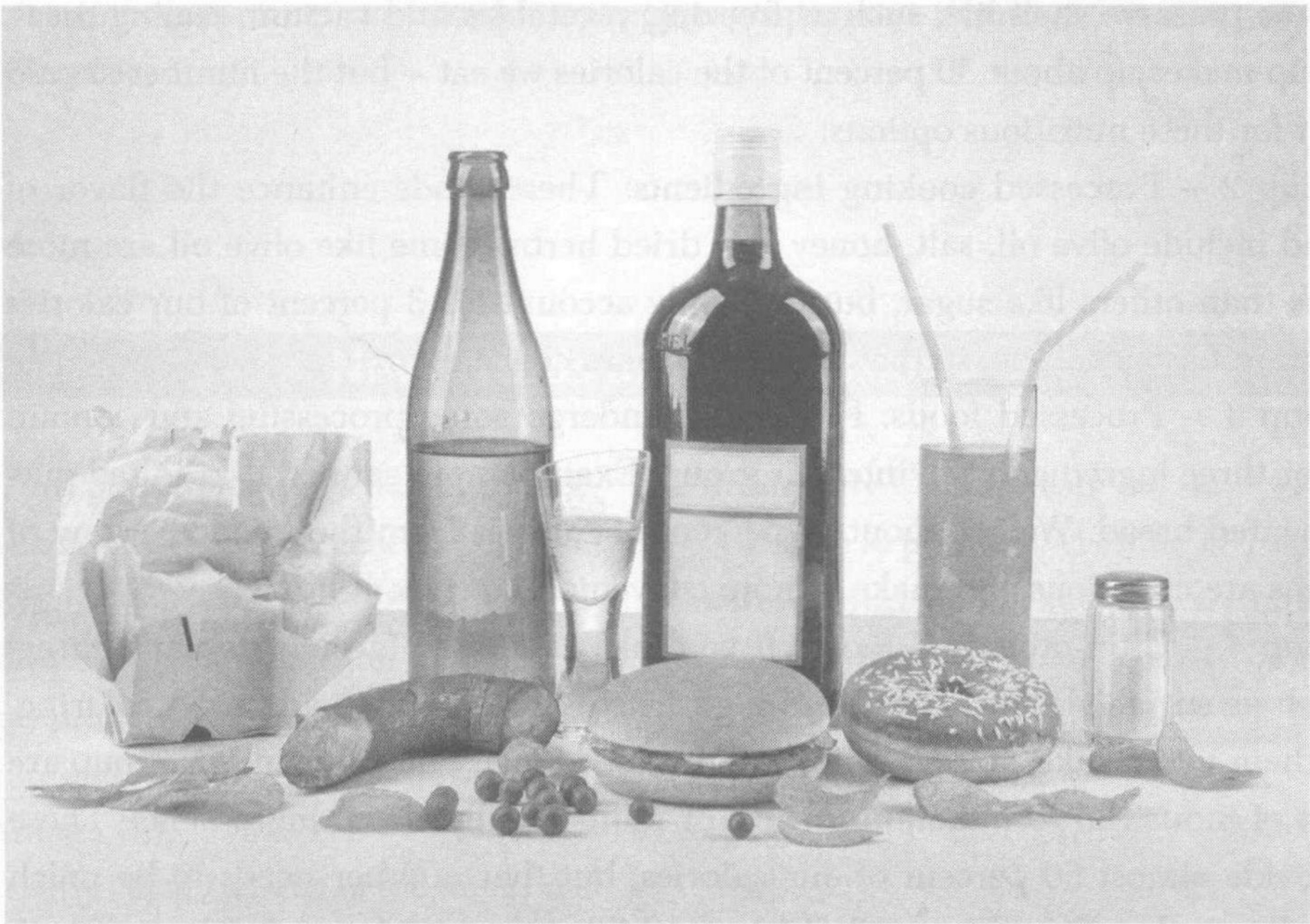
7 Group 4 – Ultra-processed foods: If you take processed (groups two and three) foods such as enriched flour, sugar and high fructose corn syrup, add food coloring, and put them into a cake, you get an ultra-processed food. The foods in this group are the result of industrial formulations of five or more usually cheap ingredients. These foods provide almost 60 percent of our calories, but that number needs to be much lower. Collectively, ultra-processed foods are high in sugar, fat and salt, and lack fiber, vitamins and minerals. People who consume more ultra-processed foods have a greater risk of obesity, hypertension and high blood sugar levels, which can lead to heart disease and diabetes. Other examples of ultra-processed foods are candy, instant soups, ice cream, breakfast cereals, soda and hot dogs.
8 Yogurt with added sugar or powdered cheese on deep-fried potatoes are examples of processes that turn once-healthy food into less nutritious fare. But not all processes are bad – some forms of preserving and preparing food are very smart ideas. When you do include some processed (not ultra-processed) foods in your grocery cart, consider the following:
9 Sprouted foods are nutritious: Whole grains and beans are living seeds, and a little “processing” with the right moisture level and temperature can make them sprout. In terms of health benefits, sprouted grains and beans are easier to digest, have minimal effect on blood-sugar levels, and contain more protein, fiber and B vitamins than their non-sprouted counterparts. So, look for whole grains, beans and breads that say “sprouted” on the package.
10 Fermented foods contain probiotics: The recent focus on fermented foods such as yogurt and kimchi is because of the beneficial probiotics they provide. Probiotics help support the immune system, relieve constipation, help prevent some types of cancer, and are being studied for their role in managing cholesterol and treating neurological disorders. Want to get more probiotics in your diet? Buy yogurt or try refrigerated kimchi – but not the shelf-stable ones. They have been heated or pasteurized, which kills the probiotics.
11 Frozen foods retain more vitamins: If fresh vegetables wither in your fridge,
use frozen options instead. They are blanched and quick-frozen, which isn't detrimental to their nutrients. In fact, a comparison study of fresh versus frozen vegetables and fruit showed that vitamins C and E are the same or higher in frozen compared with fresh. So, stock up on frozen pineapples, grapes and strawberries. They are great in yogurt!
(729 words)
New Words and Expressions
sweeping /'swiːpɪŋ/ a. showing a lack of consideration of facts or details; too general (太)笼统的;总括的
generalization $ ^{\star} $ /ˌdʒenərəlaɪˈzeɪʃən/ n. a general statement, principle, or opinion formed from (sometimes incomplete) consideration of particular facts 概括;归纳
ingredient/m'gri:djənt/ n. any of the things that are formed into a mixture when making sth., esp. in cooking(混合物的)成分;(尤指烹饪中的)配料
undergo $ ^{①} $ /ʌndəˈɡəʊ/ v. experience (esp. sth. unpleasant, unwelcome, or difficult) 经历;经受;遭受(尤指不好的事)
ferment/ˈfɜːrment/ v. 使发酵
sprout $ ^{\triangle} $ /spraut/ v. (cause to) grow new leaves or shoots (使) 发芽;抽芽
nutritious /njuː'trɪʃəs/ a. valuable to the body as food 有营养的;营养价值高的
detrimental $ ^{\triangle} $/detrirement $ ^{\text{al}} $/a. causing harm or damage 有害的;不利的
applesauce/æpl'sɔːs/ n. 苹果沙司;苹果泥
original /əˈrɪdʒənəl/ a. existing or happening first, before other people or things 最早的;最初的
discern $ ^{\star} $/di's3:n/ v. come to know, recognize, or understand (sth.) 识别;了解
distinct $ ^{A} $ /dis'tɪŋkt/ a. clearly different or separate 截然不同的;完全分开的
take note of pay careful attention to 注意(到);
留意(到)
cart /kɑːt/ n. a large wire basket on wheels that one uses in a supermarket 手推车
minimally $ ^{★A} $ /'mɪnɪməli/ ad. in a way of being as little as possible; very little 最小地;极少地
whole food food that is in a simple natural form, without anything removed or added 天然食物;(未经加工精制或增添其他物质的)全营养食物
shelf life (食品、药品等的)储藏寿命;保存期限
vacuum-sealing/ˈvækjuːmˈsiːlɪŋ/ a. 真空封装的
make up form as a whole; constitute 形成;组成;构成
option $ ^{A} $ /'ɒpʃən/ n. one of a number of courses of action that are possible and may be chosen 可选择的办法
enhance $ ^{A} $ /in'haːns/ v. increase in strength or amount 提高;增加;增强
olive $ ^{\star} $ /'plɪv/ n. the fruit of the olive tree, used for food and also for its oil (作食品或榨油用的)橄榄
account for make up or form (a particular amount or part of sth.) (在数量、比例方面) 占
fall into belong in (a particular category or range) 属于;归入
ultra-processed $ ^{\triangle} $ / $ \Delta $ltra'prəʊsest/ a. processed beyond due limit 过分加工的;超加工的
enriched /m'rɪtʃt/ a. (食物)添加维生素和矿物质的;强化的
syrup /'sɪrɒp/ n. a very thick sticky pale liquid
made from sugar 糖浆
coloring /ˈkʌlərɪŋ/ n. a substance used for giving a special color to another substance, esp. food (尤指加入食品的) 色素
formulation $ ^{\star\textcircled{A}} $ /,fɔ:mju'leɪʃən/ n. the act or
the product of developing a formula for the preparation of sth. 配制;制剂
collectively /kə'lektɪvli/ ad. as a group 就整体而言;共同地
vitamin /'vitəmɪn/ n. 维生素
hypertension /ˌhæpəˈtenʃən/ n. a medical condition in which a person has very high blood pressure 高血压(症)
diabetes $ ^{\triangle} $ /daɪəˈbiːtiːz/ n. a disease in which there is too much sugar in the blood 糖尿病;多尿症
soda /'səʊdə/ n. 苏打水;(无味或未加味的)汽水
powdered /'paudəd/ a. produced or dried in the form of powder (制成)粉状的
deep-fried /'diːpˈfraɪd/ a. (of food) fried completely under the surface of oil or fat (食物) 油炸的;油汆的
fare /feə(r)/ n. food, esp. food served in a restaurant or eaten on a special occasion 饮食;伙食
whole grain 天然的谷物;未加工过的谷物
moisture /'moɪstʃə(r)/ n. water, or other liquids, in small quantities or in the form of steam or mist 水分;湿气
minimal $ ^{\star} $ $ ^{A} $ /'minimal/ a. as little as possible; very little 最小的;极少的
protein /'prəʊtiːn/ n. 蛋白质
counterpart $ ^{*} $ /ˈkauntəpaːt/ n. a person or thing that has the same purpose or does the same job as another in a different system 两方面地位或职位相当的人(物)
probiotic /ˌprəʊbaɪˈɒtɪk/ n. a microorganism that is believed to provide health benefits when consumed 益生菌; 益生菌
kimchi /'kɪmɪtʃɪ/ n. 朝鲜泡菜(用圆白菜、洋葱、大蒜、辣椒等蔬菜腌制而成)
immune /ɪ'mjʊn/ a. unable to be harmed because of special qualities in oneself (对……) 有免疫力的;不受……影响的
the immune system(身体的)免疫系统
relieve /rɪˈliːv/ v. lessen (pain, anxiety, or trouble)
减轻(痛苦、焦虑或困扰)
constipation /kɒnstɪˈpeɪʃən/ n. 便秘
cholesterol $ ^{\star} $ /kəˈlestərpl/ n. 胆固醇
neurological /ˌnjʊrəˈlɒdʒɪkəl/ a. of or about the scientific study of the nervous system and its disease 神经系统的;神经(病)学的
disorder /dɪsˈɔːdə(r)/ n. a failure of part of the body (or mind) to work properly (身体、精神的)失调;紊乱
shelf-stable /'self,steɪbl/ a. 可在架上存放较长时间的
pasteurize /ˈpæstərəɪz/ v. heat (a liquid) in a certain way in order to destroy bacteria 用巴斯德消毒法给(液体)消毒
retain $ ^{A} $ /rɪˈteɪn/ v. keep possession of; avoid losing 保留;保有
wither $ ^{\triangle} $ /'wiðə(r)/ v. (of a plant) become dry and weak and start to die (植物等)枯萎;凋谢
comparison /kəmˈpærɪsən/ n. the act of looking at things to see how they are similar or different 比较;对照
versus $ ^{*} $ /'vɜːsəs/ prep. (abbreviation: vs / vs. / VS)
used to indicate two different things, choices, etc., that are being compared or considered
与……相比;与……相对
compared with in relation to (sth. else), measured or judged against (sth. else) 和……比起来;与……对照
stock /stɒk/ v. keep supplies of, esp. for sale 为……办货;(尤指为销售而)储备
stock up on sth. provide oneself with a full store of sth. 充分储备某物;贮存某物
Global Reading
Skim the text and answer the following questions.
- What is the purpose of the text?
- How many groups of foods are categorized in the text?
- Which group of foods do sprouted, fermented and frozen foods belong to?
Close Reading
- Choose the best answer to each of the following questions.
- What misconception about food did people use to have according to the text?
a) Fresh foods are nutritious and beneficial to people.
b) All processed foods are harmful to our health.
c) High fat and high sugar foods have bad effects on us.
- Which disease are people NOT likely to get if they eat too many ultra-processed foods?
a) diabetes
b) heart disease
c) lung cancer
- Which of the following processes CANNOT preserve the nutrients in food?
a) frying
b) freezing
c) fermenting
- Probiotics have the following benefits EXCEPT ___.
a) improving our immune systems
b) protecting our blood vessels
c) preventing cancer
Reading Skill — Recognizing classification
- Study the reading skill in the box and work on the task below.
In a classification text, the writer will organize the contents by categorizing things or people into different groups. Sometimes the classification is explicit, such as Group 1, Group 2, Group 3 and Group 4 in this text. Sometimes, the categorization is less obvious. But we can recognize them with the help of the following words or expressions:
type, class, group, kind, category, form ...
classify, categorize, sort, grade ...
One is ...; another is ...
The first ...; the second ...; the third ...
Complete the following table according to the classification of foods in the text.
| Group | Item | Examples of foods in each group |
| Group 1 | Unprocessed and minimally processed foods | 1) |
| Group 2 | Processed cooking ingredients | 2) |
| Group 3 | Processed foods | 3) |
| Group 4 | Ultra-processed foods | 4) |
- Circle the appropriate word or phrase for each of the following sentences.
- Unprocessed / Ultra-processed foods provide the major part of our calories.
- Fermented / Sprouted foods have a minimal effect on blood-sugar levels.
- Applesauce is more healthy than an apple / an apple pie.
- Canned fruits are most likely to fall into the category of processed / ultra-processed foods.
- Frozen / Fermented foods maintain the original nutrients in the foods.
Critical Thinking
Discuss the following questions.
- Think of your own diet. Which category of foods mentioned in the text do you eat most days?
- Ultra-processed foods are delicious and attractive to most people. What do you think are good ways to reduce the consumption of this group of foods?
- How does the general statement "eat less processed food and choose fresh food instead" simplify a more complex story? Explain.
- Do you agree that general statements will always mislead people? Why or why not?
Language Enhancement
- The words in the box below are either active words or academic words marked in the Academic Word List (AWL). Choose the most suitable one to complete each sentence. Change the form where necessary.
| comparison option | enhance relieve | formulation retain | immune stock | minimal undergo | distinct |
- These people in the coal mine factory had no _____ but to take the low-paid unattractive work.
- Hopefully, the multi-national anti-terrorist conference will _____ the prospects of world peace.
- There's a lot of evidence that oily fish, as _____ from fatty meat, has a beneficial effect.
- Before testing any new ___ of medicine on children, the doctors have to make very hard judgments about the benefits and risks.
- Since only a tiny amount of radiation has been released, the World Health Organization believes that the relevant public health risk is ___.
- The cancer patient must first _____ radiation and chemotherapy (化疗) to weaken the original immune system, which is an exhausting experience.
- His business has been taken over by a big corporation, but he still _____ some control over it.
- HIV (艾滋病毒) is not to undermine one human body organ, but to destroy the body's _____ system, resulting in multiple organ damage.
- To be on the safe side, some families tend to _____ their cellars with food and water in case of emergency.
- Measures have been taken to _____ the city of its traffic jam, but the problem is not likely to be solved in a short time.
- Let's try a _____ — reducing the sun to the size of a golf ball, the earth would be the size of a grain of sand.
- Study the phrases in the box below. Choose the most suitable one to complete each sentence with the help of its meaning given in brackets. Change the form where necessary.
| account for | compared with | fall into |
| make up | stock up on | take note of |
- When you examine your new apartment or house before buying or renting, _____ any possible problems with water. (pay careful attention to)
- The government called on the public to _____ food, drinkable water, flashlights and first-aid supplies for the coming snowstorms. (provide themselves with a full store of)
- With the business opening to the world, the company's overseas profits now _____ half of its yearly earnings. (make up, form)
- If you do not _____ the above categories, these issues do not apply to you, and you can skip the rest of this section. (belong in)
- All the many busy and little important things _____ my daily routines. (form as a whole; constitute)
- The depth of the ocean will be found to be very inconsiderable _____ its breadth. (in relation to; measured against)
- Study the word building skill in the box and work on the tasks below.
Word Building Skill — Prefixes (II): "en-" and "dis-"
The prefix “en-” can form verbs, meaning “make sb. or sth. be in a particular state or have a particular quality”. To put it more simply, it means “in”, “on” or “caused”, like “enable”.
The prefix "dis-" can form verbs, meaning "apart", like "discern"; form nouns, meaning "opposite", like "disorder"; form adjectives, meaning "opposite" or "apart", like "dishonest".
A. Match the following words in the left column with the corresponding meanings in the right column.
— 1) enrich v. a) notice or understand sth.
— 2) enforce v. b) put sb. or sth. at risk or in danger
— 3) entitle v. c) improve the quality of sth.
— 4) endanger v. d) clearly different or separate
— 5) discern v. e) make people obey a law or force sb. to do sth.
— 6) disorder n. f) give sb. the right to have or to do sth.
— 7) distinct a. g) failure of part of the body (or mind) to work properly
— 8) distract v. h) prevent sb. from giving full attention to sth.
B. Fill in the blanks in the following sentences by choosing the proper words with the prefix "en-" or "dis-" from above. Change the form where necessary
- We are sorry to inform you that this ticket does not _____ you to travel first class.
- It was so dark outside that I was just able to _____ the road.
- The health of our children is being _____ by exhaust gas from vehicles and factories.
- Don't allow noise to _____ you from your homework.
- International students _____ our classrooms with their different and new ideas, perspectives, and cultures.
- He has a very _____ personality and you can recognize him among these students quickly.
- Being locked in a dark room, that poor man is declared suffering from mental ___.
- Some cities are trying to _____ their anti-noise laws more strictly.
Translating Skill — Diction (II): collocation clues
4. Study the translating skill in the box and work on the task below
Take “process” as an example. It can be used as a noun or a verb.
When grammatical clues are not enough, collocations can offer further help. We can look at the words that appear around the word, and decide on its exact meaning in the sentence.
When used as a noun, it has a number of meanings: “a series of things which are carried out in order to achieve a particular result”(进程; 过程); “a series of things which happen naturally and result in a biological or chemical change”(变化过程); “a method of doing or making sth., especially one that is used in industry”(做事的方法; 工艺流程; 工序).
When used as a verb, it takes on different meanings when it is used together with different nouns: 1. when raw materials or foods are processed (加工;处理), they are prepared in factories before they are used or sold; 2. when people process (处理) information, they put it through a system or into a computer in order to deal with it; 3. when people are processed (审核;审议;使接受处理) by officials, their case is dealt with in stages and they pass from one stage of the process to the next.
In the sentence "Of course, how we process the food matters", it can be easily seen that the word "process" is used as a verb, but it still has at least three possible meanings (as shown above). So we need to look at the words that appear before or after it, and when we find the word "food", we can be sure that it corresponds with the first meaning.
Translate into Chinese the following passage that serves as a summary of Reading 2, paying special attention to the word "process" with multiple meanings.
Processed foods have been altered from their natural state, either for safety reasons or because it makes them easier to store or easier to use.
We usually think of processed foods as being bad. In truth, many of them are, but some types of processed foods are beneficial. Not all processes are detrimental. Some ingredients can undergo changes, like being frozen, fermented or sprouted, that makes them equally or more nutritious than they once were.
When you do include some processed (not ultra-processed) foods in your grocery cart, consider the following: sprouted foods are nutritious; fermented foods contain probiotics; frozen foods retain more vitamins.
Translation:
Part II LISTENING AND VIEWING
Listening:
Bananas Genetically Modified (GM) Not to Rot
Before Listening
Listening Skill — Predicting the content
Before listening, it is always helpful to use your prior knowledge and experience about a given topic to develop expectations of what you are going to hear.
This strategy will make you better prepared for the listening and then enhance comprehension while listening. The title, visuals, or listed vocabulary may help you predict.
Discuss the following questions
- What do you know about genetically modified foods?
- Study the listening skill above. What do you predict to hear about genetically modified bananas in this audio clip?
New Words and Expressions
genetically modified (GM) /dʒiˈnetɪkəlɪ ˈmɒdɪfaɪd/
转基因的
rot $ ^{\star} $ /r $ \underline{\text{ot}} $/ v. decay by a gradual natural process
腐败;腐烂 n. the process of rotting; decay 腐朽;腐烂
set in (of a disease, bad weather, etc.) begin and probably continue (疾病、坏天气等)开始来临;盛行
Israeli /ɪzˈreɪli/ a. relating to Israel or its people 以色列的;以色列人的
significantly $ ^{①} $ /sig'nifikəntli/ ad. 显著地;明显地
decomposition /di:kɒmpə'zɪʃən/ n. the process of decay 腐烂
alter $ ^{A} $ /'ɔːltə(r)/ v. make different, but without changing into sth. else 使改动;更改
genetic /dʒɪˈnetɪk/ a. relating to genes or genetics
基因的;遗传学的
make-up /'meɪkʌp/ n. 组成;构造
gene /dʒiːn/ n. 基因;遗传因子
previously /'priːviəsli/ ad. before now or before a particular time 以前地;先前地
finding /'faɪndɪŋ/ n.(调查、研究的)结果
isolate $ ^{A} $ /'aisəleit/ v. keep apart; separate from others 使隔离;使孤立
intervention $ ^{\Delta\textcircled{A}} $ /ˌɪntəˈvenʃən/ n. 干扰;干预;介入
commercialize /kə'mɜːʃəlaɪz/ v. 使商业化;使商品化
wholesaler $ ^{\star} $ /'həʊlseɪlə(r)/ n. 批发商
Listening Comprehension
- Listen to the passage and fill in the blanks.
- Israeli scientists have found a way to significantly _____ the decomposition by altering their _____ make-up.
- But it took these findings _____ to isolate the specific gene that drives the ageing process in bananas and _____ its normal function.
- Lab tests show that the genetic intervention does not harm the bananas' ___.
- The team now hope to _____ to commercialize the findings to _____ farmers and wholesalers.
- Listen again and choose the right answers.
- The scientists who conduct research on GM bananas are from ___.
a) India
b) Israel
c) America
- This new study has made breakthroughs on the basis of prior research on GM ___.
a) beans
b) potatoes
c) tomatoes
- The particular gene that ___ in bananas has been identified by the scientists.
a) blocks the growing process
b) accelerates the ageing process
c) intervenes with the ripening process
Viewing:
Why I'm a Weekday Vegetarian
Before Viewing
Discuss the following questions.
- Do you prefer eating meat or vegetables?
- Do you think eating less meat will help you lose weight?
- How long can you go without eating any meat?
New Words and Expressions
vegetarian /'vedʒɪˈteəriən/ n. a person who does not eat meat or fish 素食者
hippie /'hɪpi/ a. 嬉皮士的;具有嬉皮士特点的
log cabin a house, usu. a small one, made of logs of wood (原木)小木屋
cruelty /'kruːəlti/ n. the quality of being cruel 残忍;残酷
hypocritical /ˌhɪpəʊˈkrɪtɪkəl/ ad. 伪善地;虚伪地
emission $ ^{*} $ /ɪˈmɪʃən/ n. a gas or other substance that is sent into the air 排放物
tuck into eat eagerly 大吃
stall $ ^{*} $ /stɔːl/ v. avoid doing sth. until later 故意敷衍或不采取行动
pitch /pɪtʃ/ v. try to persuade or sell, often in an aggressive way 竭力劝说;推销
binary /'baɪnəri/ a. consisting of two things or parts; double 由两个东西(或部分)组成的
taste bud /teɪst bʌd/ 味蕾
culprit $ ^{\triangle} $ /'kʌlprɪt/ n. the cause of a problem or bad situation 产生事故的原因;引起不良后果的事物
in terms of ... from the point of view of 从……观点来看;从……角度来讲
sustainably $ ^{A} $ /səˈsteɪnəbl/ ad. 能保持地;能持续地
end up be in the end (in the stated place, condition, etc.) 最后成为;最后处于
intake $ ^{\triangle} $ /'inteɪk/ n. the amount or number allowed to enter or taken in 吸入量;摄取量
give sth. a shot try or attempt to do sth. 尝试做某事
Viewing Comprehension
Study the listening skill in the box and work on the tasks below.
Listening Skill — Understanding main ideas: key words
Listening for key words or phrases can facilitate our understanding of a speaker's main points. Paying attention to the following clues in a speech or lecture may help us identify a key word:
- The speaker tends to pause before introducing an important point.
- The speaker always repeats the key word.
- The speaker may define the key word after saying it.
- Watch the video clip and note down the key information in the blanks.
| Key words | Related information |
| Meat | Meat causes more 1) ________ than all of 2) ________ combined. We as a society 3) ________ as we did in the 50s. |
| Solution | Problem: Why am I not a vegetarian? A binary solution: either you're 4) ________ or you're 5) ________ A third solution: becoming 6) ________ |
| Weekday veg (vegetarian) | Definition: 7) ________ , Monday to Friday. On the weekend, 8) ________ . |
- Watch again and decide whether the following statements are true (T) or false (F).
☐ 1) Environmentally, meat causes as many emissions as all of transportation combined.
- The speaker was very determined to be a vegetarian after he realized the danger of hamburgers.
☐ 3) Red and processed meats cause more environmental damage and health problems than fish does.
☐ 4) According to the speaker, to be a weekday vegetarian will greatly benefit our health and the environment.
Critical Thinking
Discuss the following questions.
- Do you agree with the argument that being vegetarian is better for the environment and for the animals? Why or why not?
- In a carnivorous (食肉的) culture, do you think it is possible to change people's eating habits?
- In your viewpoint, is “weekday vegetarian” the best solution to the dilemma of whether to eat meat or to be vegetarian? Do you want to give it a shot?
Part III SPEAKING
With the increasing popularity of teamwork or joint projects in the academic setting of universities, it is important for students to learn how to take part in group discussions. You need to be aware of how to collaborate with others to make the discussion go on successfully. Knowing various skills and language in this respect may help you participate in discussions with ease. In this unit, you are going to learn about how to open a discussion and how to agree or disagree in a discussion. More skills in this regard will be introduced in Units 2–4.
Opening a discussion
In a group discussion, there should be someone who takes the lead to start the discussion. It is usually the task of a group leader, if there is one. Once the discussion is opened, each person in the group may begin to make their contributions. These are the useful language patterns to open a discussion:
Well, let's start by looking at ...
Let's begin, shall we?
So what's your opinion of this?
If you don't mind, I'd like to speak first.
Agreeing and disagreeing
Once a discussion is opened, there are many ways to gain access to it. A common one is to express agreement or disagreement. By building on what someone else has said, you can agree or disagree with him / her.
Useful language for agreeing:
I totally agree with you.
I couldn't agree more.
Useful language for disagreeing:
Exactly!
I'm afraid I don't agree.
Yes, you are right in ...
I see what you mean, but ...
But don't you think that...?
That is a good point.
Yes, but on the other hand ...
But all the evidence suggests that ...
- Work with your partner. Use the useful language listed above and discuss whether you agree or disagree with the following statements. Be sure to open a discussion nicely and express agreement and disagreement properly. A sample dialogue about the first statement has been given in the box below.
A Sample Dialogue
Statement: Eating slowly is a possible means to decrease calories and increase satisfaction.
A: Well, Let's start by looking at the first statement.
A: Do you agree that "Eating slowly is a possible means to decrease calories and increase satisfaction"?
B: OK.
B: Yes, I think so. By eating slowly, we can focus on the food and taste every bite. If the food is delicious, we will feel so satisfied.
A: I totally agree with you. What's more, when we take our time in eating, we could chew the food thoroughly before swallowing it.
B: Exactly! So it is doing good to ease digestion, and then decrease calories.
A: And finally leading to weight loss. It is so wonderful!
B: Do you have the habit of eating slowly?
A: I'm afraid not. But I decide to give it a try and eat slower from now on.
B: It's a good idea, but maybe it's easier said than done.
- Eating slowly is a possible means to decrease calories and increase satisfaction.
- If you get up late in the morning, you may not need to have a breakfast because you are going to have lunch soon.
- Microwaves alter the composition of food and have detrimental effects on people.
- Eating chocolate has a positive influence on human health.
- Raw food is more nutritious than cooked food, so we need to eat raw food often.
- Work in a group, sharing your opinions about each statement in Exercise 1 above. Use the following guidelines to help your discussion.
Assign a leader in the group who will open the discussion and monitor the process of discussing.
● Try to use different language patterns to agree or disagree with each other.
● Be polite and cooperative in the discussion.
- Choose one statement in Exercise 1 of which the group has diverse opinions. Make a list of these opinions and ask a group member to report to the whole class.
It is significant for any academic writing to have a complete and well-organized structure. Generally speaking, an academic text usually includes three parts: an introduction, a main body and a conclusion. These three structural components have distinctive functions and characteristics. In this part, you are going to learn how to write an introduction and how to develop an effective thesis statement in the introduction. In Unit 2 and Unit 3, you will learn how to write a body paragraph and a conclusion respectively.
Writing an introduction
An introduction is the first part of a text, which normally consists of one or more paragraphs. Its function is to get the readers prepared for the topic you are going to write about and then to put forward your main viewpoint. You don't need to discuss anything in detail yet. In an introduction, you always:
• give a general description or explanation of the topic;
• identify your research questions and propose a thesis statement;
• outline the organization of the text.
If the text is short, you may not need to outline the organization of it.
Writing a thesis statement
A thesis statement is a sentence which clarifies the writer's general opinion about the topic under discussion. It is usually put in the introduction to capture the main idea of the whole text. A good thesis statement should follow these guidelines:
It should be an opinion rather than a fact;
It should be specific, because you are going to support and elaborate it in the rest of the essay.
- Read the following introductions and identify the function of each numbered section of the introduction. The first example has been given.
Introduction 1:
| 1) Do you have days at work when you feel energetic, inspired and productive, while on other days you feel tired, busy and stressed, with almost nothing to show for your efforts at the end of the day? 2) When you spend several hours a day at work, it pays to make those hours healthy ones for both the body and the mind. 3) Making some simple, smart choices throughout your workday can help boost your creativity and productivity while reducing fatigue and minimizing stress. | 1) A general description of the topic: working days. 2) ________________ 3) ________________ |
Introduction 2:
- Ah, Processed foods. The term has become a sweeping generalization for anything that comes in a bag or a box. Even my nutrition advice usually includes the general statement "eat less processed food and choose fresh food instead". 2) But that sentence really simplifies a more complex story. Of course, how we process the food matters. Some ingredients can undergo changes — like being frozen, fermented or sprouted — that makes them equally or more nutritious than they once were. 3) Not all processes are detrimental. 4) Here's how to tell the difference.
- ___
- ___
- ___
- ___
- There are two essay titles below and two possible thesis statements are provided for each. Decide which thesis statement is better for the title and give further explanations.
Title 1: Why Should People Adopt a Vegetarian Diet?
Thesis statement A: Being a vegetarian has many advantages for people.
Thesis statement B: People should consider the health benefits of switching to a vegetarian diet, including weight loss and a lower risk of heart disease.
Title 2: The Problem of Food Shortages in the World
Thesis statement A: The world needs to produce at least 50% more food to feed 9 billion people by 2050.
Thesis statement B: A threefold challenge in food supply now faces the world: growing competition for land, water, and energy; overexploitation of fisheries; and the changing climate.
- In this unit, you have received a lot of information about food and healthy diets. Now write an introduction to an essay entitled "What Is a Healthy Diet?". You should:
- make sure you have included all the essential components in an introduction;
- form a good thesis statement in the introduction.