Unit 6 Zoology
Lead-in
Work on the following tasks.
- Study the bar chart "Household Penetration Rates (家庭普及率) for Pet-Ownership in the United States" and the line graph "Total U.S. Pet Industry Expenditures". What information do the chart and the graph show? Can you make any predictions about pet ownership and expenditures in the US?
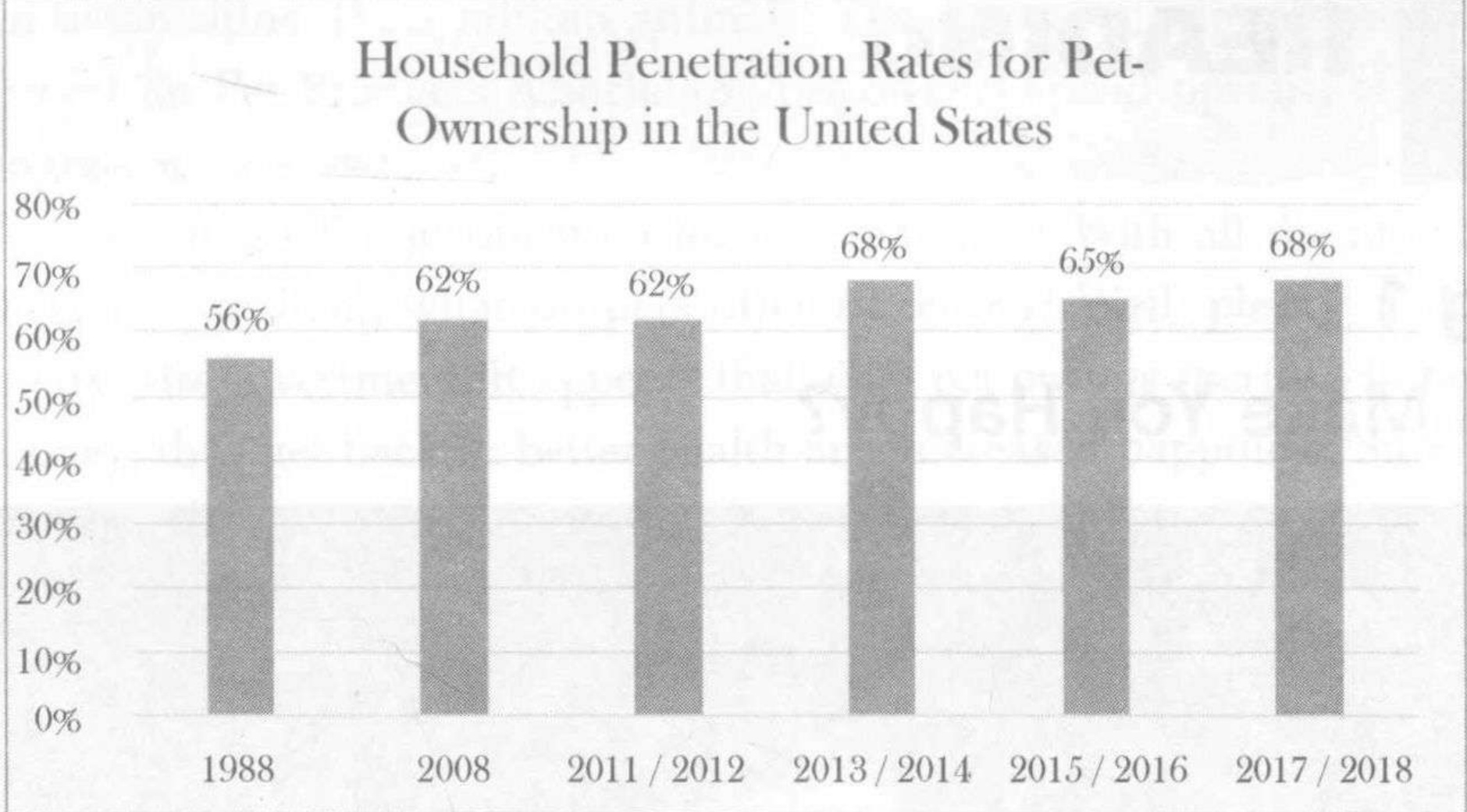
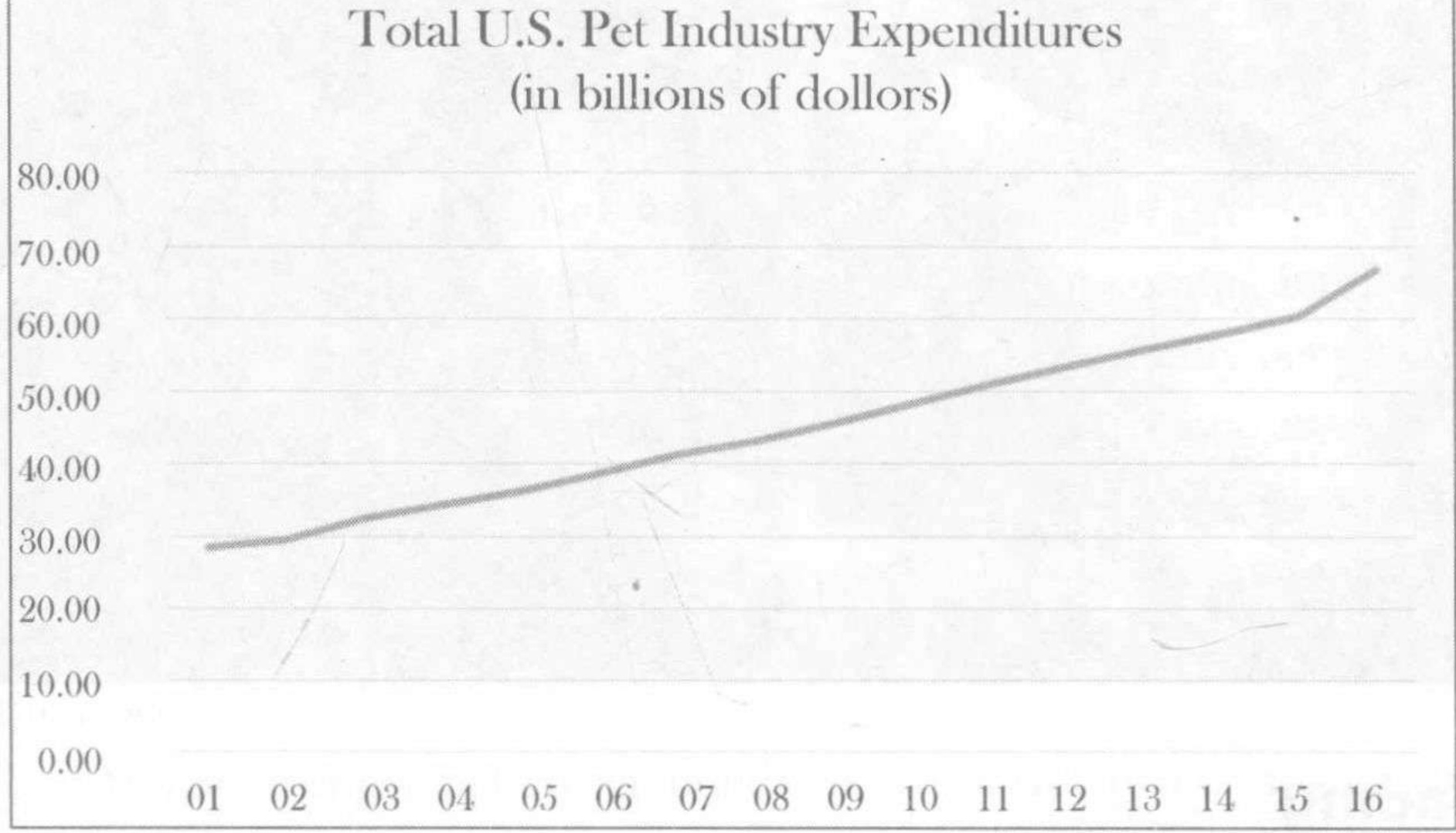
- Is pet keeping common in China? Make comparisons between China and the United States in the following two aspects: household pet ownership and pet industry expenditures. You may need to search the Internet for relevant information.
Reading 1
Can Pets Make You Happy?

Before Reading
Discuss the following questions.
- Why do many people keep pets?
- If you have a pet, tell your group about your pet. If you don't have one, tell them why not.
Can Pets Make You Happy?
Jennifer Horton
1 Pets are a big responsibility. Not only do they demand regular meals and a steady supply of fresh water, but they have to be cleaned up after constantly, too. Depending on the species, they may also require frequent walks, a steady supply of mice or a daily changing of the newspaper at the bottom of their cages. Caring for a pet is like raising a child but without the eagerly awaited emancipation stage.
2 Yet despite the tedium, an astonishing number of these creatures have managed to work their way into our homes. In the United States, 68 percent of households harbor at least one pet. That works out to approximately 76.7 million homes and
an astonishing 412.3 million animals. They're not cheap, either: According to the American Pet Products Association, pet owners spend upward of \$60 billion on pet charges in one year.
3 So what's the justification for this madness? With all the attention and money lavished on them, what do pets offer in return? Well, plenty, actually. Pets are a pretty wise investment. It appears that what pet owners sacrifice in terms of time and money, they get back in better health and increased happiness. Sure, you pet owners out there have known your pets make you happy all along. But now a growing body of research is here to back you up.
4 The pet Rx appears to work in a number of ways. For one thing, pet ownership tends to prompt people to adopt a multitude of healthy behaviors. Take a pet's need to be fed and taken outside every few hours, for instance. That responsibility gives pet owners purpose and makes them feel needed, improving their senses of self-worth. It also forces them to get off the couch and go for a walk every now and then, boosting both health and happiness.
5 Besides the behavioral changes, studies also show that interacting with a pet helps to reduce levels of harmful neurochemicals in the body and raise the good ones.
6 Pets and Stress Relief
There's something incredibly comforting about coming home after a long day at work and being greeted with wet, slobby kisses. For many people, interacting with a pet is the ultimate antidote to a stressful day. In fact, in one study, when people were presented with stressful tasks in four different situations – alone, with their spouse, with their pet, or with both their spouse and their pet – they experienced the lowest stress response and the quickest recovery in the situation where they were only with their pet.
7 While stronger pet-owner bonds usually lead to the greatest stress relief, even brief encounters can create improvements. In one study, patients who spent a short amount of time with a dog before upcoming treatment operation experienced a 37 percent reduction in their anxiety levels, perhaps because the animal's presence helped distract them from their concerns.
8 Indeed, multiple studies indicate that pets are powerful forms of stress relief, lowering not only blood pressure but also harmful stress hormones like cortisol, which is associated with depression and anxiety, and elevating beneficial ones like oxytocin, which is linked to happiness and relaxation.
9 And while it's usually the four-legged furries $ ^{1} $ that get all the credit, other pets can help, too. Simply watching a fish tank versus a bare wall for 30 minutes lowers blood pressure significantly. Observing an aquarium can be an even more powerful relaxant than several proven meditative techniques.
10 Pets and Companionship
Whoever coined the saying "good friends are hard to find" probably didn't
have a pet. Unlike your gossip co-workers, pets are loyal, nonjudgmental and full of unconditional love. Who could ask for anything more?
11 Indeed, when a group of children was asked to list 10 of their closest relationships and then rank them according to who they would most likely turn to in a time of need, pets often scored higher than the children's human relationships. It's not just children who value their pets' company. A recent survey conducted by the American Veterinary Medical Association found that more than half of the respondents consider their pets as companions. And if you've ever found yourself on the couch confiding all of your private problems into Fido's soulful eyes, you're not alone. A study on the bonds between people and their animals revealed that 97 percent of pet owners talk to their pets.
12 Not only can pets be an integral member of a person's social network, but they can help extend that network in other ways as well. Owning a dog, for instance, forces a person to go on walks or to the dog park, where he or she is more likely to be approached by other people and perhaps strike up a conversation about the cute little friend. Wheelchair patients with companion dogs receive both more attention and better quality attention from acquaintances and strangers alike. Researchers sometimes call this the magnet effect, and it works especially well for those who have a difficult time meeting people.
13 The companionship pets offer can be especially beneficial to the elderly or the infirm, who often have trouble maintaining lasting friendships. The presence of a pet provides a constant source of healthy social stimulation that can be hard to find in even a spouse or a caretaker. In such instances, animals have proven effective antidotes to depression. In one case, AIDS patients who owned pets were much less likely to succumb to depression than those without pets. Even in situations where all other factors are the same, the presence of an animal seems to provide a boost: A group of patients suffering from depression who participated in daily water exercises with dolphins saw significant improvements over a group who performed the same exercises without dolphins.
14 So whether you go with Flipper $ ^{2} $ or Fido, a pet may be just what the doctor ordered.
(969 words)
clean up after sb. make a place clean after sb. has made it dirty or messy 替某人整理干净
species /'spiːfiːz/ n. a group of related animals
or plants that is smaller than a genus (生物)
物种
await /ə'weɪt/ v. wait for 等待
emancipation $ ^{*} $/l,mænsì'peɪʃən/ n. the condition or fact of being set free or freed from some restriction 解放;摆脱束缚
tedium /'tiːdiəm/ n. the quality of being boring, monotonous, or too long 单调乏味;冗长
household /'haʊshəʊld/ n. all the people living together in a house 一家人;家庭
harbor /'hɑːbə(r)/ v. keep (animals) in one's possession 收养(动物等)
work out to come to a total amount of 总共
达……
upward of more than ……以上;多于……
justification $ ^{A} $ /ˌdʒʌstɪfɪˈkeɪʃən/ n. a good or proper reason for doing sth. 正当的理由
lavish $ ^{\triangle} $ /ˈlævɪs/ v. give or spend sth. generously or wastefully 浪费;挥霍;慷慨地给予
in return in exchange or as payment 作为交换;作为回报
investment $ ^{A} $ /ɪnˈvestmənt/ n. something that is worth buying or doing because it will be useful or helpful 值得买的东西;有用的投资物
out there in a place that could be anywhere except here 在外面
back up say or show that what sb. is saying is true 证实
Rx / 'arreks/ n. 药方;处方(prescription的缩写)
prompt /'prɒmpt/ v. cause or urge 促使;推动
multitude $ ^{*} $ /'mʌltitjuːd/ n. a large number 众多;大量
couch /kaʊtʃ/ n. a long comfortable piece of furniture, usu. with a back and arms, on which more than one person can sit or lie; sofa 长沙发 every now and then from time to time; sometimes but not often or regularly 偶尔;有时
neurochemical /,njuərəu'kemikəl/ n. 影响神经系统的化学物质
incredibly /ɪnˈkredəblɪ/ ad. very; extremely; in a way that is hard to believe 非常;极其;难以置信地;不可思议地
comforting /'kʌmfətɪŋ/ a. making one feel less sad, worried, or disappointed 安慰的;令人欣慰的
slobbery /'slɒbəri/ a. 淌口水的
ultimate $ ^{A} $ /'ʌltɪmət/ a. being or happening at the end of a process or course of action; final 最后的;最终的
antidote /'æntɪdəʊt/ n. anything that takes away the effects of sth. unpleasant 消除不快的事物;矫正方法
stressful $ ^{A} $ /'stresful/ a. full of problems that cause great worry 充满压力的;紧张的
spouse /spauz/ n. a husband or wife 配偶(指夫或妻)
recovery $ ^{A} $ /rɪˈkʌvəri/ n. a return to good health, a strong condition, etc. 恢复健康;复原
encounter $ ^{A} $ /ɪnˈkaʊntə(r)/ n. a meeting, esp. one that is sudden or unexpected (尤指突然、意外的)相遇;邂逅
reduction /rɪˈdʌkʃən/ n. (a case of) making or becoming less or smaller 减少;减轻
distract /dɪsˈtrækt/ v. take (a person or their attention) off sth., esp. for a short time (尤指短暂地) 使 (人) 分心;分散 (注意力)
presence /'prezəns/ n. the fact of being in a particular place 存在;到场
cortisol /ˈkɔːtɪsɒl/ n. 皮质醇;氢化可的松
depression $ ^{A} $ /dɪˈpreʃən/ n. a state of feeling very sad and without hope; a serious medical condition in which a person feels very sad, hopeless, and unimportant and often is unable to live in a normal way 沮丧;消沉;抑郁症
elevate $ ^{*} $ /'elɪveɪt/ v. make higher 使提高;抬升
oxytocin /,pksɪˈtəʊsɪn/ n. 催产素
aquarium /əˈkwɛəriəm/ n. a large glass container in which fish and other water creatures and plants are kept 养鱼缸;水族玻璃槽
furry /ˈfɜːrɪ/ a. covered in fur 长有毛皮的
relaxant /rɪˈlæksənt/ n. sth., esp. a drug, that relaxes 弛缓药;使人放松的事物
proven /'pruːvən/ a. tested and shown to be true 被证实的
meditative /'meditətɪv/ a. involving the practice
of thinking deeply in silence, esp. for religious reasons or in order to make one's mind calm 冥想的;沉思的
companionship $ ^{*} $ /kəmˈpænjənʃp/ n. the pleasant feeling that comes from being with someone else and not alone 伙伴关系;友情;友谊
coin/k $ \underline{o} $n/ v. invent (a word or phrase) 创造(新词或新语)
gossip $ ^{\star} $ /'gɒsɪpi/ a. 爱说闲话的;爱谈论他人私事的
loyal/ˈlɔɪəl/ a. faithful to one's friends, principles, country, etc. (对……)忠诚的;效忠的;忠贞的
nonjudgmental /'nɒn,dʒʌdʒmentəl/ a. avoiding judgments based on one's personal and esp. moral standards 不按个人道德标准进行评定的;客观的
rank /ræŋk/ v. decide the position of (sb. or sth.) on a list based on quality or importance 把……分等;给……评定等级
turn to go to (sb.) for help when having difficulty dealing with a situation 向(某人)求助;求助于
company /ˈkʌmpəni/ n. the state or condition of being with another person; companionship 陪伴;交往
veterinary /'vetərɪəri/ a. connected with caring for the health of animals $ ^{*} $兽医的
respondent $ ^{\star} $ $ ^{A} $ /ri'spondent/ n. a person who answers questions, esp. in a survey 回答问题的人;(尤指)调查对象
confide $ ^{\triangle} $/kən'faid/ v. tell (information, personal matters, etc.) secretly to a person one trusts 吐露 (秘密、心事等)
soulful /'səulfʊl/ a. expressing deep feelings, esp. feelings of sadness or love 深情的;(尤指)
凄婉的;脉脉含情的
reveal $ ^{A} $ /rɪˈviːl/ v. make known sth. that was previously secret or unknown 揭示;透露;使(事实等)显露出来
integral $ ^{\star\textcircled{A}} $ /'intigral/ a. necessary (to complete sth.); which cannot be left out 构成整体所必需的;不可或缺的;完整的
extend/ik'stend/ v. make a business, an idea, an influence, etc. cover more areas or operate in more places 扩大……的范围(或影响)
strike up begin or cause to begin (a conversation, play, etc.) 开始(谈话、演出等)
wheelchair /'hwiːlˌtʃeə(r)/ n. (病人等用的)轮椅
quality /'kwɒləti/ a. very good or excellent; of high quality 优质的;高质量的
magnet/mægnɪt/ n. 磁铁;磁石;吸铁石
infirm/in'fɜːm/ a. ill / sick and weak, esp. over a long period or as a result of being old (长期)病弱的;年老体弱的
maintain/mem'tem/ v. continue to have, do, etc., as before 维持;保持
stimulation /,stɪmju'leɪʃən/ n. action or process of encouraging sth. to happen, develop or improve 刺激(作用)
caretaker $ ^{\triangle} $/'keə,teɪkə(r)/ n. one that gives physical or emotional care and support 照顾者;看管人
AIDS /eɪdʒ/ n. Acquired Immune Deficiency
Syndrome; a very serious disease caused by a virus which breaks down the body's natural defences against infection 艾滋病;获得性免疫缺损综合征
succumb $ ^{\triangle} $ /sə'kʌm/ v. not be able to fight an attack, an illness, a temptation, etc. 屈服;屈从;抵挡不住(攻击、疾病、诱惑等)
dolphin /'dɒlfin/ n. 海豚
Global Reading
Study the reading skill in the box and work on the task below.
Reading Skill — Identifying the author's evaluation
Evaluation is a defining characteristic of academic texts. It means the author gives a value to an idea. Since different people can evaluate the same idea in different ways, evaluation is essentially subjective, arising from what people believe.
How is an idea evaluated?
An idea is evaluated by asking about characteristics such as desirability, likelihood, significance, credibility, usefulness, effectiveness, cost, and safety. Some typical evaluative questions are:
"Is it based on strong evidence?" (e.g. "Is there enough evidence to support the idea that people have become attached to their phone?" in Reading 1, Unit 5)
"How likely is it to happen?" (e.g. "Is it possible that in the future, privacy becomes obsolete?" in Reading 1, Unit 2)
"What will be its main impacts and effects?" (e.g. "What will happen if we combine three vehicle technologies?" in Reading 2, Unit 2)
● "Is it safe?" (e.g. "Is it risky to cook potatoes and other starchy foods at high temperatures?" in Reading 1, Unit 1)"
"How will it be measured?" (e.g. "How do scientists know whether you are more beautiful or less beautiful than you think?" in Reading 1, Unit 3)
"How does it work?" (e.g. "How do creative people physically see and process the world differently?" in Reading 2, Unit 3)
"How effective is it?" (e.g. "How good is it for people to eat more plants?" in Reading 1, Unit 4)
Generally speaking, the author just evaluates one big idea in an academic text, and this overall evaluation is supported by other minor evaluations in different parts of the text.
How should an independent reader deal with evaluation?
An independent reader should first identify the author's evaluation, and then decide the extent to which they agree with the author's evaluation.
Skim the introduction (Paras. 1–5), the two subheadings and the last paragraph. Answer the following questions to identify the author's overall evaluation
- Is it hard work to take care of pets?
- Do Americans like keeping pets?
- Why do Americans love their pets despite all the work they have to do?
- How good are “behavioral changes” that happen to pet owners?
- What other benefits do pets bring?
- What is the author's answer to the question: Can pets make you happy?
- To what extent do you agree with the author? Give your reasons.
Close Reading
- Finish reading Paras. 1–5. Are the following statements true (T) or false (F)? Give reasons for your judgment.
☐ 1) Pets are a big responsibility, so not many families keep them.
☐ 2) More than 60% of American families have a pet, and keeping pets is expensive.
- Pet owners are not sure about what they get in return for what they have spent on their pets.
☐ 4) Keeping a pet cultivates healthy living habits in pet owners.
☐ 5) The author is going to discuss people's behavioral changes when they interact with a pet.
- Read the section "Pets and Stress Relief" and work on the following two tasks.
- Complete the table below.
| Para. | Main idea / Topic sentence | Supporting evidence |
| 6 | ||
| 7 | ||
| 8 | ||
| 9 |
- In which paragraph do you find the summary of this section?
- Study the reading skill in the box and work on the tasks below.
Reading Skill — Recognizing comparison and contrast
Academic research usually includes comparative studies to highlight similarities and differences. In an academic text, such similarities and differences serve to support the author's argument.
Reading an academic text, you should always be alert to the comparison and contrast the author makes.
- Read Paras. 11–13 about the comparative studies researchers have done. Fill up the table with the content of the studies, the findings and the arguments supported by the studies. The first one has been given as an example.
(Note: There may be more than one study mentioned in one paragraph.)
| Para. | Comparative studies | Findings | Arguments supported |
| 11 | the study on A) children and the survey on B) average people | (Similar results) Both A and B value their pets' company. | Almost all people value their pets as companions. |
| 12 | |||
| 13 |
- Do the same work with the comparative studies in Paras. 6, 7 and 9: identify the studies and their findings; work out the argument that every study supports.
Critical Thinking
Read the following opinion and discuss to what extent you agree or disagree.
Some groups state that people keep pets for the wrong reasons. They argue that some people get pets to compensate for their inability to engage in healthy social contact with other people. Pets may be some mental support or a time-filler to these people. Others rely on pets to build their egos (自尊心) or make them feel good about themselves in some way. The ability to control another living being can be a powerful motivator. Some people see pets as disposable (可任意处理的) items to be kept as long as they are useful or fun, and they can be abandoned when they are not.
Language Enhancement
- The boldfaced words in the following sentences are either active words or academic words marked in Academic Word List (AWL). Choose a, b, or c that has the closest meaning to each boldfaced word.
- The committee said there was no scientific justification for these restrictions in terms of either health or environment protection.
a. positive attitude
b. acceptable behavior
c. good reason
- The management's announcement of a pay cut prompted workers to go on strike.
a. caused
b. discouraged
c. suggested
- The ultimate aim of cutting auto emissions is to replace gasoline altogether by using battery power or other non-polluting energy sources.
a. final
b. basic
c. original
- Hotel managers must be able to get along with all kinds of people, even in stressful situations.
a. demanding
b. awesome
c. depressing
- He did not appear to remember our encounter last summer and just nodded when we were introduced.
a. unpleasant experience b. difficult situation c. unexpected meeting
- The company promised they would make no staff reductions for at least two years.
a. discounts
b. decreases
c. simplifications
- What the movie is hinting at is that the presence or absence of a father in a family seems to be a minor detail, not even requiring an explanation.
a. manners
b. existence
c. quality
- Mild symptoms (症状) of anxiety and depression are often associated with one's social or economic difficulties.
a. stress
b. pressure
c. sadness
- Many of the party's loyal supporters have begun to question his leadership.
a. faithful
b. relative
c. dependent
- Doctors are not allowed to reveal patients' information unless they have some justification for doing so.
a. conceal b. identify c. disclose
- Online social media has become integral to the lives and businesses of people around the world.
a. essential
b. separate
c. characteristic
- A lot of your performance depends on building and maintaining a good relationship with your customers.
a. supplying
b. keeping
c. believing
- Complete the sentences with the phrases in the box. Change the form where necessary.
| back up | every now and then | in return | out there |
| strike up | turn to | upward of | work out to |
- Apple sold 33 million iOS devices in the third quarter, including iPod Touch, iPhone and iPad, which _____ about 367,000 devices per day.
- It's actually smart to take a break from work and stress _____. Don't feel guilty for having a few days off to get your life back in balance.
- Several of the passengers were perfect strangers until one of them _____ a conversation and then made a joke about the upcoming journey.
- Being out of work for months, he had no way out but to _____ the employment agency for support.
- He may have ruled the streets _____, but in here, he should follow the rules just like us.
- When you write a history essay, you should _____ all your opinions with facts.
- They are letting us use their lab, and _____ we are giving them the results of our research.
- In the next 10 years, the length of the railway tunnel to be built will be _____ the total length of the railway tunnel that has already been completed.
3. Study the word building skill in the box and work on the tasks below
Word Building Skill — Compounding (III): compound verbs
If a verb in a sentence is made up of more than one word, that verb is called a compound verb or a complex predicate (复合谓语). There are several forms of compound verbs, including:
A phrasal verb: "take away", "tear up"
A verb with auxiliaries (i.e. complex predicate): "was walking", "will meet"
A compound single-word verb: "babysit", "stir-fry".
In this word building skill, we mainly focus on phrasal verbs.
A phrasal verb is a type of compound verb. A verb (usually one of action or movement) and a prepositional adverb — also known as an adverbial particle (小品词), together form a single semantic (语义的) unit. This semantic unit cannot be understood based upon the meanings of the individual parts, but must be taken as a whole. There are at least three main types of phrasal verb constructions:
verb + preposition (prepositional phrasal verb): it is transitive (及物的) and followed by an object, e.g. "look after sb.", "run into sb. / sth.".
verb + particle (particle phrasal verb): a particle doesn't have any concrete meaning, only modifying the previous verb. Some typical particles are: up, down, in, out, on, off, over, away, back. A particle unusually doesn't take an object; however, when it's transitive and its object is a pronoun, the object can be put before the particle, e.g. "think it over", "hand them in".
verb + particle + preposition (particle-prepositional phrasal verb): many phrasal verbs are combined with both a preposition and a particle, e.g. "put up with", "look forward to".
A. Study the phrasal verbs in Reading 1, classify them and put them in the following table.
Phrasal verbs in Reading 1:
back up care for clean up after depend on get back get off lead to strike up turn to work out to
| 1) prepositional phrasal verbs | |
| 2) particle phrasal verbs | |
| 3) particle-prepositional phrasal verbs |
B. The word "up" can be used as an adverb, preposition, adjective or noun. When "up" is used as an adverb, it is always combined with a verb to form a phrasal verb. Study the following different meanings of "up" and the given examples, and translate the Chinese phrases into English phrasal verbs.
| Meaning of "up" | Example | Chinese | Translation |
| 1) totally; to an end | eat up | a) 做完 | |
| b) 用光 | |||
| 2) into pieces; to a state of separation | tear up | a) 切碎 | |
| b) 分手 | |||
| 3) safely; soundly | lock up | a) 包裹好 | |
| b) 修理好 | |||
| 4) to a bigger or greater state | grow up | a) 加速 | |
| b) 逐步建立 | |||
| 5) towards; to a closer situation | come up | a) 赶快 | |
| b) 追上 | |||
| 6) to a higher position | stand up | a) 拾起 | |
| b) 发射 | |||
| 7) into a state of union | add up | a) 收集 | |
| b) 联合起来 | |||
| 8) for additional emphasis (加强语气) | wake up | a) 堆积 | |
| b) 排队 |
- Study the translating skill in the box and work on the task below.
Translating Skill — Translating relative clauses (关系从句) (I): translating as premodifiers
A relative clause is a clause that usually modifies a noun or noun phrase and is introduced by a relative pronoun (which, that, who, whom, whose), a relative adverb (where, when, why), or a zero relative. A relative clause is a postmodifier (后置修饰语) — that is, it follows the noun or noun phrase it modifies.
When translated into Chinese, some relative clauses, if they are short enough, can simply be put before the words or phrases they modify. Thus the relative clause in English becomes a premodifier in the Chinese translation. In this case it is often necessary to insert a "的" between the modifier and the modified.
Source Text: Those who scored higher on cellphone dependency ... had more frequent phantom phone experiences. (Para. 12, Reading 1, Unit 5)
Translation: 那些 $ \underline{\text{在手机依赖方面得分较高的}} $学生……手机幻听的频率更高。
Translate the following sentences from Reading 1 into Chinese, paying attention to the relative clauses
- Indeed, multiple studies indicate that pets are powerful forms of stress relief, lowering not only blood pressure but also harmful stress hormones like cortisol, which is associated with depression and anxiety, and elevating beneficial ones like oxytocin, which is linked to happiness and relaxation. (Para. 8)
- Researchers sometimes call this the magnet effect, and it works especially well for those who have a difficult time meeting people. (Para. 12)
- The companionship pets offer can be especially beneficial to the elderly or the infirm, who often have trouble maintaining friendships. (Para. 13)
- In one case, AIDS patients who owned pets were much less likely to succumb to depression than those without pets. (Para. 13)
- Even in situations where all other factors are the same, the presence of an animal seems to provide a boost. (Para. 13)
- A group of patients suffering from depression who participated in daily water exercises with dolphins saw significant improvements over a group who performed the same exercises without dolphins. (Para. 13)
Translation:
1)
- ___
- ___
- ___
- ___
6)
Reading 2
Why Do Cats Love Cardboard Boxes?
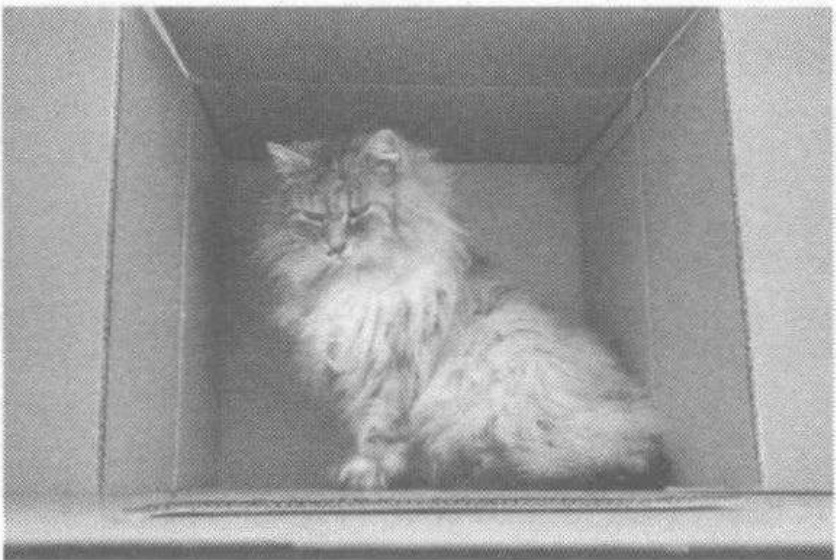
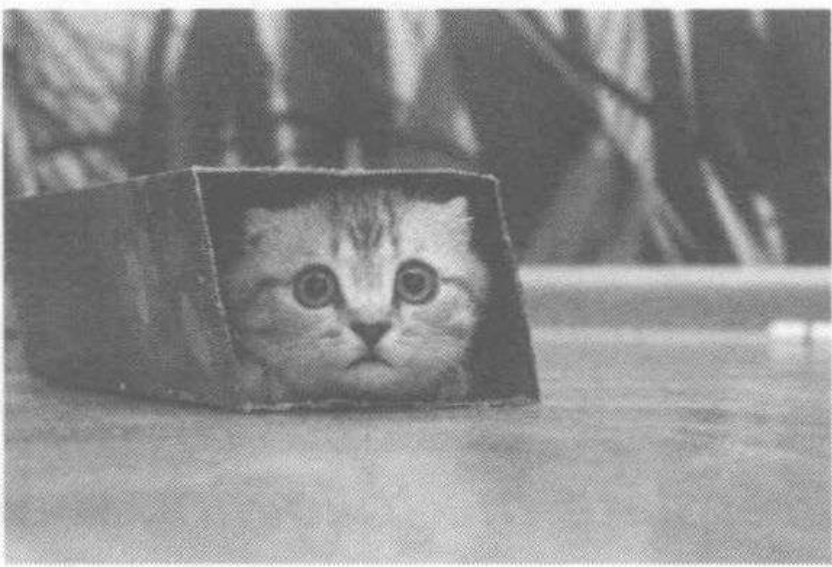
Before Reading
Make guesses and discuss: Why do cats love cardboard boxes?
Why Do Cats Love Cardboard Boxes?
Bryan Gardiner
1 Take heart, cat enthusiasts. Your cat's continued indifference toward her new Deluxe Scratch DJ Deck may be disappointing, but there is an object that's pretty much guaranteed to arouse her interest. That object, as the Internet has so thoroughly documented, is a box.
2 What are we to make of the strange gravitational pull that empty Amazon packaging exerts on cats? There's the obvious predation advantage: Cats are ambush predators, and boxes provide great hiding places to stalk prey from (and retreat to). But there's more going on here.
3 For one thing: stress. Providing hiding boxes for a group of newly arrived cats at a Dutch animal shelter while depriving another group of boxes entirely, ethologist Claudia Vinke of Utrecht University in the Netherlands found a significant difference in stress levels between cats that had boxes and those that didn't. In effect, the box cats got used to their new surroundings faster, were far less stressed early on, and were more interested in interacting with humans.
4 It makes sense when you consider that the first reaction of nearly all cats to a stressful situation is to withdraw and hide. "Hiding is a behavioral strategy of the species to cope with environmental changes," Vinke said.
5 Astute cat observers will note that many cats seem to pick other odd places to relax in addition to boxes. Some curl up in a bathroom sink. Others prefer shoes, bowls, shopping bags, coffee mugs, empty egg cartons, and other small, confined spaces, which brings us to the other reason your cat may like particularly small boxes: It's cold out.
6 According to a 2006 study by the National Research Council, the thermoneutral zone for a domestic cat is 86 to 97 degrees Fahrenheit. That's the range in which cats don't have to generate extra heat to keep warm or expend energy on cooling. That range also happens to be 20 degrees higher than ours, which explains why it's not unusual to see your neighbor's cat sprawled out on the hot ground in the middle of a
sunny summer day.
7 It also explains why many cats may enjoy curling up in tiny cardboard boxes and other strange places. Cardboard is a great insulator, and confined spaces force the cat to ball up, which in turn helps it to preserve body heat. As the same NRC study explains, most cats' housing areas are around 72 degrees Fahrenheit, a good 14 degrees colder than a domestic cat's minimum thermoneutral temperature.
8 So there you have it: Boxes are insulating, stress-relieving comfort zones where cats can hide, relax, sleep, and occasionally launch a sneak attack against the huge, unpredictable apes they live with.
(441 words)
New Words and Expressions
take heart become encouraged and more confident 树立信心;鼓起勇气;振作起来 enthusiast /ɪnˈθjuːzɪəst/ n. a person who is very interested in sth. and spends a lot of time doing it 热衷于……的人;热心者;爱好者
indifference /ɪnˈdɪfərəns/ n. a lack of interest, feeling or reaction towards sb. / sth. 漠不关心;冷淡;不感兴趣;无动于衷
deluxe /dəˈluks/ a. of a luxurious standard and surpassing all others of the same type 豪华的;奢侈的;高级的
DJ (the abbreviation for disc jockey) someone who plays CDs and records in a club, a TV station or on the radio (电台、电视台、夜总会) 唱片节目主持人
deck /dek/ n. a part of a sound system that records and / or plays sounds on a disc or tape (唱机的)转盘装置;(音响系统的)走带机构;录音座
guaranteed $ ^{①} $ /ˌɡærənˈtiːd/ a. certain to happen or be done or provided 保证的
arouse /əˈraʊz/ v. cause to become active; excite 引起;激起
document /'dɒkjument/ v. prove or support sth. with recorded facts 用文件(或证据等)证明
make (sth.) of (sth. / sb.) have or form an opinion about (sth. or sb.) 推断;理解
gravitational /ˌgrævɪˈteɪʃənəl/ a. connected with or caused by the force of gravity 引力的;重力引起的
gravitational pull (星球等对另一物体的)引力
packaging /ˈpækɪdʒɪŋ/ n. the boxes, bottles, plastic, etc. used for wrapping products so that they can be sold 包装物
exert /ɪɡˈzɜːt/ v. use power or influence to affect sb. / sth. 运用;行使;施加
predation /prɪˈdeɪʃən/ n. the act of an animal
killing and eating other animals (动物的)
捕食
ambush $ ^{\triangle} $ /'æmbuʃ/ n. the act of hiding and waiting for sb. and then making a surprise attack on them 伏击;埋伏
predator $ ^{\triangle} $ /'predətə(r)/ n. an animal that kills and eats other animals 捕食者;捕食性动物
stalk $ ^{\star} $ /stoːk/ v. move slowly and quietly towards an animal or a person, in order to kill, catch or harm it or them 偷偷接近;潜近(猎物或人)
prey $ ^{\star} $ /priː/ n. an animal, a bird, etc. that is hunted, killed and eaten by another 猎物
retreat /rɪˈtriːt/ v. move back or leave a center of fighting or other activity, esp. when forced to do so (尤指被迫地) 撤退;退却
Dutch /dʌtʃ/ a. of or connected with the Netherlands or its people 荷兰的;荷兰人的
shelter /'seltə(r)/ n. (无家可归者或动物的)临时收容所
deprive /dɪˈprɑːrv/ sb. of sth. take sth. away from sb.; prevent sb. from using or having sth. 剥夺某人的某物;阻止某人享有或使用某物
ethologist /ɪˈθɒlədʒɪst/ n. a person who studies
the behavior of animals in their natural habitat, usually proposing evolutionary explanations 动物行为学家
in effect in fact, although perhaps not appearing so 事实上;实际上
early on in the early part of a process or activity 在早期
make sense have a clear meaning; be a wise course of action 有明确的意义;有道理;合乎情理
behavioral $ ^{\star} $ /bɪˈhɛvjərəl/ a. relating to the way of behaving 行为的
strategy $ ^{A} $ /'strætɪdʒɪ/ n. a plan that is intended to achieve a particular purpose 策略;计策;行动计划
cope /kəʊp/ v. deal successfully with a difficult situation(成功地)应付;对付
cope with deal successfully with a difficult situation 成功地应付;对付
astute /ə'stjuːt/ a. clever and able to see quickly sth. that is to one's advantage 精明的;敏锐的
odd $ ^{A} $ /ɒd/ a. different from what is ordinary or expected; unusual 奇特的;古怪的;异常的
curl /k3:l/ v. twist into or form a curl or curls
(使)弯曲
curl up sit or lie with the body curved and the legs tucked up 蜷缩;蜷作一团
carton $ ^{\triangle} $/'kɑːtən/ n. a light cardboard or plastic box for holding goods, esp. food or liquid (尤指装食品或液体的)硬纸盒;塑料盒
confined $ ^{A} $ /kənˈfaɪnd/ a. small and surrounded by walls or sides 狭窄而围起来的
council /ˈkaʊnsəl/ n. a group of people chosen to give advice, make rules, do research, provide money, etc. (顾问、立法、研究、基金等) 委员会
thermoneutral /ˌθɜːməʊˈnjuːtrəl/ a. 热平衡的;温度适中范围的
domestic $ ^{A} $ /dəʊˈmestɪk/ a. kept on farms or as pets; not wild 驯养的;作宠物饲养的;非野生的
expend $ ^{*} $ /ɪk'spend/ v. use (time, energy, effort, etc.) for a particular purpose 使用;消耗
sprawl $ ^{\triangle} $ /sprɔːl/ v. sit or lie with one's arms and legs spread out in a relaxed or awkward way 伸开四肢坐(或躺)
insulator $ ^{\star} $ /'insjuleitə(r)/ n. a material or device used to prevent heat, electricity, or sound from escaping from sth. 隔热(或绝缘、隔音等的)材料(或装置)
ball up (cause to) form into the shape of a ball
(使) 成球状
housing /'hauzɪŋ/ n. houses, flats / apartments, etc. that people live in, esp. when referring to their type, price or condition 住房;住宅(统称,尤指住房类型、价格、条件)
a good not less or fewer than a particular amount; at least 至少
insulating $ ^{*} $ /'insjuleitɪŋ/ a. preventing heat, sound, electricity, etc. from passing through 起隔热(或隔音、绝缘)作用的
stress-relieving /'stresri,liːvɪŋ/ a. 缓解压力的
occasionally /ə'keɪʒənəli/ ad. sometimes but not
often 偶然地;有时
sneak $ ^{\star} $/sni:k/ a. done without any warning 突然的;出其不意的
unpredictable $ ^{A} $ /ˌʌnprɪˈdɪktəbl/ a. that cannot be predicted 无法预言的;不可预测的
ape /eɪp/ n. a large animal like a monkey, with no tail 类人猿
Proper Names
Bryan Gardiner /'braɪən ˈɡɑːdɪnə(r)/ 布赖恩 · 加德纳
Amazon/æməzən/ 亚马逊(美国电商公司)
Claudia Vinke / 'klɔːdɪə vɪŋk/ 克劳迪娅 · 芬克
Utrecht /'juːtrekt/ University 乌得勒支大学(荷兰)
$ \mathrm{HCl} \rightarrow \mathrm{HClO} + \mathrm{HCl} $
Netherlands / neðəlandz/ 荷兰
Global Reading
Scan the text for the answer to the question: Why do cats love cardboard boxes?
Underline all the answers you find in the text.
Close Reading
- Choose the best answer to complete every statement.
- A cat loves _____ most.
a) a Deluxe Scratch DJ Deck b) something pretty c) a box
- The "obvious predation advantage" (Para. 2) is that ___.
a) boxes are good toys for cats
b) boxes are good hiding places for cats
c) boxes are good places for cats to kill their prey
- The main idea of Paras. 3 and 4 is that ___.
a) boxes help cats relieve stress
b) cats love hide-and-seek games
c) it is difficult for cats to cope with a new environment
- Paras. 5–7 mainly support the idea that ___.
a) cats love other places besides boxes
b) cats seek warmth in boxes and other places
c) many cats' housing areas are too cold for them
- The "huge, unpredictable apes" (Para. 7) refer to ___.
a) cats' predators
b) cat owners
c) visiting guests of the house
- Answer the following questions to understand the comparative studies the author presents in the text.
- What is the comparative study Claudia Vinke carried out with cats? What are the findings?
- What supporting evidence does the author provide for this reason: Cats love particularly small boxes because it's "cold out"?
Critical Thinking
Work on the following tasks.
- Do you think it is worthwhile to study issues of minor significance like "why do cats love cardboard boxes"?
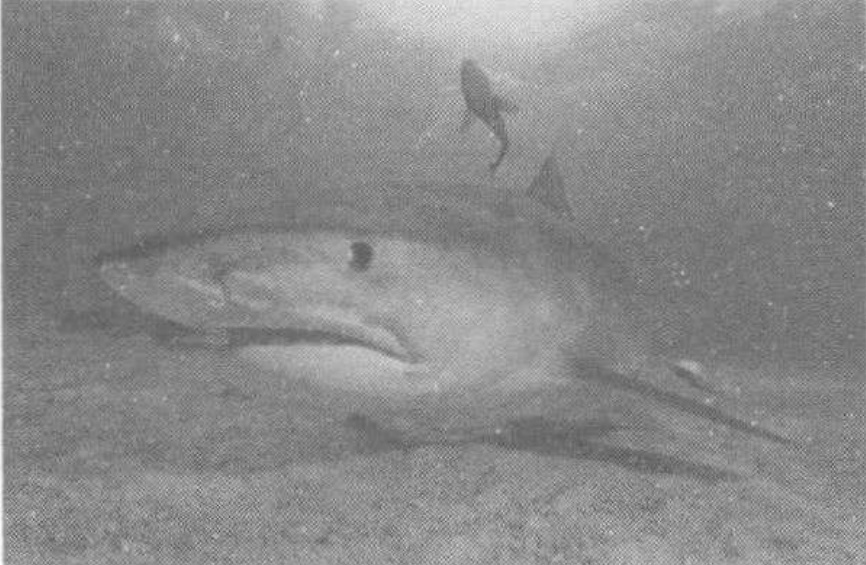
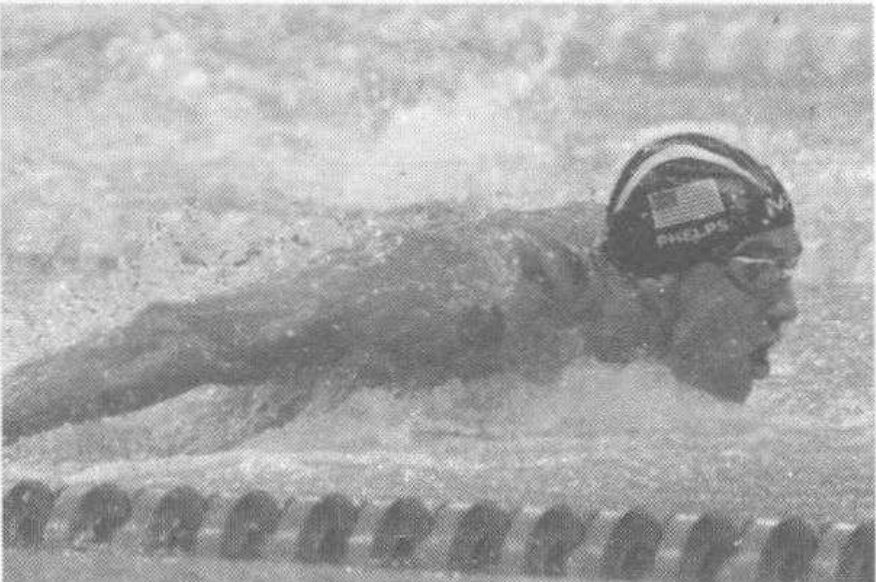
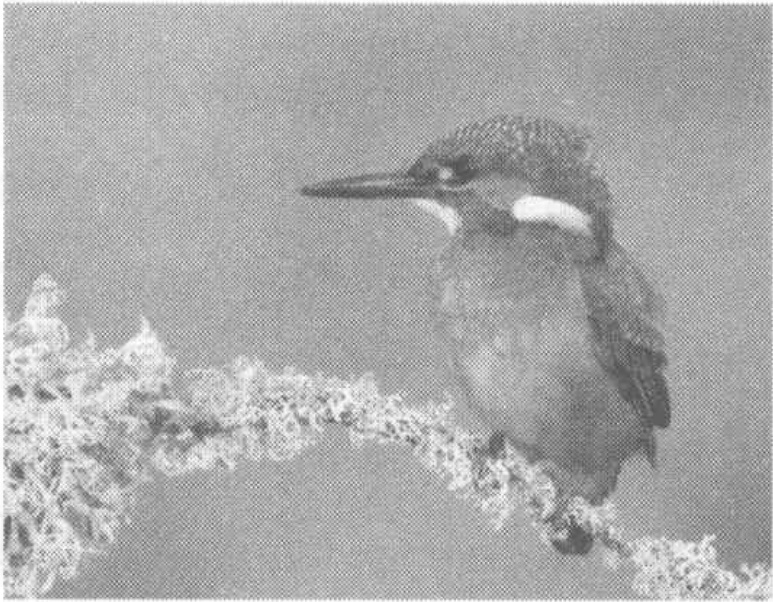
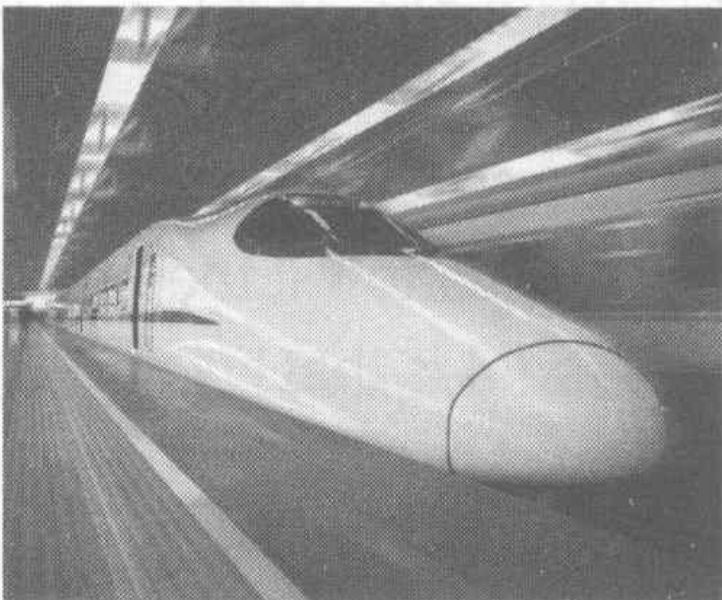
- Look at the following pictures. What inspiration have scientists got from animals? Find some other examples.
A. a tiger shark and Michael Phelps Swim Suit
B. a dog and a dynamic robot
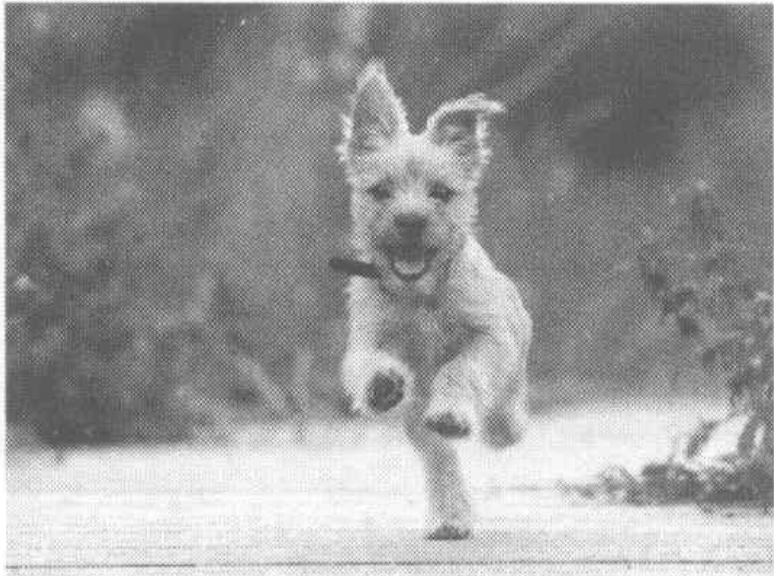
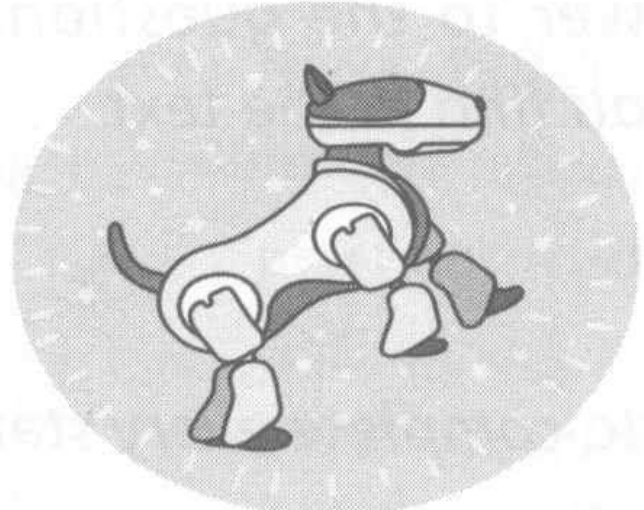
C. the beak (鸟喙) of a bird and a bullet train
Language Enhancement
- Some words are polysemous, that is, having more than one meaning. Study the following three words with different meanings. Choose the appropriate meaning for each boldfaced word in the sentences below the box. Write the letter in brackets.
document n. & v.
a. an official paper or book that gives information about sth., or that can be used as evidence or proof of sth.
b. a computer file that has a name and contains text
c. record the details of sth.
d. prove or support sth. with recorded facts
odd a.
a. different from what is ordinary or expected; unusual
b. happening or appearing occasionally; not very regular or frequent
c. not with the pair or set that it belongs to; not matching
d. approximately or a little more than the number mentioned
domestic a.
a. of or inside a particular country; not foreign or international
b. used in the home; connected with the home or family
c. kept on farms or as pets; not wild
- You can attach documents to an email and send them to friends or colleagues. ()
- Your birth certificate is an important document, which should be kept safe at all times. ()
- It is thoroughly documented in the medical community that men die younger than women.()
- Many writers have documented the significant social changes over the last decade. ( )
- On his feet were a pair of odd socks that had holes at the toes. ()
- She looks more odd than ever and doesn't interact with anyone in the workplace. ()
- Ames worked odd jobs at the agency while in high school, and after college, he signed on full time.()
- After returning from WWII battlefields, he had another 20-odd years to work before retiring.()
- It can be difficult for people with domestic responsibilities to work late at night. ()
- Domestic coffee products are just beginning to gain a foothold, and for now, they are unable to compete in volume or price with imported brands. ()
- In addition to looking after the welfare of domestic pets, society plays a vital role in the care of farm livestock.()
- Complete the sentences with the phrases in the box. Change the form where necessary.
cope with curl up early on in effect make sense take heart
- We're paid more but _____, we're earning less than last year because of the higher income tax.
- If a bear does actually make contact with you, _____ in a ball, protecting your stomach and neck, and play dead.
- The children who gave in to temptation _____ were more likely to be lonely, easily frustrated and inflexible when they grew up.
- Facing competition from domestic and overseas markets, small businesses should ___ at the government's tax relief plan.
- She used to turn to her supervisor for assistance when encountering any trouble, but now she can _____ everything on her own.
- The finding suggests that it doesn't _____ to take vitamin C 365 days a year to lessen the chance of catching a cold.
- Study the word building skill in the box and work on the tasks below.
Word Building Skill — Conversion (I): noun → verb
Conversion is a word-building process by which a word is changed from one part of speech into another without the addition of an affix (词缀). For example, the noun "water" is converted to the verb "water". Conversion, like other types of word building, is treated as a process now available for extending the lexical (词汇的) resources of the English language.
Conversions from nouns to verbs and from verbs to nouns are the most productive types. "Noun to verb" conversion can be classified into the following categories:
To put in the noun: "bottle" (to put into a bottle), "corner" (to put into a difficult position)
To give the noun or provide with the noun: "commission" (to give a commission to), "mask" (to give a mask to)
To deprive of the noun: "skin" (to take the skin off), "core" (to remove the core from)
To do with the noun: "finger" (to touch with the fingers), "brake" (to stop by means of a brake)
To act as the noun: "father" (to act as a father to), "nurse" (to act as a nurse to)
To make or change ... into the noun: "cash" (to change into cash), "group" (to make into a group)
To send or go by the noun: "mail" (to send by mail), "boat" (to travel in a boat).
A. Study the following sentences and underline the verbs which are converted from nouns
- Indeed, when a group of children was asked to list 10 of their closest relationships and then rank them according to who they would most likely turn to in a time of need, pets often scored higher than the children's human relationships. (Para. 11, Reading 1)
- As the same NRC study explains, most cats' housing areas are around 72 degrees Fahrenheit, a good 14 degrees colder than a domestic cat's minimum thermoneutral temperature. (Para. 7, Reading 2)
- Over 80 percent of college students we surveyed have experienced it. (Para. 4, Reading 1, Unit 5)
B. Some verbs that have been converted from nouns can be added with "-ing", thus becoming gerunds (动名词). These gerunds are actually considered nouns, having more abstract meaning and emphasizing the process of an action. Translate the gerunds and expressions in the table. The first one has been given as an example.
| Gerund | Chinese meaning | Expression | Translation |
| 1) housing | 提供住所;住房 | the national housing policy | 国家住房政策 |
| 2) ranking | a sophisticated ranking system | ||
| 3) banking | a world banking crisis | ||
| 4) parenting | parenting skills | ||
| 5) schooling | formal schooling | ||
| 6) marketing | a marketing campaign | ||
| 7) shipping | international shipping lanes | ||
| 8) functioning | the market-oriented economy functioning |
- Study the translating skill in the box and work on the task below.
Translating Skill — Translating relative clauses (II): translating as postmodifiers
Some relative clauses, especially when they are very long, may best be put after the words they modify, to avoid ill-sounding, top-heavy sentences.
When translating a relative clause as a postmodifier, it is sometimes necessary to repeat the antecedent (先行词), like “这一点” and “在这里” in the following examples:
Source Text: The presence of a pet provides a constant source of healthy social stimulation that can be hard to find in even a spouse or a caretaker. (Para. 13, Reading 1)
Translation: 宠物的存在能持续提供健康社交的刺激源, $ \underline{\text{这一点}} $就算是配偶或照顾者也无法做到。
Source Text: Boxes are insulating, stress-relieving comfort zones where cats can hide, relax, sleep, and occasionally launch a sneak attack against the huge, unpredictable apes they live with. (Para. 8, Reading 2)
Translation: 箱子是可隔热、能减压的舒适区, $ \underline{\text{在这里}} $猫儿们可以藏身、放松、睡觉,偶尔还能向与它们同住的体型庞大、不可预测的猿类发起一次偷袭。
Translate into Chinese the following passage that serves as a summary of Reading 2, paying special attention to the relative clauses in italics.
What are we to make of the strange gravitational pull that cardboard boxes exert on cats?
For one thing, cats are ambush predators, and boxes provide great hiding places to stalk prey from (and retreat to).
For another, hiding is a behavioral strategy of cats to cope with environmental changes and boxes are stress-relieving comfort zones for them.
Finally, most cats' housing areas are a lot colder than a domestic cat's minimum thermoneutral temperature. Cardboard is a great insulator, and confined spaces force the cat to ball up, which in turn helps it to preserve body heat. This explains why many cats may enjoy curling up in tiny cardboard boxes and other strange places.
Translation:
Part II LISTENING AND VIEWING
Listening:
Your Cat Thinks You're Cool
Before Listening
Discuss the following questions.
- Do you think pet keeping should be permitted on campus?
- Are you a cat person (喜欢猫的人) or a dog person?
New Words and Expressions
aloof /əˈluːf/ a. not friendly or interested in other people 冷漠的;冷淡的
be littered with 充满(不好的东西)
treat/triːt/ n. (尤指不经常吃的)美味食物
stuff/st $ \underset{\cdot}{a} $f/ v. fill with a substance 把……装满;填满;塞满
odor /'əʊdə(r)/ n. a smell, whether pleasant or unpleasant 气味;味道
catnip /ˈkætniːp/ n. 假荆芥;樟脑草(其香气能吸引猫)
gerbil /'dʒɜːbl/ n. 沙鼠
tuna /'tjʊnə/ n. 金枪鱼;吞拿鱼
pet /pet/ v. touch and move one's hand gently over esp. an animal or a child 抚摸
pit /pit/ v. 使对应;使竞争
take-home /'teɪkhəʊm/ a. 实际得到的
scent $ ^{*} $ /sent/ n. a smell, esp. a particular usu.
pleasant smell 气味;(尤指)香味
come in finish in the stated place in a race or competition(比赛中)获得……名次
finicky /'finɪkɪ/ a. (对衣食等)过分讲究的;过分挑剔的
captive $ ^{*} $ /ˈkæptɪv/ a. kept in a confined space; unable to escape 被关起来的;被困住的
stereotypic $ ^{\star} $/,steriəu'tipik/ a. 老一套的;刻板的
Listening Comprehension
Study the listening skill in the box and work on the tasks below.
Listening Skill — Recognizing signposting language (II): consequence
In a lecture, the speaker tends to use linking words and phrases that show connections between sentences and paragraphs. More importantly, to demonstrate the main argument better, the speaker always emphasizes the outcome explicitly. You should focus on the usage of some signposting words and phrases that show consequence, for example, therefore, thus, as a result, consequently, etc.
1. Listen to the lecture, focus on the findings of Shreve and her team's research and fill in the blanks
- The results? "Our take-home message is that although each cat displays an ___ for each item," says Kristyn Vitale Shreve, "the majority of cats and shelter cats preferred ___ with a human. Followed next by food, then toys, then scents."
- "This research is ___, especially in an applied setting, where preference tests like these could be used to _____ an individual's most preferred item. And then that item could be used for _____."
- "Or even to serve as enrichment, especially for shelter cats or potentially other captive wild cats to _____ behaviors or even stereotypic behaviors."
2. Listen again and choose the right answers
- What old-fashioned and wrong belief do people have towards house cats?
a) House cats are indifferent and uninterested in human's business.
b) House cats always enjoy their favorite toys.
c) House cats are concerned about tuna as much as humans.
- Which object in the following is NOT mentioned in the team's test?
a) Stuffed mouse.
b) Tuna fish.
c) Shelter dog.
- How many cats in the test refused to interact with the objects?
a) Four.
b) Five.
c) Six.
Viewing: Migratory Birds May Use Magnetic GPS
Before Viewing
Discuss the following questions.
- Why can homing pigeons (信鸽) find their way home quickly and precisely?
- Do you know anything about GPS?
New Words and Expressions
migratory $ ^{A} $ /'maɪɡrətəri/ a. 迁徙的;移栖的
magnetic /mæɡˈnetɪk/ a. 磁的;磁性的
GPS global positioning system 全球(卫星)定位系统
pinpoint $ ^{A} $ /'pɪnpɔɪnt/ v. 明确指出;确定(位置或时间)
orient $ ^{A} $ /'ɔɪrɪənt/ v. find one's position in relation to one's surroundings 给……定方位;给……定方向
traverse $ ^{A} $ /'trævəs/ v. cross an area of land or water 横越;穿过;横渡
hemisphere $ ^{A} $ /'heɪmɪsfɪə(r)/ n. (地球的)半球 breed /briːd/ v. 产仔;繁殖
magnetic field 磁场
olfactory /ɒlˈfæktəri/ a. 嗅觉的
magnetism /'mæɡnɪtɪzəm/ n. 磁性;磁力
Eurasian /juːˈreɪʒən/ a. 欧亚(大陆)的
reed warbler /riːdˈwɔːblə(r)/ 苇莺
the Baltic /'bɔːltɪk/ Sea 波罗的海(欧洲北部的内海)
Saint Petersburg /seint 'pi:t $ \underline{\text{azb3:}} $g/ 圣彼得堡(俄罗斯西北部港市)
reorient $ ^{①} $ /ˌriːˈɔːrɪnt/ v. 重定……的方向(或方位)
regardless of without worrying about or taking account of 不顾;不管
envious /ˈenviəs/ a. wanting sth. that sb. else has 嫉妒的;羡慕的
fluctuate $ ^{A} $ /'flʌktʃueɪt/ v. 波动;(在……之间)起伏不定
crude /kruːd/ a. simple and not very accurate
but giving a general idea of sth. 粗略的;大概的
navigation $ ^{\star} $ /nævi'geɪsən/ n. 导航;领航
be better off be in a more satisfactory or desirable situation 较自在;较幸运;较幸福
Viewing Comprehension
Study the listening skill in the box and work on the tasks below.
Listening Skill — Recognizing signposting language (III): presenting factual information
Signposting language is used vastly in academic lectures in order to give listeners a clearer structure of the information. To present some factual information, especially about scientific methods and findings, the speaker uses these expressions: statistics show..., recent data illustrate..., a research indicates..., one ... another ..., etc.
- Watch the video clip and focus on how the factual information and scientific methods are presented. Reorganize the following sentences according to the correct order in the video, and put a)–e) into the numbered blanks.
a) The same scientists have repeated that experiment, but they didn't move the birds at all.
b) One theory claims that the birds can decide the direction by how a place smells.
c) They found once again that the birds reoriented themselves to the northwest, suggesting that the magnetic field alone is enough to alter the birds' mental map.
d) Researchers in Russia investigated the map issue by capturing some birds and moving them.
e) Another theory people hold is that the birds rely on their sense of magnetism.
The correct order is: 1) ____ 2) ____ 3) ____ 4) ____ 5) ____
- Watch again and decide whether the following statements are true (T) or false (F).
☐ 1) What scientists are concerned about is the migratory birds' compass function in giving them the correct direction.
- The Eurasian reed warblers in the test flew northeast towards their breeding grounds successfully after being moved to a place near Moscow.
- The test finally suggests that the magnetic field and the smells can orient the birds' map.
☐ 4) According to the speaker, human beings had better choose GPS for exact directions.
Critical Thinking
Discuss the following questions.
- Animals appeared on the earth long before the human race, but resourceful humans have learned so much, both for survival and for development, from animals. Discuss how humans have benefited from studying animals.
- How can you find your way without a smart phone or GPS in a forest or desert?
Part III SPEAKING
After making adequate preparations for a presentation (Unit 5), now it is time to present it in front of the audience. Generally, a presentation is made up of three parts: introduction, body and conclusion. In this unit, you are going to learn how to open a presentation by learning the components of an introduction and the language being used. Studies have shown that the audience usually pays the most attention to the beginning of a presentation. Therefore, it is wise for you to arouse their interest and clearly tell them what you are going to do through the introduction.
Opening a presentation
The introduction of a presentation aims at establishing a rapport (友好关系) with the audience and giving them a "map" — an overview of the main points to be covered — to follow. Normally you can open a presentation by introducing yourself, the topic, the objective and the structure of your presentation.
Introducing the presenter
At the very beginning of a presentation, the presenter needs to greet the audience and then briefly introduce himself / herself. In this way an initial relationship with the audience is established. In the academic setting, such information as the presenter's name, college, position (student, professor, expert or dean, etc.) may be provided. On the occasions when the presenter is first introduced by a chairperson of the seminar or conference, he / she should express thanks to the chairperson and then greet all the participants. Useful language patterns in this phase are as follows:
Hello, everyone!
Good morning / afternoon / evening, ladies and gentlemen!
My name is ... / l'm a ... from ...
Let me just start by introducing myself.
It's a great honor for me to be with you today. / I appreciate the opportunity to ...
Thank you for your kind introduction!
Introducing the topic
Once you have formed a rapport with the audience, you can approach the topic: tell them what the subject being discussed is and offer a specific title for your presentation. It is in this stage that you might use a story, an anecdote (个人轶事), an interesting fact or a few questions to arouse the audience's interest in the topic. For instance, if you are going to talk about "The Benefits and Drawbacks of Keeping a Pet", you can start by asking the audience whether they have kept a pet, or by telling them a story of one of your friends who has kept a dog for many years. In this way the listeners may feel intrigued (着迷的) and expect to hear more from you. Besides,
sometimes you may want to tell the audience that your topic is important and necessary which deserves their time and attention in listening. The following expressions can be used to introduce a topic:
Today I want to talk about ...
I'd like to discuss / concentrate my discussion on ...
The title of my presentation is...
I want to begin with a story that...
Let me ask you some questions first.
This is an important / a significant issue nowadays.
It has aroused a heated debate / created a wide controversy (争议)…
Introducing the objective
In the third stage of an introduction, you need to identify the aim / objective of your presentation. Most presentations in the academic setting are informative, i.e. to convey relevant information on a topic or a recent study. So the presenter may aim to share a new discovery, to present major findings of a study, to provide a new perspective on the topic, or to give an overview of a certain subject, etc. Being aware of the objective of the speaker, the audience could understand the talk more easily. The useful language in this phase includes:
The aim / objective / purpose of my presentation is to ...
This presentation aims at / to ...
What I want to do is...
Introducing the structure
Finally and most importantly in the opening section, the speaker should give an outline, also called a preview or a table of contents, to show the structure of the whole presentation. You need to explicitly tell the audience what you will do first, then second, third and lastly. By offering such a clear "map", the audience can perceive the logic among different parts of your presentation and will follow you without difficulty. Try to use the following language patterns when introducing the structure / organization:
I'd like to give a brief outline / preview of my presentation. First I'll explain / provide ...
I shall begin with ...
Then / Second / Secondly I plan to focus on / talk about ... After that / Third / Thirdly I want to illustrate / demonstrate ... will be presented later / afterwards. Finally / Lastly, I hope to ...
I have divided my presentation into ... parts. The first is ... The second is ... The third is ...
- Work in a group. Read the following sentences and identify which can be used in the introduction of a presentation.
- I would like to summarize the talk by running through the main points.
- The aim of this presentation is to find a desirable solution to this severe problem.
- Please feel free to ask me any questions.
- I'll begin with a preview of the contents to be covered.
- Thank you, Professor James, for your kind introduction.
- Just to repeat what I said earlier: the dolphin is an amazing anir
- Then I'm going to explain why keeping a pet is not always beneficial
- It's a great pleasure for me to address such a distinguished audience.
- Let's look at another disadvantage of being so attached to your pet.
- Today I'd like to talk about intelligent animals in the world.
2. Study the speaking skills and complete the opening part of a presentation with the expressions in the box. You may need to capitalize (大写) the first letter of some expressions when filling in the blanks
about the topic after that finally here is a brief outline
it's an honor to be my name is several questions the aim of my presentation
Good morning, everyone! 1) _____ Tiffany Zhang. I'm an undergraduate (本科生) from the School of Business. 2) _____ here and share with you my ideas 3) _____ "Are Dogs Intelligent Animals?". First, Let me ask you 4) _____ How many of you have kept a dog at home or even in your dormitory? Please raise your hands if the answer is "yes". (About half of the audience put up their hands.) Well, so many of you have kept a dog. Then do you think your dog is clever or intelligent? I believe a majority of you would say "yes". 5) _____ today is to provide some evidence that indicates dogs are intelligent animals. 6) _____: First, I'm going to introduce the background of a recent study on dogs' memories. 7) _____ I will describe the research method and steps. Thirdly, the findings of the study will be elaborated and discussed. 8) _____ I will come to the conclusion that dogs are likely to have memories that resemble the human's in certain aspects.
- Give a short presentation (maximum 5 minutes) to introduce a study of animals, including its background information, research method and steps, major findings and discussions. Use the following guidelines to help your presentation.
- Make sufficient preparations by adopting the steps introduced in Unit 5.
Try to use different language patterns to open your presentation.
Be a confident presenter and avoid undesirable manners.
Besides being formal (Unit 4) and cautious (Unit 5), the language used in academic writing is also characterized by an efficient style, i.e. using the least amount of words to express the required information clearly. A typical strategy to realize linguistic efficiency is by using nouns or noun phrases that can condense the information and make the sentence structure compact. In this unit, you are going to learn how to write in an efficient style by adopting this strategy as well as other means.
Writing in an efficient style
Efficient writing aims to convey the meaning without repetition or using too many words. A close examination of academic texts may reveal the common standards for efficiency: nouns or noun phrases are frequently used; passive voice is preferred; and unnecessary repetition is avoided. All these factors help achieve the efficiency of language in academic writing.
Using nouns or noun phrases
Many nouns can be derived from other parts of speech. The process of turning a word that is not a noun (e.g. a verb, an adjective or an adverb) into a noun or into the head of a noun phrase is called nominalization (名词化). Sometimes producing a noun from another part of speech requires adding an affix, such as assign → assignment, certain → certainty. (Particularly, a gerund (动名词) is a noun formed from a verb by adding -ing which refers to an action, process or state.) Note that sometimes it does not need any transformation, such as wish → wish, result → result. Nominalization tends to expand the information contained in a single sentence. Compare the following two expressions:
Migratory birds are able to travel large distances.
The ability to travel large distances (of migratory birds) ...
The first expression is a complete sentence, whereas the second one that involves nominalization is a noun phrase. It means that if the writer wants to include more information in the first sentence, he / she must add some clauses to it or use more complete sentences. However, through nominalization this sentence can be condensed (压缩) into a noun phrase, with which the writer can easily form a new sentence that contains far more information. In this way, the use of nouns or noun phrases results in grammatical simplification and the condensation of information. For this reason, it is always regarded as a major means to realize language efficiency. Look at the following example from Reading 1:
While stronger pet-owner bonds usually lead to the greatest stress relief, even brief encounters can create improvements.
Note that the overuse of nominalization should be avoided because too many nouns or noun phrases in one single sentence may make it appear abstract or even meaningless.
Using passive voice
In academic writing, the "doer", i.e. the agent (动作执行者), is sometimes not so important as the action or the result of the action. For example, instead of writing:
I will divide my essay into four parts.
you had better use a passive voice here:
The essay will be divided into four parts.
On the one hand, the first person / used here may make the writing less formal and objective. On the other hand, the action "divide" or the result "four parts" is more important than the agent. Therefore, using the passive voice while not mentioning the agent at the same time is another way to achieve efficient writing.
It is known that many academic articles are research-based. When describing the research method or the process of the experiment, the writer would always employ passive voice and omit the agent (i.e. the scientist who conducts the research). Hence readers' attention will be drawn to the process and the result of the study.
- Avoiding unnecessary repetition
Unnecessary repetition usually involves expressing the same idea / thing in different words, or simply repeating the same words / phrases in one sentence. Look at the following examples:
| a round circlerepeat again |
| free service at no extra charge |
| Bees can learn how to move a ball just by watching others move a ball. |
| By comparing these two studies, similar mechanisms can be identified between these two studies. |
In the first two examples, the words being modified have the same connotation as the words modifying them: a circle means a round shape; repeat means say or do again. So the repetitious modifying words (round and again) need to be crossed out. In the third example, the same idea is expressed in different words — something free actually needs no extra charge. In the two sentence examples, the same phrase has been used two times, which results in redundancy (冗余). A pronoun or a synonymous expression can be used to replace the repeated expression, like:
Bees can learn how to $ \underline{\text{move a ball}} $ just by watching others $ \underline{\text{carry out the task}} $ / $ \underline{\text{do it}} $.
By comparing $ \underline{\text{these two studies}} $, similar mechanisms can be identified between $ \underline{\text{them}} $.
In fact, it is more concise to cross out “between them” in the last sentence, because to compare two things means to discover the differences or similarities between them. Consequently, to write economically by avoiding unnecessary repetitions requires careful proofreading.
- Rewrite the following sentences by using nouns or noun phrases where possible. The parts of speech that need to be nominalized have been underlined.
Example:
The kidneys of desert animals are $ \underline{\text{specially constructed}} $, so they do not need to drink water for a long time.
→ The $ \underline{\text{special construction}} $ of the kidneys of desert animals enables them not to drink water for a long time.
- Acid rain $ \underline{\text{destroys}} $ the trees, which in turn threatens wild animals in many areas of the world.
- People always think that dogs are $ \underline{\text{smart and faithful}} $ (忠诚的), so they like to keep dogs at home.
- Since we can $ \underline{\text{track}} $ migratory birds, we know that different birds may follow very different routes.
- Bees can $ \underline{\text{associate}} $ certain actions with reward, so people tend to $ \underline{\text{believe}} $ they are smart creatures.
2. Rewrite the following sentences in passive voice
- Scientists must have conducted all animal studies according to relevant national and international guidelines.
- People believed that the earliest bird has existed for 50 to 60 million years.
- Then researchers commanded the dogs to mimic the action with the words "Do it!".
- Zoologists classify animals based upon their prevailing (主要的) characteristics and traits.
- Write a body paragraph for the essay topic "Advantages / Disadvantages of Owning a Pet for Companionship". Use the following guidelines to help your writing.
- Think of a topic sentence in the paragraph. For example, you may focus on the positive or negative aspects of keeping a pet. Then provide evidence to support the main idea.
- This body paragraph should include a topic sentence, supporting sentences and / or a concluding sentence.
- Try to write in a formal and efficient style.