Unit 2 Technology
2
Technology

Lead-in
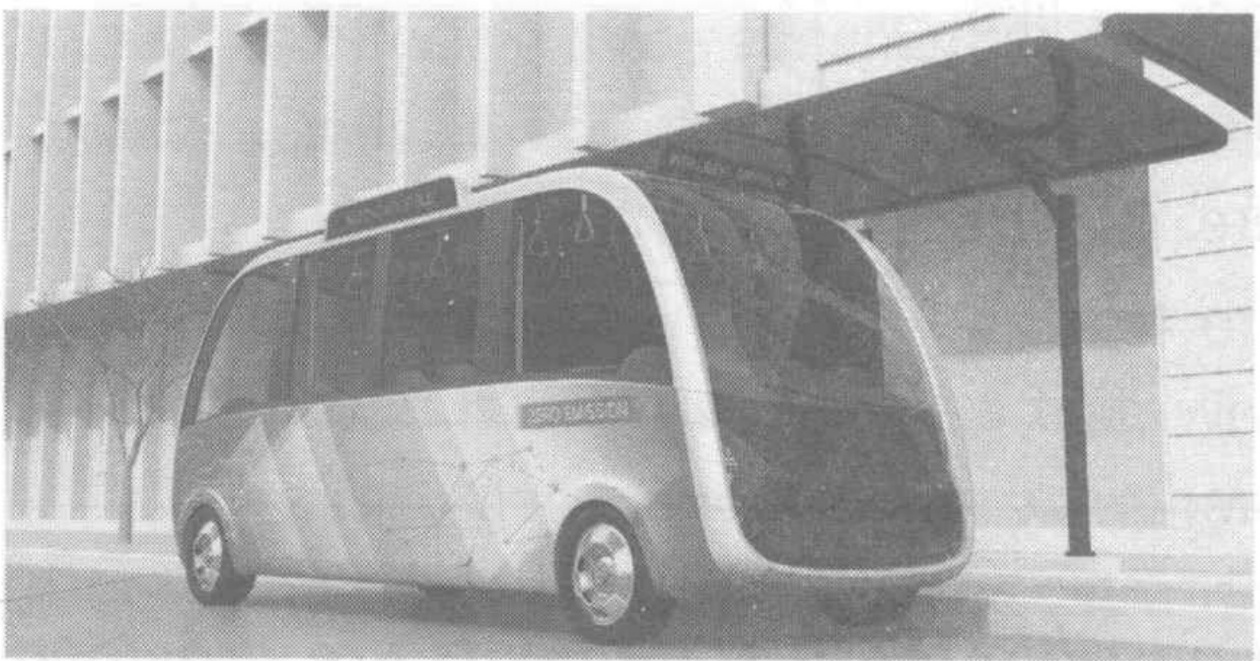
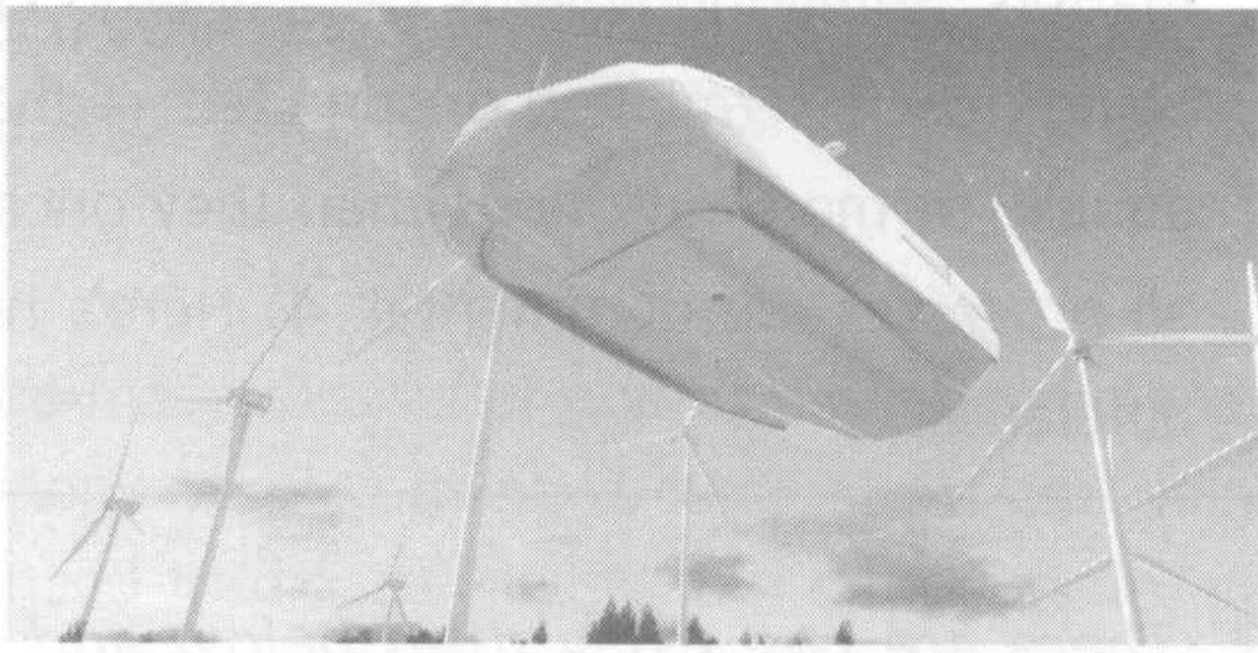
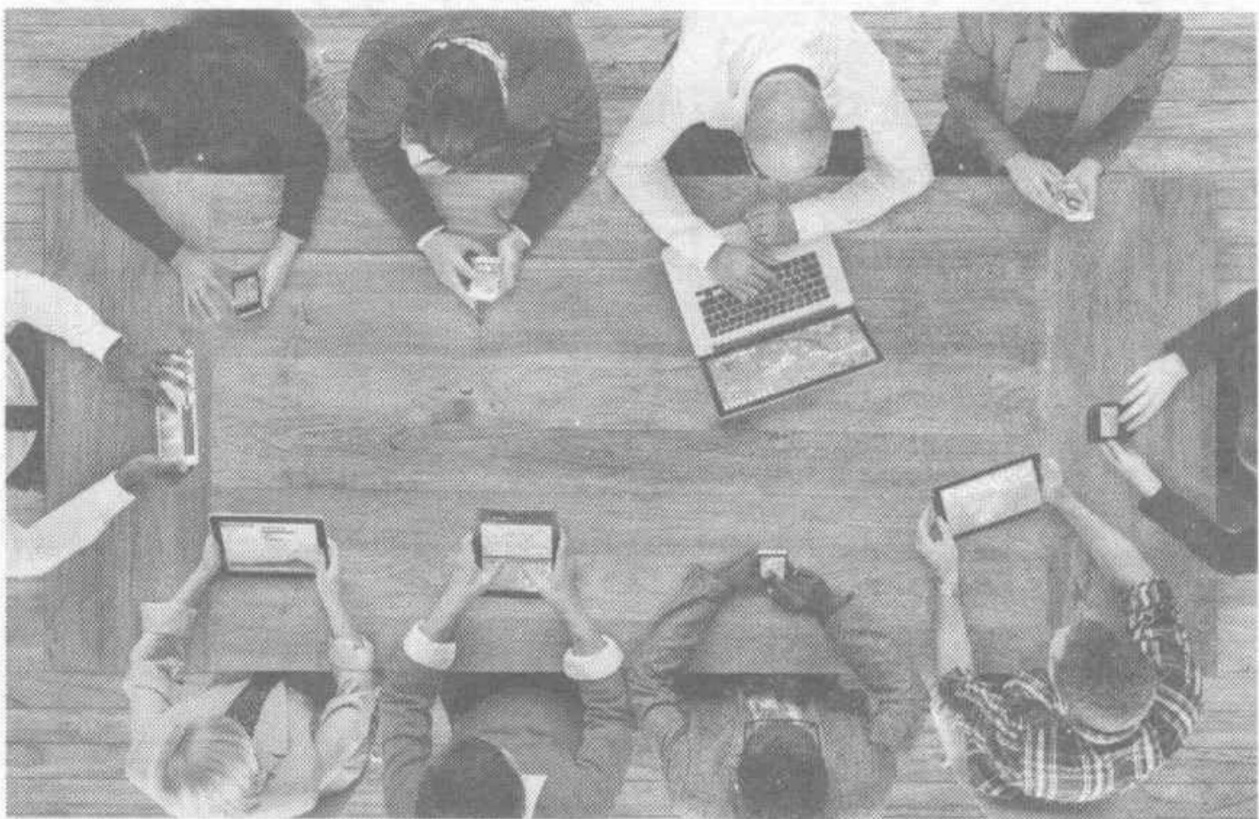
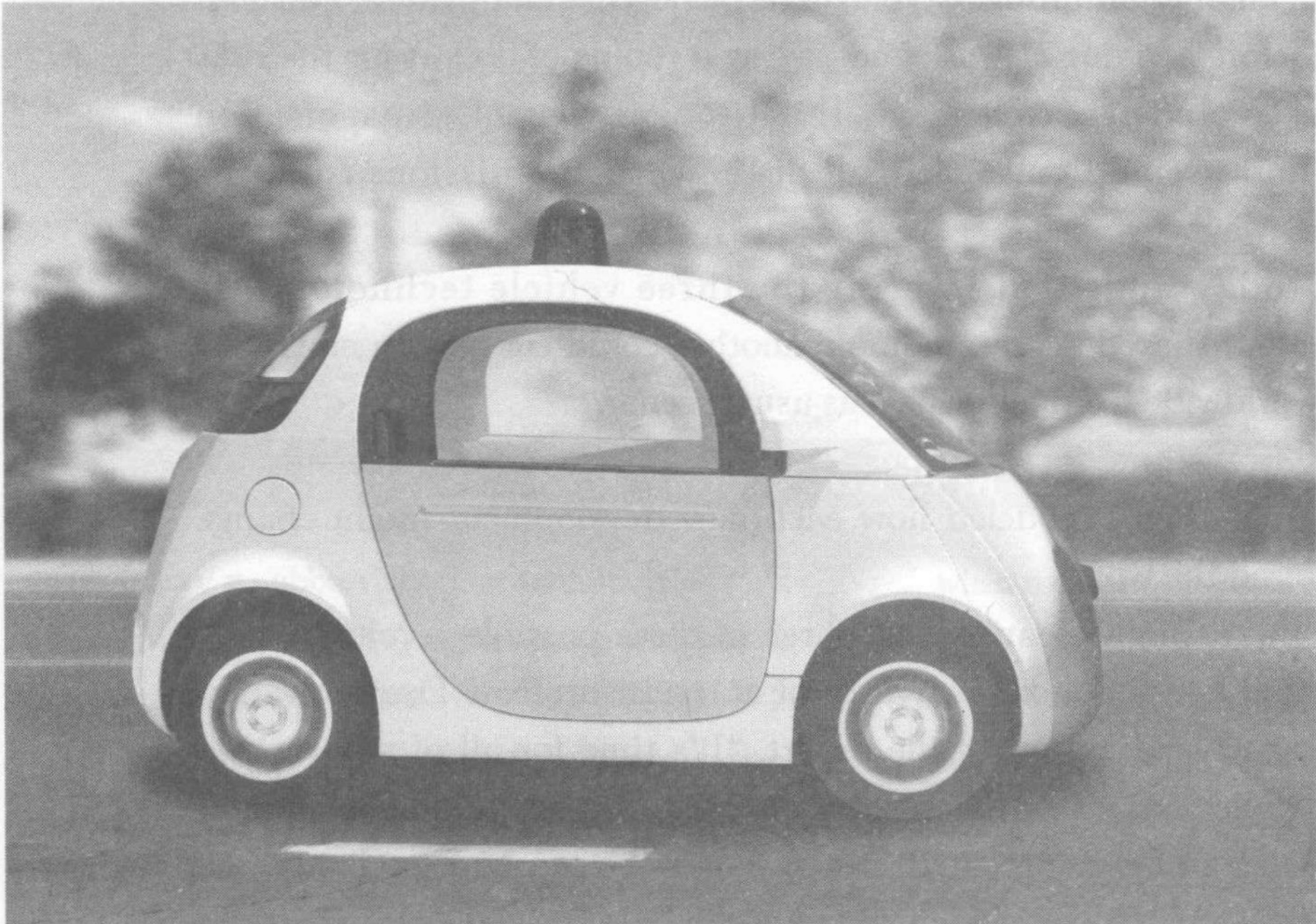
Imagine you are living in 2050 with various new technical devices around you as presented in the pictures. Answer the following questions and discuss how people travel and communicate in the future.
- Are there auto-driving buses for public transport?
- Can people drive flying cars to get around?
- Are people only communicating through digital devices?
- Can people feel the "touch" of others via long-distance communication?
Reading 1
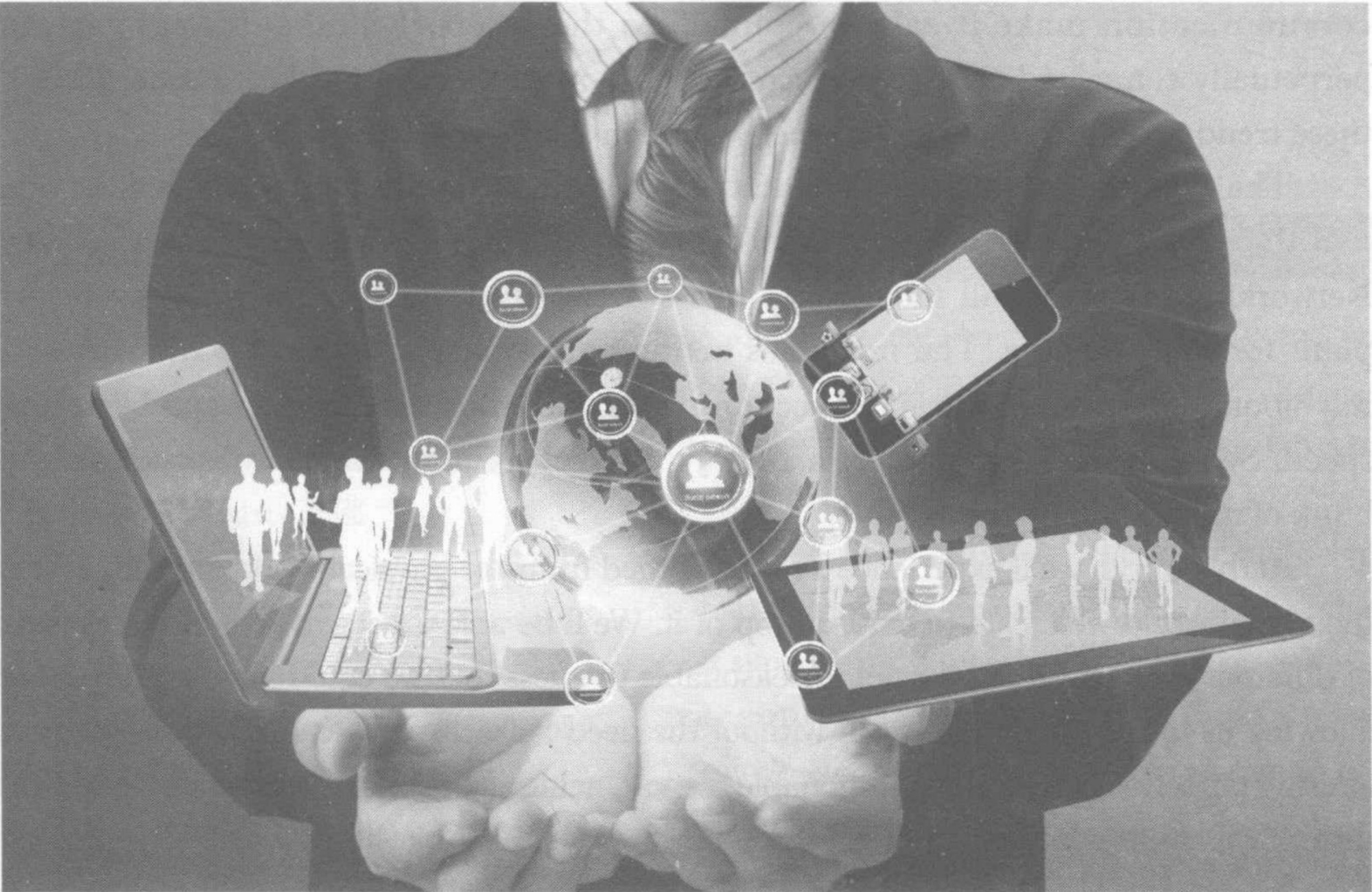
What Do You Think the Internet Will Be Like in 2050?
Before Reading
Discuss the following questions.
- Listed below are some uses of the Internet. Do you often use the Internet for such purposes? What other things do you use the Internet for?
☐ working / studying ☐ finding directions ☐ mobile payment
☐ entertaining ☐ managing personal finance ☐ monitoring
- How has the Internet changed the way people live?
What Do You Think the Internet Will Be Like in 2050? Jonathan Strickland
1 As technologies go, the Internet is still a baby. You can trace its roots back to the 1950s, when computer technology itself was quite young. In the 1960s and '70s, teams of engineers and computer scientists worked to build the foundation for a network of networks. ARPANET, one of the Internet's predecessors, began modestly
as a three-node network. Gradually, smart people began to link networks together using protocols from the ARPANET project. In the 1980s, this network proved to be a valuable tool for research and communication. A decade later, the general public became aware of the Internet as tools like the World Wide Web made it easy for the general user to access it.
2 But what's in the future for the Internet? The last few years have pointed toward mobile computing. Wireless computer networks and high-speed cellular communication make it easy to connect to the Internet. Some devices remain perpetually connected unless you turn them off or set them to airplane mode. I think these trends point to what the Internet will be in 2050 – pervasive.
3 The evolution of the Internet and the evolution of mobile computing will be one and the same. We'll start to see Internet capability in more devices and products. Networking coverage will increase. Wireless networks will act as the primary access point for most devices. The machines acting as the backbone for the Internet will rely upon high-speed physical connections capable of transmitting data at a blistering speed. Sending the equivalent of a Blu-ray disc full of data across a network in the blink of an eye will be the norm.
4 In this world, we'll experience a reality forged from the physical world around us and the digital world we create to exist on top of it. We'll be able to view this world in dozens of different ways. By 2050, it's not unreasonable to guess that we could have eye implants allowing us to see the digital world without the need for a display. Even if we decide that altering ourselves is ethically questionable, we can achieve a similar effect just by building display capabilities into a pair of glasses.
5 Imagine looking around you and activating a digital overlay that gives you volumes of information about your surroundings. You could use this capability to perform routine tasks such as finding a place to grab a bite to eat or look up a landlord's contact information. But that's just the beginning! What if you could swap out the view so that you could see what your surroundings looked like centuries ago? Imagine touring a city like Rome and with a simple command viewing it as if you were present when Julius Caesar became emperor. A pervasive Internet coupled with the right mobile technology could make it happen.
6 It's possible that in this future, privacy becomes obsolete. As we move to a mobile, social and pervasive Internet, we may see our private information become part of the public record. What if you could use that same pair of glasses and Internet connection to look up information about someone standing near you? Imagine meeting someone you'd like to date. You decide to see what this person is like, so you execute a quick command to take a look at what the Internet has to say about him or her. Through facial recognition software and a connection to the Internet, you have instant access to public information about your interest, including any social networks he or she might belong to. It all appears in a cloud around the person and soon you know his or her interests, opinions and even relationship status. But don't feel creepy for doing it – other people are doing the same thing to you at the same time.
7 Could this be the real future of the Internet? Science fiction authors have warned us about governments or corporations taking a great interest in our private information for wicked purposes. But perhaps in the end Big Brother $ ^{1} $ will turn out to be you and me. What's your opinion? Do you see the Internet becoming part of our perception of the real world around us or do you believe the two will forever remain separate concepts?
(744 words)
New Words and Expressions
trace $ ^{A} $ /treɪs/ v. find the origins of sth. by finding proof or by going back in time 追溯;追查 foundation $ ^{A} $ /faʊnˈdeɪʃən/ n. the fact or principle on which sth. is based; basis 基础
predecessor $ ^{\star} $ /'priːdɪsesə(r)/ n. sth. formerly used, but which has now been changed for sth. else (被取代了的)原先的东西
node /n $ \underline{a} $ud/ n. a place where branches or parts of a system or network meet or join 交点;节点
protocol /'prəutəkləl/ n. an established method for connecting computers so that they can exchange information (数据传输的) 协议
computing $ ^{A} $ /'kəm'pjuːtɪŋ/ n. the fact of using computers 计算;信息处理技术
cellular $ ^{\star} $ /'seljulə(r)/ a. using a network of radio stations to pass on signals 利用电台网通讯的;蜂窝式无线通讯系统的
perpetually $ ^{\star} $ /pəˈpetuəli/ ad. in a way that lasts for ever or for a long time 永久地;长期地
mode $ ^{A} $ /məʊd/ n. a way of behaving, living, operating, etc. 方式;样式
pervasive $ ^{\star} $ /pə'veisɪv/ a. existing in or spreading through every part of sth. 遍布的;弥漫性的
one and the same one person or thing and not two 完全一样(的);同一个(的)
coverage $ ^{\star} $ /kʌvərɪdʒ/ n. the total group covered;
scope 覆盖范围;覆盖量
backbone /ˈbækbəun/ n. the most important part of a system, an organization, etc. that gives it support and strength 骨干;基础
transmit $ ^{A} $ /trænz'mit/ v. send (information, sound, etc.) in the form of electrical signals to a radio, television, computer, etc. 传送;发送
blistering /ˈblɪstərɪŋ/ a. very rapid 极快的;非常迅速的
equivalent $ ^{A} $ /ɪˈkwɪvələnt/ n. sth. that is equal in value, amount, meaning, importance, etc. 等同物
blu-ray /'blu:rei/ disc 蓝光光盘;蓝光光碟(尤用以播放高品质影像)
blink $ ^{\star} $ /bl $ \underset{\cdot}{n} $k/ n. the act of shutting and opening one's eyes very quickly 眨眼睛
in the blink of an eye very quickly; in a short time 眨眼的工夫;很快
norm $ ^{A} $ /nɔːm/ n. standard, e.g. of behavior or ability, that is regarded as average or generally
acceptable 标准;规范
forge /fɔːdʒ/ v. create (usu. a lasting relationship)
by means of much hard work (靠艰苦工作)
建立(通常为长期关系)
implant $ ^{\triangle} $ /'implant/ n. sth. artificial that is put into someone's body in a medical operation 植入物
display $ ^{A} $ /dis'pleɪ/ n. an electronic device (like a computer monitor) that presents visual information (电子设备的) 显示器;显示屏
ethically $ ^{\triangle} $ /'eθɪkəli/ ad. in a way that connects with beliefs and principles about what is right and wrong 道德上地;伦理上地
activate $ ^{*} $ /'æktɪveɪt/ v. make sth. such as a device or chemical process start working 使活动;激活;使活化
overlay /ˈəʊvəleɪ/ n. a thing that is laid on top of or covers sth. else 覆盖物;涂层
volume /'vɒljuːm/ n. the total amount of sth., esp. when it is large or increasing 大量;许多
grab /græb/ v. have or take (sth.) quickly esp. in a hurry (尤指匆忙地) 取;拿
grab a bite to eat get some food quickly 简单吃点东西
landlord /ˈlændlɔːd/ n. a person or company from whom you rent a room, a house, an office, etc. 业主;房东
what if ...? what will happen if ...? 如果……怎么样?
swap $ ^{\star} $ /swop/ v. exchange (goods or positions),
usu. so that each person gets what they want 交换(商品或位置)
couple /'kʌpl/ v. join together; connect 结合;连接
coupled with combined with; together with 接着在一起;加上
privacy $ ^{\star} $ /'praivəsi/ n. the state of being alone and not watched or disturbed by other people 隐私;隐秘
obsolete /ˈɒbsəliːt/ a. no longer used; completely out of date 已废弃的;已完全过时的
execute /'eksikju:t/ v. run a computer file or program in response to a command or instruction 执行(计算机指令)
recognition /,rekəg'nɪʃən/ n. the fact of knowing sb. or sth.; recognizing or being recognized 认出;识别
creepy /'kriːpi/ a. causing or feeling an unpleasant sensation of fear 令人毛骨悚然的
wicked /'wɪkɪd/ a. extremely bad; morally wrong; evil 极坏的;邪恶的
turn out happen to be, or be found to be, in the end 结果(是);证明(是)
perception /pə'sepʃən/ n. the way one thinks about or understands sb. or sth. 认知;理解
Jonathan Strickland /'dʒɒnəθən 'strɪklənd/ 乔纳森·斯特里克兰
ARPANET /'ɑːpənet/ Advanced Research Projects Agency Network 阿帕网
Julius Caesar /'dʒuːljəs 'siːzə(r)/ 尤利乌斯·恺撒
Global Reading
Skim the text and choose a, b or c to complete each statement.
- The passage is _____.
a) a descriptive text
b) a chronological (按照时间顺序的) account
c) a speculation (推测) about the future
- The author believes that in 2050 the Internet will be _____.
a) everywhere b) out of date c) in disuse
Close Reading
- Study the reading skill in the box and work on the task below.
Reading Skill — Recognizing text organization / structure
Academic texts in English are linear, which means they each have one central point or theme with every part contributing to the main line of argument, without digressions (离题) or repetitions. So while you are reading it is important to recognize:
the central point / theme;
how every part supports the main point.
Scan the text and complete the following notes to rebuild the text.
Para. 1: Background information: The Internet in history.
Para.2: The author's central point: The Internet will develop to be 1 ___.
Paras. 3–6: How the central point is supported and developed:
Para. 6: As the Internet develops, 4) _____ will disappear.
Para.7: With the pervasive Internet, some questions are raised for further thinking.
- Choose words from the text to complete the flow chart.
The Development of the Internet
1950s: The Internet began when 1) _____ was fairly new.

1960s and 1970s: 2) _____ was built for a network of networks.
1980s: Professionals found the network useful for 3) _____.

1990s: Because of the invention of tools such as the World Wide Web, even 4) _____ began to know about the Internet.
- Answer the questions about the future development of the Internet.
- What two factors will contribute to easier access to the Internet in 2050?
- What will enable us to view the digital world even without a display?
- What technology will make it possible for people to "live" in ancient Rome?
- According to the author, what will happen to people's private information?
- Who does the author predict will be watching everyone's private life?
Critical Thinking
Form a group and work on the following tasks.
- In the society that George Orwell describes in his book Nineteen Eighty-Four (published in 1949), every citizen is under constant surveillance (监控) by the authorities. The people are always reminded of that by the slogan "Big Brother is watching you".
Do you agree that the all-present Internet is now intruding into our private lives?
Consider yourself as:
- a college student taking a test under the supervision of watching cameras
an office worker being monitored during all working hours
- a policeman tracking a suspect
- a working mother worrying about her baby in a nursery school
- a disease-control officer who needs to be well-informed about the development of an infective disease
- The author in the text asks the question at the end of the text:
"Do you see the Internet becoming part of our perception of the real world around us or do you believe the two will forever remain separate concepts?"
What is your answer to the question?
The following two points may serve as starting points for your thinking.
The virtual and real worlds are melting together when you buy virtual houses with real money or when you wake up in the middle of the night to collect the virtual grapes in your virtual farm in case they rot.
The virtual world is forever unreal when you know you can never attach the same amount of consequences and responsibilities that a real world situation would demand.
Language Enhancement
- Review the sentences from Reading 1 below. All the boldfaced words are either active words or academic words marked in Academic Word List (AWL). Choose the word from a, b, or c that has the closest meaning to each boldfaced word.
- In the 1960s and '70s, teams of engineers and computer scientists worked to build the foundation for a network of networks. (Para. 1)
a. funding
b. findings
c. basis
- The last few years have pointed toward mobile computing. (Para. 2)
a. calculating
b. using a computer
c. doing mathematics
- Some devices remain perpetually connected unless you turn them off or set them to airplane mode. (Para. 2)
a. setting
b. coverage
c. distance
- The machines ... will rely upon high-speed physical connections capable of transmitting data at a blistering speed. (Para. 3)
a. sending out
b. implanting
c. inputting
- Sending the equivalent of a Blu-ray disc full of data across a network in the blink of an eye will be the norm. (Para. 3)
a. form b. backbone c. standard
- By 2050, it's not unreasonable to guess that we could have eye implants allowing us to see the digital world without the need for a display. (Para. 4)
a. screen b. recognition c. recommendation
- Even if we decide that altering ourselves is ethically questionable, we can achieve a similar effect just by building display capabilities into a pair of glasses. (Para. 4)
a. morally b. privately c. pervasively
- Imagine looking around you and activating a digital overlay that gives you volumes of information about your surroundings. (Para. 5)
a. many books
b. large amounts
c. a lot of content
- A pervasive Internet coupled with the right mobile technology could make it happen. (Para. 5)
a. connected b. matched c. welcomed
- Do you see the Internet becoming part of our perception of the real world around us or do you believe the two will forever remain separate concepts? (Para. 7)
a. execution b. awareness c. transmission
- A collocation is a sequence of words or terms that co-occur more often than would be expected by chance. There are many "verb + noun" collocations in English.
A. Scan for the verbs used in Reading 1 and complete the collocations.
- _____ its roots back to (Para. 1)
- _____ the foundation (Para. 1)
- $ \underline{\text{____}} $ them to airplane mode (Para. 2)
- _____ this world in dozens of different ways (Para. 4)
- _____ a similar effect (Para. 4)
- _____ routine tasks (Para. 5)
- _____ a bite to eat (Para. 5)
- _____ a quick command (Para. 6)
- _____ instant access to (Para. 6)
- _____ a great interest in (Para. 7)
B. Use the collocations in Step A to complete the sentences. Change the form where necessary
- This set of books aims to familiarize students with the basic knowledge in physics so as to _____ for further specialized science.
- The new mobile phones allow safe access to games, music and address books during flights even if you _____.
- Sure, you may _____ by sending emails to your colleagues, but it adds a more personal touch if you deliver the news to them in person.
- In fact, many American giant corporate enterprises _____ small, family-owned businesses.
- In normal times, thousands of workers _____ of reactor (反应堆) maintenance at the nuclear power station.
- By moving the pointer to the icon (图标) and pressing a mouse button, you can _____ or convert the icon into a window.
- Internet-based products like online news, social media, web games, e-commerce enable their users to ___.
- People want to ___ reports or books that promise to solve their technical problems in the blink of an eye.
- The technology company recruits those who have Internet work experience and _____ Internet products.
- The staff were willing to work around the clock, sleep in the office, ___ and battle each other over strategy and technical decisions.
3. Study the word building skill in the box and work on the tasks below
Word Building Skill — Prefixes (III): "pre-" and "per-"
The prefix "pre-" means "before" or "former", and is usually added to nouns, adjectives, or verbs. For example, "prehistory" means "the history of human culture before written records".
The prefix "per-" usually means "thoroughly" or "entirely". For example, "persist", per- (thoroughly) + sist (stand), means "stand firm permanently" or "go on resolutely". "Per-" also means "through", for example, "permit", per- (through) + mit (go or leave), means "let go through" or "give leave".
A. Match the following words in the left column with the corresponding meanings the right column.
— 1) predecessor a) careful thought in advance to avoid risk
— 2) predict b) existing in or spreading through every part of sth.
— 3) pretend c) sth. formerly used
— 4) precaution d) play the part of; carry out
— 5) perception e) say sth. will happen
— 6) permanent f) lasting for all time in the future
— 7) pervasive g) take on a false or misleading appearance
— 8) perform h) the state of being aware of sth.
B. Fill in the blanks in the following sentences by choosing the proper words with the prefix "pre-" or "per-" from above. Change the form where necessary
- She began to raise money for her dream of a ___, non-profit school for the higher education of women.
- You should be warm-hearted and _____ that this new colleague is one of your best friends.
- When changing the point of observation, we also change our understanding and _____ of the surrounding world.
- By using this test, the teacher could _____ whether the students are capable of doing this task.
- The car is some 40mm shorter than its _____.
- Jane admitted she was a bit worried about having to _____ the leading female role after only a year of opera studies.
4. Study the translating skill in the box and work on the task below
Translating Skill — Omission (I): leaving out unnecessary prepositions and conjunctions
Because of the differences between English and Chinese, in most cases translations that show word-for-word correspondence will not result in a smooth and natural sentence. Sometimes it is necessary to leave out certain words depending on the context.
Prepositions and conjunctions are not used as frequently in Chinese as in English. The connections between clauses and sentences are more often implied than directly conveyed through prepositions and conjunctions. When translating from English into Chinese, unnecessary prepositions and conjunctions are frequently left out.
For example, in the sentence "A decade later, the general public became aware of the Internet as tools like the World Wide Web made it easy for the general user to access it" (Para. 1), the word "as" seems to have two possible meanings: a. used to state why
a particular situation exists; b. while or when. The translation would be awkward if both interpretations are rendered into Chinese. Yet if we leave out either meaning, the resulting translation would be incomplete therefore unfaithful.
A better way is to omit the equivalent of “as” and leave the two possible ways of connection implied in the translation:
“十年后,万维网之类的工具使普通用户得以轻松连接到互联网,普通民众也开始注意到互联网的存在。”
Translate into Chinese the following sentences from the text, leaving out the words in bold type
- In the 1960s and '70s, teams of engineers and computer scientists worked to build the foundation for a network of networks. (Para. 1)
- ARPANET, one of the Internet's predecessors, began modestly as a three-node network. (Para. 1)
- In the 1980s, this network proved to be a valuable tool for research and communication. (Para. 1)
- I think these trends point to what the Internet will be in 2050 — pervasive. (Para. 2)
- Even if we decide that altering ourselves is ethically questionable, we can achieve a similar effect just by building display capabilities into a pair of glasses. (Para. 4)
- It all appears in a cloud around the person and soon you know his or her interests, opinions and even relationship status. (Para. 6)
Translation:
- ___
- ___
- ___
- ___
- ___
- ___
Reading 2
Cutting Auto Emissions by Combining Three Vehicle Technologies
Before Reading
Form a group and work on the following tasks.
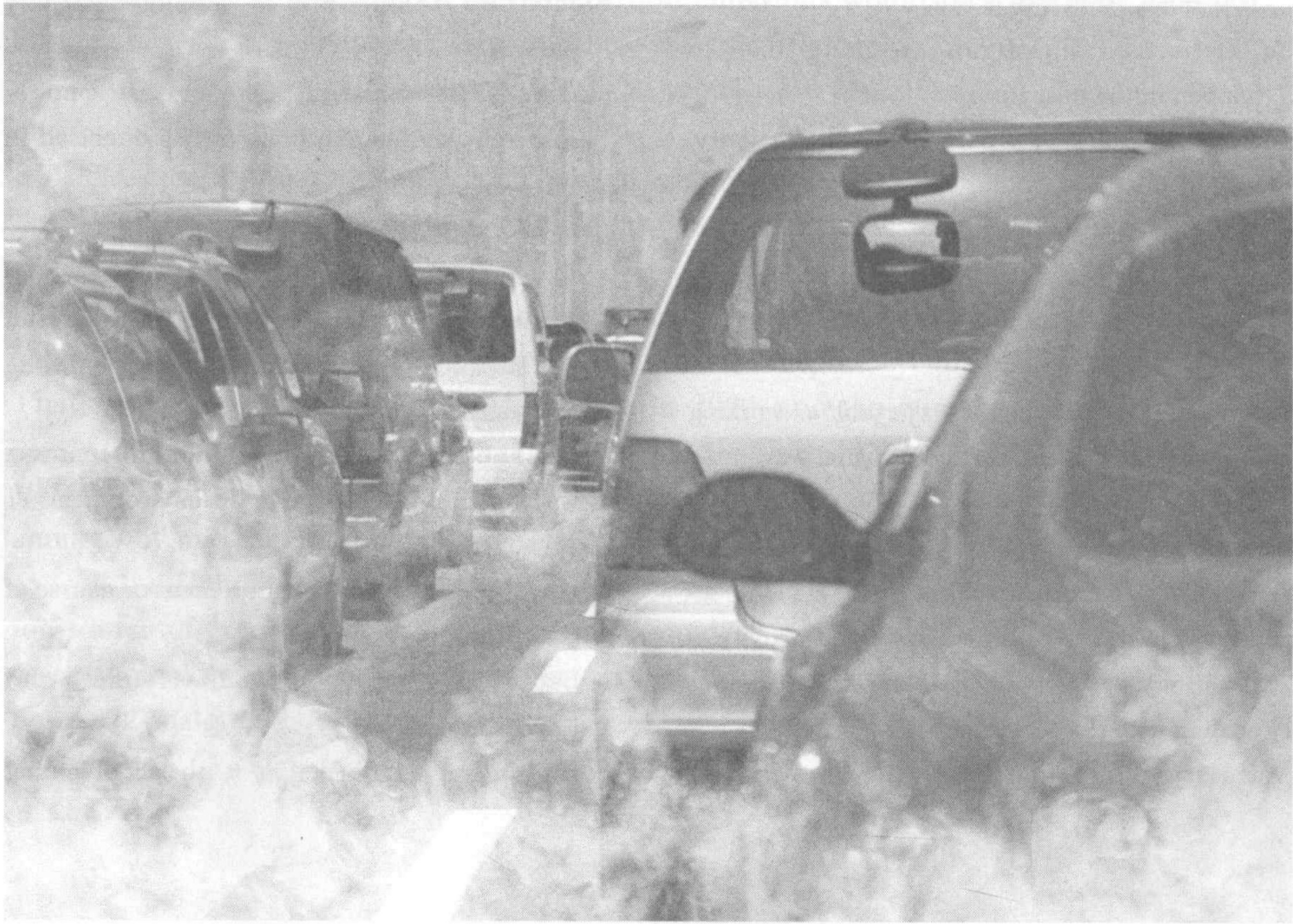
- Look at the list of transport problems. Which do you think is most serious in your city?
● heavy traffic
● insufficient parking spaces
pollution
few bicycle lanes
- inconvenient public transport
- overcrowded public transport
- Look at the list of solutions to transport problems. Pick out three most effective solutions that you think can solve the transport problems in your city.
- increasing car tax
- limiting the number of cars entering the city centre
- building new subway lines
- developing more BRT (Bus Rapid Transit) lanes
- introducing more comfortable buses
- enforcing tough laws to reduce car pollution
- building more roads
- having a bicycle-only lane in every street
- Can you think of any other solutions to the transport problems in your city?
1 Imagine jumping into a self-driving car with two other commuters in the morning, the electric engine humming as you drive through smooth traffic and past empty parking lots, before arriving at work and paying a couple of dollars for the ride.
2 The auto industry and researchers say this Utopian view of transportation is on the horizon, and it could cut nearly all of the carbon emissions from the transportation sector. Maybe.
3 A new report today finds that layering the three vehicle technologies – autonomous, electric and shared – on top of one another could cut carbon emissions 80 percent by 2050 worldwide from a business-as-usual scenario.
4 Researchers at the Institute for Transportation and Development Policy and the University of California, Davis, modeled how each new development might change carbon emissions around the world.
5 “It’s becoming increasingly clear that all three of these possible revolutions are reaching maturity,” said Lewis Fulton, a co-director at the Institute of Transportation Studies at UC Davis and lead author of the report. “It’s time for all of us, whether we’re researchers or policymakers or the general public, to think more deeply about where these things seem to be going. In 10 years, it may be too late to change the course. It’s the time now to figure out which course is the best.”
6 While some transportation researchers have suggested autonomous cars could cut emissions by boosting driver efficiency, others, including Fulton and his colleagues, project that energy use and carbon emissions would increase over a business-as-usual scenario because more people will travel farther.
7 Emissions reduction comes only when the vehicles are electrified and plugging into an increasingly cleaner grid.
8 "We have to stop thinking that self-driving cars will automatically be sustainable," Fulton said. "We need policies to make sure we steer this towards electric and efficient."
9 The most advanced scenario in the report requires people to change their behavior, using substantially more ride sharing, public transport, cycling and walking. That would cut car travel by more than half in 2050, and the number of cars by nearly three-quarters.
10 Worldwide, that combination would generate 0.7 gigaton of carbon emissions annually by mid-century, as opposed to 4.6 gigatons in a business-as-usual scenario.
11 In the United States, transportation has surpassed the electricity sector as the top source of greenhouse gas emissions, at around 30 percent. The most Utopian scenario could cut that by nearly 90 percent in 2050, or the equivalent to shutting down 172 coal-fired power plants in a year.
12 The changes could cut the cost of buying, fueling and operating the cars by more than 40 percent.
13 Fulton also recognized that upending the transportation sector would require overcoming the attachment many people have to their individual cars, saying that government would have to play a “major role”.
14 Incorporating more ride sharing and public transit was the only scenario that matched with a pathway to keep global warming under 2 degrees Celsius.
(483 words)
New Words and Expressions
auto /'ɔːtəʊ/ n. abbreviation for "automobile" 汽车 commuter /kə'mjuːtə(r)/ n. someone who travels a long distance to work every day (远距离) 上下班往返的人
hum $ ^{\star} $ /hʌm/ v. make a low continuous sound 发嗡嗡声
Utopian $ ^{*} $ /juːˈtəʊpiən/ a. having a strong belief that everything can be perfect, often in a way that does not seem to be realistic or practical 乌托邦的;空想完美主义的
on the horizon /həˈraɪzən/ seeming likely to happen in the near future 即将来临
sector $ ^{A} $ /'sek $ \underline{\text{tə}} $(r)/ n. a part of a field of activity, esp. of business, trade, etc.(尤指商业、贸易等的)部门;领域;行业
layer $ ^{A} $ /'leɪə(r)/ v. form or arrange in levels or parts within a system or set of ideas 把……分层安置;混搭
business-as-usual /ˈbɪznɪs,æzˈjuːʒuəl/ a. working or continuing in the normal or usual way 一切照常的
scenario $ ^{\star} $ $ ^{A} $ /sī'nɑːrɪəʊ/ n. a possible course of action or events esp. when imagined 设想;方案
model /'mɒdəl/ v. create a copy of an activity, a situation, etc. so that one can study it before dealing with the real thing 模拟;使仿效
maturity $ ^{\star\textregistered} $ /mə'tjuərəti/ n. the time or state
when someone or sth. is fully grown or developed
成熟
co-director /ˌkəʊdɪˈrektə(r)/ n. someone who directs sth. in partnership with another person or other people 联合主任;副主任
figure out come to understand or discover by thinking 理解;想出
boost /buːst/ v. help to advance or improve; increase 促进;提高
electrified /ɪˈlektrɪfaɪd/ a. having electricity passing through 电气化的
plug into (sth.) connect (sth.) to an electric power source by means of a plug, or be connected in this way 把插头插入;插入电座
grid $ ^{*} $ /grid/ n. 系统网络(输电线路、天然气管道等网络)
automatically $ ^{A} $ /ˌɔːtəˈmætɪkəli/ ad. as the result of a situation or action, and without one having to do anything more 自动地;自然地
sustainable $ ^{A} $ /səˈsteɪnəbl/ a. able to continue without causing damage to the environment 可持续的;不破坏环境的
steer /stiə(r)/ v. guide the movement or course of (sb. or sth.) 指导;引导
substantially /səb'stænfəli/ ad. very much or a lot; considerably 非常;大大地
combination /kɒmbɪˈneɪʃən/ n. the act of joining
or mixing together two or more things to form a single unit 联合;结合
generate $ ^{A} $ /'dʒenəreɪt/ v. produce or cause (sth.)
产生;引起
gigaton /'dʒɪɡətʌn/ n. 十亿吨梯恩梯(热核武器爆炸力的量度单位)
surpass $ ^{\star} $ /səˈpɑːs/ v. be better or greater than 胜过;超过
shut down stop operating, either permanently or for a short time 关闭;停业
coal-fired /'kəul,faɪəd/ a. 烧煤的;用煤做燃料的 upend /ʌp'end/ v. turn (sth.) upside down; upset or disturb (sb. or sth.) to a serious degree 颠倒;颠覆
attachment $ ^{A} $ /əˈtætʃmənt/ n. strong feelings of affection or loyalty for sb. or sth. 喜爱;依恋
individual $ ^{A} $ /ˌɪndɪˈvɪdʒuəl/ a. belonging to or intended for one person rather than a group 个人的
incorporate $ ^{\star\textcircled{A}} $ /in'kɔ:pəreit/ v. make (sth.) a part of a group or of sth. larger 把……合并;包含
transit $ ^{★} $ $ ^{⑧} $ /'trænsit/ n. the system of buses, trains, etc. which people use to travel from place to place 公共交通运输系统
r.r.r.
Proper Names
Camille von Kaenel /kəˈmiːl vɒnˈkænəl/ 卡米尔·冯·卡埃内尔
Davis /ˈdeɪvɪs/ 戴维斯市(美国加州城市)
Lewis Fulton /ˈljuːɪs ˈfʌltən/ 刘易斯·富尔顿
Global Reading
- Answer the questions by reading the introduction (Paras. 1–3) and the conclusion (Para. 14) of the text.
- What are the "three vehicle technologies"?
- How much of auto emissions can be cut if we combine the "three vehicle technologies"?
- How will this combination contribute to the problem of global warming?
2. Choose from the list TWO ways the author uses to support her view in the text
a) By giving examples.
b) By citing researchers.
c) By using personal experiences.
d) By presenting statistics.
e) By using a passionate tone.
Close Reading
- Study the reading skill in the box and work on the task below.
Reading Skill — Paying attention to statistics
Academic texts usually include numbers / data from research / studies, which support the author's argument. With such objective statistics, the argument sounds more convincing.
Scan the text for the information in bold type and complete the statements
The key information the author wants to emphasize: Auto emissions will be cut by combining three vehicle technologies.
- ___ will reduce 80 percent of the global carbon emissions by 2050.
- Car travel will be cut more than half if ___
- _____ will produce 0.7 gigaton of carbon emissions instead.
- In 2050, the United States will cut nearly 90 percent of its greenhouse gas emissions in the _____ sector.
2. Study the reading skill in the box and work on the task below
Reading Skill — Understanding paraphrasing
Paraphrasing is communicating the same information in different ways. It helps to:
avoid repeating;
avoid quoting someone else exactly;
● develop the author's own “voice” in the writing.
Methods to paraphrase words or phrases effectively generally include using synonyms, changing the word form, etc.
Find in the text the paraphrases for the expressions in the left column. The first one has been given as an example.
- self-driving (Para. 1)
- with two other commuters (Para. 1)
- $ \underline{\text{autonomous (Paras. 3 and 6)}} $
- ___
- cut carbon emissions (Para. 2)
- ___
- carbon emissions (Para. 2)
- ___
- three vehicle technologies (Para. 3) 5) ___
- by 2050 (Para. 3) | 6) _____
- worldwide (Para. 3) | 7) ___
- Decide whether the following statements are true (T) or false (F). Underline the information in the text that carries the same or the opposite message.
☐ 1) The future of transport by autonomous, electrified and shared vehicles is still far away.
- Lewis Fulton claims that since the three vehicle strategies are not mature yet, the public do not need to think much about the future of car transport.
☐ 3) Fulton does not agree with many researchers that autonomous cars will actually cut down carbon emissions.
- Now in the United States, electricity contributes to the biggest part of the released warming gases.
- Fulton suggests that the government play an active role in persuading people not to rely on their private cars for transport.
Critical Thinking
Form a group and work on the following tasks.
- Read the definition of “sustainable development” cited from the UN website.
What is sustainable development?
Sustainable development has been defined as development that meets the needs of the present without compromising (危及) the ability of future generations to meet their own needs.
Discuss the question: What is the most difficult part for sustainable development?
- Answer the question: What is the sustainable development for transportation? Do you think "Incorporating more ride sharing and public transit", as the author points out in the last paragraph could contribute a lot to the sustainable development for transportation?
Language Enhancement
- Review the sentences from Reading 2 below. All the boldfaced words are either active words or academic words marked in Academic Word List (AWL). Choose the word from a, b, or c that has the closest meaning to each boldfaced word.
- ... it could cut nearly all of the carbon emissions from the transportation sector. (Para. 2)
a. business
b. commerce
c. field
- A new report today finds that layering the three vehicle technologies ... could cut carbon emissions 80 percent by 2050 worldwide from a business-as-usual scenario. (Para. 3)
a. situation
b. sense
c. feeling
- It's becoming increasingly clear that all three of these possible revolutions are reaching maturity, ... (Para. 5)
a. full development
b. extreme point
c. climax
- While some transportation researchers have suggested autonomous cars could cut emissions by boosting driver efficiency, ... (Para. 6)
a. affecting
b. improving
c. combining
- We have to stop thinking that self-driving cars will automatically be sustainable, ... (Para. 8)
a. living
b. agreeable
c. continuing
- We need policies to make sure we steer this towards electric and efficient. (Para. 8)
a. guide
b. believe
c. sustain
- Worldwide, that combination would generate 0.7 gigaton of carbon emissions annually by mid-century, ... (Para. 10)
a. produce
b. prevent
c. consume
- In the United States, transportation has surpassed the electricity sector as the top source of greenhouse gas emissions, ... (Para. 11)
a. caused
b. increased
c. exceeded
- ... upending the transportation sector would require overcoming the attachment many people have to their individual cars, ... (Para. 13)
a. extra part b. fondness c. connection
- ... upending the transportation sector would require overcoming the attachment many people have to their individual cars, ... (Para. 13)
a. public
b. collective
c. private
- Incorporating more ride sharing and public transit was the only scenario that matched with a pathway to keep global warming under 2 degrees Celsius. (Para. 14)
a. Including
b. Forming
c. Modelling
- A phrasal verb consists of a verb together with a preposition or adverb. The meaning of a phrasal verb is usually associated with a set of particular words within the sentence. Study the three phrasal verbs in the box and notice that each of them has two meanings. Decide which meaning is appropriate for each boldfaced phrasal verb in the sentences below the box.
figure out
a. come to understand or discover by thinking
e.g. It's the time now to figure out which course is the best. (Para. 5)
b. come to a particular amount
e.g. Can you figure out how much we will spend during the trip?
plug into
a. connect or become connected to by or as if by means of a plug
e.g. Emissions reduction comes only when the vehicles are electrified and plugging into an increasingly cleaner grid. (Para. 7)
b. realize that sth. is available to be used and use it
e.g. A lot of students don't plug into all the research facilities we have.
shut down
a. stop operating, either permanently or for a short time
e.g. The most Utopian scenario could cut that by nearly 90 percent in 2050, or the equivalent to shutting down 172 coal-fired power plants in a year. (Para. 11)
b. prevent an opposing team or player from playing well or getting points e.g. We all knew that to win we'd have to shut down Bobby Mitchell.
— 1) First, look at the goals on your list, like getting out of debt and saving for retirement, and figure out how much each will cost.
_2) Ideally, the machine's design would be clear enough to allow users to figure out where to put those parts.
_3) The city was so clearly designed that you can easily figure out how to get to any corner in the city as long as you know how to read a map.
- He plugged a wireless transmitter into his personal computer.
_5) Being aware of its future market can position you to plug into this technology before it becomes widely available.
__6) We also plug into the research facilities available, and license technology from independent sources.
___7) If you have problems, try shutting down your computer, and then starting it up again.
- As soon as the match starts, you have to shut down the opposition's offensive line.
___ 9) The quake forced that project to shut down, and its sponsor had to make millions of dollars in payments for damaged buildings.
- Study the word building skill in the box and work on the tasks below.
Word Building Skill — Prefixes (IV): "trans-" and "sus-"
The prefix "trans-" means "across, beyond". For example, "transmit", trans-(across) + mit (send), means "send across". "Trans-" also means "into another state or place". For example, "transform" means "change in form or shape".
The prefix "sus-" is a variant spelling of "sub-", and is used before "c, p, t", meaning "under, below". For example, "suspend", sus- (below) + pend (hang), means "hang up".
A. Complete the words in the left column of the table according to the meanings given in the right column. The prefix of each target word is given.
| 1) trans | the system of buses, trains, etc. which people use to travel from place to place |
| 2) trans | send out (a signal) either by radio waves or over a wire |
| 3) trans | the process of changing written or spoken words into another language |
| 4) sus | able to continue for a long time |
| 5) sus | stop sth. officially for a time; prevent from continuing or being active |
| 6) sus | have doubts about sth. or sb. |
B. Complete the sentences with the words you have written down in Step A. Change the form where necessary.
- The city _____ is usually well developed, with a variety of modes of travel available, including buses, taxis and subways.
- Because of the poor performance in the market, the publishing house decided to _____ the sale of this book.
- With this 4G network, we can _____ data between mobile phones faster.
- On the face of it, he seems to be telling the truth. But I still _____ he's hiding something.
- What makes a good _____? It must be true to the original, clear and easy to understand.
- Study the translating skill in the box and work on the task below.
Translating Skill — Omission (II): leaving out unnecessary articles
There are two articles, the indefinite $a(n)$ and the definite the, in English. Yet in Chinese, there are no articles. Hence when translating English into Chinese, articles are frequently left out.
For example, in the sentence "The auto industry and researchers say this Utopian view of transportation is on the horizon.", it is not necessary to translate the first word "the", for expressions like "这个汽车业" would sound very strange in Chinese.
Translate into Chinese the following passage that serves as a summary of Reading 2, leaving out the words in bold type.
In the United States, transportation has surpassed the electricity sector as the top source of greenhouse gas emissions, at around 30 percent. But a recent report finds that layering the three vehicle technologies — autonomous, electric and shared — on top of one another could cut carbon emissions by 80 percent by 2050 worldwide from a business-as-usual scenario.
While it is wrong to think that self-driving cars will automatically be sustainable, emissions reduction can come when the vehicles are electrified and plugging into an increasingly cleaner grid. And if people are willing to overcome the attachment they have to their individual cars and change their behavior, using substantially more ride sharing, public transport, cycling and walking, it is possible to upend the transportation sector and cut car travel by more than half in 2050 and the number of cars by nearly three-quarters.
Translation:
Part II LISTENING AND VIEWING
Listening:
Is VR the New Reality?

Before Listening
Discuss the following questions.
- Are you always annoyed by unfamiliar words while listening? Do you think these new words will hinder your listening comprehension?
- What should be the major goal in the listening process?
New Words and Expressions
virtual /'vɜːtʃuəl/ reality (计算机创造的)虚拟现实;虚拟时空
goggles /'gɒglz/ n. 护目镜
sensor /'sensə(r)/ n.(探测光、热、压力等的)传感器
immersed $ ^{\star} $ /ɪˈmɜːst/ a. completely occupied 浸没的;专心的
simulate $ ^{\star\textcircled{A}} $/'simjulert/ v.(用计算机或模型等)模拟
simulation $ ^{\star\textcircled{A}} $/,simju'leɪʃən/ n. 模拟;仿真 impinge /ɪm'pɪndʒ/ v. have a noticeable effect 有明显作用(或影响)
socialise $ ^{\star} $/'səʊʃəlaɪz/ v. spend time with others in a friendly way(与……)交往;联谊
vertigo /'vɜːtɪɡəʊ/ n. the feeling of dizziness 眩晕
headset /'hedset/ n. a pair of headphones, esp.
one with a microphone attached to it (尤指带麦克风的)头戴式受话器;耳机
dawn /dɔːn/ v. begin 开始
Listening Comprehension
Study the listening skill in the box and work on the tasks below.
Listening Skill — Handling unfamiliar words
You may fear that you will not grasp the meaning of the passage if there are some unfamiliar words. However, what is required during most listening practices is that you should grasp the major ideas and extract important information. Skipping some new words if they do not hinder (阻碍) your understanding. If you could not figure out the meaning of an important word, you should move on and try to get an overall understanding of the passage.
- Listen to the passage and decide whether the following statements are true (T) or false (F).
☐ 1) VR technology has been used in many other fields besides gaming and entertainment.
- Young drivers who are not aware of the dangers of bad driving can experience a dangerous car journey and a virtual accident with VR technology.
☐ 3) VR can't allow people to be at home and at the office at the same time.
☐ 4) According to the author, virtual reality will change our lives dramatically.
2. Listen again and fill in the blanks
- Virtual reality, or VR, is a computer-generated technology that creates a three-dimensional _____ that you can not only see and observe, but _____ as if you are there.
- VR has already proved effective as a training tool as it simulates _____.
- He explains that by exposing patients to _____ in a virtual environment and showing them that nothing bad happens, they can eventually _____.
In 1923, the group of two men were sent to the city to build a new building. The group was also a group of men who were also in the city. The group was also a group of men who were also in the city. The group was also a group of men who were also in the city.
Viewing:
The Technology of Storytelling
Before Viewing
Discuss the following questions.
- Have you heard of pop-up books (立体书)?
- What are other ways of getting a story besides reading books?
- Do you think the Internet has changed the way people communicate?
New Words and Expressions
venerable $ ^{\star} $ /'venərəbl/ a. deserving respect 值得尊敬的
ubiquitous /juː'bɪkwɪtəs/ a. seeming to be everywhere; very common 似乎无所不在的;十分普遍的
normalcy /'nɔməlsi/ n. 正常状态;常态
pop-up book 立体书
rejoice $ ^{\star} $ /rɪˈdʒɔɪs/ v. express great happiness about sth. 非常高兴;深感欣喜
channel $ ^{A} $ /'tʃænəl/ v. (通过某种渠道)输送;传送
vaudeville /ˈvəʊdəvɪl/ n. (盛行于19世纪末20世纪初的)歌舞杂耍表演
motion /'məʊʃən/ n. the act or process of moving
移动;动
VHS video home system (a system used by video
recorders and some camcorders) 家用录像系统
DVD digital video disc or digital versatile disc on which large amounts of information, esp. photographs and video, can be stored and for use on a computer or DVD player 数字影碟;数码(多功能)光碟
excrement /'ekskrɪmənt/ n. 粪便;排泄物
gesticulate /dʒe'stɪkjʊleɪt/ v. 用手势表达;用动作示意
depict /dɪˈpɪkt/ v. represent or show in or as if in a picture 描绘;刻画
novelty $ ^{*} $ /'nɒveltɪ/ n. the quality of being new, different and interesting 新奇;新颖
pop up appear suddenly and unexpectedly 突然出现
Viewing Comprehension
Study the listening skill in the box and work on the tasks below.
Listening Skill — Understanding vocabulary from context
When attempting to interpret the meaning of a new word, it is often useful to look at what comes before and after that word. The surrounding words can give listeners helpful context clues about the meaning and usage of the new word.
- Watch the video clip and focus on the context of the six new words, then choose the corresponding meaning of each word.
| Word | Context | Meaning |
| 1) venerable: — | “Now during this time, the book was the king of storytelling. It was venerable. It was ubiquitous. But it was a little bit boring.” | a) easily hurt |
| b) worthy of respect | ||
| 2) snatch: — | “He grabbed his pen, he snatched his scissors.” | a) took quickly |
| b) walked secretly | ||
| 3) rejoice: — | “For this delight and for this wonder, people rejoiced.” | a) felt very happy |
| b) gathered together | ||
| 4) evolve: — | “Because in its 400 years of existence, storytellers never evolved the book as a storytelling device.” | a) recognized the value |
| b) developed gradually | ||
| 5) depict: | “They realized that, in 6,000 years of storytelling, they’ve gone from depicting hunting on cave walls to depicting Shakespeare on Facebook walls.” | a) discovering or noticing |
| b) describing or portraying | ||
| 6) novelty: — | “But the way that humans tell the stories has always evolved with pure, consistent novelty.” | a) the quality of being new |
| b) a long story |
- Watch again and choose the right answers.
- In the 19th century, a German invented the first ___.
a) children's pop-up book
b) storytelling device
c) scissors
- When the Internet comes around, the Meggendorfer's spirit has been ___.
a) forgotten
b) followed
c) depicted
- Does the speaker believe that depicting Shakespeare on Facebook walls is a good thing?
a) Yes, he does.
b) No, he doesn't.
Critical Thinking
Discuss the following questions.
- Is story-telling important in human civilization? Why or why not?
- Do you think the development of technology will eventually change the method of storytelling?
SPEAKING
When participating in a discussion, you need to be aware of when to make your contributions and when to involve others in the conversation so as to keep the discussion going. Everyone, not merely the group leader, should be responsible for this important task. Among various approaches to making a contribution, stating the advantages and disadvantages of something is often required in a discussion. This part will introduce two speaking skills: how to keep a discussion going and how to point out the pros and cons.
Keeping a discussion going
Each participant shares the duty to make a discussion move smoothly. Therefore, people usually take turns to speak. When it is your turn to talk, you can contribute by expressing your opinions, agreeing and disagreeing, providing information, stating advantages and disadvantages, etc. After you have finished your statements, you should give others the chance to speak. Asking questions is often a good way to invite others into the discussion. You can:
ask for information or opinion, e.g. So, what is your opinion?
ask for clarification, e.g. Can you explain it in more detail?
• challenge a former idea, e.g. Do you really think so?
Discussing the pros and cons
When putting forward your opinion in a discussion, make sure it is not biased (有偏见的). Then it is crucial to point out both the advantages and disadvantages of a problem before coming to a decision or conclusion.
Useful language for expressing the pros:
One advantage is...
The benefit of ... is ...
It has a great strength that ...
Its other virtue is ...
There are many good points about it.
I think the positive aspects outweigh ... Useful language for expressing the cons:
There is a disadvantage of ...
The shortcoming of ... is ...
... can be its main drawback.
There is a strong case against ...
The only weakness may be ...
I think the negative aspects outweigh...
- Work with your partner. How have the following technologies changed the way we live? Use the useful language listed above and discuss the pros and cons of these technologies. Be sure to keep the discussion going smoothly by taking turns to speak. A sample dialogue about the first technology has been given in the box below.
A Sample Dialogue
Technology: Artificial Intelligence (AI)
A: How do you think AI has changed the way we live?
B: Well, now we can easily find different kinds of intelligent equipment and household appliances around us, like a smart phone or a robot cleaner.
A: Yes. And more intelligent robots have been invented, such as Google's AlphaGo.
B: So what are the advantages and disadvantages of AI?
A: I think the benefit of AI is to improve work efficiency, so that the complexity of the process is simplified.
B: Its other virtue should be making our life easier and more convenient. We can save the trouble to clean the house on a hot summer day, just simply making an iRobot work for us.
A: That sounds great! Are there any drawbacks of AI?
B: Sure. Imagine that all the jobs have been done by the robots, what should we do?
A: That's a serious problem. Perhaps it is the greatest disadvantage of Al. So we need to think of how to cooperate with those robots to make our work and life more wonderful.
- Artificial Intelligence (AI)
- Virtual Reality (VR)
- Mobile payment
- Big data technology
- New energy technology
- Work in a group. Choose one technology in Exercise 1 in which the group has most interest. Make a list of its advantages and disadvantages and ask a group member to report to the whole class.
Technology: _____
Advantages:
$ \frac{2000}{10000} $
___
___
Disadvantages:
10000000000000000
The main body of an essay consists of a number of paragraphs that develop the thesis statement outlined in the introduction. Each body paragraph may elaborate one aspect of the thesis statement. This part will focus on the skills of how to write a body paragraph and how to form a topic sentence in the paragraph.
Writing a body paragraph
When you write a body paragraph, you should make your point of view clear and help the reader easily identify your idea. So it is necessary to arrange the sentences in a good structure. A well-developed body paragraph normally has three components:
- a topic sentence that states the topic and your central idea;
● supporting sentences that support and develop your opinion by providing evidence, examples or reasons;
- a concluding sentence which concludes / summarizes the topic, or links it to the next paragraph.
But not all body paragraphs have a concluding sentence.
Writing a topic sentence
A topic sentence in a paragraph clearly states the topic / subject and the main idea, guiding readers through the paragraph like a map. Therefore, writing an effective topic sentence may help you produce a well-constructed paragraph. A strong topic sentence usually:
puts forward a specific opinion which allows further development;
restricts what the paragraph is about;
• is often, but not necessarily, the first sentence of the paragraph.
- Read the following two paragraphs and match the components (a–c) to each numbered section of the paragraph.
Paragraph 1:
- Students stated that an integral part of understanding course concepts is collaboration with peers. 2) Students reported that discussion boards, a learning technology that allows participants to discuss course topics online, respond to each other's comments, and share ideas, are being utilized to facilitate this collaboration, enhancing communication both from student-to-student and student-to-instructor perspectives. 3) Furthermore, students appreciate this tool for its ability to provide a highly organized, timely, and easily accessible manner to gather information. 4) These benefits have resulted in helping students explicitly request that discussion boards be incorporated into every course at the university.
a. a topic sentence: ___ b. a supporting sentence: ___ c. a concluding sentence: ___
Paragraph 2:
- The other advantage of the AI approach is that it can be re-run whenever new data become available. 2) As Dr. Gebru points out, Google Street View is not the only source of information out there. 3) Self-driving cars, assuming they catch on, will use cameras, radar and the like to keep track of their surroundings. They should, therefore, produce even bigger data sets. 4) Other kinds of data, such as those from Earth-imaging satellites, which Google also uses to refresh its maps, could be fed into the models, too.
a. a topic sentence: ___ b. a supporting sentence: ___ c. a concluding sentence: ___
- Find the topic sentence and the concluding sentence in sentences a–f. Then put these sentences in correct order to form a paragraph about the technology of reading.
a. It doesn't do the heavy lifting of concentration, analysis and contemplation.
b. That's why a book, for me, will always win over a Kindle.
c. But our eyes lie because reading is not just a visual activity, it is also a bodily activity.
d. Reading has become jerky (急促的) and superficial.
e. A recent trial found that teenagers who read material on a printed page understood the text significantly better than those who read the same text on a screen.
f. Our eyes tell us that the words on a screen are identical to those on a piece of paper.
The topic sentence: ___ The concluding sentence: ___
Correct order: 1) ___;2) ___;3) ___;4) ___;5) ___;6) ___
- Write an appropriate topic sentence for the following paragraph.
Topic sentence: ___
It is for this reason that John Kennedy was able to "read" the New York Times so quickly, probably he "knew" most of the stories firsthand and was just letting his eye move across headlines and first sentences for the main points. Most of us do something like this with material with which we are familiar, although we are all probably less adept (熟练的) at it than we imagine.
- You are going to write a body paragraph for an essay entitled "The Impact of Technology on Learning in Higher Education".
- Form a thesis statement for the essay first. For example, your thesis statement could be “Although technology greatly facilitates students' learning in higher education, its negative impact should not be neglected”.
- Then support and develop this thesis statement in your body paragraphs.
- Think of a topic sentence in one of your body paragraphs, such as "Technology has many beneficial effects on learning" or "The negative impact of technology has provoked teachers' and parents' concern".
- Write a body paragraph including a topic sentence, supporting sentences and / or a concluding sentence.