Unit 3 Identity
3
Identity
Lead-in
Discuss the following questions.
- Besides one's name, gender and appearance, what other things make a person who they are?
- Are you satisfied with your present self? Take the following factors into consideration:
your appearance;
your personality;
your study / work state;
your relationship with others.
Reading 1
You Are Less Beautiful than You Think
Before Reading
Discuss the following question.
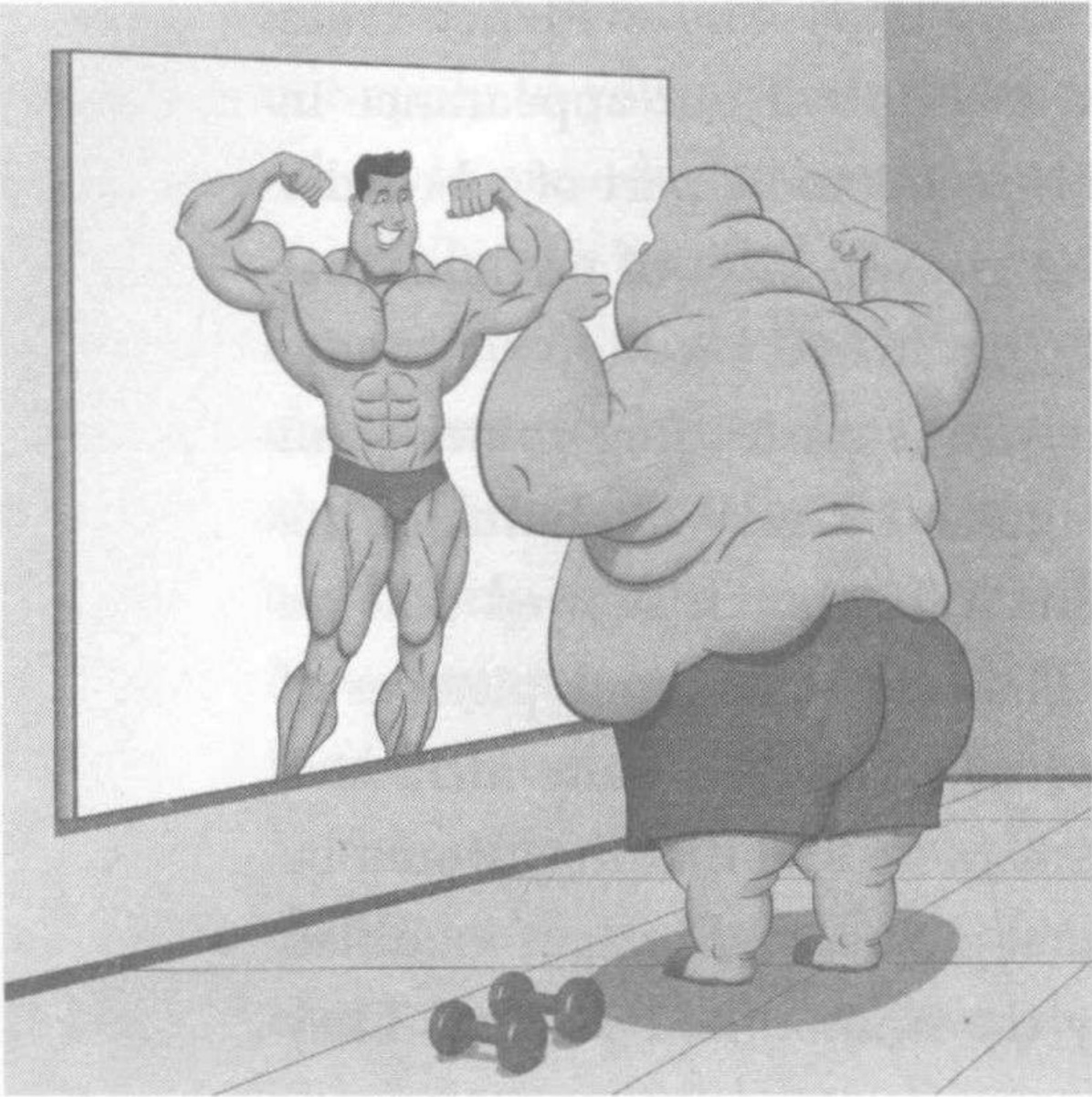
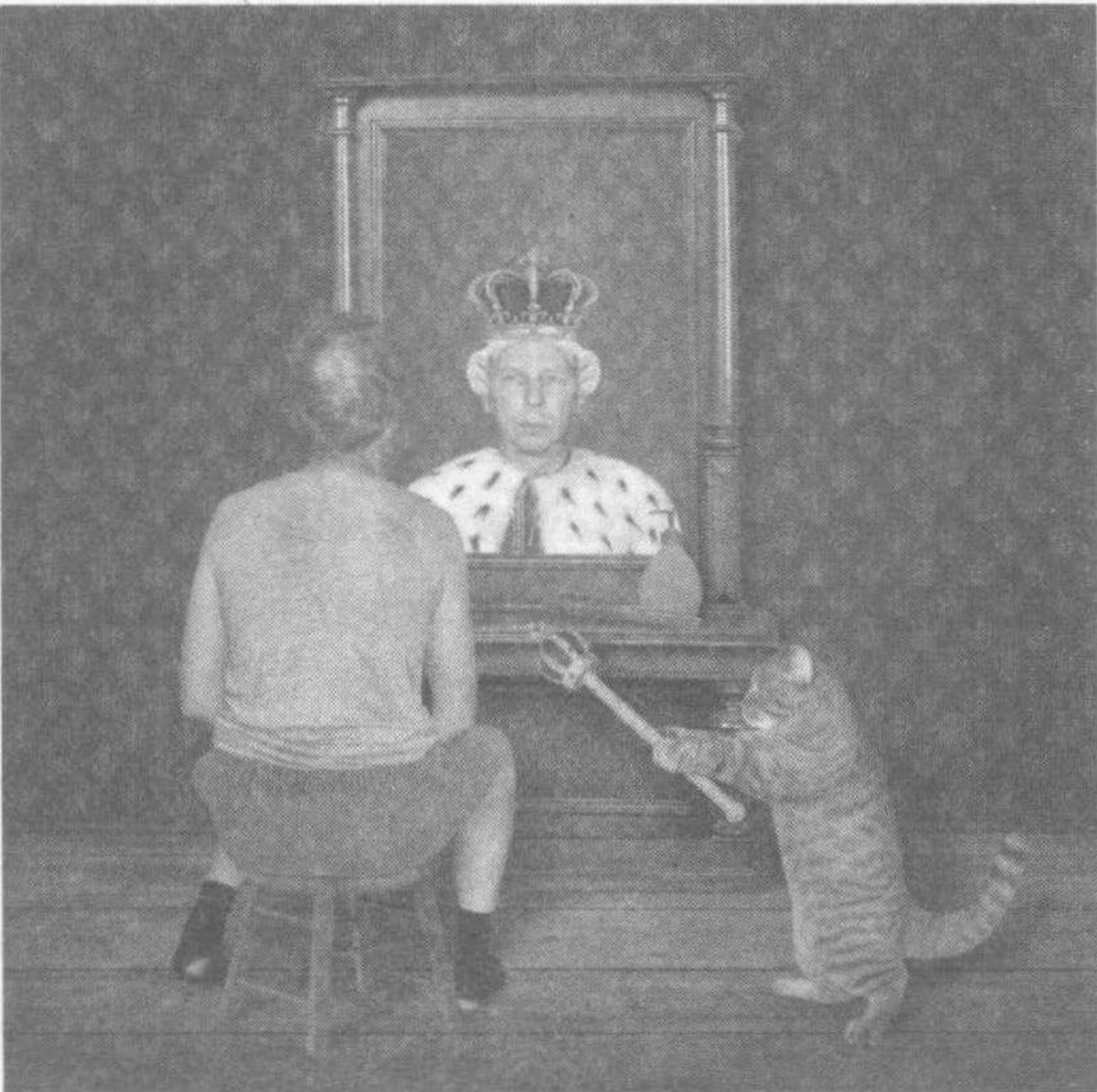
Do most people have an unbiased (不偏不倚的) view about themselves or do they tend to view themselves better than average?
You Are Less Beautiful than You Think
Ozgün Atasoy
1 On April 15, 2013 Dove launched a 3-minute video entitled "Dove Real Beauty Sketches". The video achieved instant popularity and has been watched millions of times – a successful viral campaign which has been widely talked about. In the video, a small group of women are asked to describe their faces to a person whom they cannot see. The person is a forensic artist who is there to draw pictures of the women based on their verbal descriptions. A curtain separates the artist and the women, and they never see each other. Before all this, each woman is asked to socialize with a stranger, who later separately describes the woman to the forensic artist. In the end,
the women are shown the two drawings, one based on their own description, the other based on the stranger's description. Much to their amazement and delight, the women realize that the drawings based on strangers' descriptions depict much more beautiful women. The video ends: "You are more beautiful than you think."
2 The idea is quite appealing. Perhaps too many women are unhappy with their looks. It would be a big relief if we all suddenly realized, like Christian Andersen's ugly duckling, that we are in fact beautiful.
3 However, what Dove is suggesting is not actually true. The evidence from psychological research suggests instead that we tend to think of our appearance in ways that are more flattering than are warranted. This seems to be part of a broader human tendency to see ourselves through rose colored glasses. Most of us think that we are better than we actually are – not just physically, but in every way.
4 The most direct evidence that the Dove commercial is misleading comes from the work of Nicholas Epley of the University of Chicago and Erin Whitchurch of the University of Virginia. In a series of studies, Epley and Whitchurch showed that we see ourselves as better looking than we actually are. The researchers took pictures of study participants and, using a computerized procedure, produced more attractive and less attractive versions of those pictures. Participants were told that they would be presented with a series of images including their original picture and images modified from that picture. They were then asked to identify the unmodified picture. They tended to select an attractively enhanced one.
5 Epley and Whitchurch showed that people display this bias for themselves but not for strangers. The same procedure was applied to a picture of a stranger, whom the study participant met three weeks earlier during an unrelated study. Participants tended to select the unmodified picture of the stranger.
6 People tend to say that an attractively enhanced picture is their own, but Epley and Whitchurch wanted to be sure that people truly believe what they say. People recognize objects more quickly when those objects match their mental representations. Therefore, if people truly believe that an attractively enhanced picture is their own, they should recognize that picture more quickly, which is exactly what the researchers found.
7 Inflated perceptions of one's physical appearance is a manifestation of a general phenomenon psychologists call “self-enhancement”. Researchers have shown that people overestimate the likelihood that they would engage in a desirable behavior, but are remarkably accurate when predicting the behavior of a stranger. For example, people overestimate the amount of money they would donate to charity while accurately predicting others' donations. Similarly, people overestimate their likelihood to vote in an upcoming presidential election, while accurately predicting others' likelihood to vote.
8 Most people believe that they are above average, a statistical impossibility. The above average effects, as they are called, are common. For example, 93 percent of drivers rate themselves as better than the median driver. Of college professors, 94 percent say that they do above-average work. People are unrealistically optimistic about their own health risks compared with those of other people. For example, people think that they are less susceptible to the flu than others. Stock pickers think the stocks they buy are more likely to end up winners than those of the average investor. If you think that self-enhancement biases exist in other people and they do not apply to you, you are not alone. Most people state that they are more likely than others to provide accurate self-assessments.
9 Why do we have positively enhanced self-views? The adaptive nature of self-enhancement might be the answer. Conveying the information that one has desirable characteristics is beneficial in a social environment. People may try to deceive others about their characteristics, but deception has two main disadvantages. First, it is cognitively taxing because the deceiver has to hold two conflicting representations of reality in mind: the true state of affairs and the deception. The resulting cognitive load reduces performance in other cognitive functions. Second, people are good at detecting deception and they show strong negative emotional reactions toward receivers. Since in self-enhancement people truly believe that they have desirable characteristics, they can promote themselves without having to lie. Self-enhancement also boosts confidence. Researchers have shown that confidence plays a role in determining whom people choose as leaders and romantic partners. Confident people are believed more and their advice is more likely to be followed.
10 Dove's premise is wrong. But thinking we are more beautiful than we really are may not be such a bad thing.
(881 words)
New Words and Expressions
entitle /ɪnˈtaɪtl/ v. give (a title) to (a book, play, etc.) 给(书、剧本等)题名;定名
sketch / sketʃ/ n. a simple, quickly-made, and not detailed drawing 草图
viral /'vaɪrəl/ a. quickly and widely spread or popularized esp. on the Internet or using mobile phones 快速传播(或扩散)的
forensic /fəˈrenɪsɪk/ a. connected with court or the scientific tests used by the police when trying to solve a crime 用于法庭的;法医的
verbal $ ^{\star} $ /'vɜːbəl/ a. spoken, not written 口头的;非书面的
appealing /əˈpiːlɪŋ/ a. attractive, pleasing, or interesting 有吸引力的;有趣的
psychological $ ^{①} $ /,psaɪkəˈlɒdʒɪkəl/ a. of or connected with the way the mind works 心理(上)的
flattering $ ^{*} $ /ˈflætərɪŋ/ a. (of a picture or photograph) making the person shown there looking better or more beautiful (肖像等)比真容美的
warranted $ ^{*} $ /'wɒrəntɪd/ a. that can be guaranteed right or reasonable; justified 可证明为正当的;有理由的
commercial /kə'mɜːʃəl/ n. (used in American English) an advertisement on television or radio(电视、电台广播中的)商业广告
misleading /,mis'li:dɪŋ/ a. causing someone to think or act mistakenly; guiding wrongly 使人产生误解的;引入歧途的
series $ ^{A} $ /'sɪəriːz/ n. a group of things of the same kind or related in some way, coming one after another or in order 系列;连续的同类事物
participant $ ^{\star} $ $ ^{A} $ /pa:'t $ \underset{\cdot}{i} $sip $ \underset{\cdot}{a} $nt/ n. a person who takes part in an activity or event 参加者;参与者
computerized /kəm'pjʊtərɪzd/ a. using a computer to control (an operation, system, etc.) 计算机化的;用计算机处理的
image $ ^{A} $ /'ɪmɪdʒ/ n. a picture on the screen of a television, cinema or computer (电视、影院、电脑屏幕上的)图片
modify $ ^{A} $ /'mɒdɪfai/ v. change (sth.) esp. slightly in order to improve it or make it more suitable or effective (尤指程度不大地) 更改;修改
identify $ ^{A} $ /aɪˈdentɪfaɪ/ v. recognize and correctly name (sb. or sth.) 认出;识别
unmodified /ʌnˈmɒdɪfaɪd/ a. not changed in form or character 未更改的
display $ ^{A} $ /dis'pleɪ/ v. clearly show (an emotion, quality, skill, etc.) by what one does or says 显示;显露;表现
bias $ ^{\star} $ $ ^{A} $ /'baɪəs/ n. a strong feeling in favor of or against (sb. or sth.), often not based on fair judgement 偏见;偏心
unrelated /ˌʌnrɪˈleɪtɪd/ a. not connected; not related to sth. else 不相关的;无关联的
representation /ˌreprɪzənˈteɪʃən/ n. sth. (such as a picture or symbol) that shows or describes sth. else 描述;表现
inflated $ ^{\triangle} $ /in'fleitid/ a. believing or claiming that sb. / sth. is more important or impressive than they really are 言过其实的;夸大的
manifestation /ˌmænɪfəˈsteɪʃən/ n. the act of showing or making clear and plain 表明;显示
enhancement $ ^{\triangle\textcircled{A}} $/in'ha:nsment/ n. the process of improving sth. 提升;改善
overestimate $ ^{A} $ /ˌəʊvərˈestɪmeɪt/ v. guess too high a value for (an amount) 对(数量)估计过高
likelihood $ ^{\star} $/'laiklihud/ n. the degree to which sth. can reasonably be expected to happen; probability 可能性
engage in take part in 参加;从事
desirable /dɪˈzaɪərəbl/ a. worth having or doing; pleasing 值得想望的;使人喜爱的
remarkably /rɪˈmɑːkəblɪ/ ad. in an amount or to a degree that is unusual or surprising 非凡地;异常地
donate $ ^{\star} $ /dəʊˈneɪt/ v. give money, food, clothes, etc. to sb. / sth., esp. a charity (尤指向慈善机构)捐赠;赠送
charity /'tʃærəti/ n. the aim of giving money, goods, or help to people who are poor, sick, etc.
慈善
donation /dəʊˈneɪʃən/ n. the act of donating or sth. donated 捐赠;捐赠物
upcoming $ ^{\star} $ /ʌp,kʌmɪŋ/ a. about to happen 即将来临的;即将发生的
presidential $ ^{\star} $ /,prezi'denʃəl/ a. of a president or
presidency 总统(职位的)
statistical $ ^{A} $ /stə'tɪstɪkəl/ a. of or shown by statistics 统计的;统计学的
unrealistically /ʌnriəˈlɪstɪkəli/ ad. in a way that does not show or accept things as they are 不切实际地;不现实地
susceptible $ ^{*} $ /sə'septəbl/ a. likely to suffer from a particular illness or be affected by a particular problem 易被感染的;易受影响的
stock /stɒk/ n. the shares of a particular company 股;股票
investor $ ^{\star\textcircled{A}} $/in'vestə(r)/ n. a person or an organization that invests money in sth. 投资者;投资机构
adaptive $ ^{\star\textcircled{A}} $ /əˈdæptɪv/ a. able to change so as to be suitable for new needs, different conditions, etc. 适应的;有适应性的
deceive /dɪˈsiːv/ v. cause (someone) to accept as true or good what is false or bad, usu. for a dishonest purpose 欺诈;蒙蔽
characteristic /ˌkærəktəˈrɪstɪk/ n. a special and
easily recognized quality of sb. or sth. 特征;特色
deception /dɪˈsepʃən/ n. the act of deliberately making sb. believe sth. that is not true; the act of deceiving 欺骗
cognitively $ ^{\star} $ /'kɒgnɪtɪvli/ ad. 感知地;认识(力)地
taxing /ˈtæksɪŋ/ a. needing great effort; demanding
累人的;费力的
deceiver /dɪˈsiːvər/ n. 欺骗者;欺诈者
conflicting /kənˈflɪktɪŋ/ a. (ideas, beliefs, or opinions) that cannot exist together and cannot both be true 冲突的;抵触的
cognitive $ ^{\star} $ /'kɒɡnɪtɪv/ a. related to the process of knowing, understanding, and learning sth. 感知的;认识(力)的
detect /dɪˈtekt/ v. discover or notice the presence of (sth. that is hidden or hard to see, hear, taste, etc.) 发现;察觉
premise $ ^{\star} $ /'premis/ n. a statement or idea on which reasoning is based 前提
Proper Names
Ozgun Atasoy /ˈəʊzgʌn ˈætsɔɪ/ 奥兹冈 · 阿塔索伊
Dove /dʌv/ 多芬(商标)
Christian Andersen /'kristjən ˈændəsən/ 克里斯蒂安 · 安徒生
Nicholas Epley / 'nikələs' epli/ 尼古拉斯·埃普利
Erin Whitchurch /'erin 'wittf3:tʃ/ 埃林·惠特彻奇
Global Reading
Skim the text by reading the title, the first paragraph, the first sentences of Paras. 2–9 and the last paragraph. Which TWO of the following statements does the author agree with? Please explain.
a) People are less beautiful than they think.
b) People are more beautiful than they think.
c) People generally overestimate everyone's appearance, including their own.
d) Statistically speaking, it's impossible for most people to be above average.
e) It is all harmful to believe we are better-looking.
Close Reading
- Study the reading skill in the box and work on the task below.
Reading Skill — Guessing unfamiliar words from context
It is not unusual to meet words you don't know in an academic article. Reading effectively means trying to guess the meaning of new words by looking at the context rather than stopping to look them up. Of course, you can look up important words the second time you read the article if you are still unsure of the meaning.
Using the context to guess the meaning of a word is to look at the words that come before and after the word.
Note:
The same skill is also generally applied in listening, which has been illustrated with the title "Handling unfamiliar words" in Part II "Listening and Viewing", Unit 2.
Both in reading and listening, we should always focus on catching and understanding key information rather than understanding every word. So it makes sense to try to guess the meaning of unfamiliar words when possible.
Of course, since reading is viewing the printed information, it is possible to read back and forth several times until the idea is got. In listening, however, there is usually just one chance to guess the meaning of the new word.
Scan the text for the following words, of which the boldfaced ones might be unfamiliar to you, and use the context to guess the meanings.
- rose colored glasses (Para. 3)
- the median driver (Para. 8)
- less susceptible to the flu (Para. 8) ___
- Complete the table with information about the two experiments mentioned in the text.
| Dove's Experiment | Epley and Whitchurch's Experiments | ||
| Subjects | a small group of women | 3) ________ | |
| Process | Compare two pictures of the same woman: Picture 1: Based on the description of 1) ______ who has been arranged to socialize with the woman. Picture 2: Based on the description of the woman herself. | Ask people to identify themselves among three images: 4) ________ image 5) ________ image and 6) ________ image | Ask people to identify a stranger among the three images. |
| Findings | 2) ________ | 7) ________ | 8) ________ |
| Conclusion | You are more beautiful than you think. | 9) ________ | |
3. Study the reading skill in the box and work on the task below
Reading Skill — Recognizing the topic sentence and supporting evidence
In academic texts every paragraph typically has one main idea, usually expressed in a topic sentence, and some supporting evidence, often involving reasons and examples. Identifying such paragraph structure can help you read more effectively.
Choose the best answer to each of the following questions.
- Which of the following statements is the main idea for Para. 7?
a) People usually overestimate what they are going to do.
b) People tend to believe others will do better than themselves.
c) People always predict correctly who will win in the presidential election.
- What is Para. 8 mainly about?
a) More people provide accurate self-assessment.
b) The above-average effects do not apply to you.
c) It is impossible in terms of statistics for most people to be above average.
- Which of the following statements best summarizes Para. 9?
a) Self-enhancement derives from people's adaptive nature.
b) Self-enhancement brings people positive influence.
c) Self-enhancement is deceiving others into believing what one is not.
Critical Thinking
Discuss the following questions.
- Of the two studies (Dove's experiment and Epley & Whitchurch's work) described in the text, which one do you vote for? Is your choice a reflection of what you think about yourself: more beautiful or less beautiful?
- In our daily life, do people usually flatter others or disparage (贬低) others? Can you explain why?
Language Enhancement
- The boldfaced words are either active words or academic words from Academic Word List (AWL).
A. Match the words in the left column with their meanings in the right column. Use the context of the words in the text to help you decide.
Group 1
__ 1) a 3-minute video entitled "Dove Real Beauty a. pictures Sketches" (Para. 1)
__2) the evidence from psychological research (Para. 3) b. mental
$ \underline{3} $ be presented with a series of images (Para. 4) c. show
$ \underline{4} $ images modified from that picture (Para. 4) d. changed slightly
$ \underline{5} $ asked to identify the unmodified picture (Para. 4) e. recognize
__6) people display this bias for themselves (Para. 5) f. unreasonable preference
__7) people display this bias for themselves (Para. 5) g. given the title
Group 2
— 8) a general phenomenon psychologists call “self-enhancement” (Para. 7)
h. worth doing
__ 9) people overestimate the likelihood (Para. 7) i. improvement
— 10) people overestimate the likelihood (Para. 7) j. discovering
__ 11) they would engage in a desirable behavior (Para. 7) k. probability
$ \underline{12} $ are remarkably accurate (Para. 7) I. considerably
$ \underline{13} $ try to deceive others about their characteristics (Para. 9) m. cheat
__ 14) people are good at detecting deception (Para. 9) n. overvalue
- The speech has been _____ many times to make it more understandable for the target audience.
B. Complete the sentences with some of the boldfaced words from Step A. Change the form where necessary
- It takes just a few seconds for this machine to _____ your unique fingerprint and log into your account.
- A good command of eye contact and gestures in making a speech can effectively retain the audience's attention and _____ your self-confidence.
- What people did to me might hurt, but I never want to carry their narrow-mindedness or _____ as my burden.
- The workshop is now undergoing an efficiency _____ program with a view to further increasing its production.
- Research found that men consistently ___ their own contribution to the family and underestimate that of their wives.
- The system is so sensitive that it can _____ changes in temperature as small as 0.003 degrees.
- Recent _____ research seems to confirm that people associate particular facial expressions with the same emotions across cultures.
2. Prepositions can be put after a verb, a noun, or an adjective to form a collocation
A. First try to complete the collocations with prepositions without looking at the text, then check your answers using Reading 1
- socialize _____ a stranger (Para. 1)
- see ourselves _____ rose colored glasses (Para. 3)
- a series _____ studies (Para. 4)
- be presented _____ a series of images (Para. 4)
- was applied _____ a picture of a stranger (Para. 5)
- engage _____ a desirable behavior (Para. 7)
- donate ___ charity (Para. 7)
- vote _____ an upcoming presidential election (Para. 7)
- rate themselves _____ better than the median driver (Para. 8)
- are less susceptible _____ the flu than others (Para. 8)
- plays a role _____ determining (Para. 9)
B. Complete the sentences with the collocations from Step A. Change the form where necessary
- You need to get out of the web and ___ exercise or other activities that increase a positive feeling about yourself.
- Scientists carried out _____ research projects called Person Perception to see how people estimate the age of others.
- I believe that these three principles can _____ solving some of the very tough problems that we face in the world today.
- In psychological studies of why people ___ charity, many donors sav the mere mention of money makes them less likely to help.
- The Internet has remarkably changed the way people do business, entertain themselves, exchange ideas, and _____ one another.
- About 75 percent of those surveyed today _____ being less sympathetic than what was the average score 30 years ago.
- Imagine a new shopper's impression of your site when he clicks a link from a search result and he _____ an error message.
- Recently, young people with high blood pressure have been shown to be just as $ \underline{\hspace{2cm}} $ mental decline as elderly people are.
- Study the word building skill in the box and work on the tasks below.
Word Building Skill — Suffixes (I): "-ize" and "-ify"
The suffixes "-ize" (or "-ise" in British English) and "-ify" are used to form verbs from nouns or adjectives. The verbs formed in this way have the sense of "make what is denoted by the noun / adjective", or "causative". Generally, "-ize" is used with the verbs ending in "c, r, l, m, n". For example, "realize", real +ize (make), means "make real" or "understand clearly"; "-ify" is used with the verbs ended with "r, t, s, d". For example, "justify", just (fair, right) +ify (do), means "do justice to".
A. Form words by adding "-ize" or "-ify" to the nouns or adjectives given in the table
| 1) beauty | $ \rightarrow $ | ____ |
|---|---|---|
| 2) class | $ \rightarrow $ | ____ |
| 3) clear | $ \rightarrow $ | ____ |
| 4) computer | $ \rightarrow $ | ____ |
| 5) identity | $ \rightarrow $ | ____ |
| 6) mode | $ \rightarrow $ | ____ |
| 7) modern | $ \rightarrow $ | ____ |
| 8) popular | $ \rightarrow $ | ____ |
| 9) social | $ \rightarrow $ | ____ |
| 10) symbol | $ \rightarrow $ | ____ |
B. Complete the sentences with the words formed in Step A. Change the form where necessary
- In chemistry, elements are usually _____ as metals and non-metals.
- The series of textbooks were very effective, so we decided to _____ this method of learning.
- Her friends worry that she is always alone and that she does not _____ enough.
- There are still some improper uses of language in your composition, please _____ them very carefully.
- It may be very necessary to teach the kids to _____ the differences among these objects during the class.
- The city is _____ by tall modern buildings of steel and glass.
Translating Skill — Conversion (I): translating nouns as adjectives or verbs
Conversion is one of the most important translation skills. It refers to the practice of changing the parts of speech of some particular words when necessary.
One of the characteristics of the English language is the dominance of the noun. Nouns are used far more frequently in English than in Chinese. It would be very difficult, if not impossible, to translate every English noun into a Chinese noun and still get a natural-sounding Chinese sentence.
In fact, many nouns in English can be translated as adjectives or verbs in Chinese.
The beauty of this skill can be readily appreciated in the following example.
Source Text: The video achieved instant popularity ... (Para. 1)
Translation 1: 视频达到了迅速的流行性…… (n. $ \rightarrow $ n.)
Translation 2: 视频迅速走红/流行…… (n. $ \rightarrow $ a.)
It is clear that Translation 2 is more natural. It should be noted that when a noun is translated as an adjective or a verb, the adjective modifying it is usually translated into an adverb accordingly, as in the case of "instant" in the above example.
Translate into Chinese the following sentences from Reading 1, converting the nouns in bold type to verbs or adjectives.
- Much to their amazement and delight, the women realize that the drawings based on strangers' descriptions depict much more beautiful women. (Para. 1)
- It would be a big relief if we all suddenly realized, like Christian Andersen's ugly duckling, that we are in fact beautiful. (Para. 2)
- Inflated perceptions of one's physical appearance is a manifestation of a general phenomenon psychologists call "self-enhancement". (Para. 7)
- Most people believe that they are above average, a statistical impossibility. (Para. 8)
- Stock pickers think the stocks they buy are more likely to end up winners than those of the average investor. (Para. 8)
- The adaptive nature of self-enhancement might be the answer. (Para. 9)
Translation:
- ___
2)
- ___
- ___
- ___
- ___
Reading 2
Creative People Physically See and Process the World Differently
Before Reading
Form a group to work on the following tasks.
- Read the “big five” personality traits. Then answer the following questions:
- Which of the five labels do you attach to yourself?
- Which of the five will you associate with creative people?
Many contemporary personality psychologists believe that there are five basic dimensions of personality, often referred to as the "big five" personality traits. The five broad personality traits described by the theory are extraversion (外向性), agreeableness (友善性), openness (开放性), conscientiousness (严谨性), and neuroticism (敏感性).
• Extraversion: Extraversion is characterized by excitability, sociability, talkativeness, assertiveness, and high amounts of emotional expressiveness.
Agreeableness: This personality dimension includes attributes such as trust, altruism (利他主义), kindness, affection, and other prosocial (亲社会的) behaviors.
- Openness: This trait features characteristics such as imagination and insight, and those high in this trait also tend to have a broad range of interests.
● Conscientiousness: Standard features of this dimension include high levels of thoughtfulness, with good impulse control and goal-directed behaviors.
• Neuroticism: Neuroticism is a trait characterized by sadness, moodiness, and emotional instability.
- Tell a story about a creative person you know, emphasizing how different they are/were from average people.
1 If you're the kind of person who relishes adventure, you may literally see the world differently. People who are open to new experiences can take in more visual information than other people and combine it in unique ways. This may explain why they tend to be particularly creative.
2 Openness to experience is one of the "big five" traits often used to describe personality. It is characterized by curiosity, creativity and an interest in exploring new things. Open people tend to do well at tasks that test our ability to come up with creative ideas, such as imagining new uses for everyday objects like bricks, mugs or table tennis balls.
3 There's some evidence that people with a greater degree of openness also have better visual awareness. For example, when focusing on letters moving on a screen, they are more likely to notice a grey square appearing elsewhere on the display.
4 Now Anna Antinori at the University of Melbourne in Australia and her team are showing that people who score more highly when it comes to the openness trait "see" more possibilities. "They seem to have a more flexible gate for the visual information that breaks through into their consciousness," Antinori says.
5 Patchwork pictures
Antinori and her colleagues asked 123 university students to complete a binocular rivalry test, in which they simultaneously saw a red image with one eye and a green image with the other eye for 2 minutes.
6 Usually, the brain can only perceive one image at a time, and most participants reported seeing the image flip between red and green. But some subjects saw the two images fused into a patchwork of red and green – a phenomenon known as "mixed percept".
7 The higher the participants scored for openness on a personality questionnaire, the more they experienced this mixed perception.
8 “When you present open people with the binocular rivalry dilemma, their brains are able to flexibly engage with less conventional solutions,” Antinori says. “We believe this is the first empirical evidence that they have different visual experiences to the average individual.”
9 In contrast, the other four major personality traits – extroversion, neuroticism, agreeableness and conscientiousness – weren't significantly linked to experiencing this mixed perception.
10 Mind expanding
The results could explain why people with a high degree of openness tend to be more creative and innovative, Antinori says. "When they come up with all these crazy new uses for bricks, it might be because they really perceive the world differently," she says.
11 The findings also hint at why extremely open people are more prone to paranoia and delusions, says Niko Tiliopoulos at the University of Sydney, Australia. “At those
levels of openness, people may actually see reality differently," he says. "For example, they may 'see' spirits, or misinterpret interpersonal or other signals."
12 According to Antinori, there are similarities between high levels of openness and the experience of taking magic mushrooms $ ^{1} $. Previous work by her team has found that psilocybin – a hallucinogenic compound in magic mushrooms – increases a person's openness scores in a personality questionnaire, and their experience of mixed percept in binocular rivalry tests.
13 The team has also found that some forms of meditation can increase mixed image perception in binocular rivalry tests.
14 Antinori next wants to see if similar neural processes are involved in mixed perception, creative thinking and the shifts in visual perception caused by psilocybin and meditation. “It seems that openness alters the filter of consciousness, and we’d like to know how,” she says.
(574 words)
New Words and Expressions
relish $ ^{*} $ /'relɪʃ/ v. enjoy or take pleasure in (sth.); be pleased and satisfied with (sth.) 享受;爱好 literally /'lɪtərəli/ ad. used to stress that a statement or description is true and accurate even though it may be surprising 确实地;真正地 take in learn about and try to understand (sth.) 领会;理解
trait /treɪt/ n. a particular quality, esp. of a person (尤指人的)特性;品质
characterize /'kærɪktəraɪz/ v. be typical of a person, place or thing 是……的特征;以……为特征
curiosity /ˌkjʊəriˈɒsəti/ n. the desire to know about sth. 好奇心
creativity $ ^{①} $ /ˌkriːeɪˈtɪvəti/ n. the ability to produce new and original ideas and things; imagination and inventiveness 创造力;创造性
mug/mʌg/ n. (不用茶碟的、有柄的)大杯;马克杯
awareness $ ^{②} $ /əˈweənəs/ n. knowledge or understanding of a particular subject or situation 意识;认识
when it comes to when it concerns 当涉及……consciousness /ˈkɒnʃəsnis/ n. the state of being aware of sth. 意识;感觉
patchwork /ˈpætʃwɜːk/ n. (不同图案杂色布块的)拼缝物;拼布工艺
binocular /baɪˈɒŋkjuːlʊ(r)/ a. using both eyes to see 双目并用的;双眼的
rivalry $ ^{*} $ /ˈraɪvəlri/ n. a state in which two people, companies, etc. are competing for the same thing 竞争;较量
simultaneously $ ^{*} $ /ˌsɪməˈleɪmiəsli/ ad. at exactly the same time 同时地
perceive /pə'si:v/ v. (come to) have knowledge of (sth.) through one of the senses (esp. the sight) 察觉;意识到
flip $ ^{\star} $ /flip/ v. move (sth.) with a quick sudden movement so that it is in a different position (使) 急速地动
fuse $ ^{*} $ /fjuːz/ v. join or combine (different things) together 混合
percept /'pɜːsept/ n. an impression of an object obtained by use of the senses 感知;认知
engage with give serious attention to 认真考虑
empirical $ ^{\star} $ /em'pirkəl/ a. based on experiments or experience rather than ideas or theories 以实验(或经验)为依据的;经验主义的
in contrast in comparison with objects or situations so that differences are made 与之相反;与之相比
extroversion /ˌekstrəˈvɜːsən/ n. the directing of one's interest outwards, esp. towards social contacts 性格外向(性)
neuroticism /njuəˈrɒtɪsɪzəm/ n. a personality trait characterized by instability, anxiety, aggression, etc. 神经质;具有不稳定、焦虑及有侵略性等的特征
agreeableness/əˈgriːəblnəs/ n. 随和(性);亲和(性)
conscientiousness $ ^{*} $ /kɒnsɪˈenʃəsnis/ n. 严谨(性);自觉(性);尽责(性)
innovative $ ^{\triangle} $/'məʊveɪtɪv/ a. introducing or using new ideas, ways of doing sth., etc. 采用新方法的;创新的
hint /hɪnt/ v. say (sth.) or give information about
(sth.) in an indirect way 暗示;透露;示意
prone $ ^{*} $ /prəun/ a. likely to do sth. or suffer from sth., esp. sth. bad or harmful 易于发生(不愉快事)的;有发生(讨厌事)的倾向的
paranoia /pærə'nɔɪə/ n. 妄想症;偏执狂
delusion $ ^{\triangle} $ /di'lu:3ən/ n. 妄想;幻想
misinterpret /ˌmɪsɪnˈtɜːprɪt/ v. understand or explain (sth.) incorrectly; interpret (sth.) incorrectly 错误地理解;错误地解释(或说明)
interpersonal /ˌɪntəˈpɜːsənəl/ a. connected with relationships between people 人与人之间的;人际(关系)的
similarity /ˌsɪmɪˈlærəti/ n. a point or quality in which things are similar 类似点;相似之处
previous /'priːviəs/ a. happening or existing before the one mentioned 在先的;以前的
psilocybin /psailə'saɪbɪn/ n. 二甲-4-羟色胺磷酸;裸盖菇素(一种从墨西哥蘑菇中提炼出的幻觉剂)
hallucinogenic /həˈluːsɪnəˈdʒenɪk/ a. 引起幻觉的
meditation $ ^{\triangle} $ /ˌmedɪˈteɪʃən/ n. the practice of thinking deeply in silence, esp. for religious reasons or in order to make one's mind calm 冥想;沉思
neural /'njuərəl/ a. 神经的;神经系统的
involved /ɪnˈvɒlvd/ a. taking part in sth.; being part of sth. or connected with sth. 参与的;有关联的
shift /sɪft/ n. a change in how sth. is done or how people think about sth. 改变;转变
filter / 'filtə(r)/ n. 过滤器
Proper Names
Alice Klein /'ælɪs klam/ 艾丽斯·克莱因
Anna Antinori /'ænə,æntiˈnɒri/ 安娜·安蒂诺里
Melbourne /'melbən/ 墨尔本(澳大利亚城市)
Niko Tiliopoulos /'nɪkəʊˌtɪliˈəʊpʊləs/ 尼科·蒂利欧普洛斯
Global Reading
- Skim Paras. 1–4. What do you think the author is going to discuss in the next part of the passage?
a) What type of adventures open people usually take.
b) What the “big five” personality traits are in detail.
c) Why open people see things more clearly.
d) How open people see more information.
- Skim the rest of the passage to check whether your prediction is right.
- Scan Paras. 1–4 for the paraphrases of "open people".
The quick brown fox jumps over the lazy dog.
Close Reading
- Choose from the following list THREE statements that are true about Anna Antinori's binocular rivalry test.
a) A binocular test was used to test the eyesight of 123 university students.
b) The two eyes of the subjects both watched a red image and a green image.
c) The majority of the subjects saw one image changing color between red and green.
d) People with a high level of openness most likely saw the two images mix into one with two colors.
e) The experiment was the first to prove that creative people see the world differently.
f) The experiment found other personality traits did not contribute to such visual difference.
- Based on the text, who will agree with the following statements, Anna Antinori or Niko Tiliopoulos?
- Open people find creative uses for everyday objects like bricks because they really see the world in different ways.
- Extremely open people are much more likely to misunderstand some usual social signals.
- Taking particular drugs or practising meditation will help promote people's level of openness.
Critical Thinking
Form a group and discuss the questions.
The author of the text seems to be saying that creative people are born with brains that work differently. Do you agree? Or can people be trained to become more creative?
Language Enhancement
- The words in the box below are either active words or academic words marked in the Academic Word List (AWL). Choose the most suitable one to complete each sentence. Change the form where necessary.
awareness creativity curiosity empirical hint innovative misinterpret perceive previous shift similarity
- Two vital factors seem to be necessary to make a scientist: the _____ to seek out mysteries and the creativity to solve them.
- There still seems to be a lack of ___ in the rural and suburban communities about the threat the virus poses to humans and animals.
- In this article, I talk about cloud computing service types and the _____ and differences between cloud and grid computing (网格计算).
- It is the dedication and the ___ of the workers and executives that turned the company into a profitable business.
- In his speech, the general manager _____ at an upcoming new product launch, but he refused to give more details.
- One empirical study found that sleep-deprived medical staff working on the night shift were twice as likely to _____ patients' test results.
- Visitors to this display would be well advised to stand still before the items. It takes time to _____ fully what their owners were trying to say.
- If you have a catastrophic (灾难性的) problem with your computer, you can run this application to restore your system to its _____ state.
- This thesis has done ___ research on applying the memory theory of information processing model to vocabulary teaching in college.
- More than anyone else of his time, he made products that were completely ___, combining the power of poetry and processors.
- Try to maintain calm whatever happens. The sudden _____ from joy to pain usually creates quite a psychological shock.
2. Complete the sentences with phrases and expressions from Reading 2. Their meanings and paragraph numbers have been given in brackets
- Open your eyes and ___ all the beauty around you. Even during the worst of times, there's still much to be thankful for. (see fully; Para. 1)
- After a year of analysis, the investigators have failed to _____ a conventional explanation for this so-called low-energy excess. (think of; Para. 2)
- _____ weight gain, the timing of your meals may be just as important as what or how much you eat. (When it concerns; Para. 4)
- At a time of falling domestic consumption, ___, owners of luxury watch stores in Europe are welcoming large numbers of Chinese tourists. (in comparison; Para. 9)
- It emerged that men are normally too proud to ask their partner for help and instead are more ___ hit something or break something. (likely to; Para. 11)
- Less than 10% of the motorcycle riders ___ these accidents had no insurance of any kind to provide medical care or replace property. (connected with; Para. 14)
- Study the word building skill in the box and work on the tasks below.
Word Building Skill — Suffixes (II): "-ity" and "-ness"
The suffixes "-ity" and "-ness" are used to form abstract nouns from adjectives, meaning "condition or quality". For instance, "creativity", creative + ity, means "the state or quality of being creative"; "consciousness", conscious + ness, means "the state of being conscious" or "awareness of one's own existence".
Note: The suffix "-ity" is usually added to adjectives of French origin.
A. Add suffix "-ity" or "-ness" to the adjectives in the following table to form nouns, then translate them into Chinese.
| Adjective | Suffix | Noun | Chinese meaning |
| 1) agreeable | -ity / -ness | ||
| 2) aware | |||
| 3) conscientious | |||
| 4) curious | |||
| 5) open | |||
| 6) personal | |||
| 7) popular | |||
| 8) similar |
B. Complete the sentences with the words formed in Step A. Change the form where necessary.
- Out of _____, he decided to conduct further research on this project and solve the problems.
- It is very important to raise our ___ of protecting the environment since the air quality is so bad now.
- If it had not been for the freedom and the _____ that the Internet allows, we could not communicate with each other so well.
- We should try to recognize the _____ between people of different nationalities, at the same time, knowing the differences between them.
- The couples were asked to report their own levels of forgiveness, _____ and self-respect every six to eight months.
- There has been quite a lot of research in the academic field into the impact of _____ types on successful teams.
- Study the translating skill in the box and work on the task below.
Translating Skill — Conversion (II): translating verbs as nouns or adverbs
In translation, meaning always has priority over form. When it is impossible to retain both the form and the meaning, the form of the source text has to be sacrificed. Verbs need to be paraphrased and appear in other forms on some occasions, usually because it is impossible to present verbs as verbs, as the verb "characterize" in the following example.
Source Text: It is characterized by curiosity, creativity and an interest in exploring new things. (Para. 2)
Translation: 其特点包括好奇心、创造力以及对探索新事物的兴趣。
Translate into Chinese the following passage which serves as a summary of Reading 2, paying special attention to the words in bold type
People with a high degree of openness tend to be more creative and innovative. They tend to do well at tasks that test our ability to come up with creative ideas. Research shows it might be because they really perceive the world differently. They have better visual awareness and can take in more visual information than other people and combine it in unique ways. When open people are presented with the binocular rivalry dilemma, their brains are able to flexibly engage with less conventional solutions.
Moreover, extremely open people are more prone to paranoia and delusions because they may actually see reality differently. There are similarities between high levels of openness and the experience of taking magic mushrooms.
Translation:
Part II LISTENING AND VIEWING
Listening:
What Your Desk Says About You
Before Listening
Discuss the following questions.
- What do you usually put on your desk?
- Do you organize your working space in a tidy or casual way?
- Pick the items from the following choices and discuss whether your desk shows your personality.
| books | clock | computer | pen holder |
| charger | lamp | photos | cosmetics |
| snacks | comb | toothpick | meal box |
New Words and Expressions
spick /spɪk/ and span /spæn/ very clean and tidy
极整洁的;极干净的
commission/kə'mɪʃən/ v. appoint sb. to do (sth.)
委托(某人)做……
chaotic /keɪˈɒtɪk/ a. in a state of complete disorder and confusion 混乱的
trinket /'trɪŋkɪt/ n. 小装饰物;小玩意儿
extroverted /'ekstrəv3:tid/ a. 性格外向的;好社交的
hitch$\triangleleft$/hitf/ n. a problem or difficulty that causes a short delay 暂时的困难(或问题);障碍
conscientious $ ^{*} $ /kɒnʃiˈenʃəs/ a. showing great care, attention, or seriousness of purpose 认真的;尽责的
disciplined $ ^{*} $ /'displind/ a. well organized and following rules or standards 遵守纪律的
introvert /'intrəʊvɜːt/ n. 性格内向的人;不爱交际的人
creep /kriːp/ v. move slowly, quietly and carefully, esp. so as not to attract attention 缓慢或悄悄地行进
territory /'terɪtəri/ n. (个人占据的)领域;地盘 customise /'kʌstəmaɪz/ v. build, fit, or alter according to individual specifications 定做;改制(以满足顾主的需要)
memento /mɪˈmentəʊ/ n. 令人回忆起往事的东西;纪念品
stylish /'stɑːlɪʃ/ a. fashionable; elegant 时髦的;雅观的
evolutionary /iːvəˈluːʃənərɪ/ a. 进化论的
perspective /pəˈspektɪv/ n. (观察问题的)视角 keep an eye out for 注意;当心
introverted /ˌɪntrəʊˈvɜːtɪd/ a. 内向的;不喜欢交往的
crystallisation /ˌkrɪstəlaɪˈzeɪʃn/ n. (计划、决定等的)具体化
Listening Comprehension
Study the listening skill in the box and work on the tasks below.
Listening Skill — Understanding supporting evidence (I): explicit means
In lectures or presentations, speakers always support their argument with evidence such as reasons and examples. Listening for the supporting points will help you follow the speaker's argument and understand it better. You should focus on some specific words and expressions that introduce evidence, like: for example, such as, for instance, to elaborate further, let me give you some data to show ..., etc. Furthermore, if the speaker wants to introduce some new concepts or terms, he will use the supporting evidence to explain and describe them.
- Listen to the passage, and decide whether you can catch the following supporting evidence from the audio clip. Write "Y" for Yes and "N" for No.
☐ 1) These people love being at the "crossroads" of the office.
☐ 2) These workers are often highly conscientious and disciplined, if a little cautious.
☐ 3) They may try to claim more and more territory for themselves.
☐ 4) They are more careless than their fellow workers.
☐ 5) They look for well-protected spots from which to keep an eye out for potential threats.
- Listen again and choose the right answers.
- Which desk personality type is most likely to be found in the middle of the room?
a) Clutterer.
b) Expander.
c) Surveyor.
- How do expanders increase their personal space?
a) They occupy others' space with their photos, mementos and personal objects.
b) They love being at the "crossroads" of the office.
c) They move their personal belongings further and further outwards from their own desk space.
- According to Sam Gosling, making personal statements through presentation is _____.
a) deep in our nature
b) not yet mature
c) to show ourselves
Viewing: The Psychology of Your Future Self
Before Viewing
Discuss the following questions.
- How much have you changed in the past 10 years in terms of the following aspects: personality, favorite food, attitudes toward parents, favorite music type?
- Do you regret anything you did at a younger age?
New Words and Expressions
profoundly $ ^{*} $/prəu'faundli/ ad. deeply; very strongly felt 深度地;深刻地
tattoo/tə'tuː/ n. 文身;(在皮肤上刺的)花纹
fascinate /'fæsɪmət/ v. attract and hold the interest or attention of 强烈地吸引;把……迷住
misconception $ ^{\wedge} $/miskən'sepʃən/ n. 误解;错误印象
gallop $ ^{\wedge} $/gæləp/ n. an unusually fast speed 高速度
crawl/krɔːl/ n. a very slow speed 缓慢的速度
illusion /ɪ'ljʊːʒən/ n. a false idea, esp. about oneself 幻想;错觉
magnitude $ ^{*} $/ˈmæɡnɪtjuːd/ n. the great size or importance of sth. 重要性
anticipate /ænˈtɪsɪpeɪt/ v. expect that sth. will happen and be ready for it 预期;期望
in retrospect thinking back to a time in the past, esp. with the advantage of knowing more now than you did then 回想起来;事后看来
watershed $ ^{\wedge} $/wɔːtʃeɪd/ n. an event or a period of time that marks an important change 转折点;分水岭(标志着重大变化的事件或时期)
transient $ ^{*} $/'trænzɪənt/ a. continuing for only a short time 短暂的;转瞬即逝的
fleeting /'fliːtɪŋ/ a. passing quickly; not lasting long 飞逝的;短暂的
Viewing Comprehension
Study the listening skill in the box and work on the tasks below.
Listening Skill — Understanding supporting evidence (II): implicit means
The speaker may support their main idea by explaining it, describing it, or giving further information about it. You may find some hints from the vocabulary and expressions used by the speaker, such as nouns like factors, data, causes, or some verbs like contribute to, find, affect, etc.
- Watch the video clip and focus on the speaker's usage of typical nouns or verbs in supporting evidence after stating his main argument. Fill in the blanks with the exact words you've heard, pause the video and note down some key information from the PPT used by the speaker when necessary.
Argument: What I want to convince you today is that all of us are walking around with an illusion, an illusion that history, our personal history, has just come to an end, that we have just recently become the people that we were always meant to be and will be for the rest of our lives.
The first supporting evidence: Let me give you some data to 1) _____ that claim. So here's a study of change in people's personal values over time. Here's three values: 2) _____ and _____. Everybody here holds all of them, but you probably know that as you grow, as you age, the balance of these values 3) _____. We asked thousands of people. We asked half of them to predict for us how much their values 4) _____ in the next 10 years, and the others to tell us how much their values 5) _____ in the last 10 years.
The second supporting evidence: Here's 6) ____. First.of all, you are right, change does 7) _____ as we age, but second, you're wrong, because it doesn't slow nearly as much as we think. At every age, from 18 to 68 in our data set, people vastly 8) _____ how much change they would experience over the next 10 years.
- Watch again and decide whether the following statements are true (T) or false (F).
☐ 1) We are always excited with the decisions we made that will profoundly influence our lives.
- The speaker thinks that we have a fundamental misunderstanding about the power of time.
- When we look backwards, we realize how much change happens in the last ten years.
☐ 4) The speaker believes that the one constant thing in our life is imagination.
Critical Thinking
Discuss the following questions.
- Can you predict what kind of person you will be in the next 10 years?
- Why is it significant to study personality?
- In addition to time, what other factors do you think will change our personalities?
SPEAKING
We mentioned in Unit 2 that speakers should take turns (wait for their chance) to speak in a discussion. But sometimes it is necessary for a speaker to interrupt others, for instance, when he / she fails to understand what the former speaker says, hoping to ask for clarification or confirmation. Under such circumstances the participants need to behave politely and appropriately. In this unit, you will learn how to interrupt politely and how to ask for clarification or confirmation.
Interrupting politely
In a lecture, seminar or discussion, there might be occasions on which you do not fully understand or totally agree with what the previous speaker says. Then it is acceptable for you to interrupt him / her in a polite way by:
giving signals before interrupting, e.g. raising your hand, or saying Excuse me, Well, But, etc.
continuing your talk after getting the permission from the former speaker if he / she says Yes, Ok, Go ahead. If the previous speaker would not like you to interrupt by saying Sorry, may I finish first?, you should not insist on speaking further.
using formal language in a lecture or seminar, e.g. Sorry to interrupt, I was wondering ... / may I ask ...?
Asking for clarification or confirmation
Asking for clarification means asking a question to require the former speaker to clarify or further explain a point that you may not understand. Asking for confirmation means that you paraphrase in your own words what you have heard and then ask a question to check whether your understanding is correct or not.
Sometimes you may interrupt to ask the speakers to clarify or confirm their idea before they turn to a new point. You may also wait until the speakers finish speaking and then you refer back to the point. Generally speaking, in a lecture or discussion, the process of asking for and responding to clarification or confirmation greatly enhances the mutual understanding among speakers.
Useful language to ask for clarification:
What do you mean by ...?
Would you mind saying it again?
Could you please clarify ...?
Sorry, I don't quite follow you.
Do you mean that ...?
Useful language to ask for confirmation:
Could you explain it further?
So your point is ...?
My understanding is ... Is that right?
You say that ... Is my understanding correct?
- Study the speaking skills and complete the conversation with the expressions in the box. Then practice the conversation with your partner.
Go ahead
What do you mean
A: Do you know what identity theft is?
B: Well, I guess it means the crime of stealing someone's identity.
A: Yes. And more exactly, identity theft takes place when someone steals your personal information, then they can take money out of your account, apply for credit card, or go on a spending spree ...
B: Uh, 1) _____.
A: Yes? 2) _____.
B: 3) ___ by spending spree?
A: Well, go on a spending spree means spending a lot of money at will, especially on shopping.
B: Oh, I see.
A: The thieves will use your name to do all these, and maybe you are not aware of it until you get the bill from the bank.
B: That's too terrible. So 4) _____ that we need to protect our personal information or we will become victims of identity theft. Is that right?
A: Absolutely right!
- Work in a group and discuss the following questions. In the discussion, everyone needs to interrupt others and ask for clarification or confirmation at least once.
- Do you think your personal information is valuable? Why or why not?
- Has your personal information ever been stolen? If yes, please describe your experience.
- In what cases would you reveal your identity to others?
- What can people do to reduce the risk of identity theft?
- Design a special ID card for yourself, including all the information that you would like your classmates to know about you. Then share your cards among group members.
Name: _____
___
___: ___
___
911 9:17:17 to 18:17:17 and the video of live sky skies
___:___
___: ___
- Choose a group member to describe a student in your group based on the information written on his / her identity card. Do not tell the student's name. Ask the rest of the class to guess who is being introduced.
Part IV WRITING
After learning how to write an introduction (Unit 1) and a body paragraph (Unit 2), you are going to learn how to write a conclusion in this unit. An introduction, a main body and a conclusion are the basic components of any form of academic writing, with each part playing a distinct role that should not be underestimated. Therefore, although the conclusion comes at the end of an essay, it is not the least important part.
Writing a conclusion
A conclusion is usually the last paragraph of an essay, which brings a natural close to the topic. On the one hand, it needs to have a clear connection with the former parts including the title, the introduction, the thesis statement and the main body. Besides referring back, it should look forward by offering predictions, recommendations or ideas for readers to think further about the topic. To be more concrete, a conclusion may have the following components:
• a summary of the main ideas by stating the thesis statement in a different way;
• a summary or evaluation of the points in the body part;
• a brief discussion of the significance of ideas or limitations of findings in the essay;
• recommendations (of future studies / improvement) or further questions for readers to think about.
These different components may be signaled by certain words or phrases. For instance, if you want to give a summary, you may begin your sentence with In summary, In conclusion, To summarize, To sum up, All in all, etc. You can mention the findings of your research by As the study / research found out, The study has suggested, The results have the implication, etc. When you are putting forward recommendations of further research or improvement, you may signal it by using expressions such as In the future, will, should, etc.
You should AVOID doing the following things in a conclusion:
repeating the whole thesis statement;
● focusing on any one particular point or example that has been discussed in the body part;
putting forward new ideas or giving new evidence.
- Read the following sentences that are taken from essay conclusions. Underline the words and phrases that signal a conclusion in each sentence.
- In the future, we'll tackle how to deal with the problem from a psychological way.
- All in all, by taking these approaches we will hopefully reduce the risk of identity theft to a great extent.
- The research has suggested that parental guilt about how much time is spent with their children may be misplaced.
- In conclusion, a country should never lose its cultural identity in the process of developing.
- The conclusion of an essay needs to show relevance to the title, introduction, thesis statement, and main body. Read the following parts of an essay and identify the features of the conclusion. Match the component (a–c) to each numbered section of the conclusion.
Title: Do You Look like Your Name?
Introduction (the sentence in bold type is the thesis statement):
If your name is Fred, do you look like a Fred? You might — and others might think so, too.
New research published by the APA finds that people appear to be better than chance at correctly matching people's names to their faces, and it may have something to do with cultural stereotypes we attach to names.
Main Body with topic sentences:
Paragraph 1: In the present research, participants were doing a good job at matching the name to the face.
Paragraph 2: The result may be partially due to cultural stereotypes associated with names.
Paragraph 3: Prior research has shown: people might subconsciously alter their appearance to conform to cultural norms and cues associated with their names.
Conclusion:
- Together, these findings suggest that facial appearance represents social expectations of how a person with a particular name should look. 2) Therefore, we know that we are subject to social structuring from the minute we are born, not only by gender, ethnicity and socioeconomic status, but by the simple choice others make in giving us our name. 3) So do you look like your name in your culture?
a. a discussion of the significance of the findings ___
b. a question for readers to think about ___
c. a summary by restating the thesis statement ___
- You are going to write a concluding paragraph for an essay entitled "How Can We Improve Our Self-Esteem?". The introduction, thesis statement and main body with topic sentences have been provided. Based on the content of these parts, write a conclusion for this essay. Try to contain as many components as possible in the conclusion.
Title: How Can We Improve Our Self-Esteem?
Introduction:
Self-esteem refers to how we think of ourselves.
According to the social identity theory, our self-esteem is closely related to the groups we choose to belong to.
Thesis statement:
We can enhance our self-esteem by joining the groups or communities we favor.
Main Body with topic sentences:
Paragraph 1: We will feel better about ourselves if we can enter our favorite university or work at our dream company.
Paragraph 2: Our self-esteem might also be improved when we take part in the clubs that we like.
Paragraph 3: Besides, simply being a fan of a sport may enhance our self-esteem.
Conclusion: