Unit 4 Health
4
Lead-in
Work in a group and fill up the three categories of “health” with more examples.
"Health", in its broader sense, is defined by the World Health Organization (WHO) in its 1948 constitution as "a state of complete physical, mental, and social well-being and not merely the absence of disease or infirmity (虚弱)".
| Health | ||
| Physical well-being | Mental well-being | Social well-being |
| e.g. no smoking | e.g. holding a positive attitude | e.g. having friends to share pain and sorrow |
Reading 1
What Can I Do to Extend the Length of My Life?
Before Reading
Form a group and work on the following tasks.
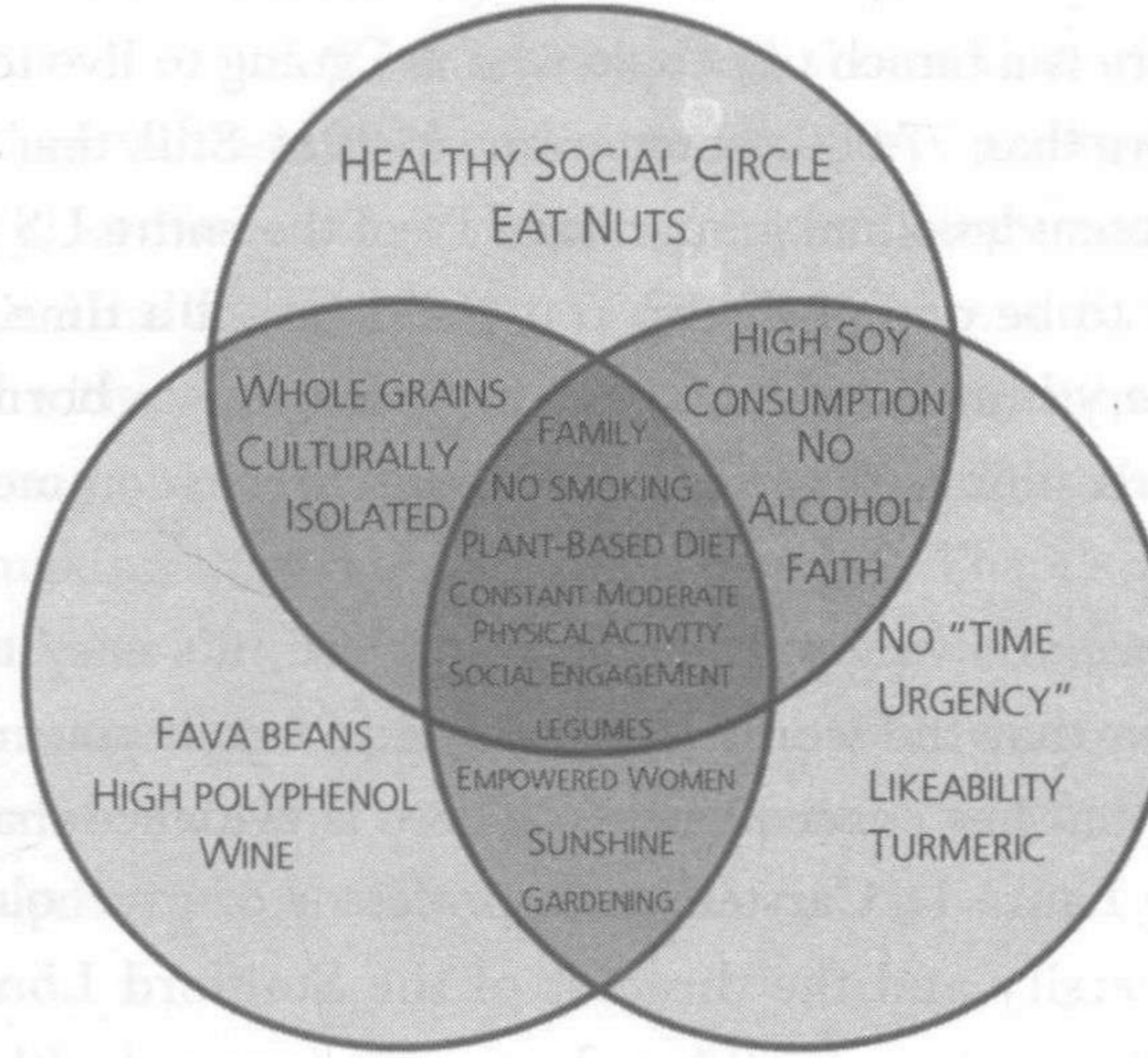
- Read about a) "blue zones" and b) a diagram of longevity clues from Okinawa, Sardinia, and Loma Linda. You may need to look up some unfamiliar words.
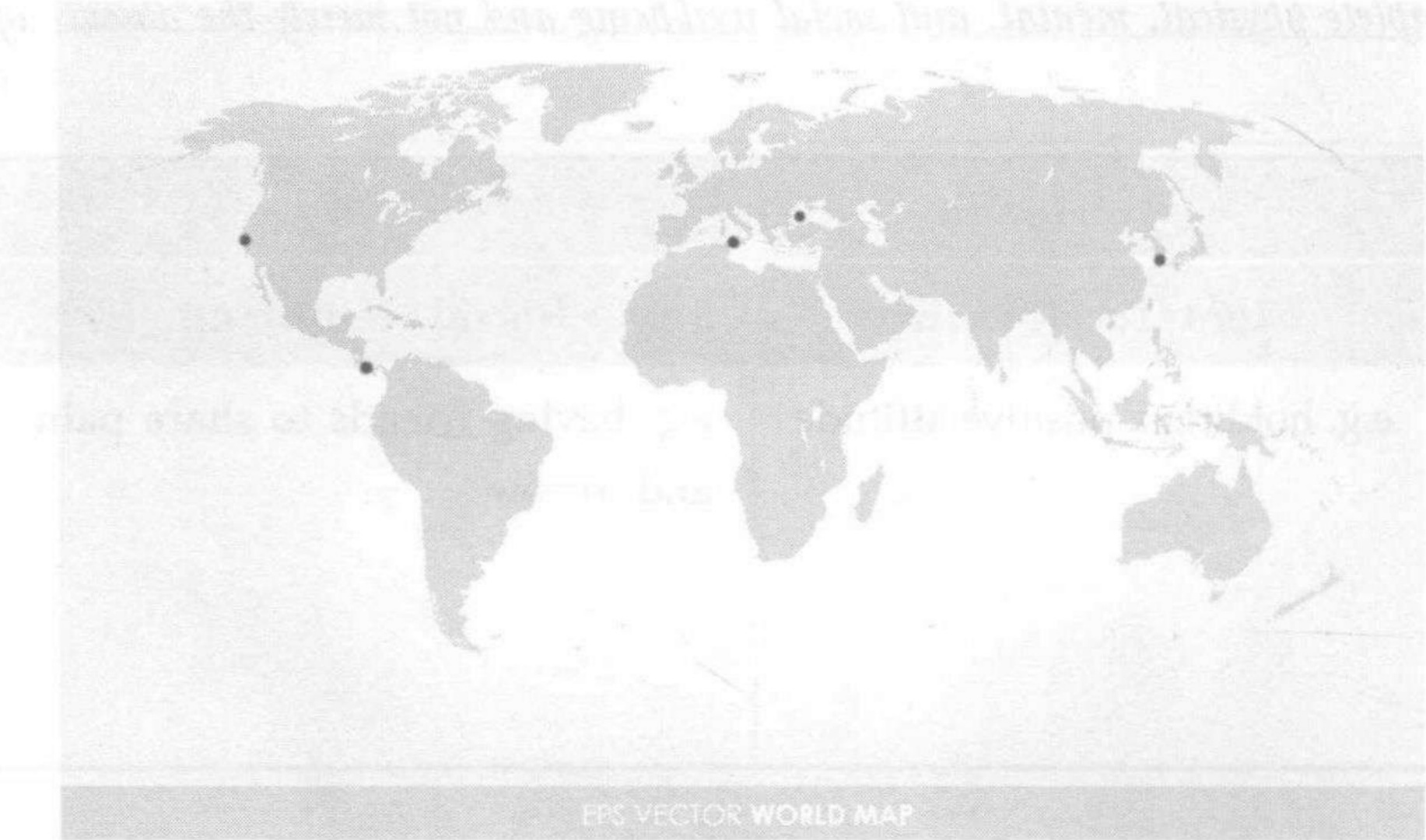
a) The term “blue zones” first appeared in the cover story of National Geographic (November 2005), “The Secrets of a Long Life” by Dan Buettner. Buettner identified five geographic areas where people live statistically longest: Okinawa (Japan); Sardinia (Italy); Nicoya (Costa Rica); Icaria (Greece) and Loma Linda (US).
b) A diagram of longevity clues from Okinawa, Sardinia, and Loma Linda
Sardinia, Italy
The six shared characteristics among the people of Okinawa, Sardinia, and Loma Linda Blue Zones are:
• Family
No smoking
• Plant-based diet
• Constant moderate physical activity
• Social engagement
Legumes
Word Bank:
culturally isolated 与外界文化隔绝
empowered woman 独立自主的女性
fava bean 蚕豆
high polyphenol wine 高多酚红酒
high soy consumption 大量食用大豆制品
legume 豆类
turmeric 姜黄
whole grain 全麦谷类
2. Discuss the question: What can I do to extend the length of my life?
1 Somewhere out there is a bunch of people who are going to live to be 100. In the US alone, there were more than 77,000 centenarians in 2014. Still, that number is very small: centenarians represent less than a quarter of 1% of the entire US population.
2 So how do you get to be one of them? You could invent a time machine, start your life over and do everything they did, or try to find a way to borrow their genes. Failing that, here are three things that longevity researchers recommend you start - and keep - doing.
3 Stay Curious. Once you've got a few years on you, it's easy to think you've heard it all. But the idea that the world has nothing to teach you makes you stop asking questions – and that has consequences. “There is evidence that curiosity has longevity benefits,” says Laura L. Carstensen, a professor of psychology and public policy at Stanford University and the director of the Stanford Longevity Center. “Asking questions and discovering new things keeps you engaged with the world and with other people.”
4 Learning something new can be a form of problem solving: digging into an article about something unusual or asking a family member about her obscure doctoral thesis (and actually listening to the answer) requires you to exercise cognitive muscles that may have gone slack.
5 Eat Way More Plants than You Think You Need to. The link between diet and well-being is something we learn early in life – and then forget over and over again until we die. That may be why so many people have diet-related diseases.
6 In the US, nearly 28 million people have type 2 diabetes, 86 million adults are prediabetic, roughly 1 in 3 adults suffers from high blood pressure, and a stunning 69% of adults are overweight.
7 So if there's one thing worth drilling into your mind, it's this: the healthiest diet is the one in which you eat a lot of plants. The celebrated Mediterranean diet is celebrated for a reason, with study after study showing that its focus on fruits, vegetables, nuts and olive oil is linked to a longer life.
8 A 2015 study of 450,000 European adults found those who ate a diet that was 70% plant-based – fruits, vegetables, nuts, whole grains and beans – had a 20% lower risk of dying of cardiovascular disease than other people. A Harvard University study found that people who ate eight or more servings of fruits and vegetables a day were 30% less likely to have a heart attack or stroke than people who ate less from the plant group.
9 Multiple studies on both laboratory animals and humans have shown that caloric restriction — following a diet whose calories are roughly 25% below the recommended adult daily calorie intake — can have life-extending benefits. That's not the way most people would want to live, but replacing meats with fruits and vegetables can go a long way toward slashing calories in a more satisfying way.
10 Rethink What It Means to Be Old. It's hard to feel positive about a stage of life when you spend every year leading up to it assuming that it's going to be grim.
11 That, of course, is a great way to ensure that grim is precisely what it becomes — but the inverse is also true. “Our research has shown that when more-positive beliefs about older individuals are held earlier in life, they can lead to health advantages,” says Becca Levy, an associate professor of epidemiology and psychology at the Yale School of Public Health. That, in turn, can mean a remarkable 7.5-year boost in life span compared with people who have negative beliefs about age.
12 That means remaining mindful of the contributions that older people make to others — and making those contributions yourself. There's no reason to accept that seniors are all addled and frail just because so many TV shows depict them that way.
13 Mortality is nonnegotiable, which is probably what makes it seem so terrible. But the number of years you get — not to mention the way you spend them — can in many ways be up to you.
(685 words)
New Words and Expressions
centenarian /,sentɪˈneəriən/ n. a person who is 100 years old or more 百岁(或百岁以上)老人
failing that used to say that if the first suggestion is not successful or possible, there is another possibility that one could try 不然的话
longevity $ ^{\triangle} $ /lon'dʒevəti/ n. long life; length of life 长寿;寿命
dig into try to learn or uncover information by studying (sth.); examine thoroughly 探究;钻研
obscure $ ^{\star} $ /əb'skjuə/ a. hard to understand; not clear 难理解的;不清楚的
doctoral /ˈdɒktərəl/ a. of or relating to the university degree of doctor 博士的;博士学位的
thesis $ ^{\star} $/'θiːsɪs/ n. a long piece of writing completed by a student as part of a university degree, based on their own research 论文;毕业论文;学位论文
$ \text{slack}^{\star} $ /slæk/ a. not stretched tight 不紧的;松弛的
way /wei/ ad. by a large amount 大大地
well-being $ ^{\star} $ /'wel'biːɪŋ/ n. personal and physical comfort, esp. good health and happiness 健康;幸福
prediabetic /priːdaɪəˈbetɪk/ a. 前驱糖尿病的
roughly $ ^{\star} $ /'rʌflɪ/ ad. not exactly but close in number, quality, meaning, etc. 粗略地;大致地
stunning $ ^{\star} $ /'stʌnɪŋ/ a. very surprising or shocking
使人震惊的;令人极为惊讶的
celebrated /'selɪbreɪtɪd/ a. well-known; famous
有名的;著名的;大名鼎鼎的
Mediterranean /ˌmedɪtəˈremɪən/ a. of or near the Mediterranean sea or the countries around it 地中海的;地中海沿岸各国的
cardiovascular /ˌkɑːdɪəʊˈvæskjʊlə(r)/ a. connected
serving /'sɜːvɪŋ/ n. an amount of food for one person; helping (供一人食用的)一份食物
stroke/strauk/n. 中风;脑血管破裂或堵塞
multiple /'mʌltɪpl/ a. including many different parts, types, etc. 多样的;多重的
caloric $ ^{*} $/kəˈlɒrɪk/ a. 热(量)的;卡(路里)的
intake /'inteɪk/ n. the amount of food, drink, etc. that one takes into his body 吸入(数)量;纳入(数)量
go a long way be of great help 有很大作用;大有帮助
slash $ ^{\star} $/slæf/ v. reduce by a large amount 大幅削减;大大降低
lead up to occur in the time that comes before (sth.) 接近
grim $ ^{*} $/grim/ a. making one feel worried and unhappy 令人担忧的;令人不快的
ensure $ ^{A} $ /ɪnˈʃʊə(r)/ v. make (sth.) certain to happen 确保(某事)发生;担保;保证
inverse /in'v3:s/ a. opposite, esp. in order or position (次序、位置等)相反的;反向的
individual $ ^{①} $ /ˌɪndɪˈvɪdʒuəl/ n. a single person or thing, considered separately from the class or group to which he, she, or it belongs 个人;个体
associate /əˈsəʊʃieɪt/ professor (美国和加拿大的)副教授(职位比教授低一级)
study of the spread and control of diseases 流行病学
in turn as a result of sth. that is part of a connected series of events 转而;反过来
remarkable /rɪˈmɑːkəbl/ a. worth mentioning, esp. because unusual or noticeable 值得注意的;十分不平常的;出众的
boost /buːst/ n. an increase or improvement 增加;改进
negative $ ^{A} $ /'negətɪv/ a. without any active, useful, or helpful qualities 消极的;非建设性的
mindful /'maɪndfʊl/ a. giving attention (to); not forgetful (of) 留意……的;不忘……的
addled /'ædld/ a. (of someone's brain) having become confused 思想糊涂的;头脑混乱的
mortality $ ^{\star} $/moːtæləti/ n. the condition of being a human and having to die 死亡;必死性
nonnegotiable $ ^{\star} $ /,nɒnniˈgəʊʃiəbl/ a. 不可谈判的;无商量余地的;绝对的
not to mention used to introduce another thing that makes a situation even more difficult, surprising, interesting, etc. 更不用说……;此外
be up to sb. used to say who is responsible for making a choice or decision 由某人决定;取决于某人
Proper Names
Jeffrey Kluger / 'd3efri 'klugə(r) / 杰弗里·克卢格
Laura L. Carstensen / 'lɔrə el 'ka:stensen / 劳拉·L·卡斯坦森
Becca Levy / 'bekə 'levi / 贝卡·利维
Global Reading
- Understand the text organization by answering the following questions.
- How many sections will you divide the text into?
- What factor helps you make the division? Why?
- Find the writer's answer to the question "What can I do to extend the length of my life?"
Close Reading
- Study the reading skill in the box and work on the tasks below.
Reading Skill — Reading by skipping the supplementary information
Academic texts in English are characterized by long and complicated sentences. One sentence usually contains one main idea with some secondary / supplementary information. To read effectively means to read the main part of the sentence for the main idea first. The secondary / supplementary information can wait until further reading.
The secondary / supplementary information is usually placed
between two dashes (破折号);
within brackets (括号);
between two commas (逗号).
A. Practise reading the following sentences by skipping the supplementary information between the dashes or in brackets.
B. Understand the main part of each sentence and rewrite it in your own words.
- a. ... here are three things that longevity researchers recommend you start — and keep — doing. (Para. 2)
b. Main idea: ___
- a. ... digging into an article about something unusual or asking a family member about her obscure doctoral thesis (and actually listening to the answer) requires you to exercise cognitive muscles that may have gone slack. (Para. 4)
b. Main idea: ___
- a. A 2015 study of 450,000 European adults found those who ate a diet that was 70% plant-based — fruits, vegetables, nuts, whole grains and beans — had a 20% lower risk of dying of cardiovascular disease than other people. (Para. 8)
b. Main idea: ___
- a. Multiple studies on both laboratory animals and humans have shown that caloric restriction — following a diet whose calories are roughly 25% below the recommended adult daily calorie intake — can have life-extending benefits. (Para. 9)
b. Main idea: ___
- a. It would be a big relief if we all suddenly realized, like Christian Andersen's ugly duckling, that we are in fact beautiful. (Para. 2, Reading 1, Unit 3)
b. Main idea: ___
- a. The above average effects, as they are called, are common. (Para. 8, Reading 1, Unit 3)
b. Main idea: ___
2. Study the reading skill in the box and work on the tasks below
Reading Skill — Understanding direct quotations
Academic texts always include quotations from authorities. Quoting authorities that agree with you will make your arguments more convincing.
In a direct quotation, the person's words are quoted exactly and enclosed in quotation marks, and the quoted person is always followed by a brief introduction including their title, the institute / organization they work with, or the field they excel at.
A. Scan the text for the quotations from Laura L. Carstensen and Becca Levy.
B. Answer the following questions.
- What argument does the quotation from Carstensen support?
- Why does the author cite Levy's words?
3. In academic texts, a paragraph or section is organized around one main idea together with the supporting evidence like reasons, examples or data. Fill up the note to reconstruct one section in the text
Section: Eat Way More Plants than You Think You Need to
Main idea: Eating a lot of plants is good for extending your life.
Key information with supporting evidence:
a) Many people have diet-related diseases.
Americans with diet-related diseases: 1) _____ with type 2 diabetes;
86 million with prediabetes;
- _____ with high blood pressure;
69% of adults with 3) _____ problems.
b) The healthiest diet is the one in which you eat a lot of plants.
E.g. 4) _____ focuses on fruits, vegetables, nuts and olive oil.
A 2015 study found eating a diet, of which 70% are plants, will reduce the risk of cardiovascular disease by 5) _____ .
A Harvard University study found that a diet with 8+ servings of plants will reduce the risk of heart attack or stroke by 6) _____ .
c) Restricting calories by eating mostly plants will extend our life.
Cutting down 7) _____ of the recommended adult daily calorie intake is supported by many studies.
Critical Thinking
Form a group to work on the following tasks.
- Compare the two diets below and answer the following questions.
- What are the staple foods (主食) of each diet?
- What are the similarities and differences between the two diets?

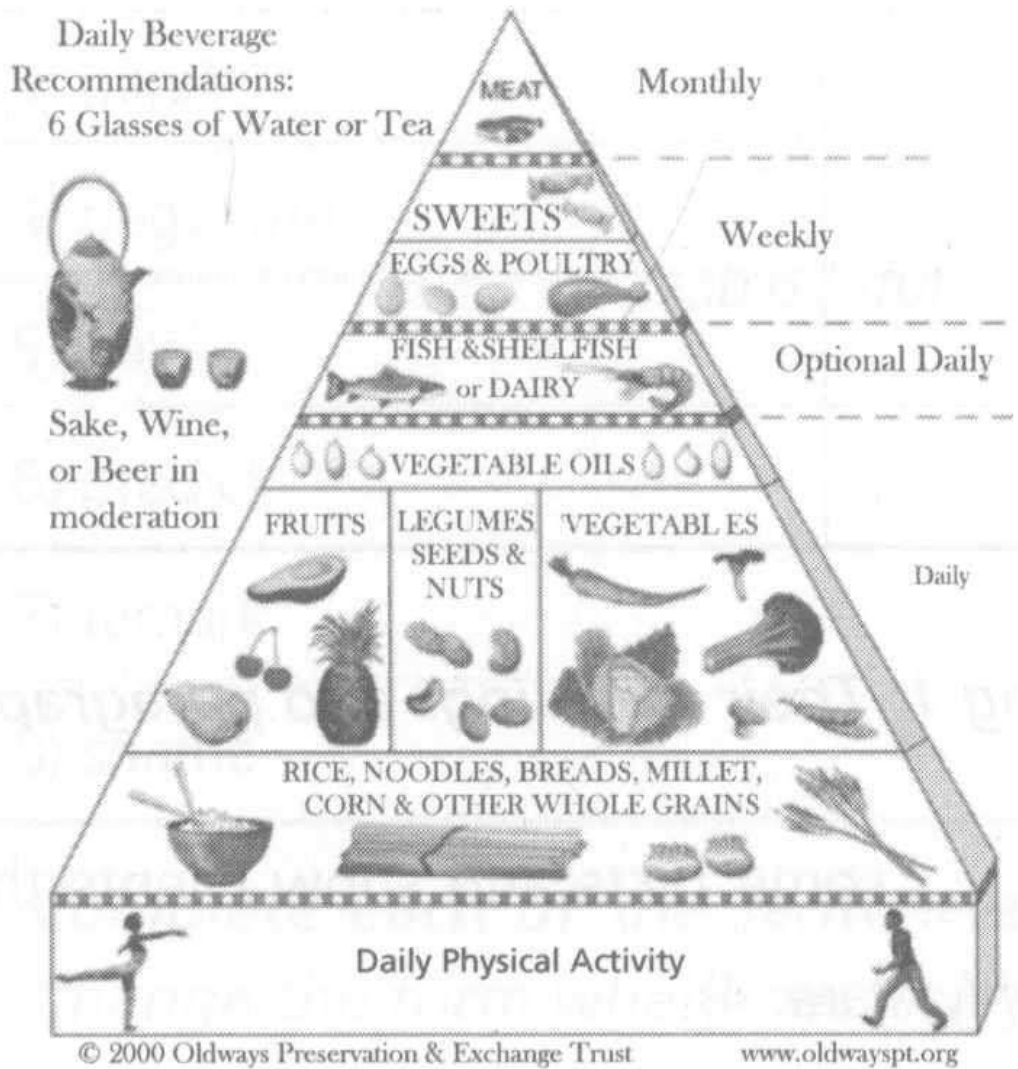
The Traditional Healthy
Latin American Diet Pyramid
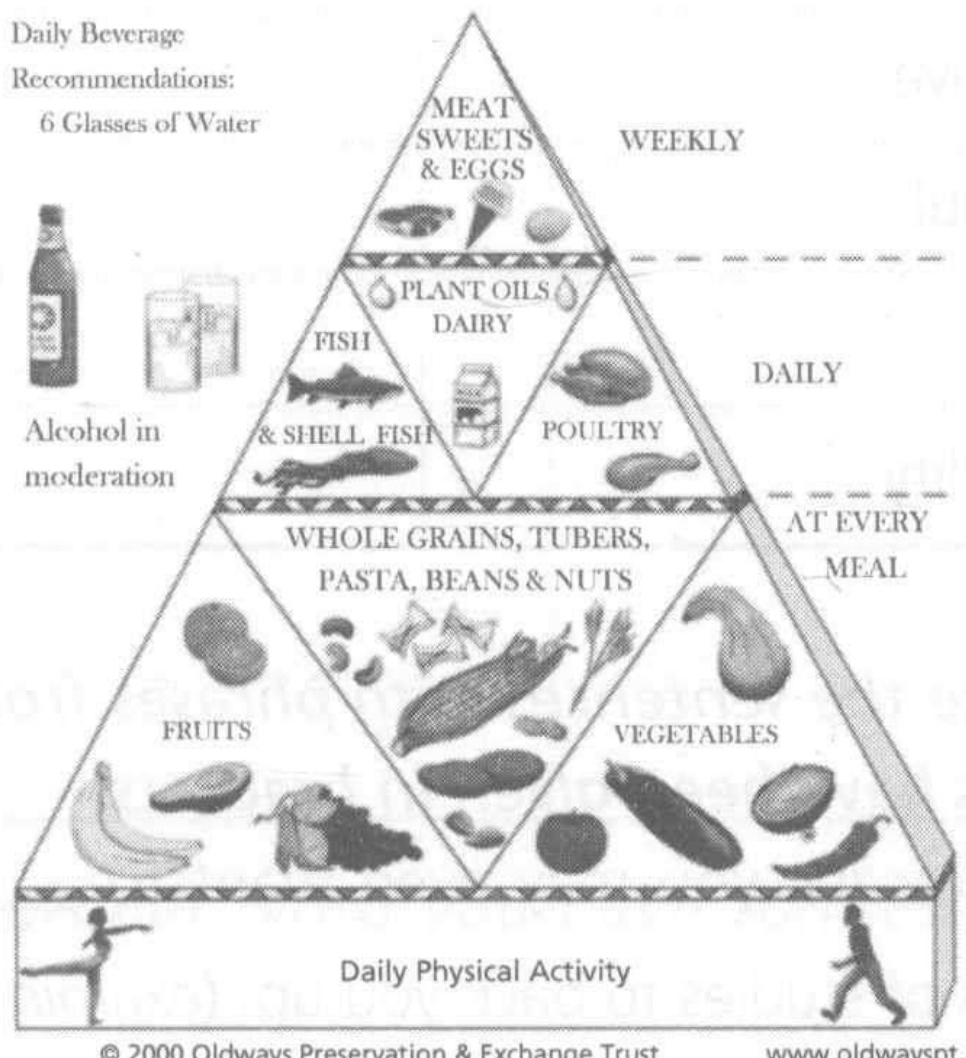

- Discuss: What foods contribute to a more healthy life?
Language Enhancement
- A synonym is a word that means the same, or almost the same, as another word in the same language, either in all of its uses or in a specific context. For example, "icy" is the synonym of "cold". An $ \underline{\text{antonym}} $ is a word that means the opposite of another word. For example, "hot" is the antonym of "cold". Write down the synonyms and antonyms of the words in the box. The first one has been given as an example.
| Word | Synonym(s) | Antonym(s) |
| 1) obscure | unclear; incomprehensible | clear; understandable |
| 2) slack | ||
| 3) well-being | ||
| 4) roughly | ||
| 5) celebrated | ||
| 6) multiple | ||
| 7) remarkable | ||
| 8) negative | ||
| 9) mindful | ||
| 10) frail | ||
| 11) mortality |
- Complete the sentences with phrases from Reading 1. Their meanings and paragraph numbers have been given in brackets.
- If necessary, you may even want to _____ some facts and show clients the results of studies to back you up. (examine thoroughly; Para. 4)
- Several small changes in your daily actions and habits can ease your pain, and _____ in preventing computer-related health problems. (be of great help; Para. 9)
- The company was making final checks of the new system in the days that _____ a public test. (occurred before; approached; Para. 10)
- Government collects its revenue (财政收入) in the form of taxes, which is _____ used for the benefit of taxpayers. (as a result; Para. 11)
- Pollution has a negative effect on the health of everyone living in the city, _____ the damage to the environment. (and in addition; Para. 13)
- If you are responsible for the project files, it _____ you to keep track of what changes are made, when, and by whom. (depends on; Para. 13)
- Study the word building skill in the box and work on the tasks below.
Word Building Skill — Suffixes (III): "-able" and "-ful"
The suffix “-able” is used to form adjectives from verbs, having the sense of “capable of; suitable for”, like “enjoyable” and “readable”. It also means “inclined to; causing”, as in the words “comfortable” and “reasonable”.
The suffix "-ful" is used to form adjectives from nouns, having the sense of "full of; having the quality of", like "colorful" and "beautiful". It also means "able to; tending to", as in the words "helpful" and "useful".
Words ending with these two suffixes are different in meaning. For instance, "respectable" means "worthy of respect; of good reputation", and "respectful" means "full of or showing respect".
A. Form words by adding "-able" or "-ful" to the verbs or nouns given in the table and write down their Chinese meanings. Please note that the first two words can be added to with both "-able" and "-ful", thus having two meanings.
| Verb / Noun | Suffix | Adjective | Chinese meaning |
| 1) forget | -able / -ful | ||
| 2) regret | |||
| 3) mind | |||
| 4) negotiate | |||
| 5) pain | |||
| 6) predict | |||
| 7) remark | |||
| 8) shame |
B. Complete each of the sentences with a proper word you have formed in Step A. Change the form where necessary
- They were fully _____ of their responsibilities and intended to carry out the political decision of their leaders.
- We have been impressed by the professor's _____ and powerful speech and want to try our best now.
- The outcome of these experiments is not always entirely _____, so don't be too confident now.
- The "reminder" function of this mobile phone application is very convenient and practical, and especially helpful to a _____ user.
- The Prime Minister said firmly that the problem of the territory (领土) is not ___.
- Study the translating skill in the box and work on the task below.
Translating Skill — Addition (I): adding nouns
Addition, also called amplification (增译法), means adding necessary words in the translation on the basis of accurate comprehension of the source text. Addition is always to supply what is implied but not explicitly expressed in the form and no extra information or meaning should be added.
When translating from English to Chinese, nouns are sometimes added to supply what is omitted in the original.
For example, in English, when referring to a particular year, it is common to present the number without including "the year of", but this is not often the case in Chinese. So phrases like "a 2015 study" should be rendered into "2015年的一项研究".
Examine the following sentences from the text and their translations, and underline the nouns that have been added
- Somewhere out there is a bunch of people who are going to live to be 100. (Para. 1)
Translation: 在某些地方有那么一小群人能够活到100岁。
- In the US alone, there were more than 77,000 centenarians in 2014. (Para. 1)
Translation: 单单是在美国,2014年就有超过77 000名百岁老人。
- … a stunning 69% of adults are overweight. (Para. 6)
Translation: ……成年人超重的比例达到令人震惊的69%。
- ... replacing meats with fruits and vegetables can go a long way toward slashing calories in a more satisfying way. (Para. 9)
Translation: ……想用更满意的方式大幅降低热量摄入,用蔬果代替肉类会大有帮助。
- It's hard to feel positive about a stage of life when you spend every year leading up to it assuming that it's going to be grim. (Para. 10)
Translation: 要是一年年接近某个生命阶段而又认为这个阶段是可怕的,那就很难对其表现出积极的心态。
- There's no reason to accept that seniors are all addled and frail just because so many TV shows depict them that way. (Para. 12)
Translation: 仅仅因为那么多电视节目都把老年人的形象刻画成头脑糊涂、身体虚弱,就认为所有老年人都如此,是没道理的。
Reading 2
You Are When You Eat

Before Reading
Answer the following questions.
- Have you ever heard about "You are what you eat"? What does that mean?
- The title of the text is "You Are When You Eat". Can you predict what you are going to read in the text?
You Are When You Eat
Emily Laber-Warren
1 Jackie Rodriguez gained 70 pounds after her first child was born. Then, when her daughter was two, she dropped all the weight with practically no effort. The transformation had nothing to do with what Rodriguez ate. Her main adjustment was moving dinnertime almost four hours earlier. That single, simple change seems to have triggered Rodriguez's dramatic weight loss – and emerging scientific evidence may explain why.
2 In labs around the world, researchers are developing a completely new understanding of how metabolism works. It seems that our bodies process food most efficiently when it's eaten during daylight hours. "We now recognize that our biology responds differently to calories consumed at different times of day," says Harvard neuroscientist Frank Scheer, Ph.D. That means a habit as harmless as eating at night, compared with eating calorically equivalent meals during the day, may cause people to gain weight.
3 Just look at Satchidananda Panda's mice. A molecular biologist at the Salk Institute for Biological Studies in California, Panda is a leading expert on how the timing of food intake affects health. His team has found that mice that eat only during their active hours (the equivalent of daytime for humans) are drastically healthier and thinner than mice that eat the same amount of food scattered over 24 hours.
4 Encouragingly, when unhealthy, snack-around-the-clock mice are put on a strict schedule that allows them to eat only during their daytime, their diabetes and fatty liver disease improve and their cholesterol levels and inflammation markers diminish. "It's likely we can reduce the severity (of disease) just by changing when people eat," Panda says.
5 To understand the connection between meal timing and health, you have to go way, way back in history. The dramatic daily shifts between light and darkness on our planet because of sunrise and sunset have been incorporated into the biology of nearly every living thing. Our internal organs function differently during the day from how they do at night, in patterns known as circadian rhythms. Over the past few years, researchers have discovered that unnatural light exposure – such as staying up late amid the glare of a digital screen – disrupts these rhythms in ways that over time can lead to a host of illnesses.
6 But now experts have begun to suspect a second circadian clock in the body-organized around food, not light. Scientists still have much to learn about this food-based body clock, but evidence suggests that round-the-clock snacking may pose as much of a danger to our health as artificial light at night. Night eating has been implicated as a factor in diabetes, heart disease, cancer, and learning and memory problems.
7 Throughout evolution, daytime has been for nourishment and nighttime for fasting, and our organs have evolved accordingly. Digestive enzymes and hormones ebb and flow in a predictable pattern over the course of 24 hours, enabling the liver, intestines, and other digestive organs to function together as one well-oiled machine. Our modern world of late-night takeout and snack-filled pantries threatens to upend this calibrating role of food.
8 Compared with other kinds of diets, night fasting is simple. In a small pilot study, Ruth Patterson, Ph.D., a nutrition expert and epidemiologist at the University of California, San Diego, told women to eat dinner as early as 6 p.m. and definitely by 8 p.m. and not to eat again until eight in the morning, for at least 12 hours of “gut rest”. “(Fasting) they instantly understood,” Patterson says. “They didn’t have to change what they ate or how they cooked.”
9 The new research suggests that breakfast really is the most important meal of the day – but we need to embrace its original meaning: breaking a fast. The first meal of the day is most beneficial only if it comes after 12 to 14 hours of not eating or drinking, says Panda.
10 In addition to fasting at night, it's beneficial to eat your main meal earlier in the day. In a 2013 study, Harvard's Frank Scheer analyzed 420 dieters at weight-loss clinics. Participants ate the same number of calories and were equally active, but those who had their main meal before 3 p.m. lost significantly more weight than those who ate later. "To find such big differences in weight loss with just a slight difference
in meal timing is quite remarkable," says Scheer.
11 To many, the science of meal timing is nothing but common sense. Craig Weingard is a bodybuilding expert who for years has included nightly fasts among his recommendations. For the longest time, Weingard resisted. It seemed too painful to go to bed hungry. Finally, he tried it. "In a flash, my whole body changed. I literally can see it the next day when I look at my stomach if I didn't eat after six," he says. "Anything you eat after 6:15 p.m. becomes part of you."
(803 words)
New Words and Expressions
practically /'præktikəli/ ad. very nearly; almost 几乎;差不多
transformation $ ^{A} $ /ˌtrænsfəˈmeɪʃn/ n. (instance of) changing completely in form, appearance, or nature 改变;改观;转变
trigger $ ^{\star\textcircled{A}} $ /'trigə(r)/ v. start or cause (esp. a number of events, often of an undesirable kind, that happen one after the other) 引发;激发(尤指一连串不好的事)
dramatic $ ^{A} $ /drəˈmætɪk/ a. sudden, very great and often surprising 突然的;巨大的;令人吃惊的
emerging $ ^{A} $ /ɪˈmɜːdʒɪŋ/ a. just beginning to exist or be noticed 新兴的;刚出现的
metabolism /mɪˈtæbəlɪzəm/ n. the chemical processes in living things that change food, etc. into energy and materials for growth 新陈代谢(作用)
neuroscientist /ˌnjuːrəʊˈsaɪəntɪst/ n. 神经系统科学家;神经学家
Ph.D. Doctor of Philosophy 哲学博士
calorically $ ^{\star} $ /kəˈlɒrɪkəli/ ad. 热(量)地;卡(路里)地
molecular /məʊˈlekjʊlə(r)/ a. relating to or made up of molecules 分子的;分子构成的
drastically $ ^{\star} $ /'dræstikəli/ ad. to a very great and usually very worrying degree 大幅度地;大大地
scatter /'skætə(r)/ v. separate or cause (a group) to separate widely (使)散开;(使)分散 around-the-clock /ə'raundðə'klɒk/ a. lasting or happening all day and night 连续24小时的;日夜不停的;连续不断的
fatty /ˈfætɪ/ a. containing (a lot of) fat 肥胖的;含脂肪(多)的
liver /'lɪvə(r)/ n. 肝脏
inflammation /ˌɪnfləˈmeɪʃn/ n. 炎症;发炎
marker /'mɑːkə(r)/ n. sth. that shows the presence or existence of sth. 标志;标识
diminish $ ^{\star A} $ /dɪˈmɪnɪs/ v. become or make sth.
become smaller or less (使)减少;变小
severity /sɪˈverəti/ n. the state of being very bad, or the extent to which sth. is bad 严重性
internal $ ^{A} $ /in'tɜːnəl/ a. existing or occurring within one's body 体内的
circadian /sɜː'keɪdɪən/ a. connected with the changes in the bodies of people or animals over each period of 24 hours 生理节奏的;昼夜节律的
rhythm /'rɪðəm/ n. a regular, repeated pattern of events, changes, activities, etc. 节奏
stay up remain awake; not go to bed 仍然醒着;不就寝
amid /ə'mɪd/ prep. in the middle of; among 在……当中;在……中间
disrupt $ ^{\star} $ /dis'rʌpt/ v. bring or throw into disorder 使混乱;扰乱
a host of a large number of 大量;许多
suspect /səˈspekt/ v. believe (esp. sth. bad) to be true or likely 怀疑;觉得(尤指坏事)可能是事实
pose $ ^{®} $ /pəuz/ v. be the cause of (sth. difficult to
deal with); present 造成;形成(难局等)
implicate $ ^{▲④} $ /'implikert/ v. show or suggest that sth. is the cause of sth. wrong or criminal 表明(或意指)……是起因
nourishment /ˈnʌrɪsmənt/ n. food and other things that are needed for health, growth, etc. 滋养品;营养;食物
fasting /'fɑːstɪŋ/ n. eating little or no food, esp. for religious reasons (尤指因宗教信仰而)禁食;斋戒
evolve $ ^{A} $ /ɪˈvɒlv/ v. develop gradually by a long continuous process 演变;进化
accordingly /əˈkɔːdɪŋli/ ad. in a proper or appropriate way; in a way that suits the facts, needs, or requirements of a situation 相应地
digestive $ ^{\star} $ /daɪˈdʒestɪv/ a. connected with or helping in the digesting of food 消化的;助消化的
hormone $ ^{\star} $ /ˈhɔːməʊn/ n. 激素;荷尔蒙
$ ebb^{\blacktriangle}/eb/v. $ grow less; become gradually lower or weaker 减少;日渐衰减
ebb and flow be in a situation or state in which sth. increases and decreases in a kind of pattern 涨落;盛衰;消长
intestine/ɪnˈtestɪn/ n. 肠
well-oiled /'wel'ɒld/ a. operating smoothly and well (机器等)运转顺利的;一帆风顺的
takeout /'teɪkaʊt/ n. a cooked meal bought from a shop that can be taken away to be eaten somewhere else 外卖食品
pantry /ˈpæ $ \underline{n} $tri/ n. a small room in a house, with shelves and cupboards for keeping food (家庭中的)食品(储藏)室
threaten /'θretən/ v. be likely to harm or destroy (sth.) 危及;有……危险
calibrate /'kælibreɪt/ v. adjust precisely for a particular function 调整;调节
pilot /'paɪlət/ a. done as a test to see if a large program, study, etc. should be done 试验性的
epidemiologist /'epɪdiːmiˈplɒdʒɪst/ n. 流行病学家
definitely $ ^{A} $ /'definitli/ ad. without doubt; clearly 无疑地;确实地;一定
gut $ ^{\triangle} $ /g $ \wedge $t/ n. 内脏
embrace /ɪmˈbreɪs/ v. make use of or accept eagerly (乐意)利用;欣然接受
in addition to as well as; besides 除……之外;另外
analyze $ ^{A} $ /'ænəlaɪz/ v. examine (sth.) in great detail in order to understand it better or discover more about it 分析
nothing but only 只有;只不过
common sense practical good sense and judgment gained from experience, rather than special knowledge from school or study 常识;情理;(由经验得来的)判断力
bodybuilding /ˈbɒdiˌbɪldɪŋ/ a. of the activity of doing regular exercises in order to make one's muscles bigger and stronger 健美运动的
recommendation /,rekəmenˈdeɪʃən/ n. a suggestion about what should be done 推荐
in a flash very quickly or suddenly 刹那间;瞬间;一下子
Proper Names
Emily Laber-Warren /'emɪliˌlæbəˈwɒrən/ 埃米莉·拉伯沃伦
Jackie Rodriguez /'dʒækɪrəʊˈdriːɡəs/ 杰姬·罗德里格斯
Frank Scheer /fræŋkˈsɪə(r)/ 弗兰克·希尔
Satchidananda Panda /, sæt $ \underline{\text{s}} $id $ \underline{\text{ə}} $nændə 'pændə/ 萨奇达南达 · 潘德
Salk/so:lk/ 索尔克
Ruth Patterson/ruːθˈpætəsən/ 鲁思·帕特森
San Diego / sændi'eigəu/ 圣迭戈(美国加州城市)
Craig Weingard /kreɪgˈwaɪngɑːd/ 克雷格·瓦因加德
Global Reading
- Finish reading the first paragraph. What do you think the author is going to discuss in the rest of the text?
2. Skim the whole text. Match the sections (1-5) to the summaries (a-e)
__1) Section One (Para.1)
__2) Section Two (Paras. 2-4)
a) an example of practising no night eating
__3) Section Three (Paras. 5-7)
b) food-based body clock
__4) Section Four (Paras. 8–10)
c) less healthy night eating
d) an example of a woman losing weight
__5) Section Five (Para. 11)
e) giving the gut a rest
Close Reading
- Study the reading skill in the box and work on the task below.
Reading Skill — Recognizing cohesion (衔接)
In a well-written text, the author uses specific language to connect meaning, ideas and information in a way that makes the text clear and easy to understand. Such language is called cohesion.
There is a variety of cohesive language, including:
a) synonyms, rephrasing and repetition;
b) noun phrases, e.g. "these terms";
c) pronouns, e.g. "this", "it";
d) linking language, e.g. "therefore", "indeed";
e) other referential language to help the reader navigate a longer text, e.g. "as we have read in Chapter 1".
In the following excerpts from Reading 2, the underlined parts are some examples of cohesive language. Match them with a-e in the box above and decide what they refer to. The first one has been given as an example.
Jackie Rodriguez gained 70 pounds after her first child was born. Then, when her daughter was two, she dropped all the weight with practically no effort. 1) $ \underline{\text{The transformation}} $ had nothing to do with what Rodriguez ate. Her main adjustment was moving dinnertime almost four hours earlier. 2) $ \underline{\text{That single, simple change}} $ seems to have triggered 3) $ \underline{\text{Rodriguez's dramatic weight loss}} $ — and emerging scientific evidence may explain why. (Para. 1)
In labs around the world, researchers are developing a completely new understanding of how metabolism works. It seems that our bodies process food most efficiently when 4) $ \underline{\text{it's}} $ eaten during daylight hours. "We now recognize that our biology responds differently to calories consumed at different times of day," says Harvard neuroscientist Frank Scheer, Ph.D. 5) $ \underline{\text{That}} $ means a habit as harmless as eating at night, compared with eating calorically equivalent meals during the day, may cause people to gain weight. (Para. 2)
- "The transformation" matches $ \underline{b} $, a noun phrase referring back to the fact that "she dropped all the weight".
- ___
- ___
4)
- ___
- Study the reading skill in the box and work on the task below.
Reading Skill — Understanding indirect quotations
Unlike a direct quotation, where the person's words are quoted exactly and enclosed in quotation marks, an indirect quotation is a summary or paraphrase of what the person says. Verbs like "say", "suggest" are often used.
E.g.
- The results could explain why people with a high degree of openness tend to be more creative and innovative, Antinori says. (Para. 10, Reading 2, Unit 3)
- While some transportation researchers have suggested autonomous cars could cut emissions by boosting driver efficiency, others, including Fulton and his colleagues, project that energy use and carbon emissions would increase over a business-as-usual scenario because more people will travel farther. (Para. 6, Reading 2, Unit 2)
Scan for the researchers listed in the box below. Read the direct / indirect quotations from them, and match the following statements (1–5) with the correct researchers (a–c) in the list.
List of researchers:
a) Frank Sheer
b) Satchidananda Panda
c) Ruth Patterson
- Changing meal times slightly will result in significant weight loss.
- Our health conditions may be improved if we eat only during the daytime.
- People eating the same amount of food at different times of day may gain different weight.
- People can benefit a lot by practising night fasting, with no other changes made to their diet.
- The benefit of breakfast is best shown when it is eaten with a stomach that has been empty for over 12 hours.
- Study the reading skill in the box and work on the task below.
Reading Skill — Understanding hedging language (模糊措辞)
Hedging is used to "soften" a message, so that it does not appear absolute. It is easier to defend a statement that is hedged, as it is not actually presented as a fact.
Academic texts are rich in hedging language, which includes:
modal verbs like “may”, “can”;
verbs like "seem", "appear";
adverbs like “arguably”, “significantly”;
adverbials like “on occasion”, “to some extent”;
• "it" and "there" structures, e.g. "It seems likely ..." and "There is little doubt ...".
Compare the two statements below:
- Formal education has an effect on intelligence.
- Formal education can have a continuing, if smaller, effect, and educational action programmes can significantly raise the IQ of children who enter them with relatively low IQ.
Statement 1 shows certainty about the effect of education on intelligence. Statement 2 uses the modal verb can and the adverb significantly to hedge the statement, making it less certain.
Underline the hedging language (if any) in the following extracts from Reading 2 and decide how certain the author or the mentioned person is in each extract.
- Jackie Rodriguez gained 70 pounds after her first child was born. (Para. 1)
- That single, simple change seems to have triggered Rodriguez's dramatic weight loss … (Para. 1)
- Encouragingly, when unhealthy, snack-around-the-clock mice are put on a strict schedule that allows them to eat only during their daytime, their diabetes and fatty liver disease improve and their cholesterol levels and inflammation markers diminish. (Para. 4)
- "It's likely we can reduce the severity (of disease) just by changing when people eat," Panda says. (Para. 4)
- Over the past few years, researchers have discovered that unnatural light exposure — such as staying up late amid the glare of a digital screen — disrupts these rhythms in ways that over time can lead to a host of illnesses. (Para. 5)
- Scientists still have much to learn about this food-based body clock, but evidence suggests that round-the-clock snacking may pose as much of a danger to our health as artificial light at night. (Para. 6)
- Night eating has been implicated as a factor in diabetes, heart disease, cancer, and learning and memory problems. (Para. 6)
- Digestive enzymes and hormones ebb and flow in a predictable pattern over the course of 24 hours, enabling the liver, intestines, and other digestive organs to function together as one well-oiled machine. (Para. 7)
Critical Thinking
Discuss the following questions.
- Do you agree with the author that when you have your main meal will significantly influence your health, especially your weight?
- Which do you think is more important for a healthy diet, what you eat or when you eat?
Language Enhancement
- The words in the box below are either active words or academic words marked in the Academic Word List (AWL). Choose the most suitable one to complete each sentence.
Change the form where necessary.
analyze internal ☐ diminish ☐ dramatic ☐ embrace ☐ evolve ☐ implicate ☐ pose ☐ suspect ☐ threaten ☐ transformation ☐ trigger
- While it may be acceptable in email or in chat rooms, excessive colloquialism can _____ the quality of a formal written text.
- Keep a short list of your achievements on a note card and pull it out when your self-criticism_____ to overwhelm you.
- Modern telecommunications have had a(n) _____ impact on our mobility, which is similar to the invention of the automobile or the train.
- The structure of this essay can be divided into three parts: to raise questions, ___ and solve problems.
- The company has ___ into one of the major chemical manufacturing bases in this region in just a couple of years.
- Even relatively small amounts of light can reset the body's _____ clock, so find as dark an environment as possible when sleeping.
- _____ by an earthquake off the coast of Japan, the tsunami (海啸) sent a five-foot surge into the harbor, causing up to 700,000 dollars in damages.
- Even respected news organizations like the BBC are encouraging their journalists to $ \underline{\hspace{2cm}} $ social media.
- The World Health Organization declared that bird flu would _____ a global health threat if it shifted from birds to humans.
- The IT department in Frank's office ___ him of illegal downloading when they detected his network traffic at four times that of his colleagues.
- My company, like hundreds of others around the world, is in the midst of such a(n) _____ from physical retail outlets (实体零售店) to online e-commerce.
- In recent years, excessive medical treatment has been _____ as an important factor behind increasingly higher health care costs.
- Complete the sentences with phrases from Reading 2. Their meanings and paragraph numbers have been given in brackets.
- The unexpected visitor has disrupted my schedule. I have to _____ late to prepare for tomorrow's academic speech. (not go to bed; Para. 5)
- Old age brings with it ___ physical threats, and among the most common are cardiovascular diseases. (a large number of; Para. 5)
- Watching the tides (潮汐) _____ so magnificently fills me with an inner contentment that I find nowhere else. (rise and fall; Para. 7)
- Bodybuilding can be very useful, and is highly recommended. ___ reshaping your body, it tends to improve your general well-being. (As well as; Para. 10)
- Competitive sports brought fame and fortune to very few people, but for the vast majority it meant _____ sweat and tears. (only; Para. 11)
- People want to be able to have instant access to reports or books that promise to solve their problems ___. (very quickly; Para. 11)
3. Study the word building skill in the box and work on the tasks below
Word Building Skill — Suffixes (IV): "-ive" and "-ic"
The suffix “-ive” can be used to form adjectives from verbs, expressing “tendency, character, quality, function, etc.” For example, “festive”, fest, feast (eat and drink) + ive (of, relating to), means “suitable for a feast or festival, joyous”.
The suffix "-ic" is used to form adjectives from nouns, meaning "of; having the quality of; caused by; similar to". For example, "heroic", hero + ic (of; relating to), means "having or displaying the character or attributes of a hero"; and "dramatic", drama, dramat + ic (of; relating to; characteristic of), means "relating to the drama", or "characteristic of the drama; vivid; moving".
A. Match the following words with the corresponding meanings
— 1) negative
a) related to or promoting digestion
b) related to the process of knowing
c) about or related to science
d) confident or sure
e) having an allergy to sth. or being opposed to it
f) containing alcohol
g) showing that you really mean the opposite of sth.
h) refusing or denying
$ \underline{8} $ alcoholic h) refusing or denying
B. Complete the sentences by choosing the proper words with the suffix "-ive" or "-ic" from above. Change the form where necessary
- Now we could avoid the risk of a(n) _____ reaction to medication with this new health insurance IC card, because our health data have been stored on the cards.
- You should let go of those ___ thoughts in front of hardship, because tomorrow will be a new beginning.
- This sort of _____ evolution has probably helped humans adapt to lots of new foods.
- In the field of academic research, and especially when being confronted with so much superstitious (迷信的) thought, a true ___ spirit is highly valued.
- As for human potential, we often think about our _____ abilities; it's our abilities for a more advanced understanding about the world that distinguishes us from animals.
- Study the translating skill in the box and work on the task below.
Translating Skill — Addition (II): adding adjectives or adverbs
Adjectives or adverbs are sometimes added to clarify the meaning, or complete the tone, of a sentence, as can be seen from the following example.
Source text: Just look at Satchidananda Panda's mice. (Para. 3)
Translation 1: 看看萨奇达南达 · 潘德的老鼠。
Translation 2: 看看萨奇达南达·潘德所研究的老鼠就知道了。
Translation 1 is almost a word-for-word rendering, whose meaning is not clear enough. In Translation 2, the addition of an adjectival phrase “所研究的” to modify “老鼠” helps clarify its meaning and the adverbial “就知道了” helps complete the sentence in terms of tone.
Translate into Chinese the following passage that serves as a summary of Reading 2, adding words where necessary.
Scientists are studying how the timing of food intake affects health.
Emerging scientific evidence suggests that eating at night, compared with eating calorically equivalent meals during the day, may cause people to gain weight. This may be because our bodies process food most efficiently when it's eaten during daylight hours, since throughout evolution, daytime has been for nourishment and nighttime for fasting, and our organs have evolved accordingly. Night eating has been implicated as a factor in a number of diseases and learning and memory problems.
In addition to fasting at night, it's beneficial to eat the main meal earlier in the day.
Translation:
Part II LISTENING AND VIEWING
Listening:
Before Listening
Form a group and list some key factors that may keep us healthy and live long.
New Words and Expressions
monarch $ ^{\triangle} $ /'mɒnək/ n. a king or queen 君主;国王;女王
engagement /ɪnˈɡeɪdʒmənt/ n. (尤指与工作有关的)约定;约会
inherit /ɪnˈherɪt/ v. 经遗传而得到(性格、身体特征)
chronic $ ^{\star} $ /'krɒnɪk/ a. (of a disease) continual; lasting a long time (疾病)慢性的
spoil /spɔɪl/ v. change sth. good into sth. bad, unpleasant, useless, etc. 破坏;毁掉
prematurely $ ^{\star} $/,premə'tjʊəli/ ad. happening before the normal or expected time 过早地;提前地
stress out feel very worried and anxious 非常焦虑
stick around stay in a place a little longer, waiting for sth. to happen 逗留;留下
jigsaw $ ^{*} $/'dʒɪɡsɔː/ n. 拼图玩具;七巧板
initiative $ ^{A} $ /ɪˈnɪsɪətɪv/ n. 项目
community $ ^{①} $ /kə'mjuːnəti/ n. the people living together and / or united by a common background 团体;社区
Listening Comprehension
Study the listening skill in the box and work on the tasks below.
Listening Skill — Recognizing rhetorical questions (反问句;设问句)
A rhetorical question is a figure of speech (修辞法) in the form of a question that is used to make a point rather than to invite an answer. Though a rhetorical question does not require a direct answer, or the questioner may even provide a direct or indirect answer to the question, in many cases the question may be intended to start a discussion or at least draw an acknowledgement from the listener that he / she understands the intended message. You should focus on some rhetorical questions that are always inspiring and thought-provoking, and pay attention to the following statements made by the questioner after these rhetorical questions.
- Listen to the passage, and fill in the blanks, paying attention to the rhetorical questions.
- When is it time to slow down? Is it when you reach middle age, when you can draw your pension or even later?
Queen Elizabeth II turned 90 this year and there are not many signs that she's _____.
- What's likely to make us live longer?
According to Professor Sarah Harper from the Oxford Institute of Population Ageing, just over half your chances of living a long life ___.
- A study published in the British Medical Journal found even low-level stress _____ and strokes by 20% and you don't want that, do you?
- But for what?
That's the final piece of the jigsaw. _____ can also make you live longer.
- Listen again and decide whether the following statements are true (T) or false (F).
- According to Professor Sarah Harper, if you have parents and grandparents who are over eighty and ninety, you are more likely to have chronic diseases.
- Because of a poor diet and lack of exercise, you will be fat and live 3 to 20 years shorter.
☐ 3) It's unnecessary to feel stressed about how long you're going to live.
- Some elderly people like to engage in charity work and care for others because they feel valued from doing so.
Viewing: One More Reason to Get a Good Night's Sleep
Before Viewing
Discuss the following questions.
- Do you usually stay up late when studying? Why or why not?
- Do you know anything about the human body's restoration (恢复) function when sleeping?
New Words and Expressions
murky /'mɜːkɪ/ a. not clearly expressed or understood 模糊的
restorative $ ^{\star} $/ri'stprətiv/ a. tending or meant to give sb. new strength or vigor 恢复的;助复元气的
machinery /mə'sɪnərɪ/ n. machines in general
机器(总称)
maintain $ ^{A} $ /meɪnˈteɪn/ v. keep (sth.) in good condition by checking or repairing it regularly
维修;保养
unimaginably /ˌʌnɪˈmædʒɪnəblɪ/ ad. in a way that is hard to imagine 难以想象地;不可思议地
embarrassment /ɪmˈbærəsmənt/ n. shy, awkward or guilty feelings 窘迫;难堪
countertop /'kauntətɒp/ n. (厨房的)工作台面 at stake 处于危险中;在危急关头
critical /'krɪtɪkəl/ a. extremely important because a future situation will be affected by it 关键的;重要的
Viewing Comprehension
Study the listening skill in the box and work on the tasks below.
Listening Skill — Recognizing analogy (类比)
In most academic lectures, the speaker may introduce or explain some complicated theory by using analogy, which means a comparison of one thing with another thing that has similar features. In a figure of speech, this analogy is carried out as a simile (明喻) or a metaphor (暗喻). If you meet some difficult concepts or ideas in a lecture, you should pay more attention to the usage of analogy by the speaker. Some words and expressions of analogy are: like, likewise, similarly, in addition to, etc.
- Watch the video and focus on the speaker's use of comparison when he tries to compare sleeping and housekeeping. Fill in the blanks with the exact words you hear.
- ... when it goes to sleep and doesn't have to be as busy, it shifts into a kind of cleaning mode to _____ the waste from the spaces between its cells, the waste that's _____ throughout the day.
- Like our housework, it's a dirty and a thankless job, but it's also important. In your house, if you stop _____ for a month, your home will become completely _____ very quickly.
- But in the brain, the consequences of falling behind may be much greater than the ___ of dirty countertops, because when it comes to cleaning the brain, it is ___ of the mind and the body that's at stake.
- Watch again and choose the right answers.
- What is the meaning of murky in the sentence "and when you don't sleep, it leaves your mind murky"?
a) Energetic.
b) Sad.
c) Not clear.
- What is sleep all about according to the speaker?
a) It refreshes and clears the mind.
b) It treats the diseases of the mind.
c) It keeps you full of power.
- Does the speaker imply that the brain is like an elegant and complex machine?
a) Yes, he does.
b) No, he doesn't.
c) Unclear.
Critical Thinking
Discuss the following questions.
- If you had a bad night's sleep, what will you do to refresh yourself?
- How would you treat insomnia (失眠)?
- What are the main functions of sleep?
Part III SPEAKING
In all forms of academic speaking, it is important to present your argument clearly and openly. A strong argument usually contains two parts: the opinion and the supporting evidence. In order to convince others in a discussion, you need to put forward your point of view directly and concisely, then further provide reliable evidence to support the idea. It is quite similar to the writing of a body paragraph in which there should be a topic sentence (expressing the main idea / opinion) and supporting sentences (providing the evidence, examples or reasons). In this unit, you will learn how to express opinions and how to support opinions.
Expressing an opinion
In academic contexts you are always expected to present your opinions in an explicit way. When you are certain about your point of view, you may say I firmly believe that .... Sometimes, you may be not so sure about an idea. Using expressions like possible, likely, maybe can help you soften your view.
Useful language for expressing opinions explicitly:
In my opinion / I think...
My point of view is ...
As I understand it, ...
I take the view that ...
As far as I'm concerned...
Useful language for expressing a strong opinion:
I firmly / strongly believe that ...
I'm convinced that ...
I'm confident / quite sure that ...
It's certain that ...
Useful language for expressing an uncertain opinion:
It seems / appears that ...
... is likely / possible.
Maybe / Perhaps...
I'm not so sure but ...
Supporting an opinion
In order to make your argument strong and convincing, it is extremely necessary to support your point of view with reliable evidence. Frequently used forms of evidence include:
examples
reasons
facts and figures
findings of research / studies
The following language patterns can be used to present different types of evidence:
One example of this is ..
For example / instance ...
Consider the case of ...
Because / As / Since ...
So / Therefore / Then / Hence ...
The data / statistics from a study show...
According to the results of a study / research, ...
- Work with your partner and study the evidence that can be used to support the given opinion. Match each piece of evidence (1–4) with the form (a–d).
Opinion 1: People with strong social networks tend to live longer.
- Because when you are ill, you stand a better chance of getting the help you need if there's someone by your side.
- According to a 2016 study, older adults who felt extremely close to family members had less risk of dying in the next five years compared with those who didn't feel as tight with their family.
- For example, people with siblings, especially sisters, are less likely to report feeling lonely.
- Interactions in our relationships impact us more than we think.
a. an example: ___ b. a reason: ___ c. a fact or a figure: ___ d. research findings: ___
Opinion 2: Eating late at night does great harm to our health.
- In my experience, if I eat dinner later than 9 p.m., I cannot easily fall asleep.
- Acid reflux (胃酸逆流), which is a problem likely to be caused by eating late at night, affects as many as 40% of Americans.
- Recent research shows that dinner time, often delayed by longer work hours, has great impact on people's fitness.
- After eating, it's important to stay upright since gravity helps keep food in the stomach; while lying down with a full stomach would be bad for digestion.
a. an example: ___ b. a reason: ___ c. a fact or a figure: ___ d. research findings: ___
- Work in a group. Adopt the useful language you have learnt and discuss the following topics about health. Try to make good arguments by putting forward clear opinions and supporting them with various forms of evidence. A sample dialogue of the first topic has been given in the box below.
A Sample Dialogue
Topic: What kind of lifestyle can be beneficial to our fitness?
A: Let's start by looking at the first question.
B: OK.
A: What kind of lifestyle is beneficial to us?
B: I think a lifestyle with regular eating and sleeping time is definitely helpful.
A: Why do you say so? Can you give some reasons or examples?
B: Sure. We know that everyone has an internal "body clock" which causes our body to automatically behave in particular ways at particular times of the day. So the time we have meals and go to sleep should follow this clock.
A: That's a good point.
B: One good example might be that if we always delay dinner time, we seem to go to sleep later at night, then it is difficult to get up, let alone concentrate on our study or work.
A: Exactly. I know that many college students often stay up late, and before going to bed they would eat some snacks or instant noodles. This type of lifestyle is really not healthy for a young person.
B: Besides following a regular timetable, there might be other healthy lifestyles. What's your opinion?
A:
- What kind of lifestyle can be beneficial to our fitness?
- Is doing sports and exercise good for people?
- How can we improve our mental health?
- How does keeping good social relationships benefit us?
- Find the topic in Exercise 2 on which the group has provided the most opinions. Make a list of those opinions as well as the supporting evidences and ask a group member to report to the whole class.
Since academic writing is aimed at scholars in the academic world, the writer needs to fulfil the expectations of these academic readers. Hence, it is of significance to understand the conventions (i.e. rules) of the academic genre (体裁). There are structural and linguistic conventions. We have illustrated the basic structure of any academic writing, namely, introduction, main body and conclusion, in the previous three units. From this unit on, we will introduce the types of writing register (语域) or style that are expected from the scholars. In linguistics, the register of a piece of writing is its style of language, which is usually appropriate to the situation in which it is used. The language used for academic purposes, such as term papers and research reports, is generally formal, cautious and efficient. In this unit, you are going to learn how to write in a formal style. The skills of how to write in a cautious and efficient way will be introduced in Unit 5 and Unit 6 respectively.
Writing in a formal style
The formality of academic writing can be achieved by word choice, sentence and grammatical structure. Basically, as a format of written language, academic writing should avoid the elements of spoken language, such as the colloquial expressions a lot of, good, bad, etc., the elliptical sentences (省略句), or idioms and slang. You also need to avoid using phrasal verbs and contractions under most circumstances. In general, a formal style of writing is characterized by advanced and sophisticated vocabulary as well as long and complex sentences. But you should pay attention not to overdo this to sacrifice the clarity of your writing.
The following avoid-doing list may help you enhance the formality of your text:
avoid using colloquial expressions like "a lot", "pretty much", "so bad";
avoid using idioms such as "in hot water", "break one's neck";
avoid using clichés that have been used too often and so weaken the effectiveness of your argument, such as "every coin has two sides", "as far as I'm concerned", "nowadays";
avoid using phrasal verbs, but choose one-word verbs instead (For instance, "check" is more formal than "go through");
avoid using contractions "It's", "won't", "can't", and write the complete forms instead (Such contractions are more acceptable now as they are seen as being more concise.).
- The words in the left column of the following table are often used in daily conversations and hence are not formal. Write down their equivalents that are more formal and appropriate for academic writing. The first one has been given as an example.
| eat | 1) $ \underline{\text{consume}} $ |
|---|---|
| use | 2) ____ |
| try | 3) ____ |
| have | 4) ____ |
| keep | 5) ____ |
| same | 6) ____ |
| about | 7) ____ |
| enough | 8) ____ |
| good | 9) ____ |
| bad | 10) ____ |
- Phrasal verbs are regarded as less formal than their one-word verb equivalents. Write down the verbs which have the same / similar meaning as the following phrasal verbs.
| look into | 1) ____ |
| help out | 2) ____ |
| make up | 3) ____ |
| find out | 4) ____ |
| cut down | 5) ____ |
| go up | 6) ____ |
| bring about | 7) ____ |
| carry out | 8) ____ |
| get rid of | 9) ____ |
| set up | 10) ____ |
- A complex sentence contains at least one $ \underline{\text{main clause}} $ (主句) and one or more $ \underline{\text{subordinate clauses}} $ (从句). Complex sentences are considered to be more formal than simple sentences. Combine each of the following groups of clauses by using the words given in brackets to form a complex sentence.
- even minor thirst can cause headaches
make you feel tired and unable to concentrate
is not good for your productivity or your well-being
(which, and)
图
- you bombard your mind with information for too long
everything gets disorganized
you may become unable to manage daytime activities
(and, then, if)
___
- our evidence shows
we need renewed and sustained efforts to cut smoking
the toll of smoking in 2015 is much larger than most people would think
(because, that)
___
- we totally agree
the well-being of children is a crucial issue
the impact of screen-based lifestyles demands serious investigation
the message that many parents will hear is that screens are inherently harmful
(and, that, while)
- Read the following paragraph, which lacks formality. Underline the parts that are not in accordance with the formal and academic style. Then rewrite the whole paragraph to make it more formal.
It didn't take Susie long to adjust to the California sunshine and lifestyle, but she's still getting used to one aspect of Los Angeles life: the lack of an office nap room. As far as Susie was concerned, escaping for a 20-minute nap two to three times a week was exactly what she needed to beat a mid-day slump or even recharge after work before going out with friends. Indeed, a lot of research is showing that naps can be good for employees. And naps can boost workers' attention, memory and creativity. Still, not all naps are created equal. Here's how to maximize the health benefits of nap time: ...