Unit 5 Artificial Intelligence
5
Artificial Intelligence

Lead-in
- Read the definition of artificial intelligence (AI). Give two examples for every listed capacity of AI.
Artificial intelligence is “the theory and development of computer systems able to perform tasks normally requiring human intelligence, such as visual perception, speech recognition, decision-making, and translation between languages”.
- visual perception: identifying "a human face" from given pictures; _____
- speech recognition: ___
- decision-making: ___
- translation between languages: ___
- What else do you know AI is capable of?
Reading 1
Working with Robots: Human and Machine Coexistence in the Workforce
Before Reading
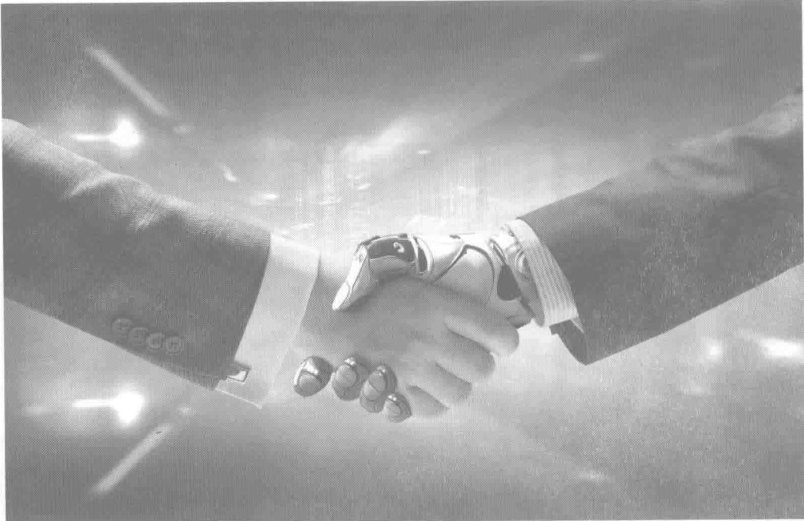
To what extent do you agree with the following statement? Explain your opinion. Robots will one day replace humans as the workforce in all fields.
Working with Robots: Human and Machine Coexistence in the Workforce Adam C. Uzialko
The pervasive fear that artificial intelligence (AI) will take over human economic livelihood has been felt in places like the manufacturing sector, as large areas of the industry automate labor formerly done by humans. However, proponents of machine learning say ultimately AI and robotics will improve the way we do virtually everything, and ultimately create new jobs.
2 Still, nearly 40 percent of U.S. jobs were slated as a “high risk” for automation by the early 2030s in a March 2017 report by PricewaterhouseCoopers (PwC). While the PwC report acknowledges it’s unlikely all those jobs will be automated for “a variety
of economic, legal, and regulatory reasons", PwC also acknowledges that new tech typically means the creation of new jobs for human workers as well, conceding “the net impact of automation on total employment is therefore unclear”.
3 Many technologists claim that the new job creation will offset some of the pain of displacement; retraining programs and continuing education opportunities are key to bringing in displaced workers into the new high-tech fold.
4 “Ever since the industrial revolution, we’ve created technology that in theory has displaced workers, and yet growth continues,” Chris Volinsky, assistant Vice President of inventive science at AT&T Labs, told Business News Daily. “It’s a displacement of work from more humble tasks to those tasks which require more education and more technology, so work gets displaced, but workers are constantly evolving and being retrained.”
5 However, the pace of technological growth is so fast that many workers might not find this a truly viable option, said Moshe Vardi, professor of computer science at Rice University and fellow at the Institute of Electrical and Electronics Engineers.
6 “As AI becomes more effective and complex, the zone of ‘automated jobs’ will continue to widen across industries and verticals,” Vardi said. “Workers are racing against the machines, and to stay ahead of the game, they need to be willing to continually refresh and upgrade their skills. The jobs least likely to be automated are those that combine nonroutine technical skills in combination with people skills.”
7 What's on the horizon?
The pace of change has workers both excited and anxious about what the future holds. According to a survey conducted by Atlassian, 87 percent of respondents expect AI to change their jobs by 2020, with 76 percent responding that some or half of their job could be performed by an algorithm or robot. And while 64 percent said they trust AI's ability to properly complete a task, 80 percent are concerned about a subsequent spike in unemployment.
8 “If harnessed correctly, AI can become our team’s ‘sixth man’, moving beyond digital assistants and chatbots, and freeing up time and brains for us to tackle society’s most complex problems,” Atlassian’s report reads.
9 “AI is, first and foremost, a tool that makes humans more productive, not unlike a hammer or a steam shovel,” said Manuel Ebert, founder of AI and machine intelligence consultancy summer.ai. “If one human can produce more in the same time, that means we need fewer humans to satisfy the same demand. That is where displacement comes from.”
10 However, Ebert continued, when productivity increases and costs decrease, often
the demand for those goods and services increases and helps drive the creation of new jobs.
11 “Think the printing press and books or the assembly line and cars,” he said. “So, the interesting question is where can AI create demand for things that were previously (prohibitively) expensive?”
12 The PwC report anticipates a rise in average pretax incomes because of mass adoption but acknowledges “these benefits may not be evenly spread across income groups”.
13 “There is therefore a case for some form of government intervention to ensure that the potential gains from automation are shared more widely across society through policies like increased investment in vocational education and training,” the report reads.
14 Others have suggested a universal basic income of some kind, which would essentially offer payments to citizens that could cover necessities like groceries or rent and mortgage payments.
15 How will the job market transition into automation?
While it is generally agreed that some steps need to be taken to relieve the pain of transition, AI proponents like Volinsky argue that the benefits of these technologies far outweigh the negatives. For example, he said, AT&T is utilizing drones and machine learning to accelerate inspection and maintenance of cell towers. Instead of sending a worker up, the company now flies drones to inspect the antennae.
16 “(The drone) flies up with HD video and sends footage back to a technician on the ground to inspect,” Volinsky said. “It might take a half hour to do a full detailed inspection of one of those towers, even though the technician is only interested in certain parts of that video.”
17 That's where AI comes in: Machine learning can be used to identify potential problem areas and highlight key points of interest the human technician needs to analyze, Volinsky said. By doing so, it can reduce the half hour task to a matter of minutes, removing the technician's need to scan through useless pieces of video to find the value.
18 AI is also making headway in customer service, internal decision-making and the way companies track their customer relationships, to name a few examples. Each of these inroads represent only the beginning of the AI revolution, Volinsky said, and these tools will be essential as they proliferate.
19 “I like to think of AI as taking the dull and routine parts out of people's work and helping humans focus on their real expertise, which is identifying problems and focusing on what else needs to be done,” Volinsky said.
20 As AI more prominently enters the workforce, humans will need to prepare for continued waves of automation by learning new skills and adapting to a changing economy, while harnessing the capabilities of AI to solve problems that were previously out of reach. A symbiotic relationship between man and machine, then, appears far more desirable than a war for prominence.
take over gain control over and responsibility for (sth.) 接手;接任;接管
livelihood $ ^{*} $ /'laɪvlɪhʊd/ n. a means of earning money in order to live 赚钱谋生的手段;生计
automate $ ^{\text{®}} $ /ˈɔːtəmeɪt/ v. run or operate (sth., such as a factory or system) by using machines, computers, etc., instead of people to do the work 使自动化
ultimately $ ^{®} $ /ʌltɪmətli/ ad. finally, after everything else has been done or considered 最后地;终极地
robotics /rəʊˈbɒtɪks/ n. the science of designing and operating robots 机器人学;机器人技术
virtually $ ^{®} $ /'vɜːtʃuəli/ ad. almost; very nearly 实
际上;事实上;差不多
slate $ ^{\triangle} $/sleit/ v. arrange or plan for sth. to happen
计划:安排
automation $ ^{*} $ $ ^{①} $ /ɔːtə'meɪʃən/ n. the use of machines to do work that was previously done by people 自动化
regulatory $ {^*} $ $ ^A $/regjulətəri/a. making or concerned with making official rules about what is acceptable in a particular business, activity, etc. 管理的;控制的
concede /kənˈsiːd/ v. admit (sth.), usu. in an unwilling way (不情愿地)承认
net /net/ a. final or conclusive, after all the
details have been considered or included 最终的;最后的
offset $ ^{*\wedge} $ /'pfset/ v. use one cost, payment or situation in order to cancel or reduce the effect of another 抵消;弥补;补偿
displacement $ ^{*} $ $ ^{①} $ /dis'pleismant/ n. the act or process of removing sb. from a job or position 使失业;免职
displace $ ^{\star} $/dis'pleis/ v. take the job or position of (sb. or sth.) 取代;使失业
fold /fəʊld/ n. a group of people who have a shared faith or interest 志趣相同的人们;同一信仰的人们
in theory used for saying that sth. seems to be true or possible as an idea but may not actually
be true or possible 从理论上看;在理论上
inventive /ɪnˈventɪv/ a. new and interesting 有新意的;有创意的
humble /'hʌmbl/ a. having a low rank or social position 低下的;卑微的
viable $ ^{\triangle} $/'vaɪəbl/ a. that can be done; that will be successful 可实施的;切实可行的
fellow /'feləʊ/ n. a member of an academic or professional organization (学术或专业团体的)会员
vertical /'v3:tikəl/ n. a structure in which there are top, middle and bottom levels 垂直体;纵向体
upgrade $ ^{*} $ / ^apgreid/ v. make (sth.) better by including the most recent information or improvements 提升;改善
nonroutine /'nɒnruːtiːn/ a. not done or happening as a normal part of a particular job, situation or process 非例行性的;非常规的
algorithm /ˈælgərɪðəm/ n. a set of rules that must be followed when solving a particular problem 算法;计算程序
subsequent $ ^{①} $ /'sʌbsɪkwənt/ a. happening or coming after sth. else 随后的;接后的
spike /'spaɪk/ n. a sudden large increase in sth. 猛增;急升
chatbot /'tʃætbot/ n. 聊天机器人
free up make (sth. currently occupied or employed) available for use 释放;腾出
foremost $ ^{*} $ /'fɔːməʊst/ a. most important; leading
最重要的;第一流的
first and foremost most importantly; above all else 最重要地;首要地
steam shovel /'ʃʌvəl/ a large steam-powered machine for digging 蒸汽挖土机;蒸汽铲
printing press a machine that produces books, newspapers, etc. by pressing a surface covered in ink onto paper 印刷机
prohibitively /prəʊˈhɪbɪtɪvli/ ad. so costly or expensive that it prevents people from buying sth. or doing sth. 高昂得令人难以承受地;贵得买不起地
pretax /'priːtæks/ a. before tax is paid (纳)税前的
case /keɪs/ n. the facts or reasons used to support or oppose a plan or an idea (用以证明或反驳的)事实;根据;理由
mortgage $ ^{*} $ /'mɔ:gɪdʒ/ n. a legal agreement in which a person borrows money to buy property (such as a house) and pays back the money over a period of years 按揭(由银行等提供房产等的抵押借款)
transition $ ^{\star\textcircled{A}} $/træn'zɪʃən/ v. undergo a change of status or condition 经历转型
outweigh /,aut'wei/ v. be greater or more important than sth. 大于;超过
utilize $ ^{®} $/'juːtɪlaɪz/ v. use sth., esp. for a practical purpose 使用;利用
drone /drəʊn/ n. an aircraft without a pilot, controlled from the ground 无人驾驶飞机
maintenance $ ^{①} $/meintənəns/ n. the act of keeping sth. in good condition by checking or repairing it regularly 维护;保养
cell tower 手机基地台;蜂窝基站
antenna $ ^{\Delta} $ /æn'tenə/ n. a device (such as a wire or a metal rod) for sending or receiving radio or television signals 天线(复数antennae /æn'teniː/ 或antennas)
HD high-definition (used of television, film or video images that are of extremely high quality, with very clear, sharp outlines and details)(电视、电影或录像图像)高清晰度
footage /ˈfʊtɪdʒ/ n. part of a film showing a particular event (影片中的)连续镜头;片段 come in have a particular role or function 有需要;起作用
make headway make progress, esp. when this is slow or difficult 取得(缓慢的或艰难的)进展
inroad /'ɪnərəʊd/ n. sth. that is achieved, esp. by reducing the power or success of sth. else(尤指通过消耗或削弱其他事物取得的)进展
proliferate $ ^{\Delta} $/prəu'lifəreit/ v. increase rapidly in number or amount 迅速繁殖(或增殖);猛增
prominently /'promɪnəntli/ ad. in a way that is noticeable or easily seen 显著地;显眼地
symbiotic /ˌsɪmbaiˈɒtɪk/ a. (of two different kinds of living things) that live together and depend on each other 共栖的;共生的
prominence /'prɪmɪnəns/ n. the fact or quality of being noticeable or important 突出;显著;重要
Proper Names
Adam C. Uzialko /ˈædəm siː ˈjuːziəlkəʊ/ 亚当·C·尤齐阿尔克
Pricewaterhouse Coopers (PwC) 普华永道会计师事务所
Chris Volinsky /krɪs ˈvɒlɪskɪ/ 克里斯·沃林斯基
AT&T Labs (American Telephone & Telegraph) 美国电话电报公司实验室
Business News Daily 商业新闻日报(美国一新闻网站)
Moshe Vardi /ˈmɒʃɪˌvɑːdɪ/ 摩西·瓦迪
Rice University 莱斯大学(美国)
Institute of Electrical and Electronics Engineers 美国电气和电子工程师协会
Atlassian /ˈætɪlæʃən/ 阿特拉斯公司(澳大利亚软件公司)
Manuel Ebert /ˈmænuel ˈebɜːt/ 曼努埃尔·埃伯特
Global Reading
- What are the TWO ideas that the author emphasizes in Paras. 1–6?
a) Machine learning will finally displace human workers.
b) A lot of workers do not feel happy about upgrading their skills.
c) Many jobs will be automated by machines in the near future.
d) New technology always creates new jobs and growth will continue.
e) Experts are worried that automation will result in unemployment.
2. Skim the section "What's on the horizon?" and "How will the job market transition into automation?". Are the following statements true (T) or false (F)?
☐ 1) AI will make humans more productive.
☐ 2) People are predicted to have a lower income.
☐ 3) Advances in AI technology will bring more benefits than risks to humans.
☐ 4) AI can replace humans in problem-detecting tasks.
☐ 5) People have been able to apply AI in several limited areas.
Close Reading
- Study the reading skill in the box and work on the task below.
Reading Skill — Paying attention to linkers expressing contrast / contradiction (转折)
Cohesion is the grammatical and lexical linking within a sentence or text. Working like the glue, cohesion joins ideas together to form a whole text. Reading an academic text, we will gain a better understanding of the authors' message if we understand how they connect their ideas within the text. One important connection is contrast or contradiction, when the two presented ideas form a sharp difference.
This connection is usually demonstrated, grammatically, by linkers: however, while, but, whereas, although, despite, etc.
The following sentences are taken from Reading 1. $ \underline{\text{Underline}} $ the linkers that express contrast / contradiction and list the two ideas that form a contrast. An example is given below.
Example:
The pervasive fear that artificial intelligence (AI) will take over human economic livelihood has been felt in places like the manufacturing sector, as large areas of the industry automate labor formerly done by humans. $ \underline{\text{However,}} $ proponents of machine learning say ultimately AI and robotics will improve the way we do virtually everything, and ultimately create new jobs. (Para. 1)
Idea 1: Opponents of machine learning fear that “artificial intelligence (AI) will take over human economic livelihood”.
Idea 2: Proponents of machine learning believe that AI will "improve the way we do virtually everything, and ultimately create new jobs".
- Ever since the industrial revolution, we've created technology that in theory has displaced workers, and yet growth continues. (Para. 4)
idea 1: ___
Idea 2:___
- And while 64 percent said they trust AI's ability to properly complete a task, 80 percent are concerned about a subsequent spike in unemployment. (Para. 7)
Idea 1:___
Idea 2:___
- "If one human can produce more in the same time, that means we need fewer humans to satisfy the same demand. That is where displacement comes from." However, Ebert continued, when productivity increases and costs decrease, often the demand for those goods and services increases and helps drive the creation of new jobs. (Paras. 9–10)
Idea 1: ___
Idea 2:___
- The PwC report anticipates a rise in average pretax incomes because of mass adoption but acknowledges “these benefits may not be evenly spread across income groups.” (Para. 12)
Idea 1: ___
Idea 2:___
- It might take a half hour to do a full detailed inspection of one of those towers, even though the technician is only interested in certain parts of that video. (Para. 16)
Idea 1: ___
Idea 2:___
- Answer the following questions.
- Does the PwC report admit that automation will result in 40% of people losing their jobs?
- According to Chris Volinsky, what has caused “growth” when technology displaces workers?
- Does Moshe Vardi find it easy for workers to keep up with the pace of technology? What is the challenge?
- What TWO suggestions are given to ensure a fairer distribution of income?
- According to Chris Volinksy, what jobs will be displaced by AI, and what jobs will be kept by humans?
Critical Thinking
What's your opinion about the following statements taken from Reading 1? Give reasons to support your opinions.
- The pace of change has workers both excited and anxious about what the future holds. (Para. 7)
- A symbiotic relationship between man and machine ... appears far more desirable than a war for prominence. (Para. 20)
Language Enhancement
- The words in the box below are either active words or academic words marked in the Academic Word List (AWL). Choose the most suitable one to complete each sentence. Change the form where necessary.
automate automation displace humble maintenance offset
regulatory subsequent ultimately upgrade utilize virtually
- The continuous rainfall and the _____ flooding have thrown city traffic into chaos.
- Despite our heroic efforts to save the business, it _____ went bankrupt.
- In the information era, communications with far-away friends can be _____ simultaneous.
- To boost productivity, the company plans to introduce robots to _____ the process that used to be manual.
- Many of the company's workers were _____ by robots as a result of the rapid development of artificial intelligence.
- Due to the severe misconduct in the crisis management, he was transferred to a _____ position for the time being.
- The wind was so violent that our _____ staff could not get out to fix the antenna until a few hours later.
- Across the company, robust Asian demand almost entirely _____ falling sales of jewelry and watches in European and American markets.
- Word processing has led to the advancement of office _____ and is definitely the best-established technology in the office today.
- In a notice published on its website today, Baidu said it had deleted indecent content and links and improved its _____ system.
- This training program will help workers to _____ their computer skills and be better prepared for the automated process.
- The websites you visit on a regular basis _____ psychology to understand how people read, use and interpret online information.
2. Complete the sentences with phrases from Reading 1. Their meanings and paragraph numbers have been given in brackets
- During the first few months after he _____ the loss-making business, he lived on a miserable schedule, sleeping only five hours a day. (gained control over; Para. 1)
- I agree with you _____, but realistically I don't think we have enough funding to accomplish that. (theoretically / ideally; Para. 4)
- Scientists believe that more breakthroughs in many other Information Technology domains are _____. (coming in the near future; Para. 7)
- Flexible working arrangements may cut down on your stress as well as _____ some of your time. (make available; Para. 8)
- What the consumers need _____ from food companies is food quality and safety. (above all else; Para. 9)
- The $ \underline{factory} $ needs someone to handle the debt problem and that is where you _____. (have a particular role; Para. 17)
- While the research might be biological, the ability to _____ on this centuries-old problem is technological. (make progress; Para. 18)
3. Study the word building skill in the box and work on the tasks below
Word Building Skill — Antonymy(反义关系)(I): classification
Antonymy is the semantic relation between antonyms. An antonym is a word that has the opposite meaning of another word. For example, "empty" is an antonym of "full". Antonymy can be classified into three types:
- Gradable antonymy (分级反义): There is scale or degree between antonyms. For example, "beautiful" and "ugly" are gradable antonyms, we can put "good-looking" and "plain" between this pair of antonyms.
Complementary antonymy (互补反义): The denial of one word means the assertion of the other. There is no intermediate ground between the two of them, e.g. "alive" and "dead".
Relational antonymy (关系反义): Two words have opposite meanings, where opposite makes sense only in the context of the relationship between the two meanings. For example, if A "lends" money to B, B "borrows" money from A.
A. Classify the following pairs of antonyms.
| male — female | hot — cold | buy — sell |
| old — young | give — receive | husband — wife |
| love — hate | present — absent | single — married |
| rich — poor | above — below | on — off |
- Gradable antonymy: ___
- Complementary antonymy:___
- Relational antonymy: ___
B. The underlined words in the following sentences are either original words or derived words from Reading 1. Choose the antonym of each of them from the given choices
- Ambiguity (歧义), as a common and $ \underline{\text{pervasive}} $ language phenomenon, has long been a major concern of many Chinese and foreign scholars.
a) rare b) unpopular c) influential
- The experiment results show that this algorithm could deal with $ \underline{\text{automatic}} $ human face detecting and tracking efficiently.
a) intellectual b) fixed c) manual
- The $ \underline{net} $ conclusion of the research is that immediate actions must be taken to save the environment.
a) gross b) initial c) final
- They must be confident enough to know when they have found a scientific truth, but $ \underline{\text{humble}} $ enough to admit when they are wrong.
a) polite b) superior c) advanced
- There may come a time when our reliance on advertising revenues to pay for this journalism is no longer a $ \underline{\text{viable}} $ business model.
a) impossible b) difficult c) invariable
- As the products are to be manufactured on this new robotic assembly line, one of the $ \underline{\text{foremost}} $ considerations must be quality of the products.
a) indirect b) primary c) secondary
- In recent years, commercial, cultural, travel and other contacts have $ \underline{\text{proliferated}} $ between Europe and China.
a) shrunk b) grown c) maintained
- The report was given a $ \underline{\text{prominent}} $ position on the front page.
a) outstanding b) invisible c) covered
- Study the translating skill in the box and work on the task below.
Translating Skill — Translating comparative structures (I)
Many comparative structures in Chinese can be conveniently rendered into their English counterparts, i.e., positive degree into positive degree, comparative degree into comparative degree.
Source text: 运动是一种跟其他减肥方法一样的好方法。
Translation: Exercising is as good a way as any to lose unwanted weight.
Source text: 这任务比我想象的难。
Translation: The task is more difficult than I imagined it to be.
In some cases, words implying comparison are used.
Source text: 心灵美胜过外表美。
Translation: Beauty of mind excels that of appearance.
Translate into English the following paragraph, paying attention to the translation of comparative structures
人工智能是由美国计算机科学家约翰·麦卡锡(John McCarthy)于1956年在达特茅斯会议(The Dartmouth Conference)上创造的。今天,它是一个涵盖了从机器人流程自动化到实际机器人技术的包罗万象的术语(umbrella term)。最近它的知名度越来越高,部分原因是大数据,也就是企业收集数据在速度、规模和种类等方面的增长。人工智能可以比人类更有效地执行数据识别模式等任务,从而使企业能够从数据中获得更多的灵感。
Translation:
二
Reading 2
How I Learned to Stop Worrying and Love the Roomba
Before Reading
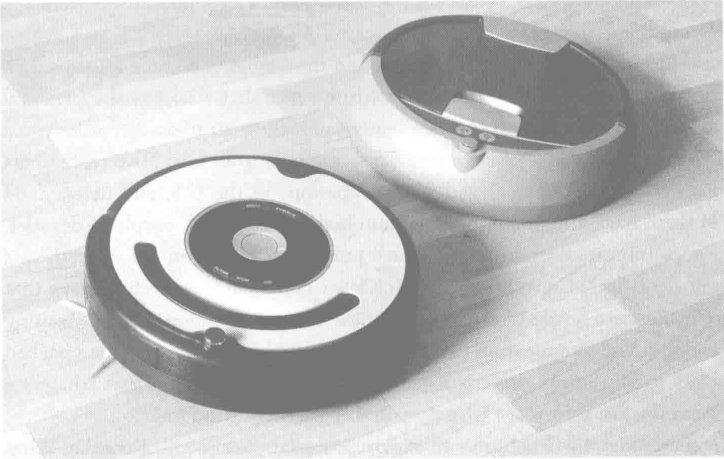
Roomba is a small household cleaner automatically brushing and vacuuming the carpets, rugs, and floors. Can you understand why some people WORRY about Roomba while some LOVE it?
How I Learned to Stop Worrying and Love the Roomba
Kristin van Ogtrop
1 There is a unique kind of modern-era rage that erupts when you call your credit-card company because you don't recognize a charge on your bill. Maybe it's true that your spouse made the charge, but the fact that your spouse wasn't listening when you asked about it is not the reason for the rage. The rage – and it's not anger or frustration; it's rage – comes when you have to have a "conversation" with a machine, or press 585 buttons on your phone in order to reach a real human in Sioux Falls or Bangalore. There is something about talking to a machine that has replaced a person that is simply ... enraging.
2 Unless that machine is my vacuum robot, a.k.a. Roomba. I can talk to my Roomba all day. Our conversations, while short, are always meaningful. For example, I might tell Roomba that it's the best thing that has ever happened to me, and Roomba will reply, "Error 18, please open the iRobot app for help."
3 Spring cleaning season is upon us, which means this is the time of year when my love for Roomba reaches its peak. But this year, frankly, I'm struggling. I'm a
patriotic human being who knows that the disappearance of American jobs has less to do with trade deals, as our new President claims, than automation — and so I am supposed to be angry and scared about robots that can do my job. I'm also a lazy human being, however, and am very, very grateful for the cute little round guy with the green light who knows not to vacuum over the towel I dropped on the floor the day before yesterday.
4 Our world is going on autopilot, people, and the sooner you come to grips with that, the sooner you can get comfortable with the fact that Alexa – the personal assistant in Amazon’s Echo speaker that already can make your to-do list, order you a ride from Uber and tell you a joke – is one day going to be your boss. Two researchers at the University of Oxford analyzed 702 occupations in the U.S. and determined that half of them have a high risk of being automated in the next couple of decades. (Realtors, accountants, telemarketers: Don’t panic, but have you considered, say, education or dentistry?) Consulting firm McKinsey conducted research to show that certain professions are headed for a future of near 100% automation. I’m just waiting for “wife and mother” to appear on that McKinsey list, because I’ve got a bag packed and am ready to hop in my driverless car and hit the road. I’m not sure where I’ll eventually end up, just someplace where my family will never find me.
5 In the meantime, I will continue to explore my relationship with Roomba. What began as an experiment in domestic codependent coexistence between woman and robot has turned into something that resembles love. It's not just me. I once worked with a woman who was having a secret affair with her Roomba. Every morning she would take Roomba out of the box while her husband took the kids to school, let Roomba clean her apartment floor and then put Roomba back in the box before her husband returned. I never got to the bottom of why she did this, and while I pretended to find her story vaguely disturbing, let's just say there's a reason I made her tell it to me so many times.
6 Apparently researchers at institutions of higher learning are developing robots that can decipher human emotion. When I am replaced by a wife / mother robot in my own household, I'm taking my suitcase straight up to Cambridge to ask the folks at MIT exactly why I fell in love with Roomba. There are other bigger, fancier domestic robots that would seem to deliver more. LG has a new smart refrigerator with a door that turns transparent when you touch it, not to mention the ability (thanks, Alexa!) to give a weather report and order products from Amazon Prime. But I don't need a refrigerator to buy stuff for me. Call me when it can make veal Marsala.
7 Until the researchers at MIT have it figured out, I will just have to guess at the logic behind my devotion to Roomba. Maybe I've done so much vacuuming in my life that I'm happy to be replaced. Maybe it was the video I saw online of the Roomba that whirred its way around the puppy lying on the kitchen floor, which I have now watched about 12 times. Or maybe it's the way Roomba sometimes seems to go around and around in circles, with no clear purpose, looking directionless and confused but always getting the job done in the end, which makes it seem almost human.
New Words and Expressions
erupt $ ^{*} $ /ɪˈrʌpt/ v. happen or begin suddenly and violently 突然发生;爆发
enraging /ɪnˈreɪdʒɪŋ/ a. making sb. very angry 激怒的;令人异常愤怒的
vacuum /'vækjuəm/ n. the act of cleaning sth. with a vacuum cleaner (用真空吸尘器所做的)清洁;清扫 v. clean sth. using a vacuum cleaner 用真空吸尘器清扫
a.k.a. abbreviation for “also known as”, used to introduce another name of a certain object or person 亦称……;又名……;也叫作……
peak /piːk/ n. the highest level or degree of excellence, quantity, activity, etc. 顶峰;高峰
patriotic $ ^{*} $ /pætriˈɒtɪk/ a. having or expressing a great love of one's country 爱国的
autopilot /ˈɔːtəʊpɑːlət/ n. 自动驾驶仪
grip /grip/ n. an understanding of sth. 理解;了解
come to grips with begin to understand or deal with (sth., such as a problem) in a direct or effective way 理解;认识
to-do list 待办事项清单
realtor /'rɪəltə(r)/ n. a real estate agent 房地产经纪人
telemarketer /'teli,ma:kitə(r)/ n. someone whose job is to sell goods or services by calling people on the telephone 电话推销员
dentistry /'dentistr/ n. the work of a dentist 牙医的工作
hop $ ^{*} $ /hɒp/ v. move by jumping on one foot 单脚跳行
in the meantime meanwhile (与此)同时;在间隔时间里
affair /ə'fɛə(r)/ n. a sexual relationship between two people, usu. when one or both of them are married to sb. else (尤指已婚男女的)私通;风流韵事
get to the bottom of find out the true reason for or cause of (sth.) 探明……的真相;弄清……的起因
vaguely /'veɪɡlɪ/ ad. somewhat or slightly 略微;稍微
apparently $ ^{①} $ /əˈpærəntli/ ad. in a way that appears to be true based on what is known; seemingly 看来;似乎
decipher /dɪˈsaɪfər/ v. succeed in finding the meaning of (sth. that is difficult to read or understand) 破译;辨认
fancy /ˈfænsi/ a. unusually complicated, often in an unnecessary way; intended to impress other people 异常复杂的;太花哨的
Marsala /mɑːsɑːlə/ n. a strong sweet wine from Sicily (产于意大利西西里岛的)马沙拉白葡萄酒
puppy $ ^{\triangle} $ /pʌpi/ n. a young dog 小狗;幼犬
Proper Names
Roomba/rumba/“伦巴”智能吸尘器
Kristin van Ogtrop /'kristin væn 'ogtreup/ 克里斯汀·范·奥格特鲁普
Sioux Falls /su: fz:lz/ 苏福尔斯;苏瀑布城(美国南达科他州东南部城市)
Bangalore /ˌbæŋɡəˈlɒ(r)/ 班加罗尔(印度南部城市)
Amazon's Echo /'ekəʊ/ 亚马逊回声(亚马逊公司一款搭载智能助手Alexa的智能音箱)
Uber /'uːbə(r)/ 优步(美国一家风险投资的创业公司和交通网络公司)
McKinsey /məˈkɪnz/ 麦肯锡(美国一家管理咨询公司)
Cambridge /ˈkeɪmbrɪdʒ/ 坎布里奇(美国马萨诸塞州东部城市)
MIT Massachusetts Institute of Technology 麻省理工学院(美国)
LG 乐金(韩国一家企业集团)
Amazon Prime /praim/ 亚马逊金牌会员
Global Reading
Choose the best answer to each of the following questions.
- When do people have “a unique kind of modern-era rage” (Para. 1)?
a) When the credit-card company does not respond to people's request.
b) When people have to make a long-distance call for a simple problem.
c) When customers find themselves communicating with a machine.
- Which of the following statements is true about the author and her Roomba?
a) She laughs when the Roomba tells her a joke.
b) She talks to the Roomba and uses it as a cleaner.
c) She feels angry and scared because the Roomba does her work.
- The author gives an example of a woman in Para. 5. What kind of relationship between the hostess and the Roomba does that example support?
a) A woman and her secret lover.
b) A mother and a competent helper.
c) The master and the household appliance.
Close Reading
Read Paras. 4, 6 and 7 carefully. Then complete the summary below.
Researchers anticipate that among 702 occupations, 1)_____ will be displaced in the near future. So the world of tomorrow must be a world of 2)_____ . The author jokes about her role of 3)_____ , which seems highly unlikely to be replaced by a robot.
Machine learning is developing to be able to understand 4) _____. Then, can any expert explain why a human falls in love with a robot? The author offers three possible reasons. First, she wants to be replaced because she is tired of 5) _____. Second, she finds the Roomba in the video so cute. Third, Roomba really looks like a 6) _____ when it keeps circling around, doing its cleaning work.
Discuss the following questions.
- What's the future of AI in housekeeping?
- The website $ \underline{\text{http://www.jobmonkey.com/}} $ lists jobs that robots can't do. Do you agree that these jobs will not be replaced by robots?
| nanny (保姆) | psychologist |
| chef | teacher |
| sports instructor | police officer |
| artist | doctor |
| tour guide | detective |
| journalist | actors / actresses / models |
| travel blogger |
Language Enhancement
- A preposition or adverb can be very useful in forming a collocation.
A. Scan Reading 2 and fill in the blanks with the prepositions or adverbs used in the collocations
- … the disappearance of American jobs has less to do _____ trade deals, … (Para. 3)
- … the sooner you come to grips _____ that, … (Para. 4)
- ... half of them have a high risk _____ being automated ... (Para. 4)
- ... certain professions are headed _____ a future of near 100% automation. (Para. 4)
- I'm not sure where I'll eventually end ___, ... (Para. 4)
- _____ the meantime, I will continue to ... (Para. 5)
- … a woman who was having a secret affair _____ her Roomba. (Para. 5)
- I never got to the bottom ___ why she did this, ... (Para. 5)
- Until the researchers at MIT have it figured ___, ... (Para. 7)
- … but always getting the job done _____ the end, … (Para. 7)
B. Complete the sentences with the collocations from Step A. Change the form where necessary
- The new hospital will be built next year. _____ the doctors have to work in seriously overcrowded conditions in the old one.
- The government needs to _____ the unemployment problem and work out practical solutions.
- Many countries appear to _____, if not already in, trouble with falling GDP and rising unemployment.
- Young people who abuse drugs often _____ as very immature adults because they never learn to cope with their problems.
- No matter whether it was a mechanical fault, a management problem, or a manufacturing problem, we must _____ this.
- Individuals who do not exercise regularly _____ developing high levels of cholesterol in the bloodstream late in life.
- The retraining center had expected to enroll 100 displaced workers, but over 500 turned up _____.
2. Study the word building skill in the box and work on the tasks below
Word Building Skill — Antonymy (II): multiple antonymy
A word that has several meanings has different antonyms. This is called multiple antonymy. For example, when the word "hard" means "firm", the antonym is "soft"; when it means "difficult", the antonym is "easy".
Therefore, a word also has different antonyms due to its different collocations. For example, "fresh bread", "fresh air", "fresh color" are anonymous to "stale bread", "stuffy air", "faded color" respectively.
A. The word "clear" has different antonyms, as shown in the box below. Read the following sentences and figure out the specific meanings of "clear". Put the matching antonym in the blank after each sentence. Consult the dictionary where necessary.
guilty, confusing, muddy, gross, unobvious, opaque (不透明的), indistinct, congested (阻塞的)
- The manager was always able to give clear and precise directions to the employees.
- She has won the election by a clear majority. ___
- My friend is in Australia but I can hear his voice as clear as a bell. _____
- The water is so clear that we can see the bottom of the lake. ___
- I prefer to use $ \underline{clear} $ glass in the house because I don't like to block the street view.
- The landlord warned them that all exits must be kept clear of baggage and piles of junk.
- Can you shift the blame onto him alone with a clear conscience? ___
- The company made a clear profit of 2 million dollars last year. ___
B. The underlined words in the following sentences are either original words or derived words from Reading 2. Choose the antonym of each of them from the given choices
- Commonly known as the first great $ \underline{\text{patriotic}} $ poet of the Chinese nation, Qu Yuan's works and personality have had a profound impact on later generations.
a) faithful b) unloved c) disloyal
- The spokesman said the deal would have had an adverse impact on China's smaller $ \underline{\text{domestic}} $ juice makers.
a) foreign b) national c) interior
- The daily sodium (钠) consumption for healthy adults will be $ \underline{\text{vaguely}} $ higher than children.
a) powerfully b) immensely c) totally
- $ \underline{\text{Apparently}} $ the company decided to run a global propaganda (宣传) campaign rather than really protect forests.
a) Unnoticeably b) Evidently c) Undoubtedly
- Any $ \underline{fancy} $ or pretentious words should not be included in this serious academic paper.
a) illusory b) plain c) understandable
- The country would be better off cultivating a welcoming and $ \underline{\text{transparent}} $ investment environment for the long term.
a) indirect b) demanding c) opaque
- Study the translating skill in the box and work on the task below.
Translating Skill — Translating comparative structures (II)
In other cases, sentence patterns indicating comparison are used.
Source text:你不至于这么冷的天气去游泳吧。
Translation: You ought to know better than to go swimming on such a cold day. (know better than ...)
Source text: 室之于人,犹巢之于鸟,穴之于兽。
Translation: As the house is to the man, so is the nest to the bird and the cave to the animal. (As ... is to ..., so is ... to ...)
Source text: 国家不能以大小而论,如同个人不能以高矮而论一样。
Translation: Nations are not to be judged by their size any more than individuals by their height. (not ... any more than ...)
Translate into English the following paragraph, paying attention to the translation of comparative structures
当人们想到人工智能——关于设计智能系统和机器的研究——时,像尤金·古斯特曼(Eugene Goostman)这样会说话的电脑经常会浮现在脑海中。但大多数人工智能研究人员的注意力并没有集中在培养聪明的谈话者上,而是集中在开发使人们的生活更容易的智能系统上——从能够识别静物和动物的软件,到迎合甚至预测主人需求和愿望的数字助理。
Translation:
一
Part II LISTENING AND VIEWING
Listening: Driverless Cars
Before Listening
Discuss the following questions.
- What are the potential advantages of driverless cars?
- Are you optimistic about the future of driverless cars?
New Words and Expressions
relentless $ ^{\triangle} $/rilentis/ a. not stopping or getting less strong 不停的;不减弱的
contention $ ^{*} $ /kən'tenʃən/ n. angry disagreement between people 争执;争论
feature $ ^{\textregistered} $ /'fiːtʃə(r)/ v. have or include (sb. or sth.) as an important part 是……的特征
pipe dream a hope that is impossible to achieve or not practical 脱离实际的愿望;妄想
prototype $ ^{*} $ /ˈprəʊtəʊtaɪp/ n. 原型;雏形;最初形态
Mercedes-Benz /'mɜːsɪdiːz bents/ 梅赛德斯-奔驰(德国汽车品牌)
go from strength to strength 不断壮大;不断取得成功;越来越强大
jump on the bandwagon /ˈbændˌwæɡən/ 赶时髦;追随潮流
unroll /ʌnˈrəʊl/ v. make (sth.) known in a public or formal way 展现;呈现
fleet /fliːt/ n. (由某人或某机构调度的)车队;机群
Ford/fɔːd/ 福特(美国一家汽车公司)
Tesla /'teslə/ 特斯拉(美国一家电动车及能源公司)
vehicular /vɪˈhɪkjʊlə(r)/ a. 供车辆等使用的;车辆的;运输工具的
autonomy* /ɔːtɒnəmi/ n. 自主性
fatality $ ^{*} $ /fəˈtæləti/ n. (事故、战争、疾病等中的)死亡
embryonic $ ^{\triangle} $/embrionik/ a. in an early stage of development 萌芽期的;未成熟的
Listening Comprehension
Study the listening skill in the box and work on the tasks below.
Listening Skill — Recognizing pros and cons
When facing a new issue or a disputable problem, a speaker usually introduces the pros and cons of it. The pros and cons of something are its advantages and disadvantages, which we should consider carefully so that we can make a sensible decision or evaluation.
Listening for contrasting words (see Unit 5, Book 1) will help you get an overall and balanced understanding of an issue. Some words which indicate the pros and cons are: though, but, however, on the other hand, etc.
1. Listen to the report about driverless cars, and pay attention to the pros and cons of them. Fill in the blanks with the exact words you have heard
• Vehicular autonomy could lead to much safer 1) ___ for all.
It could lower 2) ___ costs and enhance 3) ___ for the elderly, the sick and those with disabilities.
• They would also allow roads to increase their 4 ___.
Cons:
Perfection seems to be just 5) ___ at the moment.
To date Google's self-driving car has had 6).
- Tesla's Autopilot has caused one fatality in 2015, where the vehicle simply did not see the 7). ___.
- Listen again and choose the correct answer to each of the following questions.
- When did Mercedes-Benz successfully create the first prototype of driverless cars?
a) In the 1920s.
b) In the 1980s.
c) In the 21st century.
- Which of the following statements is NOT true according to the report?
a) Long existing in science fiction movies, autonomous cars have moved from fantasy to reality.
b) Apple and Ford already have autonomous cars on the road.
c) Autonomous cars can increase roads' capacity between 200 and 400 percent.
- What is the speaker's attitude towards driverless cars?
a) The technology of driverless cars is already mature enough.
b) There will be many obstacles and dangers on the road ahead.
c) Driverless cars still need further development.
Viewing: The Jobs We'll Lose to Machines — and the Ones We Won't
Before Viewing
Discuss the following questions.
- What do you know about machine learning?
- What jobs have been or will be replaced by machines?
New Words and Expressions
disruption $ ^{*} $ /dis'rʌpʃən/ n. a state of disorder caused by outside influence 混乱
mimic /'mɪmɪk/ v. copy (the way sb. speaks, moves, behaves, etc.) 模仿(某人的言行举止)
Kaggle /ˈkæɡl/ 卡哥网(澳大利亚一家举办机器学习竞赛、托管数据库的平台)
cutting edge (处于某事物发展的)尖端;最前沿;领先阶段
outperform$\Delta$ /ˌaʊtpəˈfɔːm/ v. achieve better results than (sb. / sth.) 超过;胜过
high-volume /haɪˈvɒljʊm/ a. 大容量的;大量的 disparate /ˈdɪspərət/ a. 迥然不同的;不相干的 reducible /rɪˈdjuːsəbl/ a. that can be described or considered simply as sth. 可以简化的 audit $ ^{\blacktriangle} $ /ˈɔːdɪt/ n. (质量或标准的)审查;检查 boilerplate /ˈbɔɪləplet/ n. (可供模仿的)样板文件;文件范例 path-breaking /ˈpɑːθˌbreɪkɪŋ/ a. 开创性的 litigation $ ^{\blacktriangle} $ /ˌlɪtɪˈɡeɪʃən/ n. the process of making or defending a claim in court 诉讼;打官司 come by obtain by efforts 得到;获得
Viewing Comprehension
Study the listening skill in the box and work on the tasks below.
Listening Skill — Recognizing similarity and difference
A speaker often applies the technique of comparison between two or more things (see Units 4 and 5, Book 1), in order to help the audience better understand the similarities and differences, and their relative importance. This is especially the case when the speaker is introducing some new ideas or technologies. You should focus on the similarities and differences between the things and avoid confusion.
- Watch a video clip about machine learning, paying attention to the similarities and differences between machines and humans. Put the following jobs in the box into the appropriate blanks, and pay attention to the specific time mentioned in the report.
| reading legal contracts | path-breaking litigation (诉讼) |
| complex tax structuring (税收筹划) | conducting audits |
| diagnosing certain diseases | assessing credit risk |
| grading essays | sorting the mail |
Similarities (the jobs that both humans and machines can do, from 1990s to 2012):
- ___
Differences (for the future of work):
Frequent and high-volume tasks that machines do or will do:
- ___
Novel and innovative problems that humans are better at:
- _____
- Watch again and decide whether the following statements are true (T) or false (F).
- According to researchers at Oxford University, almost one in every three jobs will probably be automated by machines.
- Machines will outperform humans at tasks like grading essays.
- What limits machine learning is that it needs to learn from past data rather than tackle new problems.
☐ 4) It will be more difficult for accountants and lawyers to get jobs in the future.
Critical Thinking
Discuss the following questions.
- What are the advantages and disadvantages of grading essays by machine?
- Is it possible that human beings will be controlled and enslaved by robots?
Part III SPEAKING
At university you would be assigned some academic projects that usually require collaboration with other students to conduct research (such as searching on-line or in the library, investigating by questionnaires and interviews), and then present your research results in the form of a group presentation or report writing. Such tasks are now commonly used in the Project-Based Learning (PBL), a teaching approach that is student-centered and engages students in exploring real-world challenges and problems. In order to succeed in these research-based projects, especially the group presentations, you need to master the skills that will be provided in Units 5–8. As a start, this unit will inform you how to work as part of a team.
Research-based group presentations (I): teamwork
When participating in a group project, teamwork is a prerequisite (先決条件) for you to fulfill all the relevant tasks successfully. Basically speaking, you should develop your communication skills to discuss and negotiate with others so as to reach a consensus (i.e. agreement) among the group members.
In preparation for a research-based group presentation, first you need to break down the complex task into parts and steps, and then allocate them to different group members. Usually such projects can be divided into several main parts or steps like:
- deciding on a specific topic;
- conducting research to collect sources or data;
- analyzing sources or data and gaining research results;
- discussing the results to show implications;
- incorporating all the previous tasks to prepare for and take part in the group presentation.
For step 1, all teammates need to share opinions to come to an agreement about what topic you should research and present. For steps 2–4, different members can be delegated to do the work that they are good at or interested in (the team should reach a consensus as well). Remember to always communicate with others about your progress, or difficulties and problems, and to offer help or suggestions when necessary. For the final presentation, everyone should be responsible for preparing PPT slides for the part he / she has done, and present to the teacher and classmates cooperatively with other members to make it a complete presentation. In practice, the basic procedures and components of a group presentation are similar to those of an individual oral presentation (you can refer to Units 5–8, Book 1).
When you are trying to reach an agreement with other teammates, it is advisable to use hedging language, or cautious language, to make suggestions. Such language sounds friendly and will perhaps make your suggestions more easily approved, as shown in the following examples:
It might I would be a good idea to focus on the topic of ...
We could divide the tasks at the very beginning.
Perhaps I Maybe we should select a team leader first.
If you have good reasons to back up a suggestion, you can use appropriate language to show your stance clearly, for example:
The teacher said we should look at the problem from different perspectives. So it's important / crucial that we ...
I still think a topic like that would sound boring and complex for other classmates.
I'd go for / I prefer ... because it is ...
1. Work in groups. Discuss the following questions
Have you ever taken part in any group project?
- Describe the project briefly.
- What has been successful in terms of your teamwork in this group activity?
- What do you think has been difficult to deal with? Why?
- What kind of group project would you look forward to participating in?
- How do you ensure successful teamwork in such group activities?
- Plan a group research project, following the requirements below. Note that when you are discussing and negotiating with other teammates, use appropriate language to make suggestions.
TASK: Research a type of artificial intelligence (AI) that has been / will be widely used in people's life or workplace.
OUTCOME: an oral group presentation
CONTENT: when this type of AI came / will come into being; how it works; the advantages and disadvantages of it; its potential development, etc.
- Do the group presentation based on the research that your team has conducted, following the guidelines below.
Decide who will present which part(s).
Prepare PPT slides individually and often communicate with each other.
Rehearse the presentation together and link each part cohesively and coherently.
Part IV WRITING
From this unit on, we will present the writing skills related to four major types of essays, i.e. argumentative essays, comparison-contrast essays, cause-effect essays and problem-solution essays, with each unit concentrating on one of the essay types. In fact, the writing of an extended essay often needs to incorporate different essay types. For example, your essay could be argumentative by evaluating the results or comparing and contrasting. Therefore, it is essential to know how to write each individual form of essays, and then you will be able to integrate them into a coherent essay. In this unit, you will learn how to write an argumentative essay.
Writing argumentative essays
An argumentative essay aims at establishing the writer's own position / stance on a given topic and persuading other people to see things from his / her point of view. So when writing argumentative essays you should first choose a controversial topic. If everyone seems to agree on a topic, there is little to argue about. Then you need to identify various opinions that different people may hold — including your arguments and other arguments that are at odds with yours (i.e. "counter-arguments"). In the main body you should support your arguments with evidence, reasons, or examples; and you also need to refute (驳斥) those counterarguments with solid reasons or evidence. In this way, you will provide a well-rounded and logical discussion of the topic, hence readers are more likely to be persuaded by you.
There are two structures that are commonly used to organize an argumentative essay. The first one can be referred to as "counter-arguments" → arguments structure". In the thesis statement of the introduction, you should clearly state your position / stance on the topic. Then in the main body, you first point out one or more counter-arguments in relation to the topic. You may admit their partial truth or functions, but you further provide strong evidence or reasons to exhibit that they are not acceptable. After refuting the counter-argument(s), you propose your own argument(s) and support it (them) with justifications or solid evidence like facts, statistics, research findings, or quotations from experts. The conclusion usually comprises the evaluation in favor of your arguments. The following outline shows the counterarguments → arguments structure of an argumentative essay:
| Body | Counter-arguments → arguments structure |
| Introduction / Thesis statement | |
| I. Counter-argument 1 | |
| Evidence or reasons against | |
| II. Counter-argument 2 | |
| Evidence or reasons against | |
| III. Argument 1 | |
| Evidence or reasons for | |
| IV. Argument 2 | |
| Evidence or reasons for | |
| Conclusion | |
The other structure, "arguments → counter-arguments structure" differs with the former one in the sequence of presenting two types of arguments in the main body. In this pattern, you point out your own argument(s) first, supporting it (them) with reliable evidence or reasons. Then you introduce the possible counter-argument(s) and disprove it (them) by explaining or exemplifying. An illustration of the second structure is shown below:
Arguments $ \rightarrow $ counter-arguments structure
Introduction / Thesis statement
- Argument 1
Evidence or reasons for
Body
II. Argument 2
Evidence or reasons for
III. Counter-argument 1
Evidence or reasons against
IV. Counter-argument 2
Evidence or reasons against
Conclusion
The writing of a complete argumentative essay requires you to follow all the stages in the writing procedure of pre-writing, while-writing and post-writing. After making sufficient preparations, you can work out an outline based on either of the structures. Then in the drafting / writing process, you need to make use of appropriate language to put forward and support your arguments, or to introduce and refute a counter-argument. Useful language patterns are shown in the following box.
Putting forward your arguments
This essay argues that ...
It is clear / important to note that ...
As opposed to the widely held idea, a new study reveals that ...
Supporting your arguments
According to / As found by a recent research ...
One main / primary reason for ... is that ...
For example / instance, ...
Introducing a counter-argument
Some / Many / A number of people believe / claim that ...
A common misunderstanding / misconception is that ...
It is often believed / argued that ...
- Refuting a counter-argument
It might / may be true that ..., but / yet / however ...
If / Suppose / Imagine ..., then / in that case ...
Logical as these arguments seem to be, they are not valid when ... is taken into account / consideration.
- Work in groups and brainstorm different opinions about the question: How will artificial intelligence (AI) influence our life? You may think of either the positive influences or the negative influences, from different perspectives: social, individual, educational, financial, behavioral, etc. The first one has been given as an example.
- The fast development of AI may make people unwilling to make decisions by themselves. (negative influence, behavioral perspective)
- ___
- ___
- _____
- _____
- ___
- AI technology keeps advancing at a great rate. Some people worry that AI will one day replace the human workforce and control the world. But others argue that humans can make good use of AI and live in harmony with machines or robots. Which position do you hold in regard to the future relationship between humans and AI? Choose one of the following structures to complete an outline for your ideas (you can add or delete the number of your arguments / counter-arguments).
OUTLINE 1 (Counter-arguments $ \rightarrow $ arguments structure)
Thesis statement (your position): ___
- Counter-argument 1: ___
Evidence or reasons against: ___
II. Counter-argument 2: ___
Evidence or reasons against:_____
III. Argument 1: ___
Evidence or reasons for: ___
IV. Argument 2: ___
Evidence or reasons for: ___
Conclusion: ___
OUTLINE 2 (Arguments $ \rightarrow $ counter-arguments structure)
Thesis statement (your position): ___
- Argument 1: ___
Evidence or reasons for:_____
Body
Il. Argument 2: ___
Evidence or reasons for: ___
Ill. Counter-argument 1:___
Evidence or reasons against:_____
IV. Counter-argument 2: ___
Evidence or reasons against:___
Conclusion:___
- Based on the outline that you have worked out in Task 2, write a complete argumentative essay. Follow the guidelines below.
Follow the procedure of writing an essay from pre-writing, while-writing, to post-writing steps.
Use appropriate language for arguments.
The text should be cohesive and coherent.
Use correct forms of citing and referencing.