Unit 6 Communication
6 Communication

Lead-in
Harold Lasswell, an American political scientist, developed a much quoted formulation (表述) of the main elements of communication: "Who says what in which channel to whom with what effect."
Think about the following questions and share your answers in the group.
- Who: Do you think communication is different when speakers are different?
- What: Do you agree that the message / information is the most important element in communication?
- Which channel: Do different channels, such as video conferencing, emails, message boards (留言板), presentations, face-to-face meetings, satisfy different needs in communication?
- Whom: Do you modify your communication when the listeners / recipients (接受者) are different?
- What effect: Do you always communicate with a desired effect?
Reading 1
You Talk Too Much!
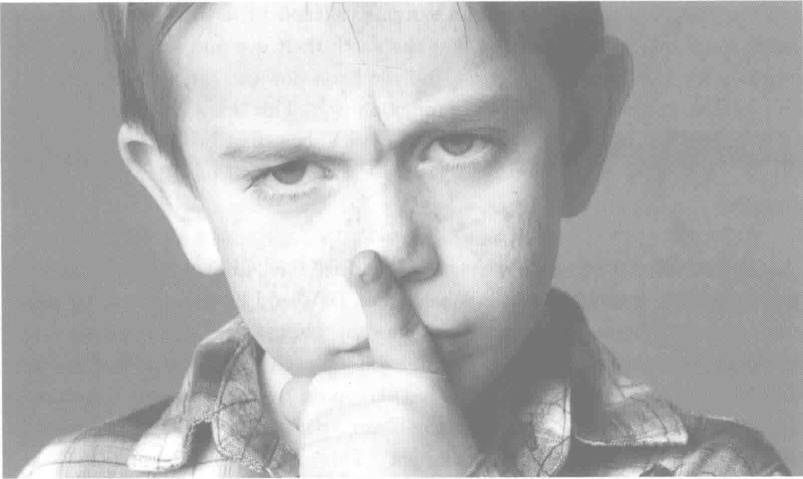
Before Reading
Imagine you are with some friends and one of them keeps talking. How would you feel? What would you do?
You Talk Too Much!
Lenore Skenazy
1 We had a couple over for dinner the other night — friends of friends — and at first, the woman seemed charming.
2 Then she seemed to be sort of monopolizing the conversation.
3 Then we realized she NEVER SHUT UP.
4 And then we noticed her husband's head cocked at a weird angle. He had fallen asleep at the dinner table.
5 Lucky guy.
6 What's shocking is not that some people talk too much. What's shocking is that they don't seem to pick up on even the most obvious cues — a passed-out spouse, for instance.
7 It turns out there are two basic types of over-talkers. The first actually work at being entertaining because they feed off our appreciation. Whether they succeed is
up to the listener. The second group is made up of those who fear that if you stop listening, they stop living. It's a problem psychologists ascribe to everything from loneliness to insecurity to arrogance.
8 University of Texas professor of psychology Art Markman, author of the book Smart Change, says nonstop talkers “need social interaction to survive, so they’re just looking to plug into somebody and don’t care who it is. They smell social interaction and go into a feeding frenzy”.
9 One neighbor of ours is such an extreme yakaholic. Everyone in the area dives inside when they see her coming, lest she catch their eye and start saying, “Our grandson was just given a promotion, and you know how you can get a promotion at his job? The only way you can get a promotion is ...” This is not chitchat. This is an act of aggression. Talkers mug listeners — they steal their time.
10 If you're ever confronted by a yakker — and you will be — try these coping strategies:
11 At Work
To fend off chattering coworkers, says Jennifer Kalita, CEO of the Vesta Group, a communications consulting firm in Washington, DC, “add the expression hard stop to your vocabulary. At the beginning of a meeting, say ‘I have a hard stop at 3 p.m., so let’s dig right in’.” Somehow a hard stop sounds set in stone, giving you the perfect out.
12 Another idea is to keep a talkative person on track by playing dumb, says psychotherapist Leslie Beth Wish, author of Smart Relationships. "Say 'I like what you're saying; I just want to make sure I've got it right'." This way, you force the talker to focus.
13 With Friends
If a longtime friend routinely goes into talk radio mode but you don't want to sever the relationship, "plan activities where talking isn't allowed," says Kalita. "Go to the movies instead of dinner. Attend a workshop together instead of a party. Take a Zumba class instead of lunch."
14 At Home
“My mom and I would watch TV while Dad sat in his recliner and talked,” recalls writer Jess Kennedy Williams. “We learned to block him out until his voice went up like he was asking a question, and then we’d say ‘Yes, I know’ or whatever.”
15 There are far better ways to keep peace in the family. The best one is to simply keep yourself busy while the talkers talk so you won’t feel they’re totally wasting your time. Sort the laundry, paint the kitchen, brand the cattle. Multitasking is key.
16 A Yakker? Moi?
Might you be an unwitting member of the chattering classes? To find out, says Kalita, examine your chatting habits like a detective. "When your friend is speaking, are you really listening or just thinking about the thing you're going to say next? When your friend tells you a story about an alligator, do you need to tell a bigger, more shocking story about an alligator?"
17 Perhaps most saliently: Did you ask any questions? Did you follow up with more questions? And were these questions not of the “That’s awful. Wanna hear what happened to me today?” variety? A real conversation involves listening, asking,
nodding, looking surprised – basically, all the stuff you see Dr. Phil $ ^{1} $ doing when he's not telling his guests how crazy they are.
18 There is, however, one time when you are absolutely allowed to dominate the conversation to your heart's content, and that is when that heart of yours is bursting. If your dog died, your daughter got engaged, you just lost your job or got elected to the Oval Office — if it's a really big moment in your life — babble on.
19 Just don't forget to thank whoever's listening for his or her time.
New Words and Expressions
(739 words)
monopolize $ ^{\triangle} $/mænpølaiz/ v. have or take control of the largest part of (sth.) so that other people are prevented from sharing it 独占;垄断
cock /kɒk/ v. turn, tip, or raise (part of one's body or face) upward or to one side 立起;竖起;使……侧向一边
weird /wɪəd/ a. very strange or unusual and difficult to explain 奇异的;不寻常的;怪诞的
pick up on notice or become aware of (sth.) 了解到;注意到
passed-out a. 昏过去了的
entertaining /entə'teɪmɪŋ/ a. amusing and interesting 有趣的;娱乐的;使人愉快的
feed off gain strength, energy, or support from (sth.) 从……获得能量(支持)
ascribe $ ^{*} $ /ə'skraɪb/ v. say or think that (sth.) is caused by, comes from, or is associated with (sth. or sb.) 把……归因于……
arrogance $ ^{*} $ /ˈærəɡəns/ n. an insulting way of thinking or behaving that comes from believing that oneself is better, smarter, or more important than other people 傲慢;自大
plug into become connected to (sth. or sb.) 连接;接入
frenzy $ ^{\triangle} $ /frenzi/ n. a state of great activity and
strong emotion that is often violent or frightening and not under control 疯狂;狂乱;狂暴
yakaholic /ˌjækəˈhɒlɪk/ n. someone who talks continuously and finds it difficult to stop talking and do other things 唠叨狂
lest /lest/ conj. in order to prevent sth. from happening; in case 惟恐;免得
chitchat /'tʃɪtʃæt/ n. casual conversation or small talk about things that are not very important 聊天;闲谈
aggression /ə'greʃən/ n. a violent attack or threats by one person against another person 侵犯;挑衅
mug/m $ \wedge $g/v. attack and rob (sb.) esp. in a public place(公然)行凶抢劫;打劫
confront /kənˈfrʌnt/ v. be faced with and have to deal with 面临;遇到
yakker /'jækə(r)/ n. someone who talks continuously about things that are not very serious or important 喋喋不休的人
fend off defend oneself against (sb. or sth.) 挡开;避开
chattering $ ^{\triangle} $ /'tʃætərɪŋ/ a. talking quickly, continuously, and for a long time, usu. about sth. unimportant 唠叨的;喋喋不休的
hard stop 急停;硬性停止
dig in begin work with great determination 认真努力地开始工作
set in stone permanent and impossible to change
绝不改变;板上钉钉
out n. a way of escaping from a problem or dilemma 脱身之计;出路
play dumb/dʌm/ pretend to know or understand less than one really does 装傻;装聋作哑
psychotherapist /ˌpsaɪkəʊˈθɜːrəpɪst/ n. someone who is trained to treat people with a mental illness by talking to them rather than by giving them drugs 精神治疗医师;心理医生
routinely $ ^{*} $ /ruː'tiːnli/ ad. as part of the usual way of doing sth. 按常规;照例
talk radio radio programs in which sb. discusses a particular subject with people who telephone the radio station to give their opinions 电台听众热线节目
sever /'sevə(r)/ v. end (a relationship, connection, etc.) completely 断绝;中断
Zumba /ˈzʌmbə/ n. 尊巴健身舞
recliner /rɪˈklɑːnə(r)/ n. an armchair that can lean back at different angles, esp. one with a footrest that extends from the front 活动靠背扶手椅;躺椅
block out ignore 忽视;不理会
brand /brænd/ v. mark (an animal) with a brand to show who owns it 给(牲畜)打烙印
multitasking /'mʌltɪtɑːskɪŋ/ n. the condition of doing several things at the same time 同时处理多项事情
moi /mwɒ/ ᵢnt. me 我(用于反诘)
unwitting /ʌnˈwɪtɪŋ/ a. not aware of what one is doing or of the situation one is involved in 不知情的;没有意识到的;不知不觉的
chattering classes educated middle-class people with an interest in current affairs and culture who like to make their views known to each other 喋喋不休的阶层;聒噪阶层
alligator /ˈælɡeɪtə(r)/ n. 短吻鳄
saliently $ ^{\triangle} $/'seilentli/ ad. most importantly or noticeably 最重要地;显著地;突出地
follow up add to (sth. that one has just done) by doing sth. else 跟进;紧随
dominate $ ^{①} $ /'dɒmɪneɪt/ v. control or have a lot of influence over (sb. / sth.), esp. in an unpleasant way 支配;控制;影响
to one's heart's content until one feels satisfied; as long or as much as one wants 尽情地;尽兴地
the Oval Office the office of the U.S. President in the White House (美国白宫的)椭圆形办公室;总统办公室
babble /ˈbæbl/ v. say or talk quickly and foolishly or in a way that is hard to understand 胡言乱语;含糊不清地说
Proper Names
Lenore Skenazy/lə'nɔː'skeneizi/ 勒诺·斯科纳兹
University of Texas /ˈtekɪsər/ 德克萨斯大学(美国)
Art Markman /ɑːtˈmɑːkmen/ 阿尔特·马克曼
Smart Change 《聪明的改变》
Jennifer Kalita / 'dzenifa(r) 'kæltə/ 詹妮弗·卡丽塔
the Vesta /'vestə/ Group 维斯塔集团(美国一家通讯咨询公司)
LeslieBeth Wish /leslibəθ'wif/ 莱斯利贝思 · 威什
Smart Relationships 《聪明的关系》
Jess Kennedy Williams /dʒes 'kenidɪ'wɪljəmz/ 杰斯·肯尼迪·威廉斯 Phil /fil/ 菲尔
Global Reading
Answer the following questions.
- Why does the author give the example of the couple at the beginning of the text?
- What are the THREE settings for which the author gives strategies to deal with nonstop talkers?
- How can people find out whether they are over-talkers or not?
Close Reading
Study the reading skill in the box and work on the tasks below.
Reading Skill — Understanding specific details and general statements
An academic text has one central point / theme which is discussed or analyzed from several aspects. Such aspects usually appear in two forms: specific details and general statements.
Specific details easily catch the readers' attention and make the abstract idea more likely to be understood. In other words, details reinforce the general claims the author makes. Without them, the generalization would sound less credible. General statements, by contrast, summarize what those specifics aim at. An academic text asks for generalization before or after specific facts or examples.
A. Find the general statements in the text that the listed specific details help to reinforce. Write them in the space provided. The first one has been done as an example.
| Para(s). | Specific details | General statements |
| 1-5 | The couple at dinner | 1) “What's shocking is not that some people talk too much. What's shocking is that they don't seem to pick up on even the most obvious cues…” (Para. 6) |
| 9 | One neighbor of ours | 2) ________ ________ ________ |
| 11 | (Jennifer Kalita gives the example) “I have a hard stop at 3 p.m., so let's dig right in.” | 3) ________ ________ ________ |
| 12 | (LeslieBeth Wish gives the example) “I like what you're saying; I just want to make sure I've got it right.” | 4) ________ ________ ________ |
| 13 | (Kalita gives examples) “Go to the movies instead of dinner. Attend a workshop together instead of a party. Take a Zumba class instead of lunch.” | 5) _____ |
| 14-15 | (Jess Kennedy Williams gives examples) “Sort the laundry, paint the kitchen, brand the cattle.” | 6) _____ |
| 16-17 | (Kalita asks questions) “When your friend is speaking, are you really listening or just thinking about the thing you're going to say next? When your friend tells you a story about an alligator, do you need to tell a bigger, more shocking story about an alligator?”(The author asks questions) “Did you ask any questions? Did you follow up with more questions? And were these questions not of the ‘That's awful. Wanna hear what happened to me today?’ variety?” | 7) _____ |
| 18 | (The author provides situations) “If your dog died, your daughter got engaged, you just lost your job or got elected to the Oval Office...” | 8) _____ |
B. Read through all the general statements you have written in Task A and complete the following summary
You Talk Too Much!
Some people talk too much and it is equal to an 1) _____. Strategies are provided to cope with such over-talkers in three settings. When you are at work, Jennifer Kalita suggests 2) _____ and LeslieBeth Wish recommends 3) _____. If you are meeting a talkative friend, Kalita gives tips on planning activities where 4) _____ is not possible. The best way to live with a babbling family member is to try 5) _____.
A real conversation involves not just talking but a lot of (6) ___. If you act on such understanding, you are not a hated yakker.
Critical Thinking
Discuss the following questions.
- Why could "loneliness", "insecurity" or "arrogance" be the reasons for a person to talk too much, as is stated by the author in Para. 7?
- Are there other reasons that people sometimes talk too much?
Language Enhancement
- The italicized words and expressions in the box have more than one meaning. Decide which meaning is suitable for each sentence.
| 1) The soldier cocked the gun, ready to shoot.2) He cocked his head to one side and fell asleep. | a) pull back the trigger of ...b) turn ... (a part of one's body) so that it is at an angle |
| 3) She was nervous, but no one picked up on it.4) The speaker picked up on the last comment. | a) continue talking aboutb) notice or become aware of |
| 5) She feels she is up to the challenges in the new job.6) The amount of donation is entirely up to the donors. | a) capable of dealing withb) decided by |
| 7) The teammates are able to feed off each other's ideas.8) These bears feed off the leaves of this special tree. | a) get food fromb) gain support from |
| 9) Please plug the scanner into the computer.10) The computer program takes data from these sources and automatically plugs it into the equation. | a) connect ... tob) put (information) into ... |
| 11) He just grabbed a plate and dug in.12) Let's dig in and focus on the projects right now. | a) begin eatingb) begin work with great determination |
| 13) Try to block out the distractions and dig into your work.14) We put on music to block out the sound of the traffic. | a) stop (noise) from coming inb) ignore |
| 15) They no longer brand their cattle.16) They branded him a coward. | a) put a mark on (an animal) to show who owns itb) describe with a word that expresses strong criticism |
| 17) He followed up his early findings with another study.18) The references in the book were too vague to follow up. | a) try to get more information aboutb) add to (sth. that one has just done) by doing sth. else |
- Study the word building skill in the box and work on the tasks below.
Word Building Skill — Polysemy (多义关系)
Polysemy means the coexistence of many possible meanings for a word, i.e. the same word may have a set of different meanings. Polysemic words are products of sense-shift (意义转换) in the development of the vocabulary, and show the economy and efficiency of language.
There are two processes of sense-shift:
Radiation (发散): a process in which the primary meaning of a word stands in the center, and the derived meanings radiate from it in every direction like rays. For example, the primary meaning of the word "hand" (a part of the human body at the end of the arm) is used as a central meaning, while the derived meanings are: possession (The property is no longer in my hands), person or source from which something comes (She heard the news at first hand), skill (She has a light hand for painting), etc.
Concatenation (串联): a process in which the meanings of a word move gradually away from its first sense by successive shifts, like the links of a chain, until there is no connection between the sense that is finally developed and the primary meaning. For example, the word "fond" once meant "foolish" in Old English. But now it means "loving in a kind, gentle way".
A. The original meaning of the word "power" is "ability", and then it has gained more meanings in the process of radiation. Several meanings (a-j) of it are listed below. Read the following sentences (1-6) and put the letters (a-j) into the brackets after each sentence.
a) the ability to do or act; particular faculty of body or mind (primary meaning)
b) the ability to control people or things
c) the authority of a person or group to do sth.
d) a country with a lot of influence in world affairs, or with great military strength
e) the physical strength or effect of sth.
f) the public supply of electricity
g) energy that can be collected and used to operate a machine, to make electricity
h) the number of times that an amount is to be multiplied by itself (乘方;幂)
i) the amount by which a lens can make objects appear larger (放大倍率)
i) a good or evil spirit that controls the lives of others
- The power of the explosion smashed windows across the street. ()
- People should have more power over the decisions that affect their lives. ()
- A writer's power of observation is the decisive factor of a successful novel. ()
- The police have been given special powers to help them in the fight against terrorism. ()
- Why did the United States become the leading economic power of the 20th century? ()
- The scientist said the facilities appeared to be designed primarily for civilian nuclear power. ()
B. The underlined words in the following sentences are from Reading 1, and they all have more than one meaning. Choose the suitable meaning for each of them from the given choices.
- This organization is trying to $ \underline{\text{monopolize}} $ the supply of oil in this region.
a) to have or take control of the largest part of sth., so that other people are prevented from sharing it
b) to take a large part of sb.'s attention or time so that they are unable to speak to or deal with other people
- They $ \underline{\text{ascribed}} $ great importance to these polices which were made to boost the local economy.
a) to consider that sth. is caused by a particular thing or person
b) to consider that sb. /sth. has or should have a particular quality
- He said that this country had no history of military $ \underline{\text{aggression}} $ and expansion and needs a peaceful and steady international environment.
a) feelings of anger and hatred that may result in threatening or violent behavior
b) a violent attack or threats by one person against another person or by one country against another country
- Due to the poor performance of the company, the CEO found himself $ \underline{\text{confronted}} $ by massive opposition.
a) to appear and need to be dealt with by sb.
b) to face sb. so that they cannot avoid seeing and hearing you
- That would allow us to $ \underline{sever} $ all our ties from the company and any possible conflict would be eliminated.
a) to cut sth. into two pieces; to cut sth. off sth.
b) to completely end a relationship or all communication with sb.
- The train crash that caused heavy casualties $ \underline{\text{dominated}} $ the news.
a) to control or have a lot of influence over sb. / sth., especially in an unpleasant way
b) to be the most important or noticeable feature of sth.
3. Study the translating skill in the box and work on the task below
Translating Skill — Translating set phrases (I): literal translation (直译)
Some set phrases in Chinese can be directly translated into English, either because they have the same meaning and form as corresponding English idioms or because it is possible to retain the original image in the translation without causing confusion or misunderstanding.
Source text: 吃一堑,长一智。
Translation: A fall into the pit, a gain in your wit.
Source text: 不入虎穴,焉得虎子?
Translation: How can you catch tiger cubs without entering the tiger's lair?
Translate into English the following paragraph, paying attention to the translation of set phrases.
关于销售技巧的早期书籍包含了诸如道德、服务、人际关系以及努力工作等关键词。这些都促成了一个概念:销售人员应与顾客建立友谊。后来,挨家挨户推销的销售人员发现他们可以通过使用特定的词语和特定的说服方法来增加销售额,这促成了销售技巧的完善和传播(proliferation)。这些技巧的重点不是顾客的需求,也不是建立友谊,而是通过成交技术和方法(closing techniques and methods)来完成一次性销售。
Translation:
\(\begin{array}{l} 56\in \boxed{5} \quad 57\in \boxed{5} \\ 58\div 56=5 \quad 59\div 56=5 \quad 60\div 56=5 \quad 61\div 56=5 \quad 62\div 56=5 \quad 63\div 56=5 \quad 64\div 56=5 \quad 65\div 56=5 \quad 66\div 56=5 \quad 67\div 56=5 \quad 68\div 56=5 \quad 69\div 56=5 \quad 70\div 56=5 \quad 71\div 56=5 \quad 72\div 56=5 \quad 73\div 56=5 \quad 74\div 56=5 \quad 75\div 56=5 \quad 76\div 56=5 \quad 77\div 56=5 \quad 78\div 56=5 \quad 79\div 56=5 \quad 80\div 56=5 \quad 81\div 56=5 \quad 82\div 56=5 \quad 83\div 56=5 \quad 84\div 56=5 \quad 85\div 56=5 \quad 86\div 56=5 \quad 87\div 56=5 \quad 88\div 56=5 \quad 89\div 56=5 \quad 90\div 56=5 \quad 91\div 56=5 \quad 92\div 56=5 \quad 93\div 56=5 \quad 94\div 56=5 \quad 95\div 56=5 \quad 96\div 56=5 \quad 97\div 56=5 \quad 98\div 56=5 \quad 99\div 56=5 \quad 100\div 56=5 \quad 101\div 56=5 \quad 102\div 56=5 \quad 103\div 56=5 \quad 104\div 56=5 \quad 105\div 56=5 \quad 106\div 56=5 \quad 107\div 56=5 \quad 108\div 56=5 \quad 109\div 56=5 \quad 110\div 56=5 \quad 111\div 56=5 \quad 112\div 56=5 \quad 113\div 56=5 \quad 114\div 56=5 \quad 115\div 56=5 \quad 116\div 56=5 \quad 117\div 56=5 \quad 118\div 56=5 \quad 119\div 56=5 \quad 120\div 56=5 \quad 121\div 56=5 \quad 122\div 56=5 \quad 123\div 56=5 \quad 124\div 56=5 \quad 125\div 56=5 \quad 126\div 56=5 \quad 127\div 56=5 \quad 128\div 56=5 \quad 129\div 56=5 \quad 130\div 56=5 \quad 131\div 56=5 \quad 132\div 56=5 \quad 133\div 56=5 \quad 134\div 56=5 \quad 135\div 56=5 \quad 136\div 56=5 \quad 137\div 56=5 \quad 138\div 56=5 \quad 139\div 56=5 \quad 140\div 56=5 \quad 141\div 56=5 \quad 142\div 56=5 \quad 143\div 56=5 \quad 144\div 56=5 \quad 145\div 56=5 \quad 146\div 56=5 \quad 147\div 56=5 \quad 148\div 56=5 \quad 149\div 56=5 \quad 150\div 56=5 \quad 151\div 56=5 \quad 152\div 56=5 \quad 153\div 56=5 \quad 154\div 56=5 \quad 155\div 56=5 \quad 156\div 56=5 \quad 157\div 56=5 \quad 158\div 56=5 \quad 159\div 56=5 \quad 160\div 56=5 \quad 161\div 56=5 \quad 162\div 56=5 \quad 163\div 56=5 \quad 164\div 56=5 \quad 165\div 56=5 \quad 166\div 56=5 \quad 167\div 56=5 \quad 168\div 56=5 \quad 169\div 56=5 \quad 170\div 56=5 \quad 171\div 56=5 \quad 172\div 56=5 \quad 173\div 56=5 \quad 174\div 56=5 \quad 175\div 56=5 \quad 176\div 56=5 \quad 177\div 56=5 \quad 178\div 56=5 \quad 179\div 56=5 \quad 180\div 56=5 \quad 181\div 56=5 \quad 182\div 56=5 \quad 183\div 56=5 \quad 184\div 56=5 \quad 185\div 56=5 \quad 186\div 56=5 \quad 187\div 56=5 \quad 188\div 56=5 \quad 189\div 56=5 \quad 190\div 56=5 \quad 191\div 56=5 \quad 192\div 56=5 \quad 193\div 56=5 \quad 194\div 56=5 \quad 195\div 56=5 \quad 196\div 56=5 \quad 197\div 56=5 \quad 198\div 56=5 \quad 199\div 56=5 \quad 200\div 56=5 \quad 201\div 56=5 \quad 202\div 56=5 \quad 203\div 56=5 \quad 204\div 56=5 \quad 205\div 56=5 \quad 206\div 56=5 \quad 207\div 56=5 \quad 208\div 56=5 \quad 209\div 56=5 \quad 210\div 56=5 \quad 211\div 56=5 \quad 212\div 56=5 \quad 213\div 56=5 \quad 214\div 56=5 \quad 215\div 56=5 \quad 216\div 56=5 \quad 217\div 56=5 \quad 218\div 56=5 \quad 219\div 56=5 \quad 220\div 56=5 \quad 221\div 56=5 \quad 222\div 56=5 \quad 223\div 56=5 \quad 224\div 56=5 \quad 225\div 56=5 \quad 226\div 56=5 \quad 227\div 56=5 \quad 228\div 56=5 \quad 229\div 56=5 \quad 230\div 56=5 \quad 231\div 56=5 \quad 232\div 56=5 \quad 233\div 56=5 \quad 234\div 56=5 \quad 235\div 56=5 \quad 236\div 56=5 \quad 237\div 56=5 \quad 238\div 56=5 \quad 239\div 56=5 \quad 240\div 56=5 \quad 241\div 56=5 \quad 242\div 56=5 \quad 243\div 56=5 \quad 244\div 56=5 \quad 245\div 56=5 \quad 246\div 56=5 \quad 247\div 56=5 \quad 248\div 56=5 \quad 249\div 56=5 \quad 250\div 56=5 \quad 251\div 56=5 \quad 252\div 56=5 \quad 253\div 56=5 \quad 254\div 56=5 \quad 255\div 56=5 \quad 256\div 56=5 \quad 257\div 56=5 \quad 258\div 56=5 \quad 259\div 56=5 \quad 260\div 56=5 \quad 261\div 56=5 \quad 262\div 56=5 \quad 263\div 56=5 \quad 264\div 56=5 \quad 265\div 56=5 \quad 266\div 56=5 \quad 267\div 56=5 \quad 268\div 56=5 \quad 269\div 56=5 \quad 270\div 56=5 \quad 271\div 56=5 \quad 272\div 56=5 \quad 273\div 56=5 \quad 274\div 56=5 \quad 275\div 56=5 \quad 276\div 56=5 \quad 277\div 56=5 \quad 278\div 56=5 \quad 279\div 56=5 \quad 280\div 56=5 \quad 281\div 56=5 \quad 282\div 56=5 \quad 283\div 56=5 \quad 284\div 56=5 \quad 285\div 56=5 \quad 286\div 56=5 \quad 287\div 56=5 \quad 288\div 56=5 \quad 289\div 56=5 \quad 290\div 56=5 \quad 291\div 56=5 \quad 292\div 56=5 \quad 293\div 56=5 \quad 294\div 56=5 \quad 295\div 56=5 \quad 296\div 56=5 \quad 297\div 56=5 \quad 298\div 56=5 \quad 299\div 56=5 \quad 300\div 56=5 \quad 301\div 56=5 \quad 302\div 56=5 \quad 303\div 56=5 \quad 304\div 56=5 \quad 305\div 56=5 \quad 306\div 56=5 \quad 307\div 56=5 \quad 308\div 56=5 \quad 309\div 56=5 \quad 310\div 56=5 \quad 311\div 56=5 \quad 312\div 56=5 \quad 313\div 56=5 \quad 314\div 56=5 \quad 315\div 56=5 \quad 316\div 56=5 \quad 317\div 56=5 \quad 318\div 56=5 \quad 319\div 56=5 \quad 320\div 56=5 \quad 321\div 56=5 \quad 322\div 56=5 \quad 323\div 56=5 \quad 324\div 56=5 \quad 325\div 56=5 \quad 326\div 56=5 \quad 327\div 56=5 \quad 328\div 56=5 \quad 329\div 56=5 \quad 330\div 56=5 \quad 331\div 56=5 \quad 332\div 56=5 \quad 333\div 56=5 \quad 334\div 56=5 \quad 335\div 56=5 \quad 336\div 56=5 \quad 337\div 56=5 \quad 338\div 56=5 \quad 339\div 56=5 \quad 340\div 56=5 \quad 341\div 56=5 \quad 342\div 56=5 \quad 343\div 56=5 \quad 344\div 56=5 \quad 345\div 56=5 \quad 346\div 56=5 \quad 347\div 56=5 \quad 348\div 56=5 \quad 349\div 56=5 \quad 350\div 56=5 \quad 351\div 56=5 \quad 352\div 56=5 \quad 353\div 56=5 \quad 354\div 56=5 \quad 355\div 56=5 \quad 356\div 56=5 \quad 357\div 56=5 \quad 358\div 56=5 \quad 359\div 56=5 \quad 360\div 56=5 \quad 361\div 56=5 \quad 362\div 56=5 \quad 363\div 56=5 \quad 364\div 56=5 \quad 365\div 56=5 \quad 366\div 56=5 \quad 367\div 56=5 \quad 368\div 56=5 \quad 369\div 56=5 \quad 370\div 56=5 \quad 371\div 56=5 \quad 372\div 56=5 \quad 373\div 56=5 \
Reading 2
Does Your Communication Style Hold You Back?

Before Reading
- Translate the following two statements on "mindfulness" (静观; 正念) into Chinese.
- Mindfulness means maintaining a moment-by-moment awareness of our thoughts, feelings, bodily sensations, and surrounding environment.
“静观/正念”的意思是_____
- Mindfulness meditation is the practice of quietening the mind to bring awareness and attention to the present moment.
“静观/正念冥想”就是_____
- Does mindfulness help to achieve successful communication?
Does Your Communication Style Hold You Back?
Lisa B. Marshall
1 Have you ever taken a DISC communication assessment? More than 2 million people have taken a DISC assessment to better understand their communication style. In fact, organizations that I work with often request DISC profiles for high-potential
employees and high-performance teams to help them identify and maximize their strengths.
2 Research shows that successful people share a common trait – self-awareness or mindfulness. In fact, the word “mindfulness” shows up everywhere these days. So what does mindfulness mean and how do we get there? In general, having mindfulness means that you're aware of yourself and others. For me, as a communication expert, mindfulness starts with an awareness of your communication and its impact on people around you.
3 Discover What Drives You
Did you know that although we are all unique, there are only four primary styles of communication?
4 Back in 1928 a psychologist named William Marston wrote a book called Emotions of Normal People, which described dimensions that most influenced people's emotional behavior – Dominance (D), Inducement (I), Stability (S), and Compliance (C) – a.k.a. DISC.
5 Interestingly, Marston was also a lawyer who not only produced the first functional lie detector polygraph, but also created the Wonder Woman comic $ ^{1} $!
6 Anyway, over the years, Marston's original work has been used to create a variety of DISC-style assessments to help people learn and identify these four primary styles or communication behaviors.
7 The idea is that by understanding your own communication style, and the style of those around you, you are then able to engage in what I call smart talk. And for me, smart talk is not just saying things right — smart talk is saying just the right things! (Hence the name of my book, Smart Talk.)
8 DISC Communication Styles
So what exactly are the four DISC styles? Although they've been labeled a bunch of different things over time, the meaning has remained the same. Here's a quick summary of the four primary styles identified in a DISC profile:
9 Dominant / Driver: People that score high in the “D” behaviors speak fast, move fast, and want results yesterday. People who are of this style will do everything they can to figure out how to go around obstacles. And if they can’t go around – they may just go right through the obstacle! Although that may rub others the wrong way sometimes, this type of person can be relied on to get things done. If I were to choose a single word to describe this type of person, it’s “Now!”
10 Influencer / Interactive: What should you look for to identify a high "I" (influencer or interactive) style? Like a high "D", people who score high in the "I" behaviors also
speak fast and move fast, but the language is far more personal than the high “D” dominant driver. Influencers like to tell stories, are very interactive, positive, and talkative. Although it can be difficult for this style to keep track of details and stay organized, if you need someone to promote an idea or event, you can rely on this type of person. If I were to choose a single word to describe “I” people, I would choose “Expressive”.
11 Stable / Steady: People who score highly in the “S” behaviors are sensitive and steady. They are slower in movement and are more emotionally connected to the listener. This person will ask about you and your other teammates and is often the glue that keeps teams together. What is difficult for this person is conflict – they don’t like rocking the boat. But you can always rely on this person to help coordinate or connect you with someone in their network. If I were to choose one word to describe this type, I would choose “Feelings”.
12 Compliant / Cautious: Finally, how to know you're talking with a “C” (compliant or cautious) style person? People who score high in the “C” behaviors are interested in order, precision, and accuracy. They are slow in moving and slow to speak, but when they do speak they may be somewhat direct. You can count on this type of person to solve problems, plan effectively, and invent processes. If you want something done right, you can rely on this type of person. If I were to choose one word to describe this type, I would choose “Details”.
13 Usually when people hear about these styles for the first time, their response is, "I'm not sure what my style is, I think I'm a little bit of each." And that's true. We do have attributes of each style in our communication arsenal.
14 In fact, your communication style changes depending on the context of the situation. However, although every person uses a blend of styles, what the research tells us is that we tend to rely on one or two primary styles in most of our communication. We tend to rely on one style when we are under stress, and on the other when we are actively managing our communication style.
15 But understanding your own style is only the first step. The best use of this model is to help you quickly size up those around you so that you can modify your communication in a way that is more comfortable for them. That's why I like this very simple model of communication. It's a quick and efficient way to evaluate the communication patterns of others. It gives you a great starting point to help you communicate better. And even if you've known someone your entire life, it still can help you to develop better communication with them.
(922 words)
hold sb. back keep sb. from doing sth. 阻挡某人;阻止某人前进
self-awareness /,selfəˈweənɪs/ n. knowledge and understanding of one's own character 自知;自明;自觉
mindfulness /'maɪndfʊlns/ n. awareness of oneself and the surrounding environment 正念;静观
show up reveal or be revealed clearly; be easily seen(使)显而易见;显得醒目
dimension $ ^{①} $/di'menʃən/ n. an aspect, or way of looking at or thinking about sth. 方面;特点
dominance $ ^{\star\wedge} $/'dɒmɪnəns/ n. the fact or position of dominating; importance, power, or controlling influence 支配(或统治)地位;控制力
inducement /ɪnˈdjuːsmənt/ n. sth. that is given to sb. to persuade them to do sth. 引诱;诱因
compliance $ ^{\triangle} $ /kəm'plaiəns/ n. the practice of obeying rules or requests made by people in authority 服从;顺从;遵从
detector $ ^{®} $ /dɪˈtektə(r)/ n. a piece of equipment for discovering the presence of sth. 探测器;检测器
polygraph /ˈpɒlɪɡrɑːf/ n. lie detector 多种波动描
记器:测谎器
comic /'kɒmɪk/ n. a book or magazine that contains stories told in pictures 连环漫画书
dominant $ ^{①} $ /'dɒmɪnənt/ a. more important, powerful or noticeable than other things 首要
的;占支配地位的;占优势的;显著的
driver /ˈdraɪvə(r)/ n. someone who influences sth.
or causes it to make progress 驱动者
rub sb. the wrong way make sb. annoyed or angry, often without intending to, by doing or saying sth. that offends them(无意中)惹人生气;触怒别人
influencer /'ɪnfluənsə(r)/ n. someone who has an influence over sb. or sth. 有影响力的人
keep track of sth. keep oneself informed about a person, situation, etc.(时刻)了解(……的)动态;掌握(……的)线索
expressive /ɪkˈspresɪv/ a. showing emotions and feelings clearly and openly 富于表情的;有表现力的
rock the boat cause problems by changing a situation that is considered satisfactory 找麻烦;捣乱
compliant /kəmˈplaɪənt/ a. willing to agree with other people or to obey rules 顺从的;百依百顺的
precision /prɪˈsɪʒən/ n. the quality of being exact, accurate and careful 精确;准确;细致
arsenal $ ^{\triangle} $ /'ɑːsnəl/ n. a large collection of things
one can use to achieve a particular purpose
宝库
size up consider and form an opinion or judgment about 估计;估量;判断
Global Reading
- Skim the section "Discover What Drives You" and answer the question: How important is the communication style?
- Scan the section "DISC Communication Styles" and answer the question: What does DISC stand for?
- Read Paras. 13–15 and answer the question:
Do we rely on one style in our communication? Why or why not?
Close Reading
- Read Paras. 1–7 and decide whether the following statements are true (T) or false (F). Give reasons for your judgment.
☐ 1) Many organizations adopt DISC assessment to know their employees' professional capabilities better.
- Mindfulness in communication means being aware of both your own style and its effect on your listeners.
☐ 3) William Marston created different DISC tests.
- Fill up the table with information about different communication styles.
| Features | When is it esp. useful | One word description | |
| D style | They speak fast, move fast and want to complete fast. | 1) ____ | Now |
| I style | They speak fast, move fast, but use 2) ____ language. | To promote an idea or event. | 3) ____ |
| S style | They do not move so fast but function as 4) ____ in a team. | To coordinate. | Feelings |
| C style | They are slow to move, slow to speak, but can be direct. They attach importance to 5) ____ ____. | To get things done in the right way. | Details |
3. Read Paras. 13–15 and answer the question:
Besides knowing about our own communication style, what are other benefits of understanding DISC?
Critical Thinking
Discuss the following questions.
- How differently do men and women, people in different age groups (for example, teenagers and the middle-aged), communicate?
- Do you think there are some general principles all people can follow to develop effective communication?
Language Enhancement
- A preposition or adverb can be very useful in forming a collocation.
A. Scan Reading 2 and fill in the blanks with the prepositions or adverbs used in the collocations.
- Does Your Communication Style Hold You _____? (Title)
- … the word "mindfulness" shows _____ everywhere … (Para. 2)
- … having mindfulness means that you're aware _____ yourself … (Para. 2)
- … you are then able to engage ___ what I call smart talk. (Para. 7)
- … do everything they can to figure _____ how to go around obstacles. (Para. 9)
. it can be difficult for this style to keep track _____ details ... (Para. 10)
- You can count _____ this type of person to ... (Para. 12)
- … to help you quickly size _____ those around you … (Para. 15)
B. Complete the sentences with the collocations from Step A. Change the form where necessary
- It will take time for some effects of the reform to ___ clearly.
- It's difficult to ___ all the new inventions in technology.
- The pilot's job was to fly over the earthquake-stricken area and _____ the situation.
- Once he starts talking, there's nothing to ___ him ___.
- Scientists are trying to _____ how these elements form and interact with one another.
- Many people _____ the importance of living in harmony with nature.
- Study the word building skill in the box and work on the tasks below.
Word Building Skill — Homonymy(同音同形异义关系)
Homonymy is the relationship between a set of homonyms. Broadly, homonyms are words with the same form but different meanings. For example, the word "bank" in "river bank" and "savings bank" has different meanings.
Homonyms can be classified as:
● Homographs (同形异义词): words that share the same spelling, but different in pronunciation and meaning, e.g. "close" adj. /kləʊs/: near; "close" v. /kləʊz/: to shut.
● Homophones (同音异义词): words that share the same pronunciation, but different in spelling and meaning, e.g. "son" n. /sʌn/: a male child; "sun" n. /sʌn/: a burning star in the sky that gives light and heat.
Note that the distinction between homonymy and polysemy is usually made on the basis of the connection of the senses. Polysemy usually involves related senses, e.g. the two meanings of "head" (the upper part of human body and a person in charge of sth.) have the associated senses; whereas the senses associated with homonymy are not related, e.g. "river bank" and "savings bank".
A. Homonyms are often used to create puns (双关语) for desired effects like humor or sarcasm (讽刺). Find the homonymic puns in the following sentences, and explain the implied meanings
- — What did the grape say when it got stepped on?
— Nothing, but it let out a little whine.
Explanation: ___
- One swallow doesn't make a summer, but it surely warms you on a cold, hungry day.
Explanation: _____
- Thanks to this drought my family has run out of water. Now everybody is unwell.
Explanation: ___
- Seven days without food makes one weak.
Explanation: ___
- The wedding was so emotional that even the cake was in tiers.
Explanation: ___
- — Why is it so wet in England?
— Because many kings and queens have reigned there.
Explanation: ___
B. Circle the correct word that best completes each sentence
- England is known for its damp, and often cold climb / clime.
- The engineers were afraid the dam would brake / break if the water got any higher.
- We came in late and only saw the tail / tale end of the movie.
- The baby kept staring at the ceiling / sealing, fascinated with his new world.
- Michael has just ordered a new bedroom suite / sweet and it is beautiful.
- The resort offers daily made / maid service to its guests.
- A spinal chord / cord injury can cause paralysis or even death.
- He finally decided to loan / lone the museum his entire collection.
- Study the translating skill in the box and work on the task below.
Translating Skill — Translating set phrases (II): free translation (意译)
When direct rendering may result in awkwardness or cause misunderstanding, set phrases in Chinese can simply be translated as non-idioms according to their meanings.
Source text: 他们已到了山穷水尽的地步。
Translation: They are now at the end of their rope.
Source text: 先去读一本好书,见见久未谋面的好友或去户外远足一番,再回头看待问题,你或许会感到柳暗花明。
Translation: Read a good book, catch up with some friends you haven't seen for a long time, or go on a hike. You will be able to look at the issue with a fresh perspective.
Translate into English the following paragraph, paying attention to the translation of set phrases
谈话时表情要自然、友好、得体。说话时可适当做些手势,但不要手舞足蹈。加入别人谈话前要先打招呼。别人在个别谈话时,不要凑前旁听(eavesdrop)。若需与某人说话,应待别人说完。第三者参与谈话时,应以握手、点头或微笑表示欢迎。谈话中如有急事需要处理或离开,应向谈话对方打招呼、表示歉意。
Translation:
一
Part II LISTENING AND VIEWING
Listening:
Lower Your Voice Pitch to Persuade
Before Listening
Discuss the following questions.
- Do you think the pitch of one's voice is very important or influential in persuasive communication?
- Besides the pitch, are there any other factors about voice that help make a successful speech or presentation?
New Words and Expressions
pitch /pɪtʃ/ n.(说话等)声音(或音调)的高低度 baritone /ˈbærɪtəʊn/ n. 男中音 oxygen tank 氧气罐
posture $ ^{*} $ /'postʃə(r)/ n.(坐立的)姿势
heating unit 加热装置
sway /swei/ n. power or influence over sb. or sth.
rally /ˈræli/ v. 召集;集合
控制:影响
Listening Comprehension
Study the listening skill in the box and work on the tasks below.
Listening Skill — Recognizing cause and effect (I): cause and effect relationships
Cause and effect relationships are a critical component in academic texts and materials. Generally, a cause and effect relationship means “one thing leads to another thing”; or one thing is responsible for another, and another is dependent on one thing. For example, Smoking causes lung cancer. / One result of this war was the rising oil price.
Sometimes, a cause and effect relationship is not stated explicitly (without the typical cause and effect language). For example, All the students were shouting excitedly as soon as the test time was up.
There are also cause and effect chains, which means A causes B, and B causes C.
You should try to relate two or more things together and be very clear about this inner relationship during listening.
- Listen to the report about "voice" and work on the tasks below.
A. Fill in the blanks with the exact words you have heard.
a. Joey Cheng, a social psychologist, and her team 1) _____ people who do
- _____ while speaking might hold more sway in an argument.
b. They tested the theory by recording 3) _____ university students as they 4) _____ about the most essential equipment after a disaster on the Moon.
c. You lower your voice.
d. You'll probably be more effective at 5) _____ and 6) _____
e. Because it changes 7 ___.
B. Decide what cause and effect relationships the above sentences belong to, and put the letters (a-e) into the blanks
_____ causes ___;
_____ causes ___;
_____ causes _____.
- Listen again and choose the correct answer to each of the following questions.
- Which nonverbal cue is mentioned in the report?
a) Shaking one's head while smiling.
b) Crossing one's arms behind one's head.
c) Biting one's lips without thinking.
- Which of the following statements is true about the students' psychology game?
a) Those who lowered the pitch of their voices were more likely to win support.
b) The outside observers were not quite influenced by the group leaders.
c) The students didn't reach an agreement on the most essential equipment.
a) One's initial voice pitch decides the power to persuade.
- What is the key to lowering one's voice according to the speaker?
b) One should observe the people of all voice pitches during the talk.
c) The voice should get deeper during the talk no matter what one's initial voice pitch is.
Viewing: Talk Nerdy to Me
Before Viewing
Discuss the following questions.
- Do you sometimes feel that some types of science and technology are difficult to understand?
- Is there any solution to the general problem of being afraid of science and technology?
New Words and Expressions
nerdy /'nɜːdɪ/ a. 书呆子气的;无趣乏味的
sexy /'seksi/ a. exciting and interesting 迷人的;有吸引力的
engaging /m'geɪdʒɪn/ a. pleasant, interesting, and entertaining 有趣的;令人愉快的;迷人的
trabeculae /trə'bekjuliː/ n. (复数)骨小梁;小柱
mesh /mef/ n. 网状物
osteoporosis /ˌɒstiəʊpərəsɪs/ n. 骨质疏松(症)
beware $ ^{\Delta} $ /bɪˈweə(r)/ v. 谨防;当心
jargon $ ^{\Delta} $ /'dʒɑːɡən/ n. 行话;行业术语
spatial $ ^{\Delta} $ /'speɪʃəl/ a. of or connected with space (关于)空间的
temporal $ ^{*} $ /'tempərəl/ a. connected with or limited by time 时间的
dumb down make (sth.) less intellectually challenging 降低……的难度
Einstein /'aɪnstəm/ 爱因斯坦(美籍德国理论物理学家)
analogy $ ^{(*)} $ /əˈnælədʒɪ/ n. 类比;类推;比拟
bullet point(文件中列举时用正方形、菱形等点句符开始的)点句;点句符;项目符号
overwhelmed /ˌəʊvəˈwelɪd/ a. 晕头转向的;受不了的
the Eiffel /'aɪfəl/ Tower (法国巴黎的)埃菲尔铁塔
visual $ ^{(*)} $ /'vɪʒuəl/ n. 视觉资料(指说明性的图片、影片等)
equation $ ^{(*)} $ /ɪˈkweɪʒən/ n. 方程;方程式
subtract /səb'trækt/ v. take (a number, amount, etc.) from sth. larger 减去;减掉
relevance $ ^{(*)} $ /'reləvəns/ n. 相关(性)
Viewing Comprehension
Study the listening skill in the box and work on the tasks below.
Listening Skill — Recognizing cause and effect (II): cause and effect language
A speaker may put either cause or effect first in a sentence to change the focus of the statement. There are different ways to convey the same message using cause and effect language such as nouns, verbs, and conjunctions.
cause $ \rightarrow $ effect language includes:
The increase of private cars is the cause of / reason for traffic jam.
The increase of private cars tends to cause / result in / lead to traffic jam.
The cause of / reason for traffic jam is the increase of private cars.
effect $ \rightarrow $ cause language includes:
The effect of / result of / consequence of the increase of private cars is traffic jam.
Traffic jam results from / is caused by the increase of private cars.
There is traffic jam because of / due to / as a result of the increase of private cars. Other keywords for cause and effect are: as, since, so, consequently, then, therefore, etc.
- Watch the video speech about how scientists convey their professional knowledge to common people. The cause and effect sentences in the speech are given below. Fill in the blanks with the exact words you have heard.
Our scientists and engineers are the ones that are tackling our 1) ___, from energy to environment to health care, among others. And if we don't know about it and understand it, then the work isn't done.
But these great conversations can't occur if our scientists and engineers don't invite us in to 2)____. So scientists and engineers, please, talk nerdy to us.
- Don't just tell me that you study trabeculae, but tell me that you study trabeculae, which is the mesh-like 3) _____ of our bones because it's important to 4) _____ osteoporosis.
- A slide like this is not only boring, but it relies too much on the 5) _____ of our brain, and causes us to become 6) _____ .
- And because the engineers that I've worked with have taught me to become really 7)_____ my inner nerd, I want to summarize with an equation.
- Watch again and decide whether the following statements are true (T) or false (F).
☐ 1) The speaker thinks that it's necessary to have great communication with scientists and engineers.
☐ 2) Scientifically speaking, the words "spatial and temporal" are easily understood by ordinary people.
- If a scientist has to clearly communicate his / her science to us, the ideas will be weakened or changed.
- In order to create a deeper sense of understanding of the topic, a single, readable sentence, and sometimes visuals can be used.
Critical Thinking
- Can you get any suggestions from the video about making an understandable PPT for your presentation?
Discuss the following questions.
- How can you understand the sentence in the video "As Einstein said, make everything as simple as possible, but no simpler"?
Part III SPEAKING
In order to successfully fulfill the task of research-based group presentations, it is of vital importance to know how to conduct research. Generally speaking, there are two types of research methods, i.e. qualitative (定性的) and quantitative (定量的) research. By using either method, you can obtain and collect useful data for your research purpose. So, this unit will inform you how to adopt an appropriate research method and how to present your research method in the presentation.
Research-based group presentations (II): research methods
Qualitative research usually focuses on subjective information, such as feelings, experiences or opinions. The aim of this type of research may vary with the disciplinary background, such as a psychologist or sociologist seeking to gather an in-depth understanding of human behavior and the reasons that underlie such behavior. Qualitative research is a broad methodological approach that includes many specific research methods, such as case studies, interviews, and observation.
Quantitative research, by contrast, focuses on the information in the form of numbers. The researcher analyzes such data with the help of statistics (统计学) and hopes that the numbers will yield an unbiased result that can be generalized to some larger population. The most common way to collect quantitative data is by using questionnaires.
Case studies
A “case” being studied in the research may be an individual, organization, event, or action. Case studies are often employed to allow in-depth, multi-faceted (多方面的) explorations of complex issues in their real-life settings. For example, you may conduct a case study to investigate how the teacher communicates with his / her student, by observing and recording their dialogues in and out of class.
Interviews
An interview is an interaction through which the researcher asks the interviewee a series of questions to find some information about the interviewee. It can elicit information that cannot be obtained by other data-collection techniques, such as feelings and opinions.
There are three types of interviews in terms of the degree of freedom on the part of the researcher: 1) unstructured interview; 2) semi-structured interview; 3) structured interview. For semi-structured and structured interview you should prepare an interview guide or schedule that consists of a series of questions that must be truly open-ended. In order to conduct an interview effectively, you are advised to use a variety of strategies, such as using a tape recorder, probing, using presupposition questions and having a conversational style.
Observation
Observation is the process of watching someone or something to gather information. It does not rely on what people say about their ideas or feelings. The researcher is there to learn about the situation. Therefore the researcher should start out being fairly non-selective in terms of what he/she observes and may need to devote considerable time to field-work. The essential aspects to be observed may include: 1) frequency of events; 2) events at given points of time; 3) duration of events; 4) sample of people.
Questionnaires
A questionnaire is a research instrument consisting of a series of questions (or other types of prompts (提示)) for the purpose of gathering information from respondents. It is one of the cheapest and most feasible ways to collect data. If you want it to be really effective, you need to design the questionnaire well.
The standard questionnaire design is a set of questions with fixed answer choices. These answer choices could be two options (e.g. yes / no), multiple options or rank scaling (量表), etc. The respondents are required to tick the most appropriate answer accordingly. Some questionnaires can also include questions to get the participants' open and subjective answers.
Due to the importance of research method and the complexity of conducting research, most students should be involved in the process of data collecting. Then in the group presentation, one student needs to be responsible for introducing the research method from these aspects: why & how, who, when, and where. Look at the following example sentence patterns that are used when presenting information on the research method.
Why & how
In order to investigate the different communication styles of men and women, we conducted case studies to follow 3 couples in their daily life.
We adopted the research method of interviewing to gain more understanding about...
Who
We have distributed 100 questionnaires to college students, including 42 boys and 58 girls.
The 3 couples being followed are of different ages and education background.
When
Our observation lasted for two months.
Last week we distributed our questionnaires online.
Where
We observed our subjects (研究对象) in their offices. We randomly interviewed 10 students on our campus.
- The following text is a transcript of the students' presentation on their research methods. Fill in the blanks by choosing the suitable words in the box. Change the form where necessary. Pay special attention to how to present the different aspects concerning the research method, i.e. why & how, who, when, and where.
To get our answer, we have done some research. We 1) $ \_\_\_\_\_\_\_\_\_\_\_ $ two kinds of research methods. The first one is questionnaires. We set up a questionnaire which 2) $ \_\_\_\_\_\_\_\_\_\_\_ $ 6 questions and 3) $ \_\_\_\_\_\_\_\_\_\_\_ $ it to our classmates and friends through WeChat or QQ. We have 4) $ \_\_\_\_\_\_\_\_\_\_\_ $ 100 answers, 43 from men and 57 from women. After that we also did some 5) $ \_\_\_\_\_\_\_\_\_\_\_ $ We found some WeChat moments and asked different people what kind of feelings they have when reading them. After the investigation we analyzed the 6) $ \_\_\_\_\_\_\_\_\_\_\_ $ and drew our conclusion.
| receive | adopt | data | distribute | include | interview |
- Plan a group research project by following the requirements below. Focus on designing your questionnaire together.
| TASK: | Find out how college teachers communicate with their students. |
| RESEARCH METHOD: | questionnaire |
| OUTCOME: | an oral group presentation |
| CONTENTS: | different ways / styles that teachers communicate with students\nWhich ways are more effective than others?\npotential problems of their communication and suggestions |
- Conduct the research according to the requirements of Task 2. Then make a group presentation based on your research. Follow the guidelines below.
Have good teamwork.
- Link each part of your presentation cohesively and coherently.
Describe your research method clearly.
Part IV WRITING
Comparison and contrast are often used in academic texts under a wide range of subjects. A comparison-contrast essay examines the similarities and differences between two or more items, usually with the aim to figure out which item excels the other in certain aspects, e.g. comparing the radio and TV to determine which form of media can communicate information more effectively. This type of essay tends to organize the text on the basis of how things are similar to or different from each other. In this unit, you will primarily learn the typical structures and language patterns used in comparison-contrast essays.
Writing comparison-contrast essays
The writing of a comparison-contrast essay follows a similar procedure as the writing of other essay types, i.e. preparing, drafting / writing, and revising. You need to search for enough relevant information on the topic before working out an outline, based on which you will start your first drafting. Try to get acquainted with two types of structures that can help you plan an outline for a comparison-contrast essay. They are the block structure and the point-by-point structure.
The block structure organizes all the points concerned with item A in one block, and the points concerned with item B in another block. Here "block" means one or more successive paragraphs that constitute a whole. The points to be compared and contrasted between items A and B should be the same. For example, if you are asked to compare two means of transport — train and plane, you can list all the features of train travel first, and then describe the features of plane travel. Besides, you need to compare these two types of transport in terms of the same points / aspects, such as safety, cost, and comfort. The following outline shows the block structure of a comparison-contrast essay:
| Block structure | |
| Introduction / Thesis statement | |
| Body | { |
| Conclusion | |
The point-by-point structure, by contrast, organizes the essay by the points related to both items — each body paragraph compares items A and B in terms of one point. For instance, you may first describe train and plane travelling in terms of their safety (Point 1), then in terms of their cost (Point 2), and finally the state of comfort (Point 3). In this way, you compare and contrast two items throughout the main body. An illustration of point-by-point structure is shown below:
Point-by-point structure
Introduction / Thesis statement
Body
Conclusion
You may select either of the structures to organize your essay according to your need and preference. Then in the drafting / writing process, you need to make use of comparison and contrast language appropriately. Generally speaking, different types of grammatical categories can be used to compare / contrast, including: nouns, verbs, adjectives, adverbials, prepositions, coordinators and subordinators. A number of examples in each category are listed in the following box.
Nouns e.g. "similarity", "resemblance", "likeness", "difference", "discrepancy", "variance"
The major difference / discrepancy between press and radio reports lies in ...
Verbs e.g. "resemble", "differ", "vary", "contrast (with)"
The two types of over-talkers resemble each other in many aspects.
- Adjectives e.g. "similar", "same", "equal", "different", "as ... (adj.) as", "more / less than"
This way of communication is as effective as that way in terms of ...
Adverbials e.g. "similarly", "equally", "conversely", "nevertheless", "however", "in / by contrast", "in / by comparison", "on the one hand / on the other hand"
On the one hand, many people desire to be understood by others. On the other hand, they do not feel like communicating with others.
Prepositions e.g. "like", "unlike", "rather than", "instead of"
Communication should be based on mutual trust instead of hostility.
- Coordinators e.g. "both ... and", "but"
These boys and girls may have grown up in the same neighborhood, or even in the same house, but they are actually in different worlds of words.
Subordinators e.g. "while", "whereas", "though", "although", "even though"
Though all humans need both intimacy and independence, women tend to focus on the first and men on the second.
1. Complete the following sentences with appropriate comparison and contrast language from the box below. Change the form where necessary
| although | both ... and | but | different |
| however | same | similarly |
- A speech that is read, for example, rarely has the _____ impact as a speech that is delivered spontaneously.
- If you say one thing, _____ your body language says something else, your listener will likely feel you're being dishonest.
- $ \underline{\text{they}} $ often play together, boys and girls spend most of their time playing in same-sex groups.
- When communicating with others, we often focus on what we should say. ___, effective communication is less about talking and more about listening.
- _____ status _____ connections can be used as means to get things done by talking.
- Learn to adjust your nonverbal signals according to the context. The tone of your voice, for example, should be _____ when you're addressing a child than when you're addressing a group of adults. _____, take into account the emotional state and cultural background of the person you're interacting with.
2. You are going to write an essay on the following topic. Choose one of the following structures to complete an outline for your essay
TOPIC: Do men and women communicate differently? Compare and contrast men's and women's communication styles.
OUTLINE 1 (Block structure)
Introduction / Thesis statement: ___
- Men's communication styles
(Point 1)
(Point 2)
Body
(Point 3)
II. Women's communication styles
(Point 1)
(Point 2)
(Point 3)
Conclusion: ___
___
OUTLINE 2 (Point-by-point structure)
Introduction / Thesis statement: ___
- $ \underline{\text{(Point 1)}} $
Men's communication styles: _____
Women's communication styles: _____
Body
II. $ \underline{\text{(Point 2)}} $
Men's communication styles: ___
Women's communication styles: ___
III. (Point 3)
Men's communication styles: _____
Women's communication styles: _____
Conclusion:___
3. Based on the outline that you have worked out in Task 2, write a complete comparison contrast essay. Follow the guidelines below
Follow the procedure of writing an essay from pre-writing, while writing, to post-writing steps.
Use a variety of comparison and contrast language.
The text should be cohesive and coherent.
Use appropriate citing and referencing.