Unit 2 Journey into the unknown

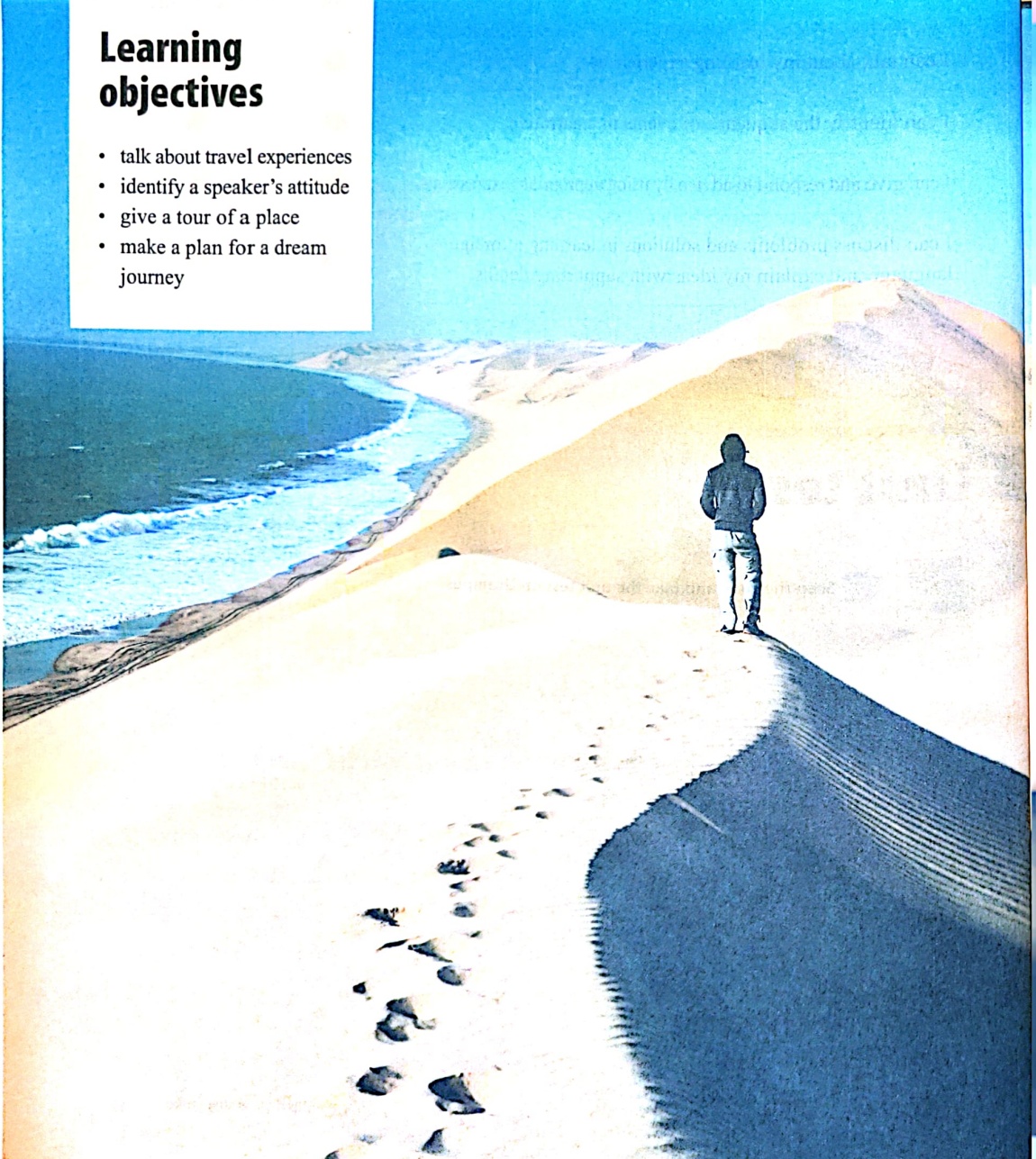
Journey into the unknown
• talk about travel experiences
Learning objectives
• identify a speaker's attitude
• give a tour of a place
• make a plan for a dream journey

Opening up
Read the quotes about traveling. Then work in pairs and discuss whether you agree with them. Explain your reasons.
11
The real voyage of discovery consists not in seeking new landscapes, but in having new eyes.
— Marcel Proust
(French novelist)
If you reject the food, ignore the customs, fear the religion and avoid the people, you might better stay home.
— James Albert Michener
(American novelist)
To travel is to discover that everyone is wrong about other countries.
— Aldous Huxley (English novelist)
Taking in
Listening to China
Before you listen
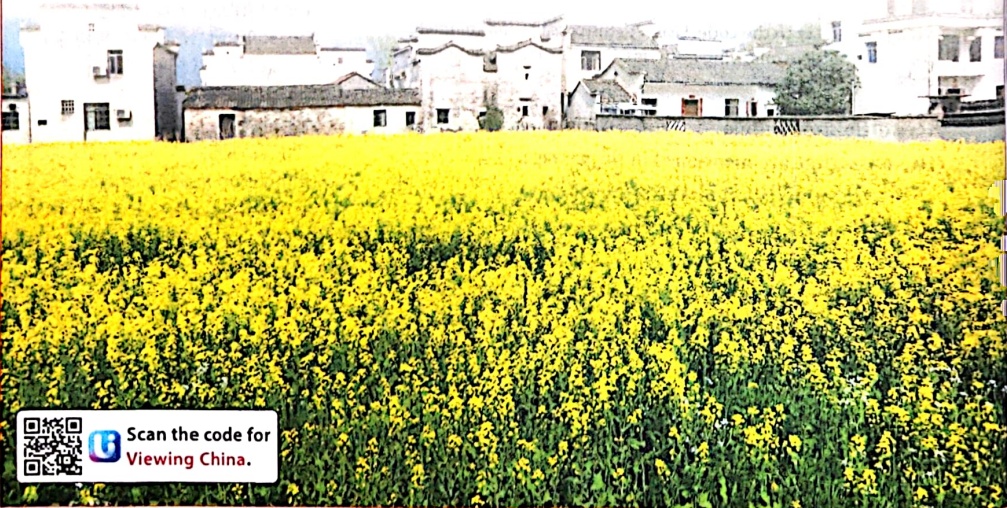
1 Look at the pictures. Then work in pairs and discuss which aspects illustrated might most impress an overseas visitor who comes to China for the first time. Explain your reasons.
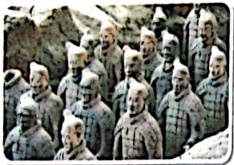
Cultural relics

City views
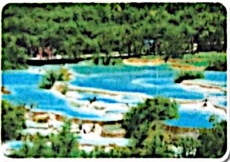
Natural landscapes
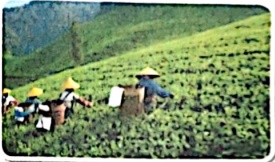
Local people
Listening skills
Identifying a speaker's attitude
When listening to a passage or conversation, it is important to identify the speaker's attitudes, feelings, and judgments about the subject. This understanding may include their assessments of certain people's traits or behavior, as well as evaluations of the quality or worth of particular objects.
A good way to identify the speaker's attitude is to pay attention to the adjectives and adverbs employed that express positive or negative meanings. For example, words like excellent and amazing indicate the speaker's positive evaluation, while words like terrible and disappointing suggest a negative evaluation. However, such evaluative expressions are not limited to adjectives and adverbs. Nouns and verbs like advantage, drawback, enjoy, and criticize can also provide insights into the speaker's attitude.
,сотрипр вло-світлиної сотрій півпівні-ворис, зобрій у міроїне
When a dog is described as a lovable puppy, you may understand that the speaker's attitude toward the dog is positive, but when a dog is described as a fierce beast, you may know that the speaker's attitude is negative. Similarly, if a place is described as a paradise by the speaker, their attitude toward the place is positive, but if it is called a hell, the attitude is definitely negative. Likewise, in the example, The findings of the study have been challenged, the speaker's attitude toward the findings is negative, because the word "challenge" here expresses a negative appraisal.
Now, you are going to listen to a passage in which the speaker talks about her travel experience in China. Try to identify the speaker's attitude by listening for the words and expressions that indicate judgment, opinion, or subjective evaluation.

Scan the code and learn more about the skill on Ucampus.
detail.com/v521A
While you listen

Scan the code. Listen to the passage and complete the following exercises. You may listen to it more than once.
2 Read the items about traveling in China and check (✓) the ones that are mentioned in the passage
☐ 1 Nightlife in fascinating metropolises
☐ 2 Kindness and warmth of local people
☐ 3 Local craft shops and unique souvenirs
☐ 4 Museums and historic sites in impressive big cities
☐ 5 Local ceremonies showing local customs and traditions
New words
□ 6 National parks, ancient villages, and centuries-old temples
resort /rɪˈzɔːt/ n. 度假胜地
boast/bəust/ vt.(地方、机构等)自豪地拥有(好的事物)
hospitality /,hɑspə'tæləti/ n.
好客,殷勤
gorge/go:d3/n. 峡谷
好客;殷勤
thumbs up n. 赞许;鼓励
3 Read the statements and fill in the blanks according to what you hear.
1 I first traveled to China in 2010 and was _____ by that experience that I've returned to China 10 times since my first trip.
2 Even after 10 trips, China's $ \_\_\_\_\_\_ $ national parks,
ancient villages, super-modern cities, centuries-old temples,
$ \_\_\_\_\_ $ palaces, and untouched beach resorts still have
much to offer.
3 China _____ numerous impressive cities. Beijing and Shanghai are perfect examples and are among the most _____ metropolises in Asia.
4 Tourists who go to its _____ countryside can enjoy ancient villages, _____ mountain resorts, thousand-year-old canal towns, river trips through huge gorges, and _____ plateaus.
5 Throughout my various trips there, I have been greeted with $ \underline{\text{}} $ by everyday Chinese folk outside of the main tourist cities. I was often treated like a friend, with locals always sparking up conversations, strangers giving me countless $ \underline{\text{}} $, and some even inviting me into their homes for tea!
After you listen
4 Work in pairs and describe one of your most memorable travel experiences in China to each other.
Viewing world cultures
Before you view
1 Read the program information and answer the questions.
1 What do you know about the five places mentioned in the program information?
2 Which place do you think is the number one place to see?
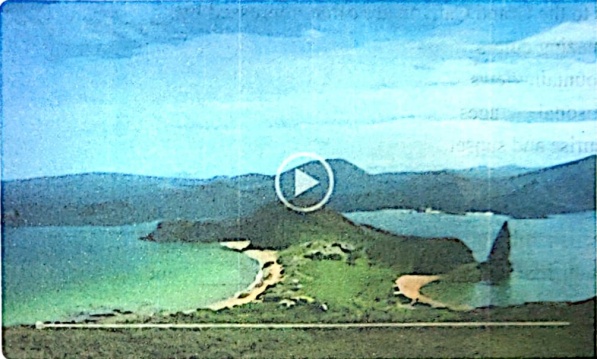
There are so many places in the world to see, but if you want to visit 50 in your life, which do you choose? In this program, we look at five places: Bangkok (曼谷), Cape Town (开普敦), the Grand Canyon, the Masai Mara (马萨伊马拉国家自然保护区), and Paris. Watch the program and find out which is the number one place to see!
While you view

Scan the code. Watch the video clip and complete the following exercises. You may watch it more than once.
2 Read the statements and choices. Then choose the best one to fill in each blank according to the video clip.
- Bangkok is an important place for _____.
A. Buddhists
B. Thai people
C. temple lovers
D. tourists around the world
2 The Masai Mara is so special because _____.
A the animals there live in complete freedom
B the African sky is particularly clear and blue
C the open spaces and wild animals are impressive
D it is a fantastic place for studying animal behavior
New words
Buddhist /'budɪst/ n. 佛教徒
Kenya /'kenja/ 肯尼亚(非洲国家)
zebra /ˈzebra/ n. 斑马
hippo /'hipəʊ/ n. 河马
underneath /ˌʌndəˈniːθ/ prep. 在…下面
Eiffel /ˈaɪfəl/ Tower 埃菲尔铁塔(位于法国巴黎)
Table Mountain 桌山(位于南非开普敦)
3 We can learn the following information about Paris except that ___.
A the food in Paris is rather cheap
B it is a very popular, elegant, and romantic city
C art lovers can visit it in the spring and enjoy the art galleries
D people can enjoy the view of the city from the top of the Eiffel Tower
4 Cape Town's $ \underline{\text{}} $ make it a special place for visitors.
A fantastic dishes
B lovely little dolphins
C New Year celebrations
D mountains and beaches
5 Visitors to the Grand Canyon are often impressed by _____.
A its amazing colors
B its mountain views
C its seasonal changes
D its sunrise and sunset
3 Read the statements and fill in the blanks according to the video clip.
1 With over six million people, it's big, it's _____, and you love it! It's very good for _____, and the nightlife is great, too.
2 It's got lots of clubs, _____, shops, food ... everything you _____, really.
3 Huge open ___, fantastic animals, just wide open freedom, warmth, and _____ are all underneath the great African skies.
4 To me, Paris is ___, romantic, and ___.
5 Behind Cape Town is the 1,000-meter-high Table Mountain, with its fantastic _____.
6 Friendly people, loads of $ \underline{\text{a}} $____, and the food is unbelievably $ \underline{\text{a}} $____.
7 With every _____ inch of the _____, the colors in the canyon change.
8 I remember actually sitting there ... and I just _____.
After you view
4 Work in pairs and discuss the questions.
1 Which places in the world would you like to visit? Make a list of three places and give your reasons.
2 Are you more attracted to natural landscapes or cultural attractions? Why?
Watching street interviews

Scan the code. Watch the video podcast and complete the following exercises.
1 Watch the full version of the podcast and summarize its general idea.
2 Read the paragraph. Then watch Part 1 of the podcast and fill in the blanks.
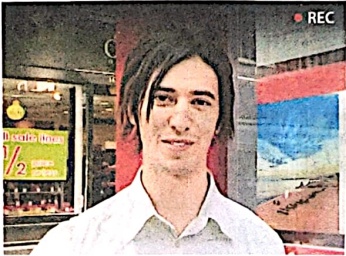
I've spent a lot of time living in
- ___, so there
isn't one place I think of as home.
___ and learning about 3) ___. Today, I'm asking people about travel.
Istanbul/,ɪstæn'buːl/伊斯坦布尔(土耳其西北部港市)
New words
absolutely /ˈæbsəluːtli/
ad. 确确实实地(用于强调)
Malta /'mɔːltə/ 马耳他(欧洲国家)
mature /məˈtʃuə/ vi.
(人)变成熟
anticipation
/ænˌtɪsəˈpeɪʃn/ n.
期望;期待
3 Do they travel a lot? Look at the people and read the statements. Then watch Part 2 of the podcast and check (✓) the true statements


☐ 1 Travel is her passion
3 She has done little traveling on holidays.
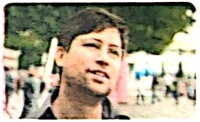
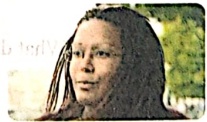

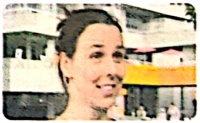
☐ 5 She loves to travel to different countries.
2 He has been to Istanbul twice.
7 She has been to Türkiye, India, and Malta.
4 She gets excited
about going to any
country.
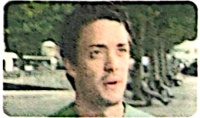
6 He has been traveling for 12 years.
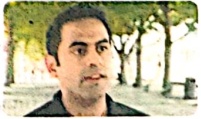
8 As an expedition leader, he often works in the United Kingdom.
Culture notes
Istanbul: the largest city and the economic, cultural, and historical center of Türkiye. The city, where Asia and Europe meet, has played host to many important historical events.
Malta: a Southern European country consisting of a group of islands situated in the center of the Mediterranean Sea (地中海). It is famous as a tourist destination, with numerous recreational (娱乐的) areas and historical monuments.
on the end of the year before
$ ^{2} $ See § 22.122.106.
$ ^{3} $ See § 22.122.106.
已知函数$f(x)=\sin(x+\frac{\pi}{6})-f(x)$
求函数$f(x)$的极值点$x$
求函数$f(x)$的极值点$x$
4 What do they like about traveling? Look at the people and read the statements. Then watch Part 3 of the podcast and fill in the blanks.
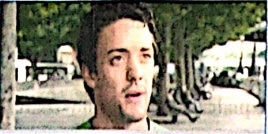
He thinks that traveling helps a person 1)____ a lot and gain completely different experiences.

She loves the 2) ___
_____ experience.
75
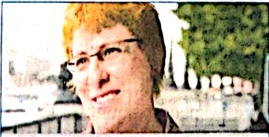
She loves to see art. And she loves to see 3) $ \underline{\text{in other}} $ countries.
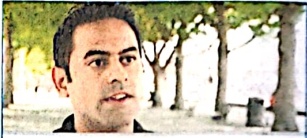
He can see the most
beautiful 4) _____
____ around the world.
He likes getting out there and experiencing a different 5)____, getting far away from what he's used to, and meeting new people.
She loves being in a new place, seeing very different things, hearing a different 6)____, and eating different food.
1 Have you traveled much? Where have you been? What did you like most about the places you've visited?
5 Work in pairs and discuss the questions.
2 What do you usually do when you visit a new place?
Role-play

Scan the code. Listen to the conversation and complete Exercises 1 and 2 on Ucampus.
Culture notes
Greenwich Village: an area of New York City known for being the home of many artists, especially since the early 1950s.
Hudson River: a river in New York State in the northeast of the U.S. It meets the Atlantic Ocean in New York City.
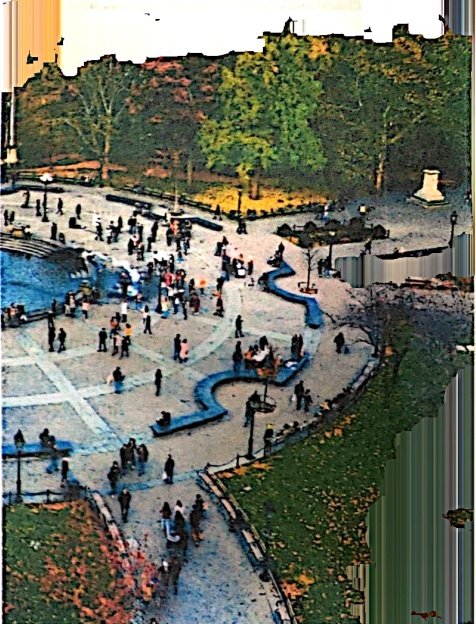
Washington Square Park: a popular public park in New York City and a landmark of Greenwich Village. It is so named to honor George Washington. The park has served various roles for its community. Its two main attractions are a large fountain and the Washington Arch, both located at the center of the square.
Blue Note Jazz Club: a famous jazz club in Greenwich Village, New York City. Over the years, it has been an economic engine for Greenwich Village, bringing in jazz fans from all over the world.
Caffe Reggio: a famous coffee house in the heart of Greenwich Village. It was the first café in the U.S. to serve cappuccino.
New words

Greenwich /'grɪnɪdʒ/ Village
格林尼治村(美国纽约市曼哈顿区的一部分)
Hudson /ˈhʌdsn/ River 哈得孙河(美国东北部的一条河流)
Washington /ˈwɒʃɪntən/ Square Park 华盛顿广场公园(位于美国纽约)
cappuccino /ˌkæpəˈtʃiːnəʊ/ n. 卡布奇诺咖啡(一种加热牛奶、撒巧克力粉的意大利咖啡)
Speaking skills
Giving a tour of a place
Giving a tour of a place is introducing visitors to a place of interest, such as a museum, a historical site, or a natural attraction, allowing visitors to better understand the history, culture, and unique features of the place. There are some steps to follow when you give a tour of a place.
Lead the way
You need to give visitors clear and correct explanations as to where they are now, what they can see here, and where they are heading next. You may use spatial prepositions, such as near, over, next to, and under, to explain where it is in relation to other places. You may also use expressions like On the left / right you can see ..., Just around the corner is ..., and ... is directly in front of / behind us to introduce other places or buildings of interest in the surrounding areas. Expressions like In a few minutes, we'll be passing ... and Please follow me, and we will head over to ... are used to show the next location you are heading for.
Talk about facts
When you are showing visitors around a place, you may need to provide facts and figures about its history, architecture, culture, landmarks, significant events, local people, local cuisine, etc., to help the visitors know more about the place they are visiting. When it comes to a specific building, for example, a museum, you may need to introduce the visitors to the information about its geographical position, history, collections, current exhibits, etc.
Give comments
During a tour of a place, occasionally, you may make comments on what you see. You may use evaluative expressions, such as famous, best, impressive, worth a visit, and underrated, to show your personal appraisal of what you are introducing. For example, comments like This is one of the best restaurants in the city may make visitors want to have a try.
By leading the way, providing facts, and giving comments, you can make a tour both informative and interesting.
Scan the code and learn more about the skill on Ucampus.
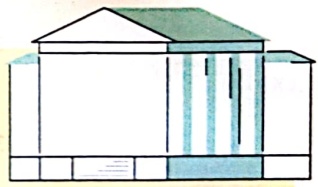
3 Work in pairs and role-play the situations. Use the skills for giving a tour of a place.
Situation 1

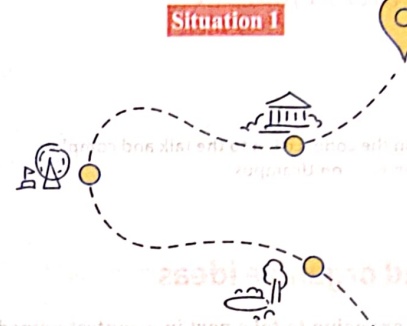
Town or city tour
Student B is visiting Student A. Student B has never been to Student A's town / city before.
A: Give Student B a tour.
Tour guide checklist:
- Introduce two to four places that are worth visiting.
- Comment on some places on the tour.
B: Ask questions about the places Student A shows you.
Give at least one fact about each place.

Situation 2
University tour
Student A has just made friends with Student B, an international student in Student A's department. Student B is new to the university.
A: Take Student B on a tour of the campus.
B: Ask questions about the places Student A shows you.

Tour guide checklist:
- Introduce two to four places that are important for daily needs.
• Give at least one fact about each place.
Comment on some of the places you show to Student B.
Group discussion
Planning a dream journey
New words
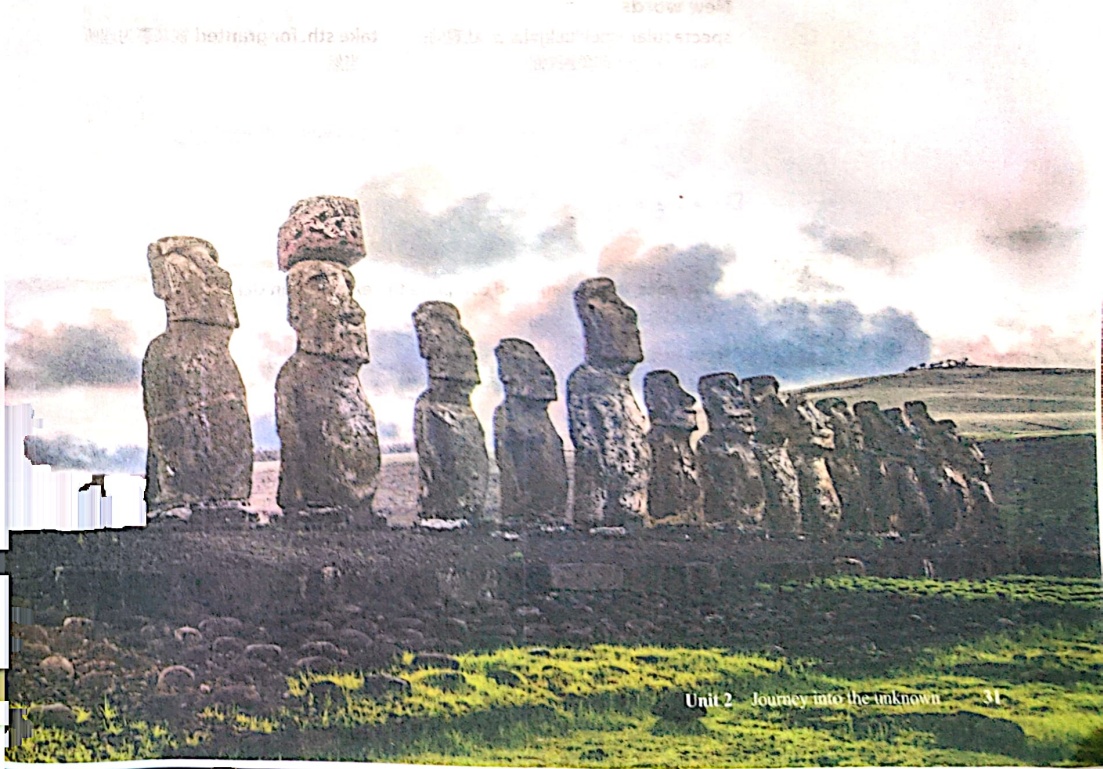
Easter Island /iːstəˈaɪlənd/
复活节岛(太平洋上的火山岛)
isolated /ˈaɪsəleɪtɪd/ a. 偏僻的

Get ideas

Scan the code. Listen to the talk and complete Exercise 1 on Ucampus.
Discuss and organize ideas
2 Suppose you are going to take part in a contest named Journey of Our Dreams. Work in groups of three and create a plan for your dream journey by discussing the questions and taking notes.
1 When / Where / How are you going to travel?
2 How long will the trip take?
3 Who are you going to go with?
4 What would you like to see / experience / do?
5 Why is this a dream journey for you?
3 Work together to prepare a presentation of your dream journey plan. Use the notes to organize the content of your presentation.
Present ideas
4 Present your group's dream journey plan to the class. Before you begin, refer to the checklist to see if you are ready.
Make the presentation easy to understand by providing supporting details.
□ Use appropriate expressions to present our ideas.
☐ Use different types of sentences when speaking.
□ Use appropriate intonation patterns.
5 Vote for the best dream journey plan
Further listening
News reports

Listen to two news reports and complete the exercises on Ucampus
New words
News report 1
migratory /maɪˈɡreɪtəri/ a. 迁徙的
brew /bruː/ vt. 酿造(啤酒)
niche /niːʃ/ a. (产品)针对特定小群体的
News report 2
Indonesian /ˌɪndəˈniːʒən/ a. 印度尼西亚的
recklessly /'reklesli/ ad. 鲁莽地 valid /'væld/ a. 有效的;正式认可的 collide /kə'laɪd/ vi. 碰撞;相撞
Conversation

Listen to the conversation and complete the exercises on Ucampus
New words
spectacular /spekˈtækjələ/ a. 壮观的;精彩的;令人印象深刻的
take sth. for granted 视某事为理所当然
Passage

Listen to the passage and complete the exercises on Ucampus
New words
vivid /vɪvɪd/ a. 清晰的;生动的;逼真的
Wrapping up
Use the self-assessment checklist to check what you have learned in this unit.
| OK | Needs work | |
| I can talk about my travel experiences. | ☐ | ☐ |
| I can identify a speaker's attitude. | ☐ | ☐ |
| I can give a tour of a place by following the steps of leading the way, talking about facts, and giving comments. | ☐ | ☐ |
| I can make a plan for a dream journey with supporting details. | ☐ | ☐ |
50.250.121791.5x.07
Unit test


Scan the code and take the unit test on Ucampus.