Unit 3 Time out

Time out
Learning objectives
• talk about leisure activities
- use mind maps to take notes while listening
- overcome challenges in phone communication
• plan a perfect day out



Opening up

Look at the pictures. Then work in pairs and discuss which leisure activities illustrated are new to you but you would be interested in trying. Give reasons for your choices. You may also mention any other activities not presented in these pictures.
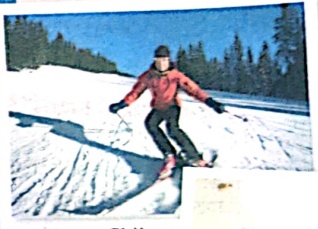
img
2018


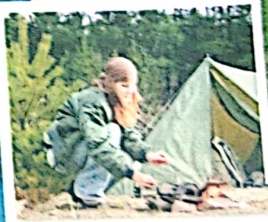

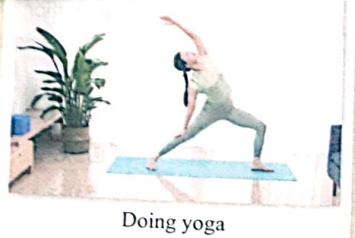
Taking in
Listening to China
Before you listen
1 Work in pairs and discuss the questions.
1 What activity do you enjoy doing most in your leisure time? Why?
2 What leisure activities have been gaining popularity in China in recent years? Use specific examples to support your ideas.
Listening skills
Using mind maps to take notes
Mind maps can be incredibly helpful for taking notes in your academic life. A mind map is a diagram that shows the hierarchy and organization of complex ideas and information. It not only highlights important facts, but also provides a graphical representation of the relationship between ideas, facts, and concepts.
When you take notes with a mind map, you can start by summarizing the central idea in a few words and placing it in the center, at the top, or on the left of your page. As the speaker elaborates on different aspects, you can branch out with subtopics. This helps you create a coherent and logical structure for your notes. The relevant keywords or phrases on the branches of the mind map act as memory triggers, helping you recall the main ideas and supporting details more easily.
Additionally, you can use colors, symbols, and images in your mind map to make it more visually appealing and engaging, enhancing your ability to remember the information.
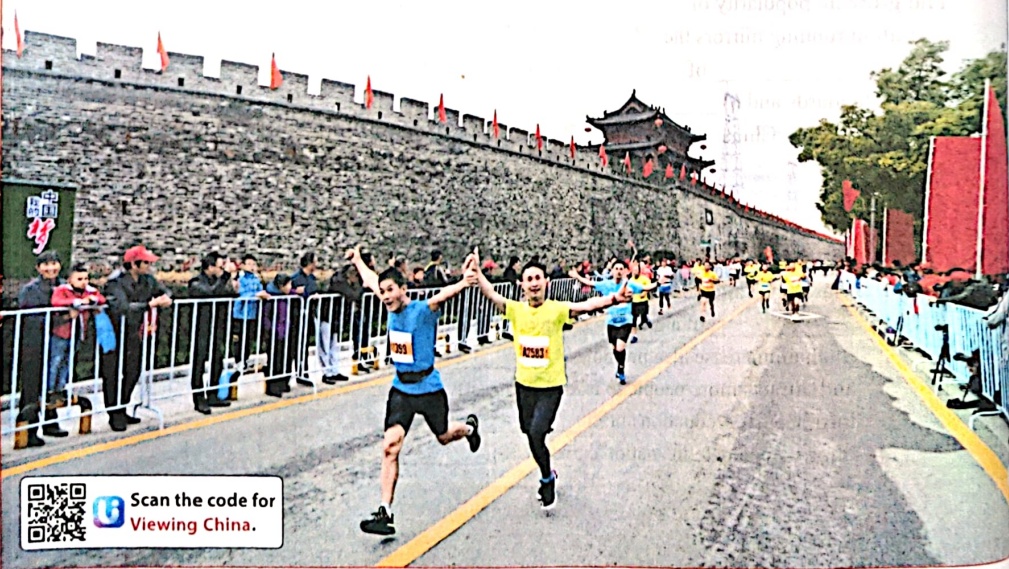
Now, you are going to listen to a passage about the development of marathon (马拉松) running in China. Try to identify the main topic and the supporting details by taking notes in the mind map on Page 37.


Scan the code and learn more about the skill on Ucampus.
While you listen


Scan the code. Listen to the passage and complete the following exercises. You may listen to it more than once.
2 Read the mind map and fill in the blanks according to what you hear

Main topic:
wristband /ˈrɪstbænd/ n. 戴在腕上的东西
upgrade /ʌpˈgreɪd/ vi. 提高;升级 gear /ɡɪər/ n. 成套服装
Marathon running gaining
- $ \underline{\text{}} $ in China
New words
enthusiast /mˈθjuːziæst/ n. 爱好者
What does it mirror?
The growing popularity of marathon running mirrors the 5) $ \underline{\hspace{2cm}} $ of living standards and 6) $ \underline{\hspace{2cm}} $ in China.
What is the evidence?
• The number of2)_____has been growing in recent years.
• The variety of 3) _____ is also impressive.
- The sport has also been driving the consumption of various kinds of 4) _____ apps and smart wristbands.
What benefits does it bring?
Marathons are increasing in number to satisfy the 7) $ \underline{\hspace{2cm}} $ of a growing group of running enthusiasts.
Such an increase also promotes a 8)_____ and attracts more people to take part in sports. This, in turn, leads to reductions in 9)_____ and improvements to the nation's overall 10)_____ .
3 Read the statements and underline the correct alternative to complete each sentence according to what you hear.
1 Marathon running has turned from a(n) professional / amateur / niche sport into one of the country's favorite leisure activities within a relatively short period of time.
2 In 2010, it took more than five months to persuade enough people to cheer for / sign up for / prepare for the Beijing Marathon.
3 It is common to see professional athletes / famous stars / government officials, doctors, teachers, and students all running side by side.
4 Using such products to share workout data, lap times, and personal bests has turned out to be the main motivation / a great additional source of satisfaction / the best way to show off.
5 While running may be a low-bar sport, the annual spending of an average marathon runner on running gear, training, and travel has been on the decline / out of expectation / on the rise in recent years.
After you listen
4 Do you know any popular sports or leisure activities that have deep historical roots in Chinese culture? Work in groups of three and choose one sport or leisure activity to research and report. Provide a detailed explanation of its rules, history, and current status in China.
Viewing world cultures
Before you view
1 Read the program information and answer the questions.
1 What is the favorite season for many Japanese people?
2 What is sakura?

Japan has four seasons, and many people's favorite season is spring. In spring in Japan, the blossoms (花) open on one million cherry trees (樱桃树). The Japanese call these blossoms "sakura". At the sakura time, a pink wave of color travels from south to north, and people come out to celebrate. In this episode of our program, we talk about the best time to visit Japan and the things you can do there.
While you view


Scan the code. Watch the video clip and complete the following exercises. You may watch it more than once.
2 Read the paragraph and fill in the blanks according to the video clip. There are one million cherry trees in Japan. From January to May, a pink wave of color travels from south to north, over 1) _____.
For Japanese people, the sakura season is a very special time of year. It's a good time to visit Japan and to enjoy 2) _____. If you need to decide when to visit Japan during the sakura season, you can refer to the 3) _____ forecast, though it may not be 4) _____. The sakura season is big business, with sakura 5) _____, food, and drinks available everywhere. Sadly, the sakura season is short, with the blossoms opening for about 6) _____ before falling.
New words
picnic /'pɪknɪk/ n. 野餐
souvenir /ˌsuːvəˈnɪə/ n.
纪念品
3 Read the statements and check (✓) the true ones according to the video clip.
☐ 1 When the sakura season starts, some parts of Japan are still in winter.
☐ 2 It is recommended that people visit Japan a week after spring arrives to witness the cherry blossoms.
☐ 3 During the sakura season, families and friends in Japan often have picnics in the parks.
☐ 5 The cherry blossom cakes favored by most Japanese people have sweet, sticky rice in them.
6 It will be hard to find a good place to sit in the parks if you start the day too late.
☐ 4 Japanese women enjoy taking pictures in traditional clothes under the cherry trees.
☐ 7 The most exciting part of the celebrations starts after the sun goes down.
After you view
4 Work in pairs and discuss the questions.
1 Would you like to experience the sakura season? Why or why not?
2 What flowers are most favored in Chinese culture? What symbolic meaning do these flowers have?
3 Can you name some famous flower festivals in China? What cultural or historical significance do these festivals hold?

Watching street interviews
2023年1月1日星期日

Scan the code. Watch the video podcast and complete the following exercises.
New words
Nottingham /ˈnɒtɪŋəm/
诺丁汉(英国英格兰
中部城市)
1 Watch the full version of the podcast and summarize its general idea.
Robin Hood Festival
/robin 'hud 'festrvl/
罗宾汉节
2 Read the paragraph. Then watch Part 1 of the podcast and fill in the blanks

I like playing music and going to 1) _____
___ in my free time. This weekend, I'm
going to 2) _____ in North
London to see my friend's 3) _____
3 What do they like doing in their free time? Look at the people and read the statements. Then watch Part 2 of the podcast and fill in the blanks
___. What do you like doing in your free time?

I like to 1)
___. I like to be very active. I like to do a lot of sports. I also like to see a lot of friends.
___. I like to go and see plays.

Well, I have two 3) _____, so I don't have much free time. But 4) _____
is, er, is one of my great
pleasures.

I enjoy jazz, so I quite like
- _____
to listen to the ... listen to
some jazz or go out to
6).

I like to do many things in my free time. 17)____. I love to study different things. I'm studying 8)____ and different languages now. I enjoy reading. Um, I enjoy 9)____.

Um, I also enjoy, er, creative writing, um, and 10) ___.
Culture notes
Robin Hood Festival: a week-long, fun-packed celebration of the life and times of the famous Robin Hood, who was a popular heroic figure in the medieval period (中世纪) in English folklore. It is held in August each year at Sherwood Forest in the city of Nottingham. This event recreates a medieval atmosphere and features the major characters from the Robin Hood legend.
4 What are they going to do this weekend? Look at the people and read the statements. Then watch Part 3 of the podcast and check (√) the true statements.

☐ 1 He's going camping with his son's school friends.


2 She's going to run a marathon for the Robin Hood Festival.

3 He's going to watch movies the whole weekend.
☐ 4 She's going to have a long trip this weekend.


☐ 5 He's going to have dinner at his friends' house on Sunday night.
☐ 6 He's going to a friend's
birthday party on Saturday.
5 Work in pairs and tell your partner what you like doing in your free time and what you are going to do this weekend. The prompts are for your reference.
In my free time, I enjoy _____ _____ , and I love _____ _____ , because _____ _____ . This weekend, I'm going to _____ _____ and _____ _____ .
Speaking out
Role-play


Scan the code. Listen to four conversations and complete Exercises 1 and 2 on Ucampus.
New words
Rodney Collins /,rodní 'kolinz/ 罗德尼·科林斯(人名)
Judy Starr /ˌdʒuːdiˈstɑː/
朱迪·斯塔尔(人名)
Oxford /ˈɒksfɑːd/ Street 牛津街
(位于英国伦敦)
brilliant /ˈbrɪljənt/ a. 极好的;很棒的
Andy Jones /ˌændɪˈdʒəʊnz/
安迪·琼斯(人名)

Sarah Hobbs /,sɛərə 'hobz/
萨拉·霍布斯(人名)
Speaking skills
Overcoming challenges in phone communication
In the previous four conversations, you heard the speakers encounter some problems in telephone communication. The speaking skill you are going to learn in this unit is how to overcome challenges in phone communication.
The following are some problems that may arise during a telephone conversation and the expressions that may help keep the conversation going in such situations.
When you fail to catch or understand something, you may say: I'm sorry, I didn't get that. Could you say it again, please?
When you are not sure whether the information is correct, you may say:
One moment. Can I just check?
When the speaker's voice is too low, you may say: I'm sorry, could you speak up, please?
When the speaker is speaking too fast, you may say: Sorry, can you slow down, please?
You may refer to the following table for more expressions that can be used to overcome challenges in phone communication.
| Challenges in phone communication | Expressions for overcoming challenges in phone communication |
| The hearer fails to catch / understand something. | • Sorry, I didn't catch that. Did you say ...?• I'm afraid I didn't follow you. Could you repeat that, please?• I missed that. Would you mind repeating it?• I'm sorry, the line's bad. Could you repeat what you just said?• I'm sorry, I'm not sure I understand. Would you mind explaining it again, please? |
| The hearer wants to check the information provided by the speaker. | • Please wait while I check that for you.• One moment, please. I'll double-check on that for you. |
| The speaker's voice is too low. | • I'm sorry, I can't hear you very well. Would you speak up a little, please?• I am having difficulty hearing you. Could you please speak a bit louder? |
| The speaker is speaking too fast. | • Sorry, my English is a bit weak. Could you speak more slowly, please?• I'm having trouble following you. Would you mind starting again and speaking a little slower? |


Scan the code and learn more about the skill on Ucampus.
3 Work in pairs and role-play the situations. Use the skills for overcoming challenges in phone communication.
Situation 1
Inviting a friend to a movie
A: You are calling to invite your classmate, B, to a movie this evening. Mention the name and time of the movie, as well as the theater's name.
B: Your classmate, A, is calling you. Answer the phone. Listen and respond to the invitation. But you didn't get the name of the theater, so you ask A to repeat that.


Situation 2
Changing a reservation
A: You are calling Brandon's Restaurant. You want to change your reservation from 7 p.m. on Tuesday to 8 p.m. next Wednesday. There will now be ten people, not five, so a bigger table will be needed.
B: You work for Brandon's Restaurant. Answer the customer's call. Check the reservation, record the new information, adjust the reservation accordingly, and confirm the changes with the customer.


New words
Prague /pra:g/ 布拉格(捷克首都)
Charles /tʃɑːlz/ Bridge 查理大桥(位于捷克布拉格)
Bach /baːh/ 巴赫(德国作曲家)
Municipal /mjuːˈnɪsəpəl/ House 市民会馆(位于捷克布拉格)
Mozart /ˈməʊtsɑːt/ 莫扎特(奥地利作曲家)
Vivaldi /viːˈvɑːldiː/ 维瓦尔第(意大利作曲家)
Group discussion
Czech /tʃek/ a. 捷克的
Planning a perfect day out

Get ideas

Scan the code. Listen to the talk and complete Exercises 1 and 2 on Ucampus.
Discuss and organize ideas
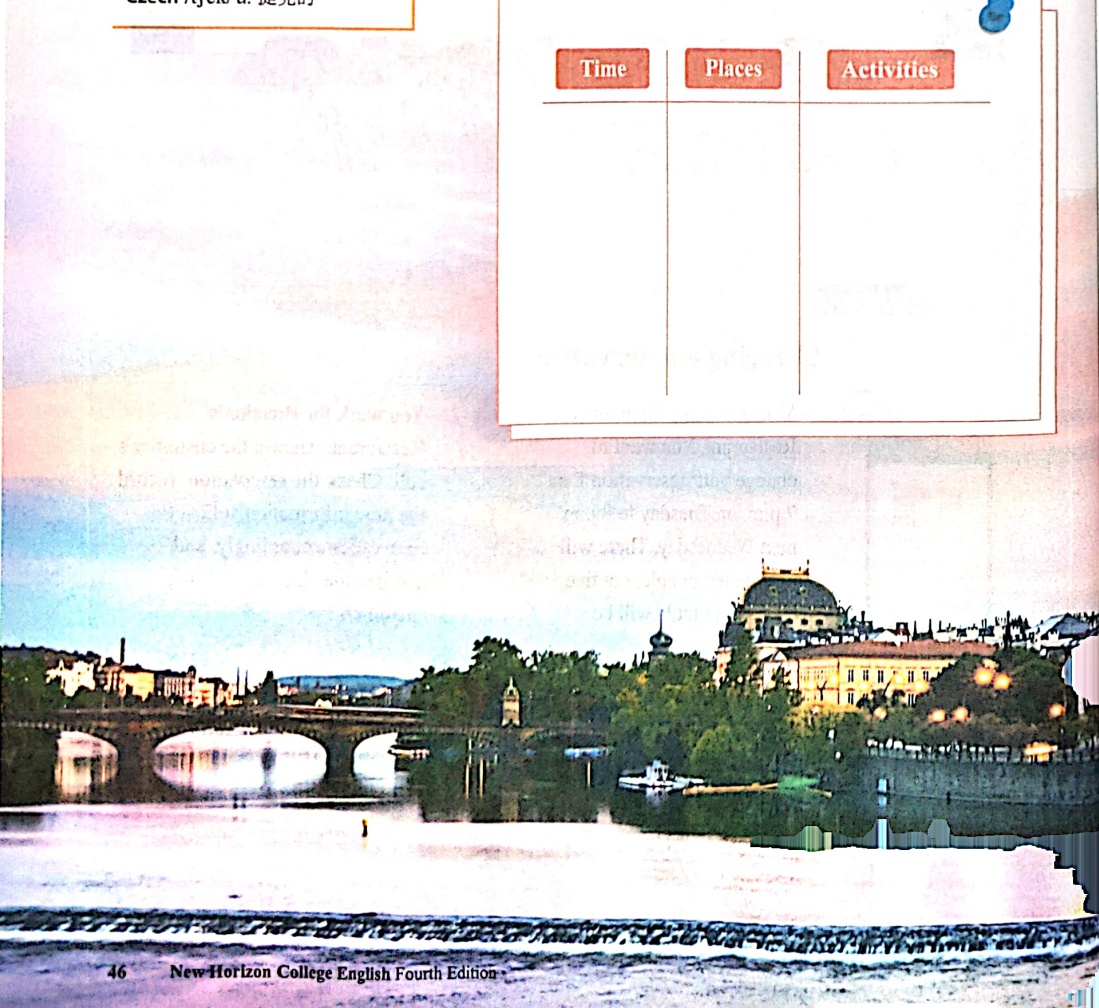
3 Work in groups of three and discuss what you plan to do for a perfect day out. Use the table to take notes of your ideas.
4 Work together to prepare a presentation of your plan. Use the notes to organize the content of your presentation.
Present ideas
5 Present your group's plan for a perfect day out to the class. Before you begin, refer to the checklist to see if you are ready.
| Checklist |
| ☐ Describe the activities of a day out in detail. |
| ☐ Make appropriate use of the key phrases. |
| ☐ Make the presentation attractive and easy to understand. |
| ☐ Use appropriate intonation patterns. |

Further listening
News reports

Listen to two news reports and complete the exercises on Ucampus
New words
News report 1
cognitive /ˈkɒgnətɪv/ a. 认知的
sensitive /ˈsensətɪv/ a. 敏感度高的
beneficial /ˌbenɪˈfɪʃəl/ a. 有益的
verbal /ˈvɜːbəl/ working memory n.
言语工作记忆
News report 2
dart /da:t/ n. 飞镖;镖
multisensory /ˌmʌltiˈsensəri/ a. 多种感觉(并用)的
interaction /ˌɪntərˈækʃən/ n. 交流
Conversation

6 Listen to the conversation and complete the exercises on Ucampus.
New words
Ashley /ˈæʃli/ 阿什莉(人名)
alien /ˈeɪliən/ a. 外星人(生物)的
spoil /spɔɪl/ vt. 毁掉;破坏
Passage

Listen to the passage and complete the exercises on Ucampus.
New words
canoeing/kəˈnuːɪŋ/ n. 独木舟运动
campfire/ˈkæmpfəʊ/ n. 营火;篝火
wrap/ræp/ vt. (用纸或布)包裹
foil/foɪl/ n. (包裹食物用的)箔
Wrapping up
| OK | Needs work | |
| I can talk about leisure activities. | ☐ | ☐ |
| I can use mind maps to take notes while listening. | ☐ | ☐ |
| I can overcome challenges in phone communication by using appropriate expressions. | ☐ | ☐ |
| I can discuss plans for a perfect day out by describing activities in detail. | ☐ | ☐ |
Unit test


Scan the code and take the unit test on Ucampus.