Unit 4 Urban pulse
Urban pulse
Learning objectives
• talk about city life
• listen for numbers
• make and respond to complaints
- recommend the best city to live in

Opening up
Look at the pictures. Then work in pairs and discuss what your ideal city would look like. Describe it briefly to your partner.
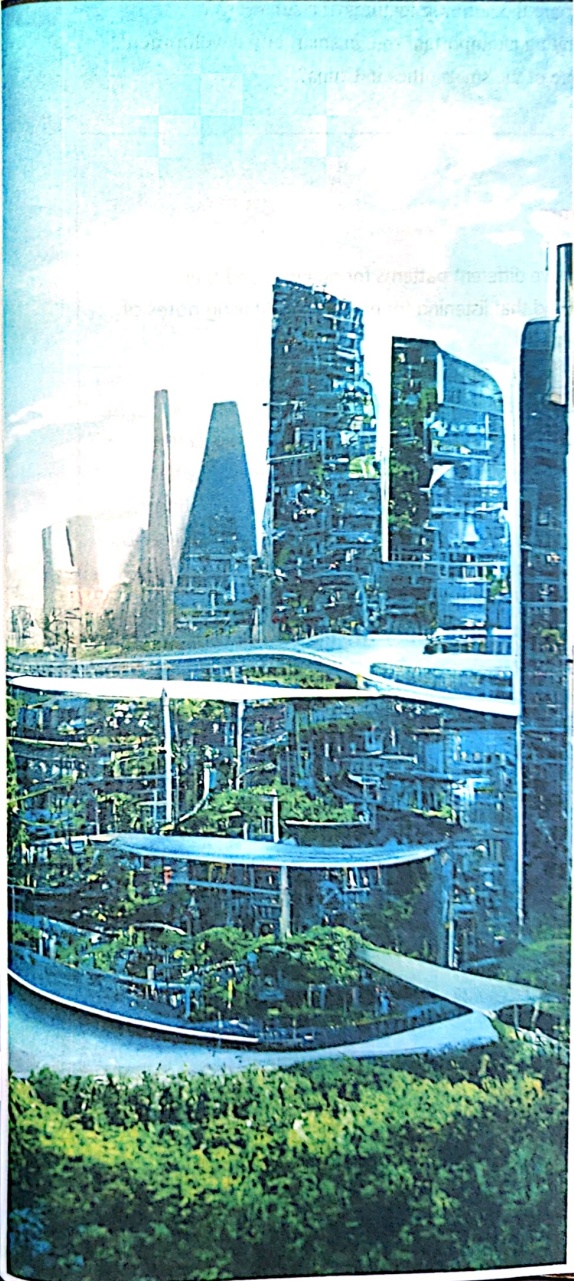


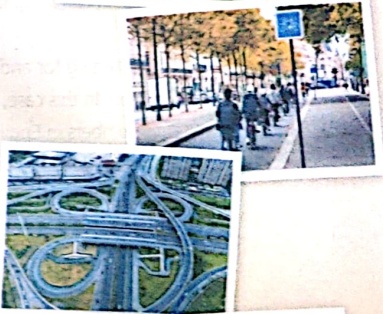
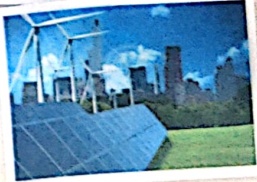

Taking in
Listening to China
Before you listen
1 Work in pairs and discuss the questions.
1 What do you think are the defining features of a smart city?
2 China has been playing an important role in smart city development. Can you name some of the smart cities in China?
Listening skills
Listening for numbers
As English and Chinese have different patterns for numbers and their pronunciation, you may find that listening for numbers and taking notes of them can be quite challenging.
Listening for and taking notes of large numbers may be a difficulty for you. In this case, a useful strategy is to use commas as separators. Large numbers in English are read in groups of three digits, so when you take notes of large numbers, place commas after every three digits, counting from the right. In other words, when you hear billion, million and thousand, you write commas instead. For example, when you hear sixteen thousand six hundred eighty, you can write it as 16,680; and when you hear seven hundred eighty-nine million four hundred fifty-two thousand three hundred twenty, you can write 789,452,320.
Decimals may also present a difficulty for you. The rule for reading decimals is to start with the whole number – the number to the left of the decimal point. The period, or decimal point, can simply be read as “point”. Then each number after the decimal point is read individually. When you take notes of decimals, you need to be attentive to cues like “point”, which indicates the presence of a decimal point. For example, when you hear twelve point eight two five, you should write 12.825.
As for percentages, the rule for saying them is simple: say the number and then the word "percent". For example, when you hear sixty-five percent, you should write 65%.
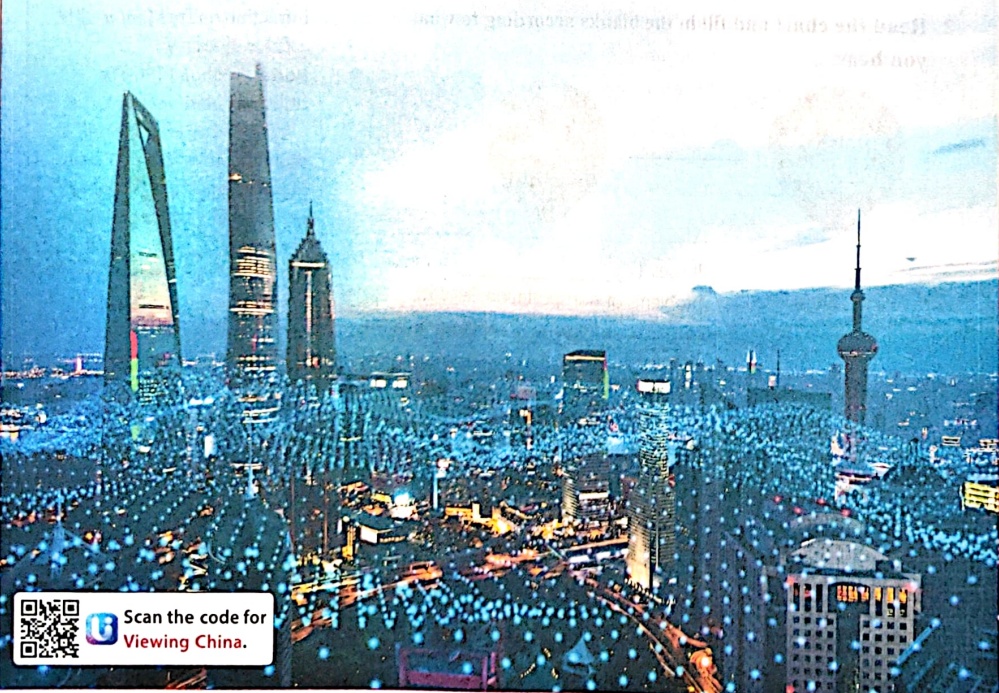
Now, you are going to listen to a passage about Shanghai, a smart city. This passage includes various forms of numbers. Try to take notes of them by making use of the skills you have learned in this part.

Scan the code and learn more about the skill on Ucampus.
While you listen


Scan the code. Listen to the passage and complete the following exercises. You may listen to it more than once.
2 Read the chart and fill in the blanks according to what you hear
Smart city solutions
City Brain
Functions
E-government
services
It uses 1) _____ to solve problems of transportation, security,
- ___, and more.
New words
Extensive digital infrastructure
infrastructure /ˈɪnfrəˌstrʌktʃər/ n. 基础设施(建设)
artificial intelligence /ˌɑːtrɪˈfɪʃəl ɪnˈtelədʒns/ n. 人工智能
infraction/in'frækʃən/ n. 违规
行为;违法行为
portal/p0:tl/n.门户网站
utility /juː'tɪləti/ n. (煤气、水电等的)公共服务,公用事业 dual /'djuːəl/ a. 双的;双重的 gigabit /'gɪgəbɪt/ n. 千兆比特 broadband /'brɔːdbænd/ n. 宽带
They help simplify some processes into something 3) _____ online shopping, and allow city officials and citizens to 4) _____ and quickly react in times of crisis.
It facilitates Shanghai to become the first dual gigabit city, with both 5) $ \underline{\text{}} $ and 6) $ \underline{\text{}} $ gigabit broadband.
3 Read the statements and fill in the blanks according to what you hear.
1 Deep learning artificial intelligence systems identify issues such as _____, traffic infractions, _____, and illegal garbage dumps.
2 The city's e-government portal has more than _____ users within a population of more than _____.
3 Through the portal, citizens can handle their business regulation requirements, _____, receive emergency-response information, and more.
4 Shanghai has achieved _____ household wired broadband coverage, covering _____ households.
After you listen
4 Work in groups of three and discuss how smart city solutions could transform our lives. Each group should focus on one specific aspect and explain your ideas with supporting details.
Viewing world cultures
Before you view
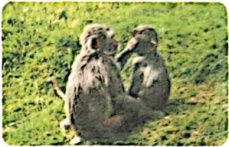
1 Look at the pictures and read the program information. Then work in pairs and discuss the questions.
1 Which animals in the pictures are usually found in cities?
2 Are there any other animals that can be found in cities?
3 Why are some wild animals coming into cities?


(2) $ x^{2}+4x=0 $
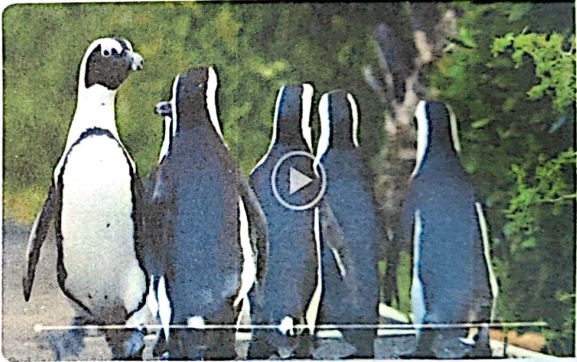
All over the world, cities are growing bigger and bigger, as more and more people are moving in. Wild animals, too, are moving out of nature and into the cities. There, they may easily find food and new homes for their families. In this episode, we follow the journey of a group of penguins from the ocean to their homes near Cape Town.
While you view


Scan the code. Watch the video clip and complete the following exercises. You may watch it more than once.
2 Read the statements and check (✓) the true ones according to the video clip.
☐ 1 As more and more people move into cities, more animals are moving out of cities.
☐ 2 It's safer for African penguins to travel together in the streets.
☐ 3 It is dangerous for penguins to travel on the roads because there are too many cars.
☐ 4 African penguins choose one partner for life.
☐ 5 The problem for penguins at night is that they cannot see well.
☐ 6 Each year, up to 13 penguins die on the roads near the city of Cape Town.
3 Read the paragraph and fill in the blanks according to the video clip.
This female African penguin lives in a 1)____ near the city of Cape Town, South Africa. Her partner is 2)____.
This morning, he 3)____. She's waiting for him to come back. He's starting his journey from 4)____, back to his partner in the garden. It's a 5)____. This penguin's going into a house. He's 6)____. He's taking a long time! Finally, past a garden 7)____, into the garden, and he's home 8)____!
After you view
4 Work in pairs and discuss the questions.
1 What evidence can you find to support the statement that humans and animals can coexist in cities and towns?
2 What impact does urbanization have on animals?

Watching street interviews

Scan the code. Watch the video podcast and complete the following exercises.
1 Watch the full version of the podcast and summarize its general idea.
2 Read the paragraph. Then watch Part 1 of the podcast and fill in the blanks.
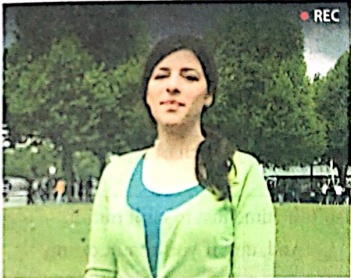
I've always enjoyed living in
- ____. I like the
- _____ and all the
different things that you can do.
Not everyone feels like me, though.
Some people prefer the 3) _____
of the country. How about
you? Do you enjoy city life?
3 Do they enjoy city life? Look at the people and read the statements. Then watch Part 2 of the podcast and match the people A-F to the statements 1-6.






1 So it's what I'm used to, and I enjoy that I can get everywhere really easily.
2 I think, er ... London especially is very vibrant, and there's always something going on.
3 It suits me. I think it suits my personality.
4 Much prefer the country.
5 London's such a vibrant, um, active city. Um, there are always lots of things to do.
6 Um, it's a great place to be. There are lots of people around, things happening.
New words
vibrant /'vaɪbrənt/ a. 充满活力的
personality
/ˌpɜːsəˈnælɪtɪ/ n.
个性;性格
congested /kənˈdʒestɪd/
a. 交通拥挤的;车辆
堵塞的
chill out vi. 放松
4 What are the main problems in cities? Look at the people and read the statements. Then watch Part 3 of the podcast and fill in the blanks

Traffic is 1) _____ congested.

Sometimes it can be difficult to get around the city quickly, um ... and that can be 2)____.

I think there's, there's always a very much of a go-go kind of attitude - you have to be 3) _____ the whole time. And there isn't the time just to chill out or, or 4) _____. And, um, if you're not doing something, you're 5) _____.

I think we should be trying to encourage, um, more sort of
- _____, so cycling, um, and encouraging people to walk and use their cars less.
5 Work in pairs and discuss the questions.
1 What are the good things about living in your hometown?
2 What are the main problems in your hometown?
3 What do you think of city life?

Role-play
Speaking skills
Making and responding to complaints
If you are unhappy about or dissatisfied with a product or service, you may feel the need to make a complaint. A complaint is an expression of displeasure or annoyance. The previous three conversations show how to make complaints and respond to complaints.
There are many expressions that you can use to express complaints, including I'm sorry to bother you, but ..., Excuse me, but there is a problem with ..., I have a complaint to make about ..., etc.

When somebody complains to you about something, you will definitely want to say something as a response. If you've provided the product or service which has caused a complaint, you may need to apologize for the problem or inconvenience caused and see what you can do about it. You can give responses by using expressions like I'm so sorry, I didn't realize ..., I'm really sorry, I will not make the same mistake again, and We'll look into it right away.
If you are not sure about how to deal with the problem at the moment and need some time to figure out solutions to it, you can respond to a complaint by
ying something like I suggest you leave it with us, and we'll saying something like I suggest you leave it with us, and we'll see what we can do. Yet if there is nothing you can do to help solve the problem, you may respond to the complaint using expressions such as Sorry, but we can't do anything about it.
You may refer to the following table for more expressions that can be used to make and respond to complaints.
| Expressions for making complaints | Expressions for responding to complaints |
| • I'm sorry to have to say this, but ...• I'm sorry to trouble you, but ...• Excuse me, there seems / appears to be something wrong with ...• I understand it's not your fault, but ...• I wonder if you could help me with ...• I've got a bit of a problem here.• I think you might have forgotten to ...• There may have been a misunderstanding about ...• I'm afraid there is a (slight) problem with ...• I'm afraid I have to make a complaint.• I must express my disappointment. | • Thank you for bringing this to our attention.• I'm sorry for the inconvenience.• I'm so sorry, but this will never happen again.• I'm sorry. We promise never to make the same mistake again.• We are eager to resolve this promptly.• I'm sorry, but there's nothing we can do at the moment.• I'm afraid there isn't much we can do about it.• I'm afraid the manager isn't here at the moment. Could you call back later?• I'm afraid we can't help you at the moment. Could you leave your phone number? We'll contact you soon. |


Scan the code and learn more about the skill on Ucampus.
3 Work in pairs and role-play the situations. Use the skills for making and responding to complaints.
Situation
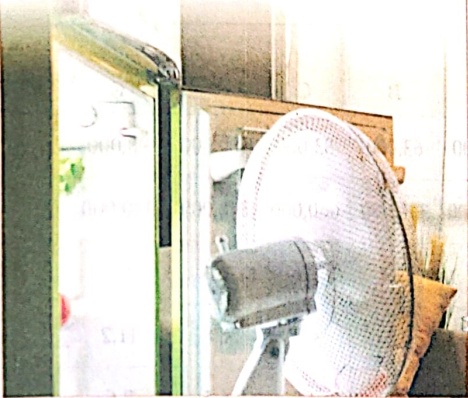
The fridge doesn't work
A: You are a hotel guest. You find that the fridge in your room doesn't work. Call the receptionist to make a complaint.
B: You are a hotel receptionist. Listen to what the guest says and respond to their complaint.

Situation 2
You served me the wrong dish!
A: You are a customer in a restaurant. You asked for pasta with chicken but were given pasta with fish. Talk to the waiter to make a complaint.
B: You are a waiter. Listen to what problem your guest has and respond to their complaint.


Group discussion
Recommending the best city to live in
Get ideas
The table provides some of this year's data on five cities in Country X. Read the explanation for some categories and study the statistics for each city carefully.
| A | B | C | D | E |
|---|
| Median household income per year ($) | 94,000 | 63,000 | 83,000 | 100,000 | 98,000 |$
| Average house price ($) | 480,000 | 390,000 | 660,000 | 340,000 | 320,000 |$
| Unemployment rate (%) | 9.4 | 11.4 | 7.6 | 6.1 | 5.3 |
|---|---|---|---|---|---|
| Population growth rate (%) | 4.5 | 1.8 | 4.4 | 8.8 | 11.2 |
| Doctors per 1,000 people | 2.1 | 2.4 | 2.5 | 6.5 | 2.6 |
| Precipitation (降水量) (mm/year) | 835 | 1,060 | 1,230 | 915 | 480 |
| Days below 0°C | 147 | 150 | 35 | 153 | 178 |
| Air quality (PM2.5 levels) | 18 | 15 | 6 | 10 | 12 |
| Transportation (%) | 34.5 | 34.7 | 20 | 21.2 | 12.7 |
POPULATION GROWTH RATE: Higher growth rates create problems as cities struggle to provide services to growing populations. Lower growth rates mean fewer opportunities.
PRECIPITATION: The ideal precipitation is considered to be 700mm per year.
AIR QUALITY: This is determined by the levels of PM2.5, which is fine particulates (颗粒) matter and a major component of smog. A figure lower than 15 is considered good.
TRANSPORTATION: It is represented by the percentage of the workforce using public transport. A figure above 20 percent is considered pretty good.
Discuss and organize ideas
2 Work in groups of three and discuss the pros and cons of each city. Use the table to take notes of your ideas.
| Cities | Pros | Cons |
| A | ||
| B | ||
| C | ||
| D | ||
| E |
3 Suppose a friend of yours is thinking about moving to Country X. Work with your group members and discuss which among the five cities would be the best recommendation. Give reasons for your suggestion.
The city we recommend:
☐ A
☐ B
C
☐ D
E
Reasons for our recommendation:
2024
Present ideas
4 Present your group's recommendation and the supporting reasons to the class. Before you begin, refer to the checklist to see if you are ready.
| Checklist |
| ☐ Provide enough convincing reasons for our recommendation. |
| ☐ Speak logically and clearly about our recommendation. |
| ☐ Use different sentence patterns when speaking. |
| ☐ Use appropriate intonation patterns. |
Further listening

News reports
Listen to two news reports and complete the exercises on Ucampus
New words
News report 1
emission /ɪ'mɪʃən/ n. (光、热、气等的)散发,排放
disassembly /ˌdɪsəˈsembli/ n. 拆卸
incentive /ɪnˈsentɪv/ n. 激励;鼓励
landfill /ˈlændfɪl/ n. 填埋的废弃物
News report 2
Saudi Arabia /saudi ə'reibə/ 沙特阿拉伯(亚洲国家)
unveil /ʌnˈveɪl/ vt.(首次)透露(新计划)
vertical /'vɜːtɪkəl/ a. 垂直的;直立的
press release /rɪ'liːs/ n. 新闻稿
dystopian /dɪsˈtəʊpɪən/ a. 反面乌托邦的
gulf /gʌlf/ n. 海湾
Dubai/duːˈbaɪ/ 迪拜(阿拉伯联合酋长国城市)
Abu Dhabi /ˌɑːbuːˈdɑːbiː/ 阿布扎比(阿拉伯联合酋长国首都)
Conversation

Listen to the conversation and complete the exercises on Ucampus
New words
Santa Fe /ˌsæntəˈfeɪ/ 圣菲(美国新墨西哥州首府)
New Mexico 新墨西哥州(美国州名)
Passage

Listen to the passage and complete the exercises on Ucampus
New words
United Arab Emirates
/juːnɑtɪd ˈærb ˈemɪrəts/ 阿拉伯联合酋长国(亚洲国家)
plumber /'plʌmə/ n. 管子工
monitor /'monitə/ vt. 监测;检测 transit /'trænsit/ n. 交通运输系统
Wrapping up
Use the self-assessment checklist to check what you have learned in this unit.
| OK | Needs work | |
| I can talk about different aspects of city life. | ☐ | ☐ |
| I can take notes of numbers while listening. | ☐ | ☐ |
| I can make and respond to complaints by using appropriate expressions. | ☐ | ☐ |
| I can discuss the pros and cons of a city through a comprehensive analysis of relevant data. | ☐ | ☐ |
Unit test


Scan the code and take the unit test on Ucampus.