Unit 1 Life is a learning curve
Life is a learning curve
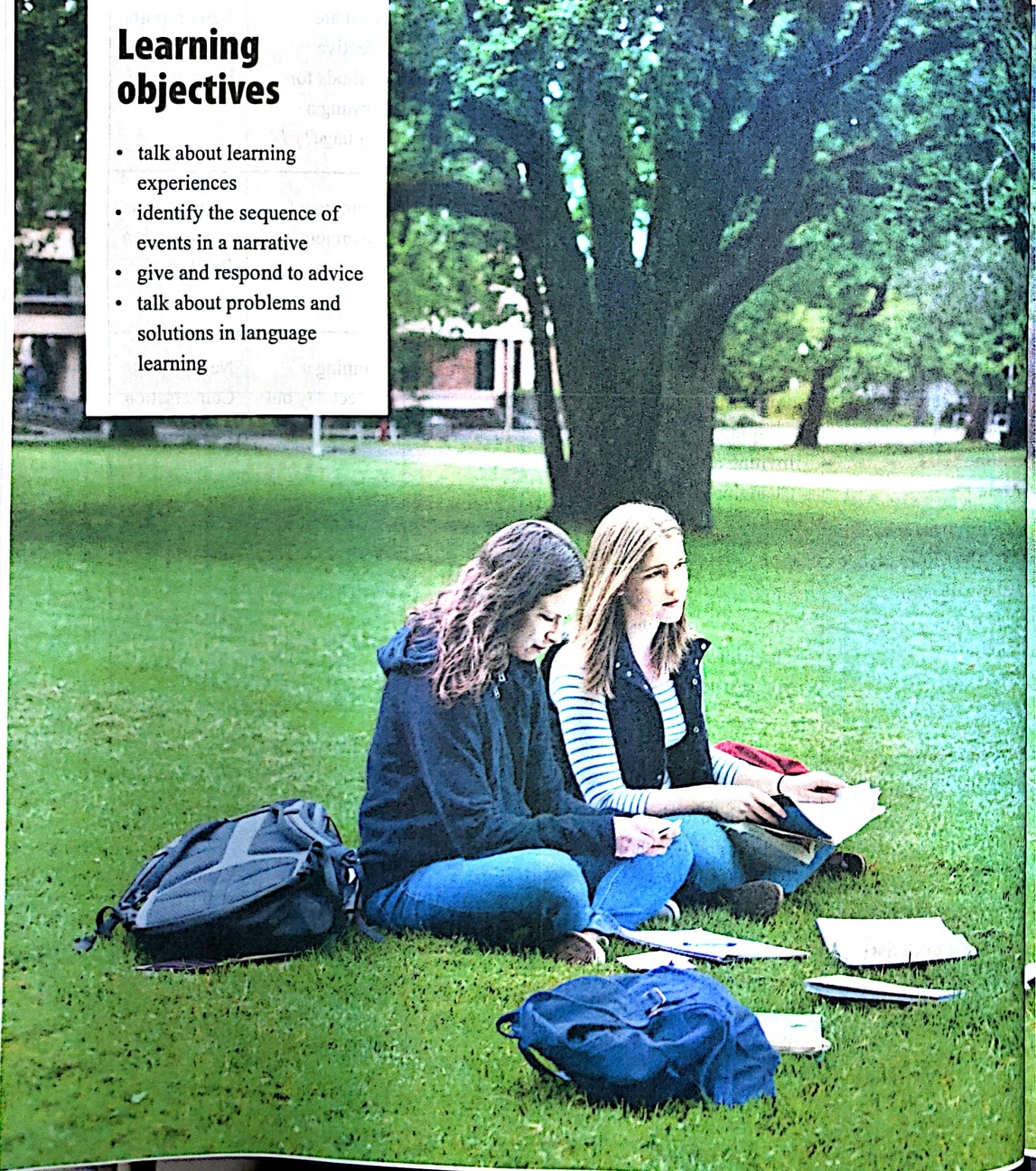
Learning objectives
• talk about learning experiences
• identify the sequence of events in a narrative
• give and respond to advice
- talk about problems and solutions in language learning

Opening up
Read the quotes about learning. Then work in pairs and discuss whether you agree with them. Explain your reasons.
LL
For the things we have to learn
before we can do them, we learn by
doing them.
— Aristotle
(Ancient Greek philosopher)
Learning never exhausts the mind.
— Leonardo da Vinci
(Italian artist and inventor)
When three men meet together, one of them who is anxious to learn can always learn something of the other two.
— Confucius (Chinese philosopher)
Taking in
Listening to China
Before you listen
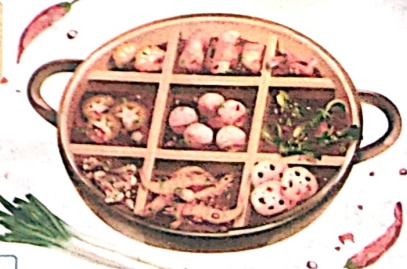
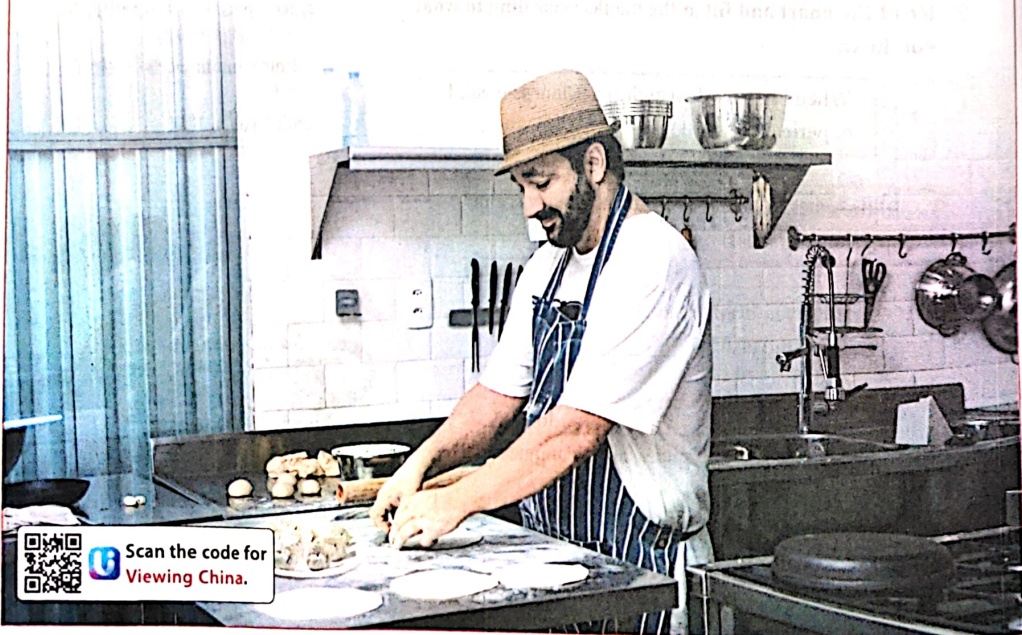
In this part, you are going to listen to an overseas visitor talking about his experience of learning to cook Chinese food. Work in pairs to discuss the questions and predict what you will hear in the narrative.
1 Why might the speaker want to learn to cook Chinese food?
2 How might the speaker learn to cook Chinese food?
3 What might be the final learning outcome?
Listening skills
Identifying the sequence of events in a narrative
The sequence of events is the chronological order in which related events or actions occur. Identifying the sequence of events in a narrative is an important listening strategy that can help you better follow and comprehend a narrative.
One of the most effective ways to recognize the sequence of events is to listen for the sequencing words or time-order words that are used to connect the various parts of a narrative. Some of these words and expressions also act as signals to indicate whether an event happens in the beginning, in the middle, or toward the end of a narrative.
However, sometimes these signal words may not be present or so explicit in a narrative. In that case, it is helpful to mentally visualize the scenes described in the narrative and identify the sequence. A scene refers to a specific location or setting in which a particular event or action takes place. For example, in the narrative you are going to listen to, the speaker's experience of trying Chinese food might be described. The place where he had his first authentic Chinese meal is a scene. As the narrative progresses, the scenes change, and different events occur within these scenes.
Visualizing the scenes allows you to create a mental map of a narrative's progression, facilitating your understanding of the story. This approach
used not left at this point on the line from the point A
Synonymeta b鸽molesca cifthil zoologica
enables you to piece together the narrative puzzle, even in the absence of explicit signal words. Therefore, paying close attention to the scene transitions in narratives can help you comprehend a wealth of information about the events.
Now, you are going to listen to the narrative. Try to identify the sequence of events by noting the signal words and the sequence of scenes in it.

Scan the code and learn more about the skill on Ucampus.
While you listen

Scan the code. Listen to the passage and complete the following exercises. You may listen to it more than once.
2 Read the chart and fill in the blanks according to what you hear.
When I had my first authentic Chinese meal, I experienced total 1)____.
In the class, the many unfamiliar ingredients and spices presented 2) _____ to me.
However, despite the 3) _____, I found the taste 4) _____.
I developed a 5) _____ for the variety of ingredients, spices, and techniques used in Chinese cooking.
Over time, my love for 6) _____
only grew stronger.
New words
taste buds n. [pl.] 味蕾
palate /ˈpælət/ n. 味觉;品尝力
ingredient /ɪnˈɡriːdiənt/ n.(烹调用的)成分,食材
mimic /'mɪmɪk/ vt. 学…的样子;模仿
spice/spais/n.(从植物中提取用于烹调的)香料
chili/tfuli/n. 辣椒
3 Work in pairs and answer the questions according to what you hear.
1 Why did the speaker want to learn to cook Chinese food?
2 Besides the new ingredients and spices, what other aspects of the cooking class did the speaker find challenging?
3 How did the speaker learn to cook in the cooking class?
4 What mistake did the speaker make in the cooking class?
5 What did the speaker begin studying soon after starting to learn how to cook Chinese food?
6 What did the speaker say about himself at the end of the story?
After you listen
4 Work in pairs and discuss the topics
1 Share your experience of learning something new or challenging with your partner. Explain why you wanted to learn, how you learned, the challenges you encountered, and what impact that experience has had on you.
2 A visiting international student wants to learn something that symbolizes traditional Chinese culture. What would you recommend they learn? What challenges do you think they might encounter? What do you think they can gain from the learning experience?
Viewing world cultures
Before you view
1 Read the program information and check (✓) the true statements.
☐ 1 In 1932, all adults in Scotland did an intelligence test.
☐ 2 Many of the same people did the test again nearly 70 years later.
☐ 3 The program can tell us how to live longer.
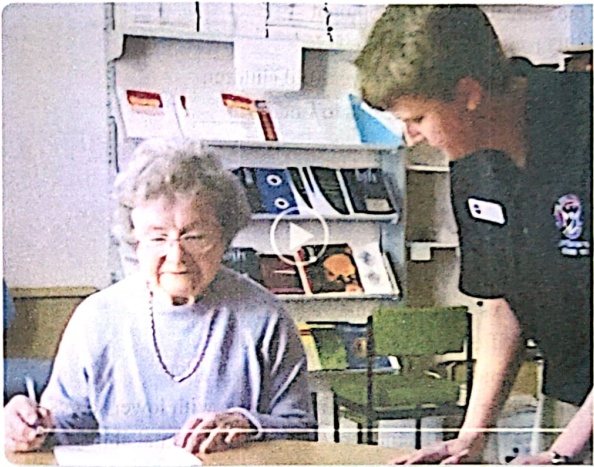
An episode of a documentary television series follows a group of people who agree to repeat a test that they did when they were children. In 1932, every 11-year-old in Scotland did an intelligence test (智力测验). Nearly 70 years later, at the age of 79 or 80, hundreds of the same people did the test again. The results were very interesting, and maybe they can tell us about the type of people who live the longest.
While you view


can the code. Watch the video clip and complete the following exercises. You may watch it more than once.
2 Read the statements and underline the correct alternative to complete each sentence according to the video clip.
1 A special exam for children was / The results of the 1932 test were “rediscovered” in an Edinburgh basement.
2 The instructions and the test are the same as they were in 1932 / easier than those in 1932.
3 The two old men and the old woman are talking about schools 80 years ago / the exam they have done.
4 People who did well / badly in the IQ test in their childhood are the people who are still alive today.
New words
life expectancy /ɪkˈspektənsi/ n. 预期寿命
Edinburgh /'edɪnbərə/ 爱丁堡(英国苏格兰首府)
potential/pə'tenʃəl/ a. 潜在的;可能的
goldmine /ˈɡəʊldmaɪn/ n. 宝库
sticky /'stuki/ a.(处境、问题等)难办的,棘手的
intriguing /ɪnˈtriːɡɪŋ/ a.(由于奇特、神秘或出人意料而)非常有趣的
recipe /resəpi/ n. 窍门;诀窍
3 Read the statements and choices. Then choose the best one to fill in each blank according to the video clip.
1 Recent research on IQ tests suggests a possible link between people's IQ scores and their ___.
A diets
B lifestyle
C parenting
D physical condition
2 The IQ test in 1932 was special in that ___.
A it was planned to be repeated 70 years later
B its results revealed the secrets of IQ development
C it was the only mass IQ test performed in the U.K.
D it was an IQ test especially designed for 11-year-old children
3 The old lady interviewed after the IQ test seems to find it ___.
A very interesting
B quite challenging
C carefully organized
D scientifically designed
4 The researchers in this study are mainly interested in ___.
A what makes people's IQ scores increase as they age
B what causes the individual differences in people's IQ scores
C what is the difference between one's IQ score at 11 and that at 80
D what makes people with higher IQ scores outperform those with lower scores
5 The study shows that ___ may have an influence on people's mental ability.
A education
B profession
C social contact
D physical condition
After you view
4 Work in pairs and discuss the questions.
1 What do you think of the view “Intelligence must be bred, not trained”?
2 In your opinion, what factors affect intelligence?
3 How do you think your intelligence changes as you get older? Why do you think so?
Watching street interviews

Scan the code. Watch the video podcast and complete the following exercises.
1 Watch the full version of the podcast and summarize its general idea.
2 Read the paragraph. Then watch Part 1 of the podcast and fill in the blanks.
I have a full-time job, but I like learning (1)____ in my spare time. 2)____, I'm studying Spanish. I'm enjoying it, but I'm finding it 3)____. Today, we're asking people about learning new things.
New words
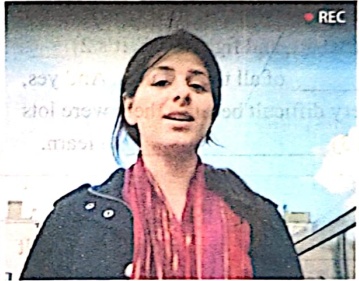
3 What are they learning at the moment? Look at the people and read the statements. Then watch Part 2 of the podcast and check (✓) the true statements
process /'prəuses/ n. (为达到某目标的)过程,进程
negotiation
/niˌgəʊʃiˈeɪʃn/ n. (尤指在商业或政治方面正式的) 谈判,协商
evaluation/l,væljueɪʃən/
n. 评估;评价
Swahili/swɑː'hiːlɪ/ n.
斯瓦希里语(一种非洲语言)
Zimbabwe/zm'barbwe/津巴布韦(非洲国家)
capoeira /kæpəʊˈeərə/ n. 卡波埃拉,巴西战舞(一种混杂非洲和巴西风格的武术性舞蹈)
Sanskrit /ˈsænskrɪt/ n.
梵文,梵语(印度古代的语言)
Latin /ˈlætɪn/ n. 拉丁语 trumpet /ˈtrʌmpɪt/ n. 小号

☐ 1 She is learning to drive at the moment.
☐ 3 She is learning to speak Spanish at the moment.



5 He is learning Arabic at the moment.
7 He has just learned how to kayak.
2 She is learning to play golf because she wants to play with her friends.
4 She is learning yoga at the moment, and she is finding it quite easy.

6 She is learning French in evening classes.
8 He is learning how to play a musical instrument.
Culture notes
Swahili: a language spoken by various ethnic groups (族群) in much of East Africa. It has been greatly influenced by Arabic. There are an enormous number of Arabic loanwords (外来语) in the language.
Sanskrit: the classical language of Ancient India. It is considered one of the most ancient languages in the world.
2020-02-24:18:17
2020/03/01-02/01
2020
4 What's the most difficult thing they've ever learned? Look at the people and read the statements. Then watch Part 3 of the podcast and fill in the blanks.

The most difficult thing 1) _____ is Mandarin Chinese. I did it in evening classes a few years ago, and I found it really, really difficult.

Probably capoeira, which is a Brazilian dance, martial art, and fight thing. It's 2) _____ of all these things. And yes, that was very difficult because there were lots of unusual 3) _____ to learn.

- _____ was the most difficult thing.

Well, I learned some Sanskrit, and that's got, um, 5) _____, two more than Latin. It's quite difficult 6) _____.

Um, I learned to play the trumpet at school. That was pretty difficult. Er ... and maybe learning to drive. I 7) _____ learning to drive.
5 Work in pairs and discuss the questions.
1 What are you learning at the moment? Do you enjoy learning it? Why or why not?
2 What is the most difficult thing you have ever learned? Why?
3 What do you enjoy learning most? Why?
Role-play


Scan the code. Listen to the conversation and complete Exercises 1 and 2 on Ucampus.
Speaking skills
Giving and responding to advice
The conversation you have just listened to is a good example of how to give and respond to advice. There are a variety of language choices in English for giving and responding to advice.
Firstly, sentence patterns like (I think) it's a good idea to ..., (I think) it helps ..., and Another idea is ... can be used to give advice. Typical examples from the previous conversation include It's a good idea to study with friends at the same time each day, I think it helps when you study with friends, and Another idea is not to eat too much before the exam.
Secondly, the modal verb should is used to indicate advisability, as in the example: She should listen to English as much as possible to get used to how it sounds. In contrast, its negative form should not be often used for advising someone not to do something. Another more formal modal verb ought to be used to be used in the same way as should and should not be given advice.
The third way to give advice in English is to use the imperative form of verbs, as in the following examples: Listen to the news, Listen to podcasts, and Watch English television.
The use of the sentence patterns Why don't you …?, Why not …?, How about …?, and If I were you, … is a rather polite way to give advice in English, as shown in the following example: Why not go to the library?
When responding to advice, expressions like That's a good idea, I suppose so, I agree with this one, and You're right are used to give positive responses, while expressions like I'm not sure that's a good idea and I'm not sure about that are used as negative responses.
You may refer to the following table for more expressions that can be used to give and respond to advice.
| Expressions for giving advice | Expressions for responding to advice |
| • You'd better spend more time on English.• It may be a good idea to find a cheaper hotel.• Have you thought about seeing a movie instead?• Why don't you try matching it with a black dress? | • This is really a good idea.• I think this is great advice.• I'll take that on board.• I understand your opinion, but ... |

Scan the code and learn more about the skill on Ucampus.
3 Look at the pictures and read the conversations. Then fill in the blanks using the words in brackets to form correct sentences.
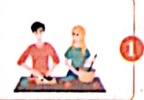
A: I think _____ more salad. It's good for you. (you / eat)
B: That's $ \underline{\text{idea.}} $ (good)

A: You _____ so much time on the computer. (not / spend)
B: _____ right. (you)

A: _____ we go for a five-kilometer run every morning? (why)
B: I _____ a good idea. (not sure)

A: I think _____ idea that we go shopping together. (good)
B: I ___.(suppose)
4 Work in pairs and role-play the situations. Use the skills for giving and responding to advice.
Situation 1
What should I do when I feel homesick?
Student A is a first-year college student. It is the first time they are away from family, friends, and the everyday environment they are used to. Student A misses their family and friends back home.
A: Discuss your feelings with Student B.
Then listen and respond to their advice.

B: Listen to Student A's problem and give them some advice.

Situation 2
I'm overwhelmed with so many obligations
Student A finds it overwhelming to balance their time for academics, extracurricular activities, and personal life. Constantly struggling to fulfill all these obligations leaves them feeling stressed and exhausted.
A: Share your concerns with Student B.
Then listen and respond to their advice.
B: Listen to Student A's problem and give them some advice.
Group discussion
What are effective methods for learning a language?
Get ideas


Scan the code. Listen to the radio program and complete Exercise 1 on Ucampus.
Discuss and organize ideas
2 Read the website message and the replies, and recall what you have learned from the radio program. Then work in groups of three. Brainstorm to decide on three methods that you think can best help Tomasz improve his English quickly and provide supporting reasons. Use the table on Page 15 to take notes of your ideas.
○○○ < >
凸

Hi, can you help me? I'm studying English at a language school, but I'm going to start work for an international company next month. I need to improve my English quickly! Has anyone got any good ideas? Looking forward to hearing from you.
Hi Tomasz, I think you should study online. Use message boards to chat with people all over the world and practice your English. You will make new friends, too!
Tomasz, read news websites every day. And for any new words you come across, look them up in a dictionary.
You should get a good grammar book and do all the exercises.
Practice makes perfect!
I think it's a good idea to focus on listening. Why don't you try watching movies with English subtitles?
Tomasz, I don't think you should study on your own. You should talk to people. Find someone who speaks English, and talk to them. Oh, make sure they want to talk with you first!





Smith1894
$ P_{\text{total}} = P_{1} + P_{2} + \cdots + P_{n} $
| Method 1: Why it works: |
| Method 2: Why it works: |
| Method 3: Why it works: |
3 Work together to prepare a presentation about different methods for helping Tomasz improve his English quickly. Use the notes to organize the content of your presentation.
Present ideas
4 Present your group's methods for helping Tomasz improve his English quickly to the class. Before you begin, refer to the checklist to see if you are ready.
| Checklist |
| ☐ Present our choice of learning methods clearly. |
| ☐ Provide enough convincing reasons for our choice. |
| ☐ Make the presentation easy to understand. |
| ☐ Use different words and sentence patterns to add variety to the presentation. |
Further listening
News reports

Listen to two news reports and complete the exercises on Ucampus.
New words
News report 1
inconsistent /ˌɪnkənˈsɪstənt/ a. (行为、fictional /ˈfɪkʃənəl/ a. 虚构的工作等) 时好时坏的,变化无常的
distracting /dɪˈstræktɪŋ/ a. 分散注意
力的;使人分心的
News report 2
netizen /'netizən/ n. 网民
enroll/in'rəul/ vi. 注册
accomplishment /əˈkʌmplɪʃmənt/
n. 成就;成绩
Conversation

Listen to the conversation and complete the exercises on Ucampus.
New words
assignment /əˈsaɪnmənt/ n. 作业
Passage

Listen to the passage and complete the exercises on Ucampus
New words
frustrated /frʌˈstreɪtɪd/ a. 懊恼的;沮丧的
repetitive /rɪˈpetətɪv/ a. 重复乏味的
extensively /ɪkˈstensɪvli/ ad. 广泛地
linguistic /lɪŋˈgwɪstɪk/ a. 语言的;语言学的
in-depth /'ɪn ˈdepθ/ a. 深入的
Wrapping up
Use the self-assessment checklist to check what you have learned in this unit
| OK | Needs work | |
| I can talk about my learning experiences. | ☐ | ☐ |
| I can identify the sequence of events in a narrative. | ☐ | ☐ |
| I can give and respond to advice by using appropriate expressions. | ☐ | ☐ |
| I can discuss problems and solutions in learning a foreign language and explain my ideas with supporting details. | ☐ | ☐ |
Unit test


Scan the code and take the unit test on Ucampus.